You live in a world where dinosaurs feel strangely familiar: movie monsters, plastic toys, museum skeletons. But the very first real dinosaurs that walked this planet were nothing like the towering beasts you’re used to seeing. They were small, fast, and for a long time, almost invisible in the fossil record. Only in the last few decades have paleontologists started to piece together their story, and every new bone pulled from Triassic rock has been quietly rewriting what you thought you knew.
As you follow these discoveries, you’re not just learning dinosaur trivia – you’re looking straight into a turning point in Earth’s history, when a group of scrappy reptiles began an evolutionary experiment that would dominate the planet for more than 160 million years. The twist is that scientists still do not fully agree on which fossil counts as the “first” dinosaur, or even exactly when dinosaurs truly began. That uncertainty is not a flaw; it’s the thrill of it. You’re stepping into a mystery that is still unfolding in real time.
The Strange World Before Dinosaurs Took Over
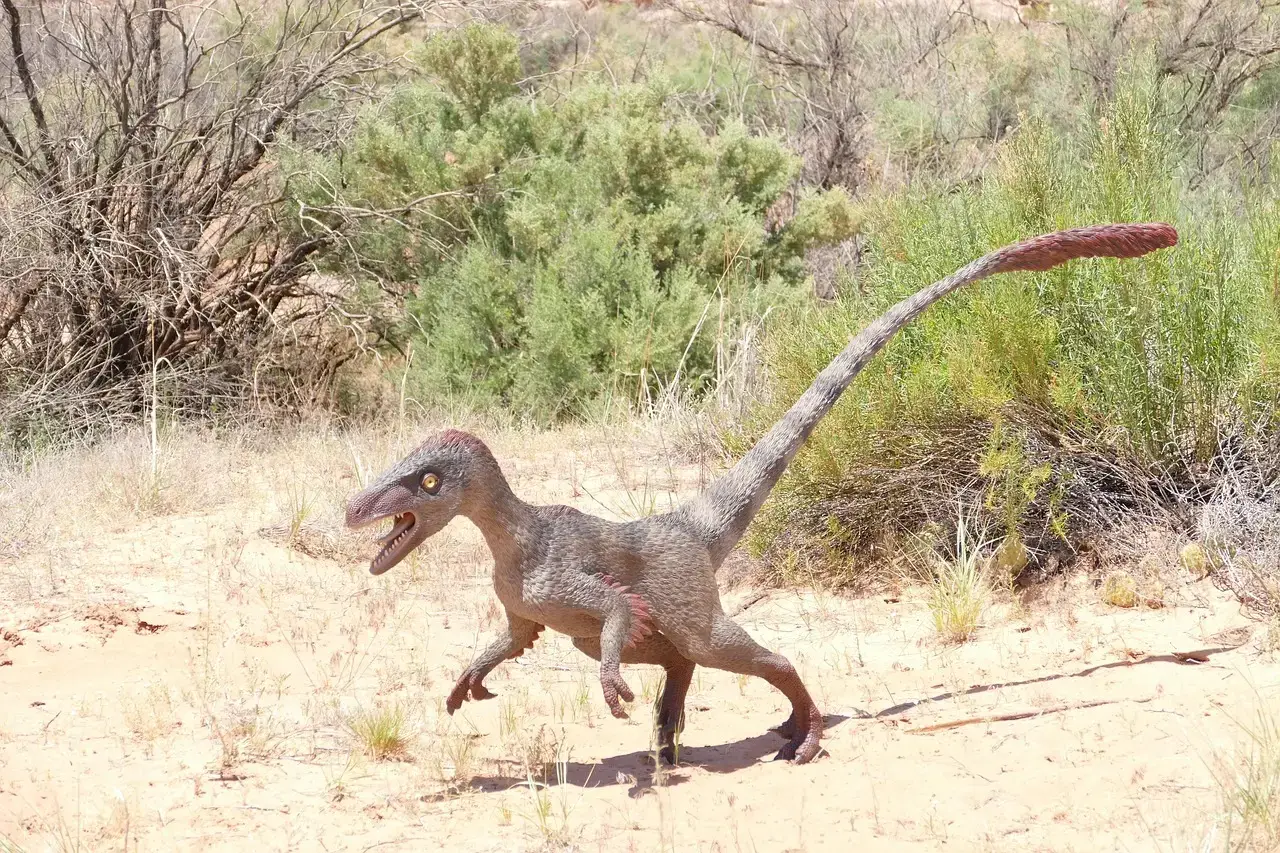
Imagine standing in a forest roughly more than 240 million years ago, long before any T. rex or Triceratops, and realizing that you wouldn’t immediately recognize the world beneath your feet. You’d see reptile relatives that look a bit like a mashup of crocodiles, birds, and lizards, all scrambling through fern-filled floodplains. Dinosaurs at this point are either not around yet or so rare that you’d probably miss them entirely if you glanced around once and looked away. They started out not as rulers, but as background characters in an ecosystem ruled by other powerful reptiles.
In that pre-dinosaur world, a group of animals called archosaurs is quietly setting the stage. One side of this family tree will eventually lead to crocodiles, while the other side will lead to pterosaurs and dinosaurs. Close dinosaur relatives such as Asilisaurus and other dinosauriforms already show up in the Middle Triassic of Africa, telling you that the “dinosaur line” is already experimenting with new body plans and lifestyles before true dinosaurs clearly appear in the record. You’re looking at a world in motion, where the ingredients of dinosaurs are present, even if the final recipe is not yet obvious.
Nyasasaurus and the Blurry Line of the “First Dinosaur”
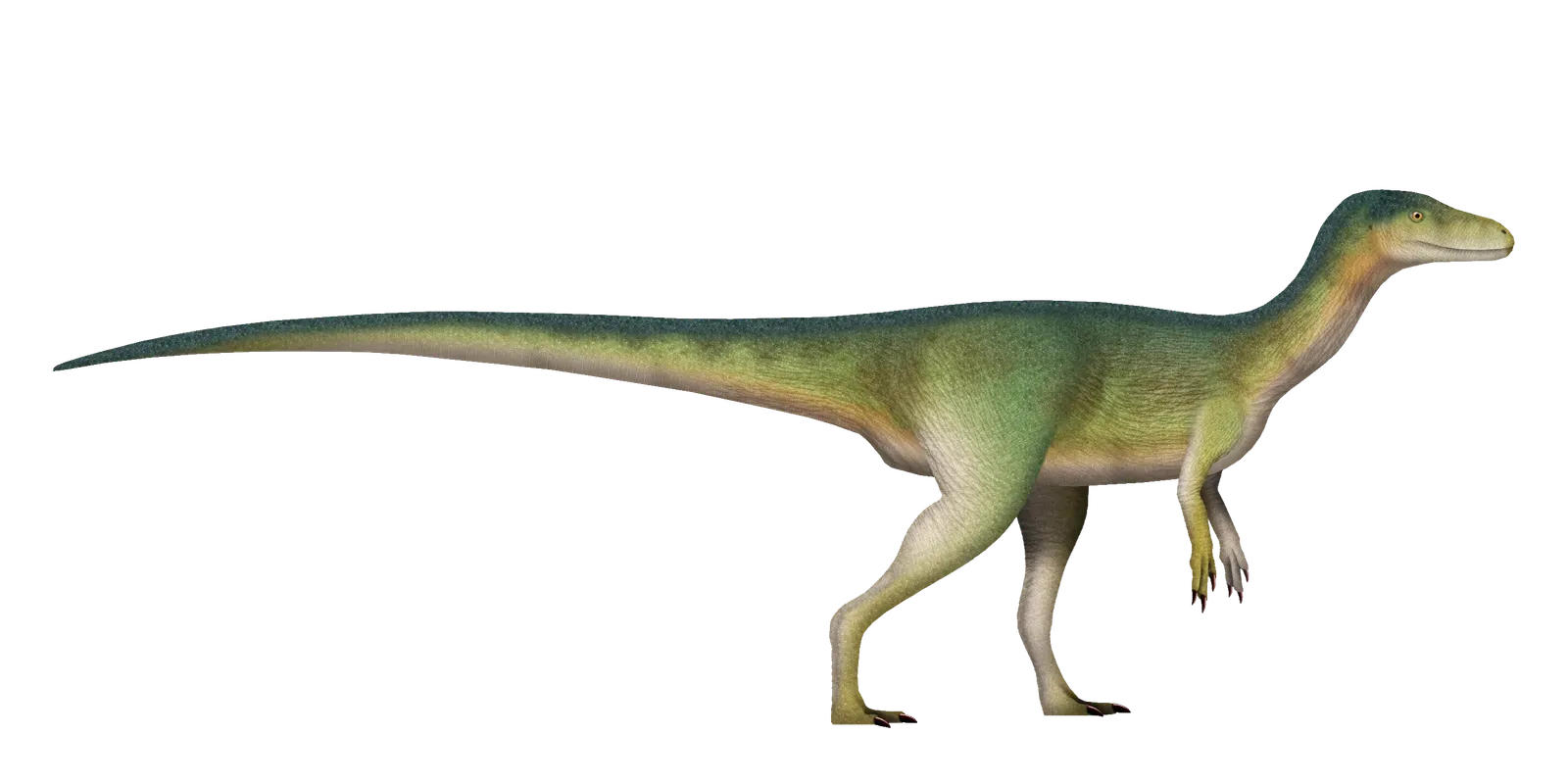
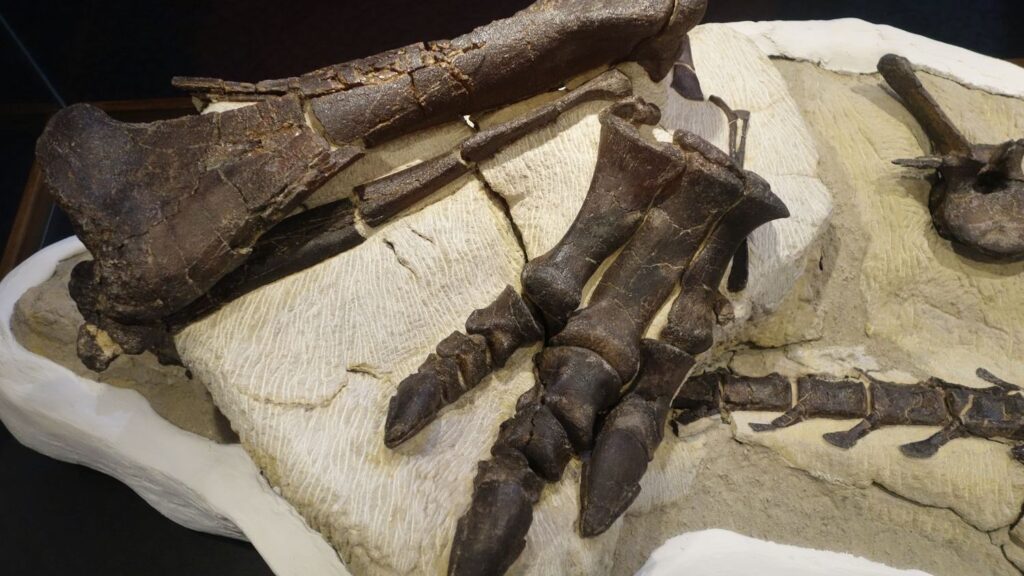
When you ask which fossil is the very first dinosaur, Nyasasaurus from Tanzania is one of the names that keeps popping up – and almost immediately, you run into a scientific gray area. The bones, discovered in Middle Triassic rocks and studied in detail only many decades later, have features that look strikingly dinosaur-like, such as specific traits in its limb bones and vertebrae. That pushes you back to around 243 million years ago, earlier than classic Late Triassic dinosaurs from Argentina and Brazil. But here’s the catch: some researchers argue that, based on what is preserved, it might instead be just outside true Dinosauria, in a very close cousin group.
For you, Nyasasaurus teaches an important lesson about how science actually works. There is no red line painted in the rocks that says “first dinosaur, start here.” Instead, you see a continuum of forms, and scientists have to draw boundaries based on specific anatomical details that can be interpreted in different ways. As new fossils and better scans appear, the status of Nyasasaurus can shift: sometimes sitting proudly inside Dinosauria in one analysis, then sliding back out as a near-relative in another. You’re not looking at a simple answer – you’re looking at the messy, honest process of figuring out how life evolves.
Asilisaurus and the Dino-Relatives That Came First
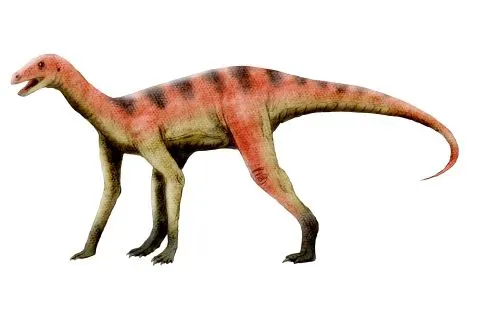
Before you picture dinosaurs as an overnight success story, you need to meet Asilisaurus, another animal from the Triassic rocks of Tanzania. Asilisaurus is not a dinosaur, but a very close cousin in a group often called silesaurids, which share many skeletal features with early dinosaurs. These animals lived roughly ten million or so years before unambiguous dinosaurs show up in the fossil record, telling you that the dinosaur side of the archosaur family tree had already split off and was diversifying well before dinosaurs themselves became common. In other words, the “dinosaur experiment” had a long rehearsal.
When you look at Asilisaurus, you see that some dinosaur-like traits – such as certain hip and limb arrangements – did not suddenly appear out of nowhere. Instead, they evolved step by step in these close relatives, like a series of software updates before the full version is released. This helps you understand why it is so hard to pinpoint exactly where dinosaurs begin. If Asilisaurus already walks and moves in ways similar to early dinosaurs, then the line between “almost dinosaur” and “true dinosaur” becomes more like a fuzzy gradient than a sharp boundary. You’re learning to think about evolution as a slow blending of traits, not a set of clean, labeled boxes.
Herrerasaurus and Eoraptor: What the First Clear Dinosaurs Looked Like
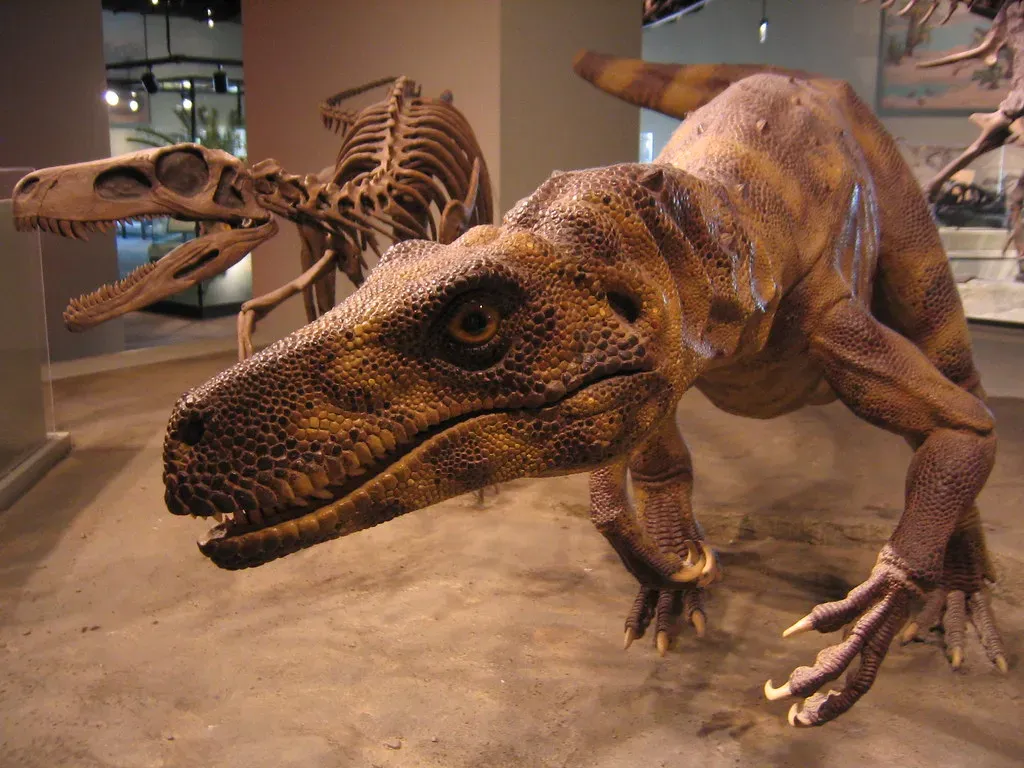
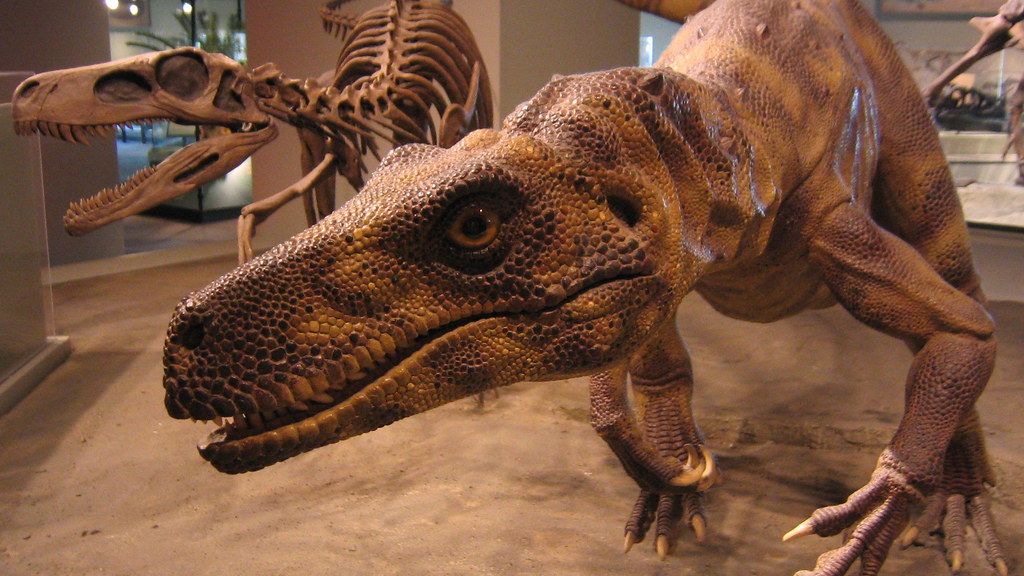
When you finally arrive in the Late Triassic, around 230 million years ago in what’s now Argentina, you meet two animals that most paleontologists accept as some of the earliest undeniable dinosaurs: Herrerasaurus and Eoraptor. They’re nothing like the giant celebrities you know from popular culture. Herrerasaurus is a medium-sized, agile predator with a long tail, powerful hind limbs, and sharp teeth, stalking other reptiles and early mammal relatives. Eoraptor is smaller and more lightly built, with a mixed-looking teeth set that hints at a diet that might have included both meat and plants, depending on who you ask.
These early dinosaurs show you that the fabled “first dinosaurs” were not gigantesque titans but relatively small, two-legged runners, probably fast and alert in complex ecosystems. They already display hallmark dinosaur traits such as upright posture, specialized hips, and a characteristic ankle structure, which helps scientists confidently place them within Dinosauria. At the same time, their skeletons still look quite primitive compared to later Jurassic and Cretaceous species, giving you a window into the early stages of the dinosaur blueprint. When you imagine the origin of dinosaurs, it makes more sense to think of nimble, cat-sized and dog-sized animals weaving through the undergrowth than colossal monsters shaking the ground.
Mbiresaurus and the Surprise of Africa’s Earliest Dinosaurs
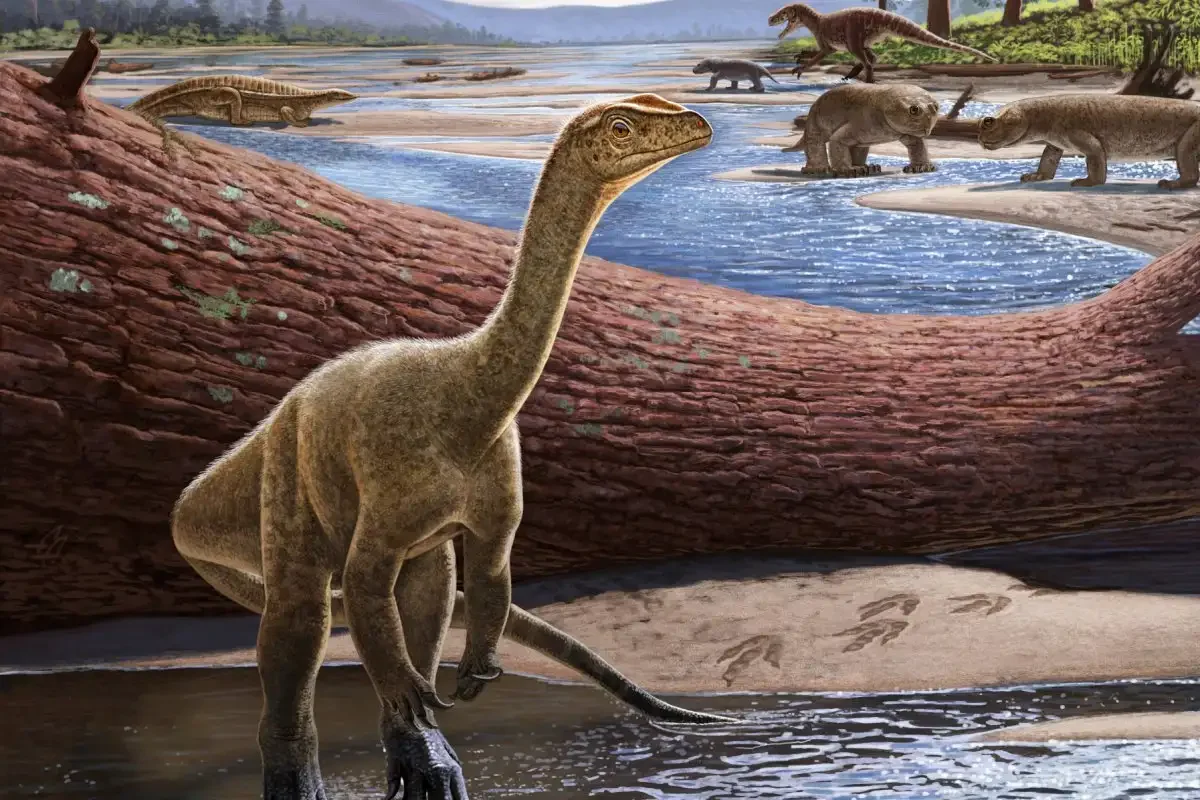
If you picture dinosaur origins as mostly a South American story, Africa’s Mbiresaurus forces you to widen your map. Discovered in Zimbabwe and dated to around 230 million years ago, Mbiresaurus is one of the oldest known dinosaurs from the entire continent of Africa. It is a small, early sauropodomorph, part of the same broad group that would eventually produce long-necked giants like Diplodocus and Brachiosaurus. For you, this little dinosaur is proof that early dinosaur evolution was not confined to one corner of the supercontinent Pangaea.
What makes Mbiresaurus so intriguing for you is not just its age, but the company it keeps. The rocks that preserved it also hold fossils of other Triassic reptiles and early mammal relatives, suggesting that early dinosaurs like Mbiresaurus were part of diverse, mixed communities rather than isolated pioneers. Its similarities to early sauropodomorphs from South America hint that these dinosaurs spread widely across southern Pangaea sooner than some scientists had thought. When you connect the dots, you start to see dinosaur origins as a broad southern-hemisphere phenomenon, with early species moving between what would later become South America, Africa, and beyond.
Why Pinning Down “The First Dinosaur” Is So Hard
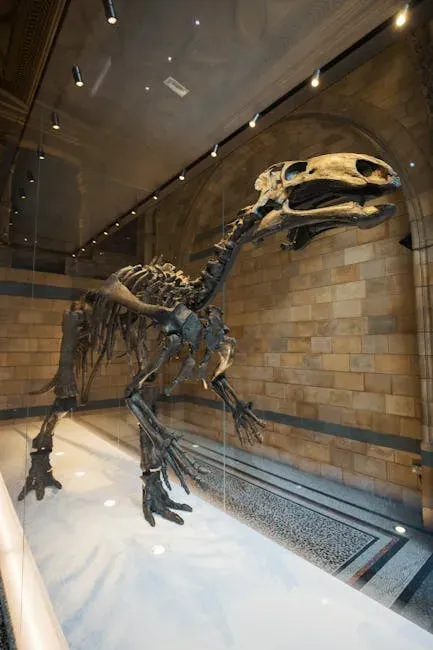
You might feel tempted to demand a clean answer: which single species is the first dinosaur, period? But the more you learn, the more you realize that nature rarely works in such tidy headlines. Fossils like Nyasasaurus, Asilisaurus, Herrerasaurus, Eoraptor, and Mbiresaurus cluster in a relatively narrow window of time – roughly between the Middle and early Late Triassic. The farther back you go, the fewer bones you have, and the more incomplete the skeletons become. That means you’re often trying to draw big evolutionary conclusions from fragments: a single limb bone here, a partial pelvis there.
On top of that, evolution doesn’t flip switches; it turns dials gradually. Early dinosaur relatives already share many traits with true dinosaurs, and early dinosaurs themselves retain many primitive features from their ancestors. When you look at a specimen on the border, reasonable experts can disagree on whether it falls just inside or just outside the dinosaur group. So instead of one neat “first dinosaur,” you’re better off thinking about a small cluster of early forms in southern Pangaea, all hovering around that threshold. Your question shifts from “Which one came first?” to “How did this whole group emerge and spread?” – and that’s a far more powerful way to understand deep time.
How New Technology Is Changing What You Can Know
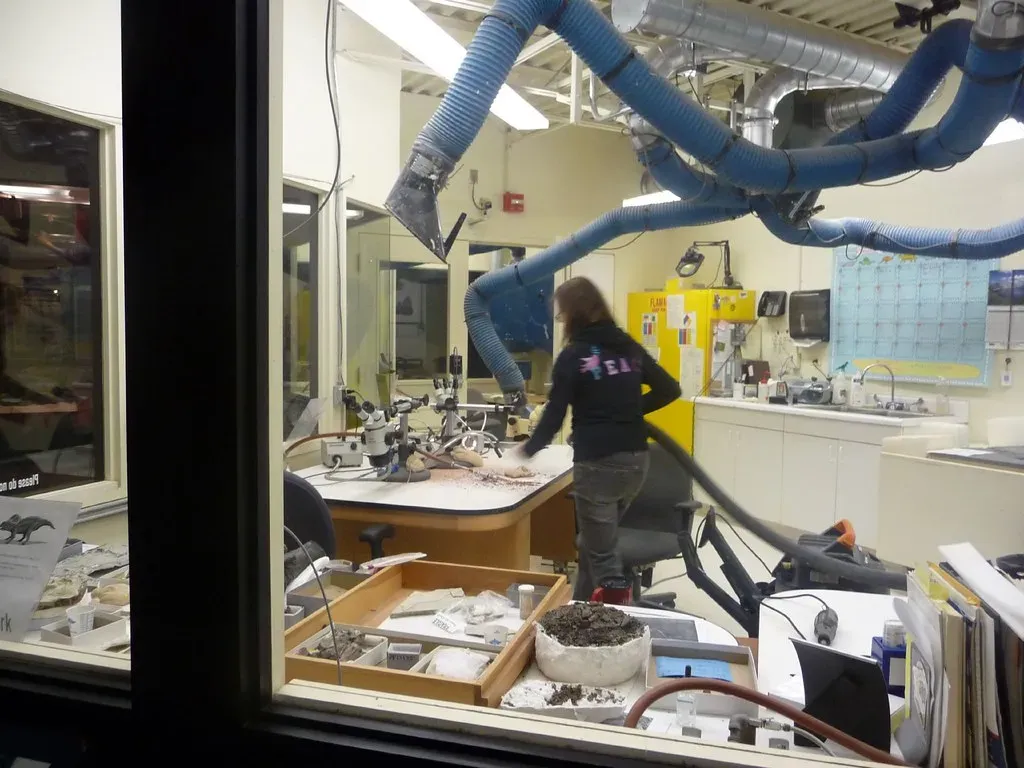
Not long ago, many of the fossils you now read about sat in museum drawers, labeled, cataloged, and mostly ignored, simply because tools and methods were not advanced enough to pull their full story out of stone. Today, you benefit from high-resolution CT scanning, 3D modeling, and more refined ways to date rocks using radioactive minerals such as zircon crystals. When paleontologists re-examine old bones with new technology, they sometimes discover anatomy that was never visible before, or adjust ages of rock layers by several million years. Those tweaks might sound small, but when you’re chasing the origin of dinosaurs, a handful of millions of years can flip the narrative.
You also gain from more systematic fieldwork in parts of the world that were once rarely explored, such as remote regions of Tanzania, Zimbabwe, and interior Brazil. Each new dig adds local context: which animals lived alongside the earliest dinosaurs, what the climate was like, and how ecosystems shifted over time. Combined with powerful computer analyses that compare hundreds of skeletal traits across species, this lets scientists test different evolutionary trees instead of relying on gut feelings. For you, it means that the story of the first dinosaurs is no longer speculative guesswork; it is a testable, ever-improving picture built from hard data and cross-checked methods.
What These Early Dinosaurs Tell You About Evolution and Survival
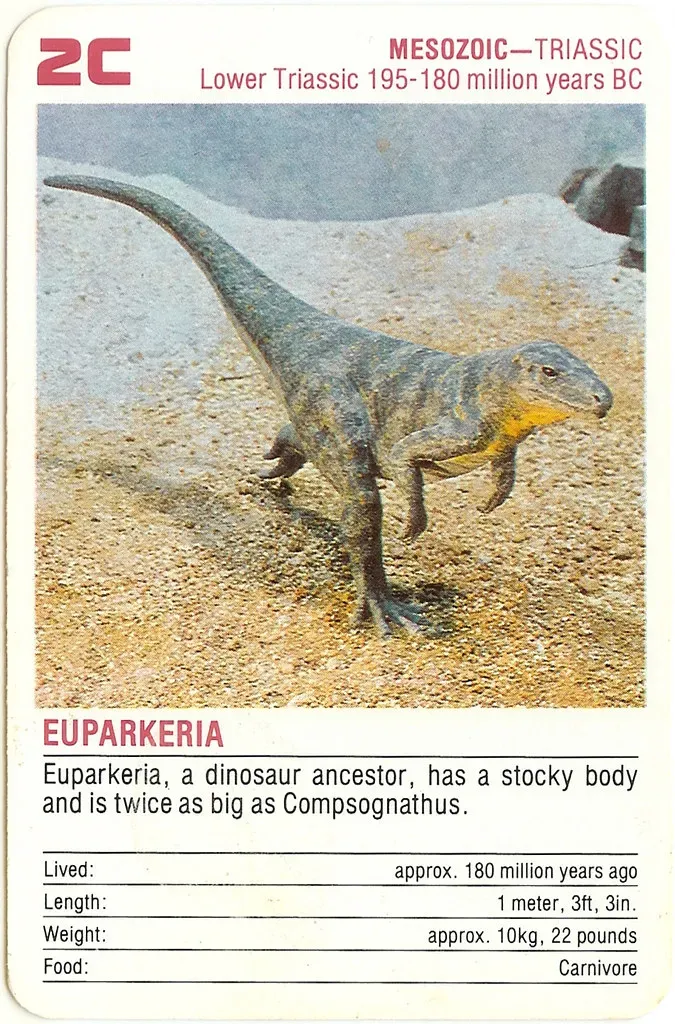
When you trace dinosaur origins through these early species, you start seeing a bigger theme: success in evolution often begins quietly. Early dinosaurs were small, relatively rare, and probably had to compete with established reptiles that were already well adapted to their environments. Yet their unique body plan – upright limbs, strong hips, and efficient movement – gave them an edge as climates and ecosystems changed in the Late Triassic. Over time, that edge turned a scattered group of nimble animals into a dominant global force. From your vantage point in 2026, it is tempting to assume dominance was inevitable, but in their own time, these first dinosaurs were more like hopeful outsiders than guaranteed winners.
These discoveries also remind you that extinction and opportunity are deeply linked. As environmental stresses and mass extinctions reshaped Triassic ecosystems, many archosaur lineages declined or disappeared. Dinosaurs, with their flexible body plans and varied diets, were positioned to take advantage of the new ecological space that opened up. The modest-sized Eoraptor or Mbiresaurus you picture scampering across floodplains are not just interesting fossils – they’re early chapters in a huge evolutionary gamble that happened to pay off spectacularly. When you reflect on that, you see evolution not as a straight ladder of improvement, but as a messy, branching tree full of experiments, most of which you never meet because they left no descendants.
The Mystery Is Still Unfolding – and You’re Watching It Live
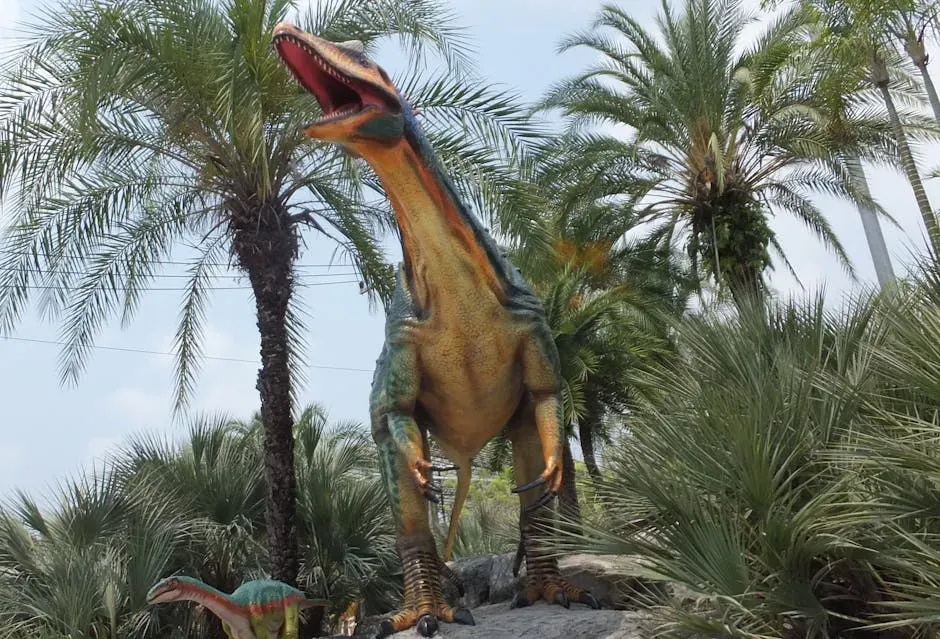
Right now, as you read this, teams of paleontologists are hiking through deserts, mountains, and badlands, hoping to find the next fragment that will shift the story of dinosaur origins yet again. The first dinosaur that truly walked the Earth may never be found; its bones may have eroded away, or be buried in a place no one ever digs. But every new species discovered in Middle and Late Triassic rocks – from southern Pangaea to other corners of the globe – tightens the net, giving you a richer and more precise picture of how dinosaurs began. You are living at a moment when that picture is changing faster than at almost any time since dinosaurs were first named in the nineteenth century.
When you step back, the real magic is not in naming a single “first dinosaur,” but in realizing how much you can learn from a few scattered bones in ancient mudstone. These fossils let you reconstruct not only bodies but entire worlds: climates, food webs, and evolutionary pressures that shaped life long before humans existed. The mystery of the first dinosaurs is not a puzzle with one correct final answer; it is an open-ended investigation that keeps inviting you back with new clues and fresh perspectives. So as the next Triassic fossil comes out of the ground and rewrites another detail, you might find yourself wondering: if this is what you know today, what surprising twist will the rocks reveal to you tomorrow?