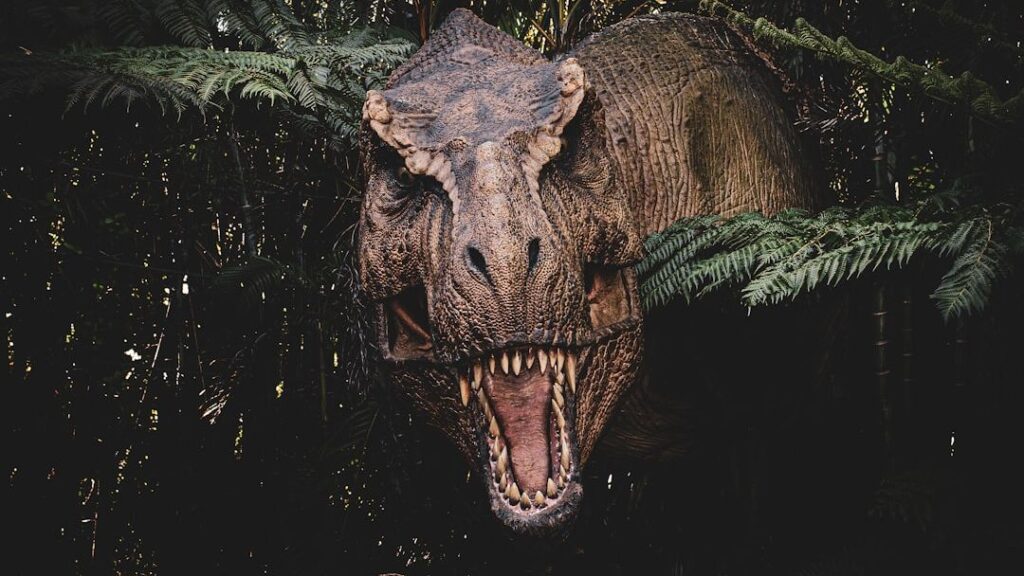
Imagine the most famous predator in history getting dragged online for being stupid. That is basically what has happened to Tyrannosaurus rex over the last few decades: countless memes, jokes about tiny arms and tiny brains, and the idea that this giant killer was actually kind of a lumbering idiot. It sounds funny, but it quietly shapes how we picture one of the most powerful animals to ever walk the planet.
The twist is that the science behind T. rex intelligence is way more interesting, way more nuanced, and honestly way cooler than the lazy stereotype. When paleontologists actually dig into brain size, senses, behavior, and comparison with other dinosaurs, a different picture starts to appear. T. rex might not have been a genius in the way people love to imagine some clever pack hunters, but calling it is not just unfair; it is flat-out wrong.
The Tiny Brain Myth: Why Size Alone Misleads Us
The first big problem is that we tend to judge brains like we judge smartphones: bigger, newer, more powerful must mean smarter. Early reconstructions of T. rex braincases made it easy to laugh at the size of its brain compared with its massive skull, and that joke has stuck around in popular culture. But brain size alone, especially absolute size, is a terrible way to measure intelligence across such different kinds of animals. A whale has a larger brain than you, but that doesn’t make it more capable in the human sense.
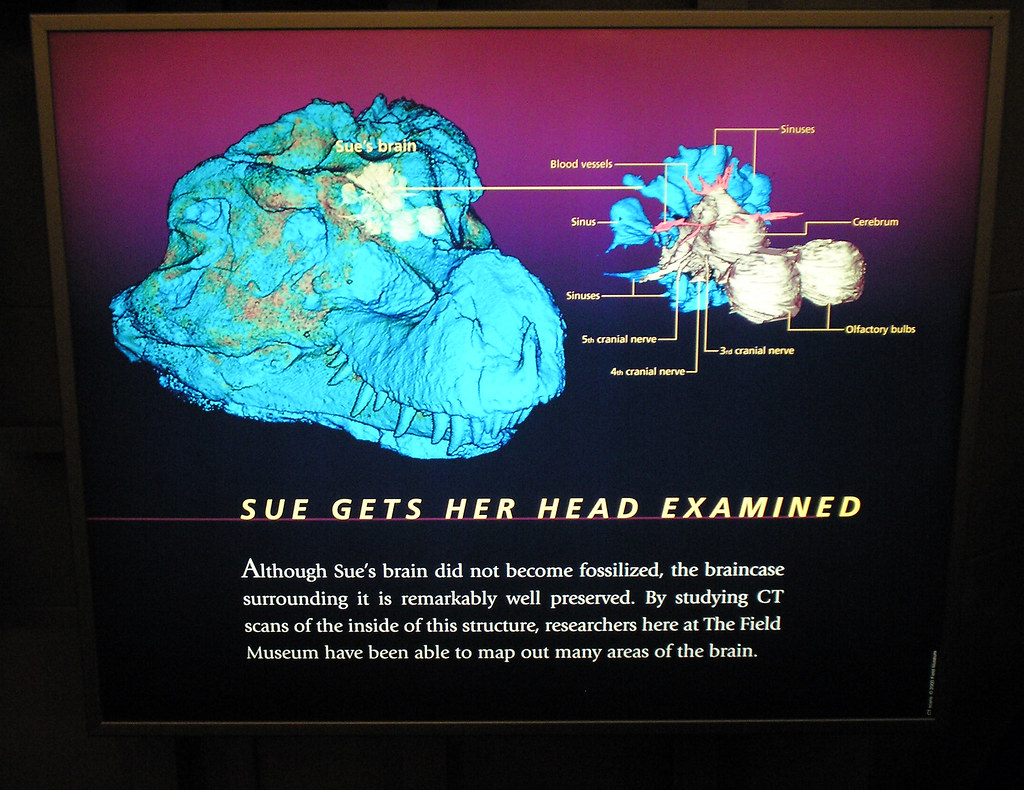
What scientists actually look at is brain size in relation to body size and the structure of different brain regions. Some modern studies using CT scans of T. rex skulls show that, for a dinosaur of its size, its brain was not ridiculously small at all. It falls roughly in the same general range as many other large theropods. That means T. rex was probably about as smart as it needed to be for its lifestyle, and certainly not the village idiot of the Late Cretaceous.
Inside The Skull: What T. Rex’s Braincase Really Tells Us
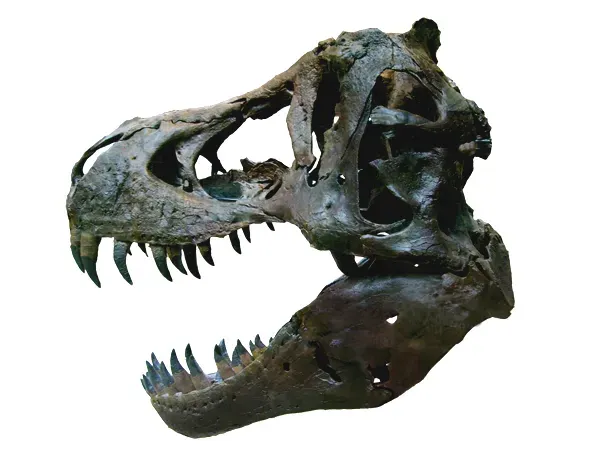
When researchers digitally reconstruct the brain cavity of a T. rex, a few things stand out that do not fit with the “dumb monster” label. The olfactory bulbs, which handle the sense of smell, were large relative to the rest of the brain, suggesting that T. rex had an excellent sense of smell. The parts of the brain connected with vision and coordination also appear well developed for a large predatory animal. This is not the layout of a slow, clumsy creature that just blunders around.
Of course, we should be honest: the T. rex brain was still pretty simple compared with mammals and birds alive today. It was likely closer in overall complexity to that of a big modern reptile or maybe a primitive bird, not a crow or a parrot. But that still places it in a category of animals that can hunt, navigate, interact with rivals, and adapt to a changing environment. In other words, T. rex’s brain was tuned for survival, not solving puzzles in a research lab.
Super Senses: Vision, Smell, And Hearing Over Raw Smarts
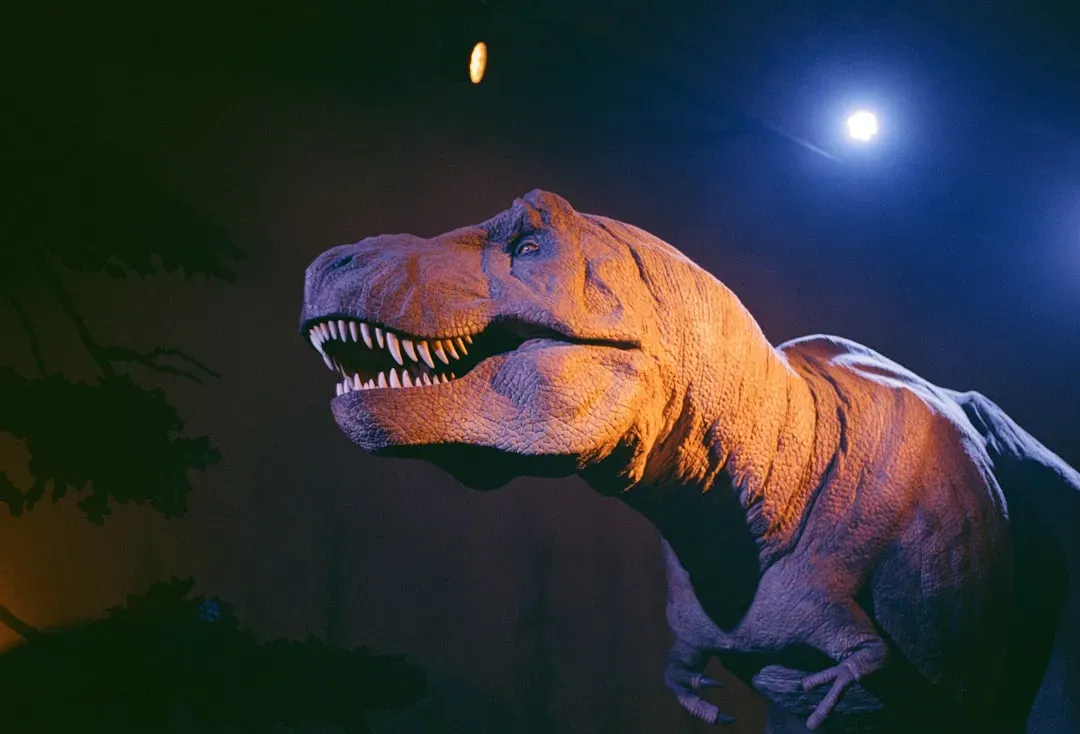
If you really want to know how capable T. rex was, you have to look at its sensory toolkit. Evidence from skull shape and eye socket placement suggests T. rex had forward-facing eyes, which gives an animal overlapping fields of view and depth perception. That is a big deal for a predator trying to judge distance while charging at prey. Many scientists think T. rex likely had very sharp vision, probably better than many of its dinosaur neighbors.
On top of that, the previously mentioned large olfactory bulbs point to a powerful sense of smell, and studies of the inner ear canals indicate it likely heard low-frequency sounds quite well. Put together, this is a creature that could see you from far away, smell you even if you were hidden, and hear distant movements that many other animals would miss. Maybe it did not need to outthink everything; it could out-sense and overpower almost anything instead.
Big Predators, Big Brains? Comparing T. Rex To Other Theropods
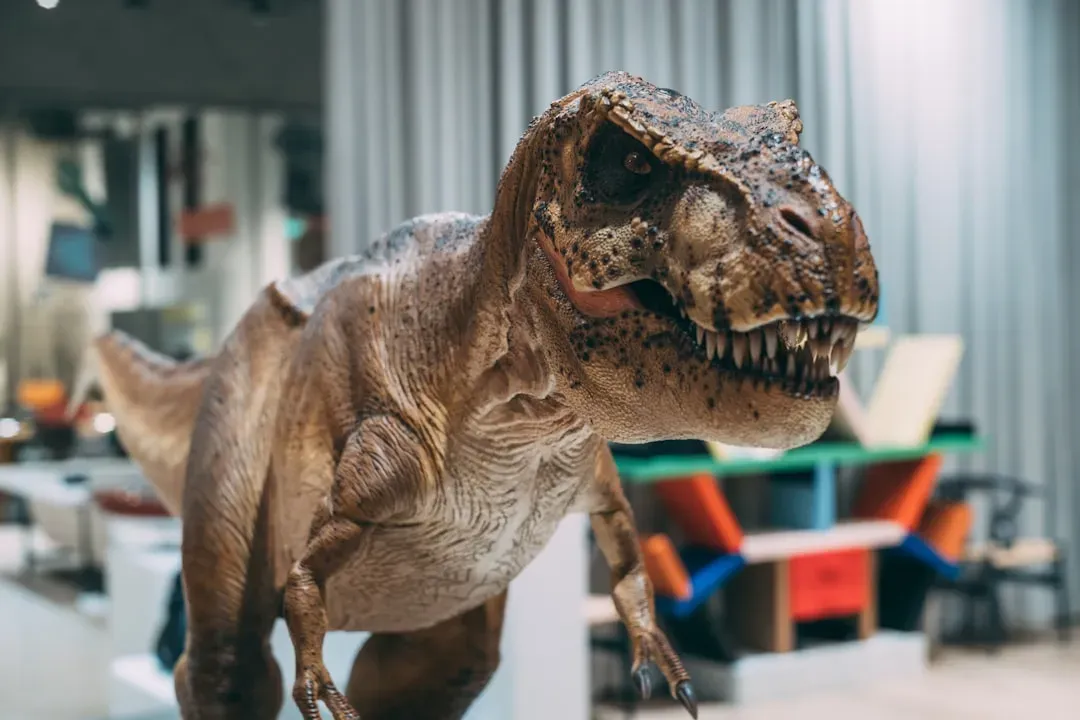
The fairest way to ask if T. rex was “dumb” is to compare it with similar dinosaurs, especially other large theropods. When scientists estimate brain-to-body ratios across these meat-eaters, T. rex generally falls somewhere in the middle or upper-middle range. It is not at the top, but it is not scraping the bottom either. Some smaller theropods, including the ancestors of birds, appear to have had proportionally larger and more complex brains.
Those more birdlike predators probably had more flexible behavior and maybe more problem-solving ability, a bit like how a crow today can figure out clever solutions while a crocodile tends to rely more on instinct and ambush. But that still does not turn T. rex into a mental lightweight. It was roughly about as intelligent as a successful large predator had to be, in the same way a lion is not as clever as a raven but is still very good at being a lion.
Behavior Clues: Hunting, Scavenging, Or Something In Between
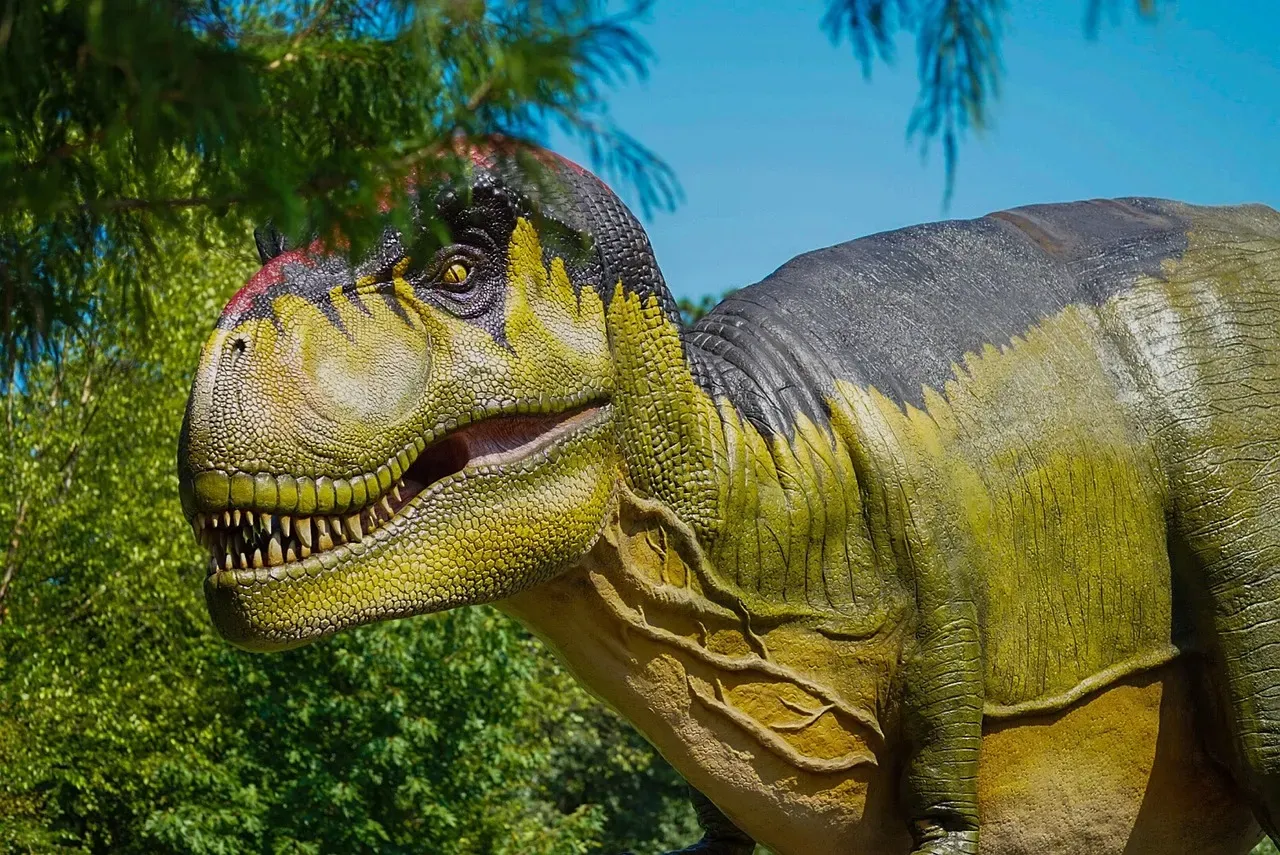
Another way we can peek into T. rex’s mind is by asking how it lived. The old argument claimed that because T. rex may have scavenged, it must have been clumsy or too dull to hunt. That idea has not aged well. Evidence such as healed bite marks on hadrosaur bones suggests T. rex bit living animals that later survived, which strongly supports active hunting. It almost certainly scavenged too, but that actually makes it more adaptable, not more foolish.
Think about modern predators: hyenas and lions will scavenge when the opportunity is there, and nobody labels them stupid for doing it. T. rex, with its strong jaws, refined senses, and impressive mobility for such a huge body, probably used whatever strategy worked at the time. That kind of behavioral flexibility is a quiet sign of competence, even if it does not sound as glamorous as mysterious pack tactics or complex planning that some people like to imagine.
Social Or Solitary: Did T. Rex Need A Big Brain For Group Life?
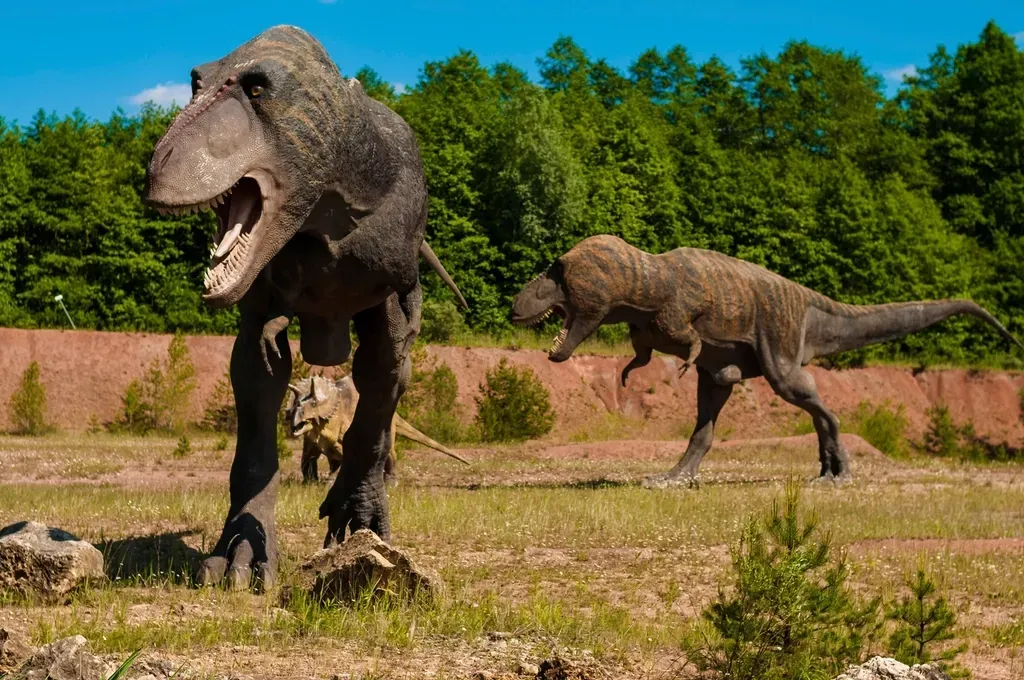
One of the hottest questions about dinosaur intelligence is whether any of them lived truly social lives that required higher-level thinking. There are hints that some tyrannosaur species may have moved in groups at least occasionally, based on trackways and fossil bonebeds with multiple individuals. If those interpretations are right for T. rex or its close relatives, it would suggest some level of social behavior beyond just bumping into each other at feeding sites.
Even then, there is no solid proof T. rex had the kind of complex social structures you see in wolves or dolphins today. Its intelligence was probably more about reading immediate cues: recognizing rivals, responding to threats, finding mates, and avoiding getting injured in fights. That still demands a decent amount of behavioral flexibility. It is one thing to be a mindless eating machine; it is another to navigate dominance, territory, and potential cooperation with your own kind without constantly getting yourself killed.
Measuring Dinosaur Smarts: A Flawed Game From The Start
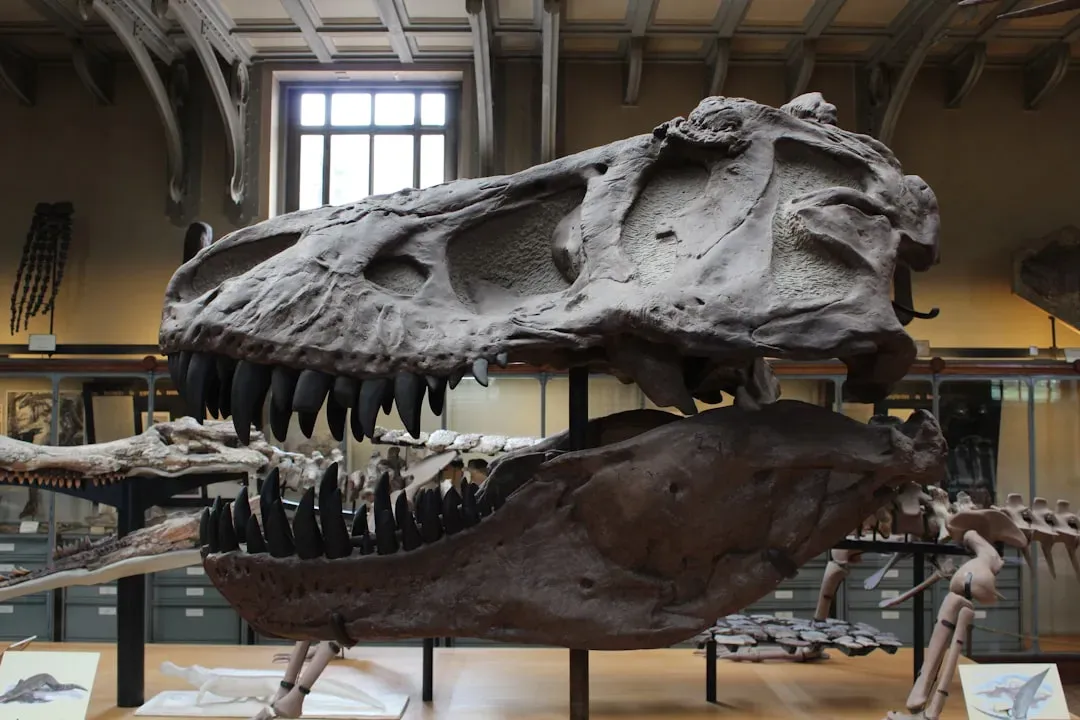
One uncomfortable truth is that our tools for measuring dinosaur intelligence are pretty crude. Scientists often use a measure called an encephalization quotient, which compares brain size to what you would expect for an animal of that body mass. It gives a rough sense of how “brainy” a species might be. But this metric was designed mostly for mammals and does not translate cleanly to reptiles and birds, let alone their distant dinosaur ancestors.
Even among modern animals, brain size does not fully predict behavior. Some species with small brains show surprisingly complex social lives or clever survival tricks. Ancient dinosaurs are even harder to pin down, because we cannot see them solve problems or react to challenges directly. All we have are bones, imprints of brain cavities, rare potential trackways, and educated guesses. Labeling any dinosaur “dumbest” based on that thin evidence is more about our ego than about proper science.
The Real Dummies: Our Obsession With Ranking Prehistoric Minds
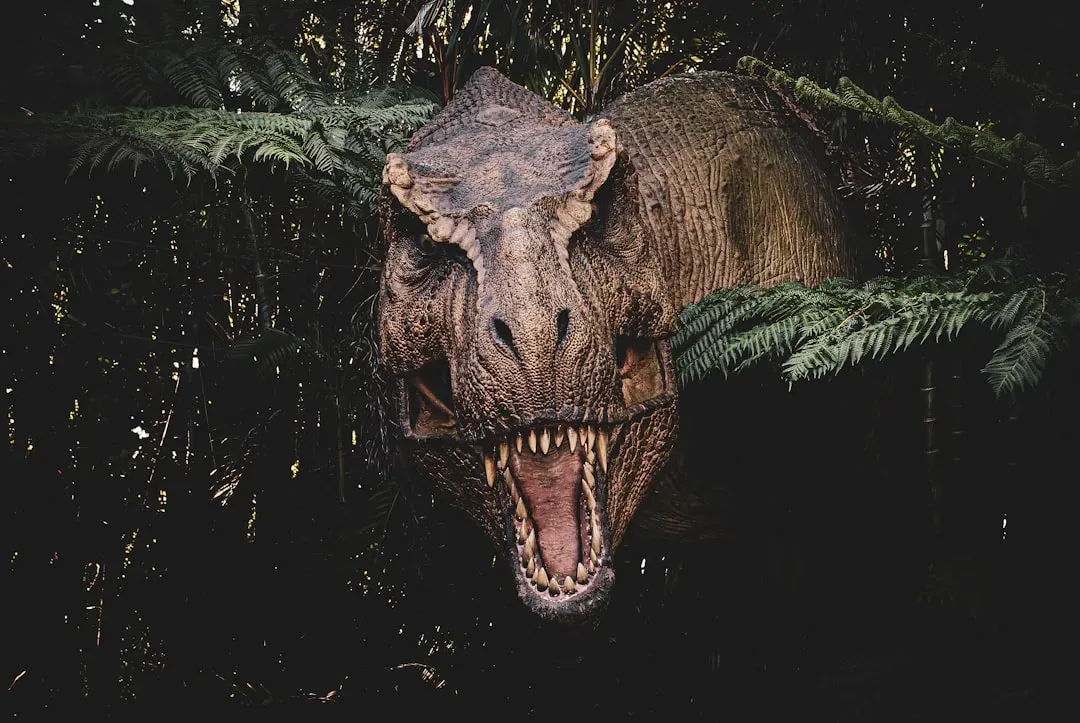
There is something very human in our urge to rank things: smartest, dumbest, biggest, fastest. It makes for fun headlines and easy comparisons, but it usually oversimplifies the messy reality of evolution. Dinosaurs did not evolve to impress our intelligence tests; they evolved to survive their own worlds. T. rex succeeded spectacularly in that game, dominating its ecosystem for millions of years in the Late Cretaceous. That track record alone should make us hesitate before laughing too loudly at its brain.
When you step back, the whole idea of mocking T. rex for supposedly being stupid says more about us than about it. We want mental superiority to feel like the ultimate measure of worth, even though natural selection only cares whether your particular set of traits works. For T. rex, power, senses, and fitting neatly into its role as a top predator were what mattered. The dinosaur did not need to compose music or plan infrastructure; it just needed to eat, mate, and not die, and it did that very well.
So Was T. ? An Opinionated Verdict
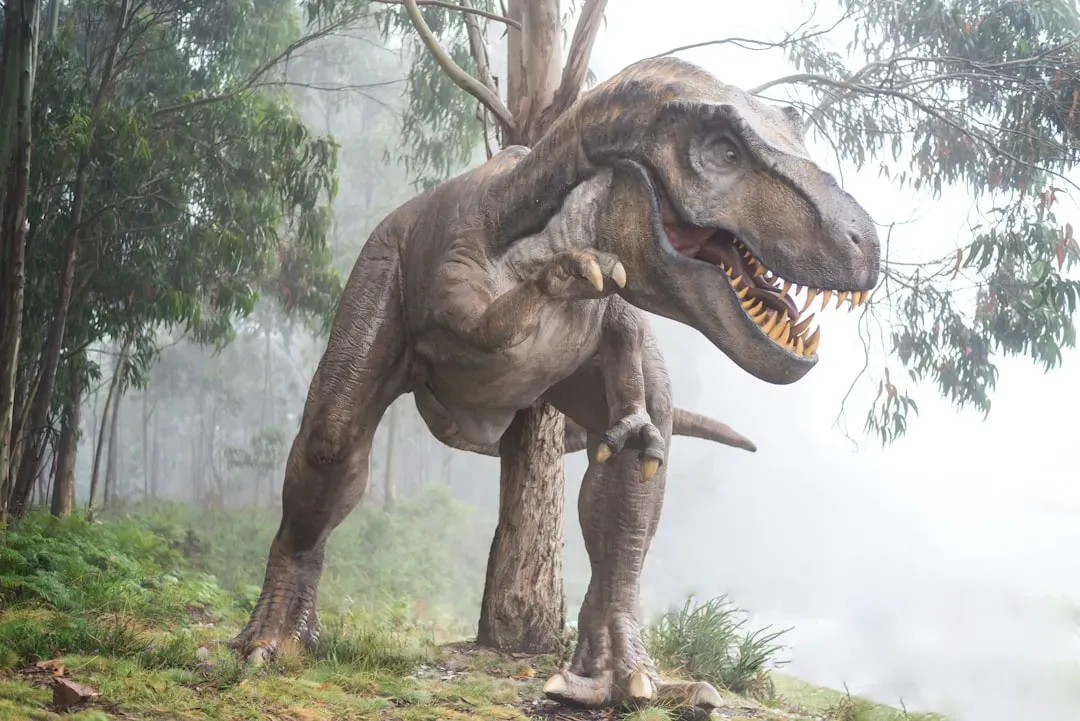
If you are waiting for a dramatic reveal that T. rex was secretly a misunderstood genius, that is not where the evidence points. It was probably not on the mental level of the brightest birdlike dinosaurs, and it certainly was not solving puzzles or using tools. In my view, though, calling it the dumbest dinosaur is like calling a shark unintelligent because it cannot play chess. The insult completely misses the point of what that animal is built to do.
Based on what we know now, T. rex looks like a solidly competent predator with good senses, adequate problem-solving for its lifestyle, and maybe some modest social abilities, not some prehistoric buffoon. It was smart enough to become and remain one of the apex carnivores of its world, which is all the proof that really matters. So if there is a real “dumb” move here, it is ours: clinging to the cartoon image of a stupid T. rex instead of appreciating how finely tuned it actually was. When you picture that giant skull and those bone-crushing jaws, do you really still think the brain behind them was a joke?