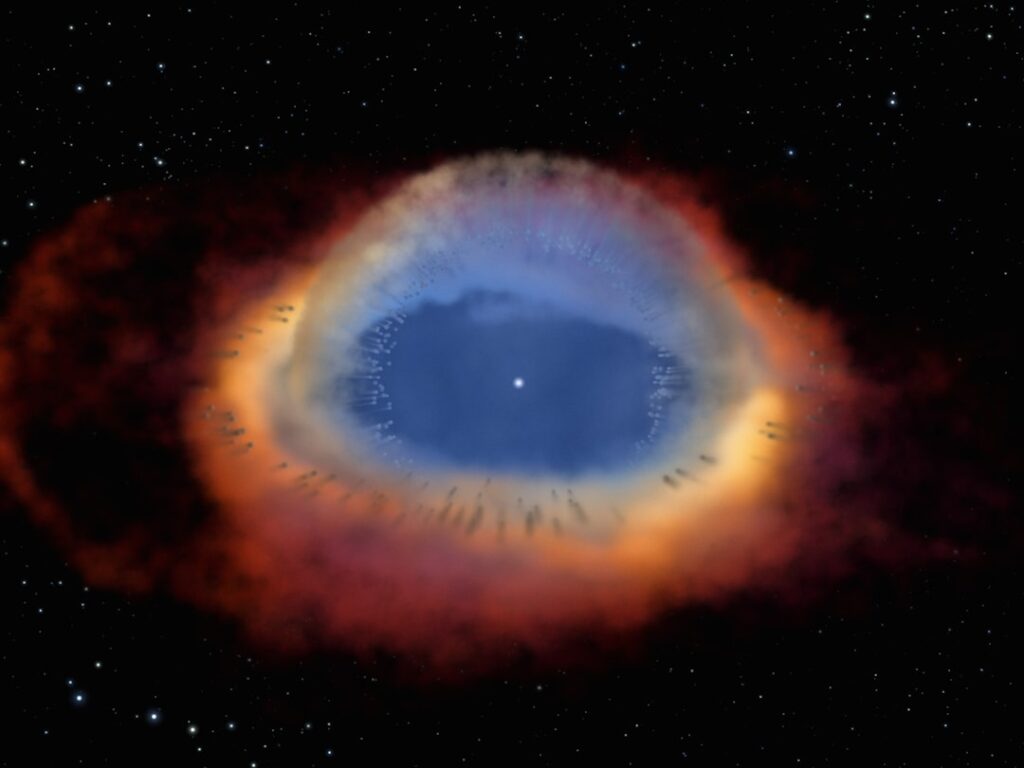
650 light-years away in the constellation Aquarius, the Helix Nebula unfolds the dramatic end of a sun-like star in a breathtaking new infrared image from the James Webb Space Telescope.
Iconic Nebula Sharpens in Infrared Light
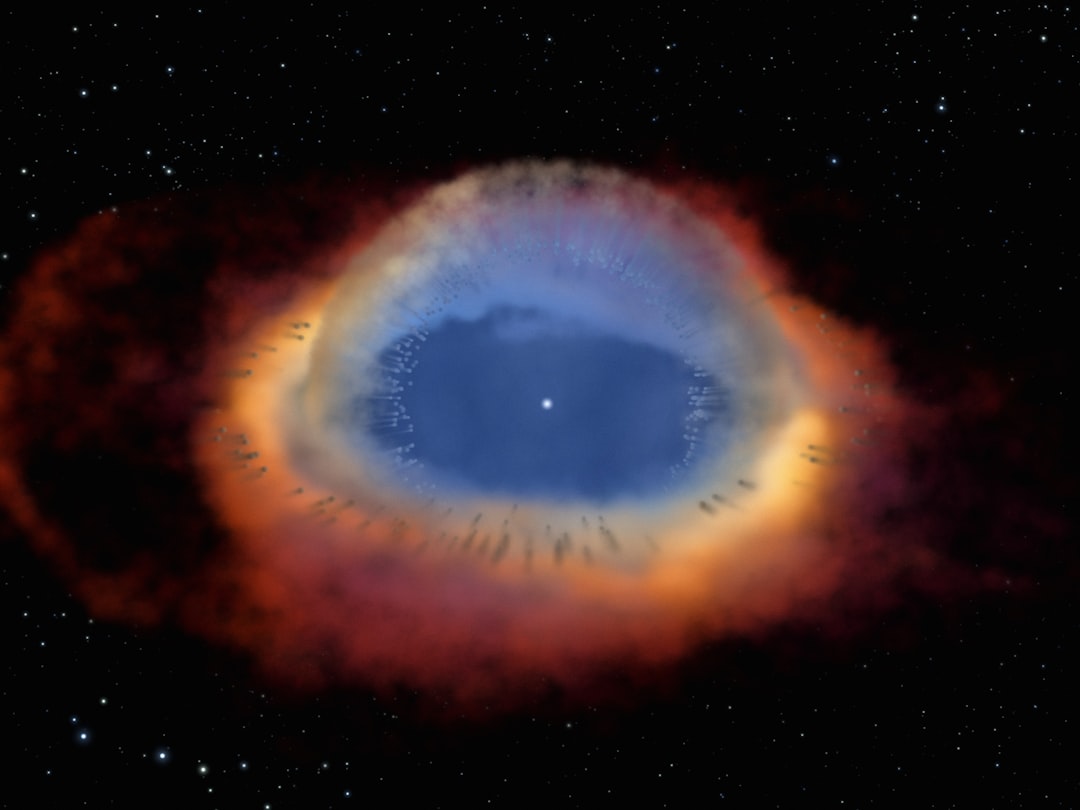
Iconic Nebula Sharpens in Infrared Light (Image Credits: Unsplash)
Astronomers first spotted the Helix Nebula in the early 1800s. Its bold ring-like structure quickly earned it fame as one of the sky’s most recognizable planetary nebulae.
Ground-based and space telescopes studied it for decades. The James Webb Space Telescope elevated those efforts with unprecedented clarity. This NIRCam image zooms into a small inner section, revealing details invisible before. Fierce stellar winds shaped intricate features around the nebula’s core.
Pillars resembling comets with extended tails line the expanding gas shell’s edge. Hot gas outflows collided with older, cooler material shed earlier by the star. Those interactions carved the nebula’s textured landscape.
Forces Shaping the Stellar Remnant
A white dwarf anchors the Helix Nebula’s heart, though it falls outside this close-up frame. The star’s exposed core blasts intense ultraviolet radiation outward. Blistering winds from this dying remnant pierced surrounding dust and gas shells.
Those collisions formed thousands of glowing knots and streamers. Astronomers now see how fast-moving material interacts with slower, prior ejections. The process mirrors what our Sun may undergo billions of years from now. Planetary nebulae like this mark the transition from stellar life to cosmic recycling.
Webb’s resolution brought these dynamics into full view. Earlier Hubble images showed a hazy glow. Infrared observations exposed the sharp, structured chaos within.
Colors Map a Gradient of Heat and Chemistry
Temperature and composition dictate the image’s vivid palette. Blue hues mark the hottest, ionized gas nearest the center. Ultraviolet energy from the white dwarf energized those regions.
Yellow tones appear farther out, where hydrogen atoms linked into molecules. Reddish edges signal the coolest zones, with thinning gas and emerging dust. This progression traces the shell’s outward expansion.
- Blue: Scorching hot, UV-illuminated gas
- Yellow: Cooling zones rich in molecular hydrogen
- Red: Coldest material fostering dust and complex molecules
- Comet-like pillars: Wind-sculpted knots at the inner boundary
- White dwarf influence: Radiation driving the chemical shifts
Cosmic Cycle from Death to Renewal
The Helix Nebula recycles a star’s remnants into space. Expelled layers enrich the interstellar medium with raw ingredients. Future stars and planets draw from this material.
Webb’s observations deepened insights into planet formation. Protected dust pockets allow complex molecules to emerge. Such environments echo early solar system conditions. The nebula stands as a laboratory for stellar evolution.
Key Takeaways
- Webb’s NIRCam delivered the sharpest infrared view of the Helix Nebula’s inner structure to date.
- Stellar winds created comet-like knots by slamming into older gas shells.
- Color gradients reveal shifts from hot ionized gas to cool molecular regions, seeding new worlds.
This vivid portrait reminds observers of the universe’s enduring renewal. The death of one star fuels countless others. What strikes you most about the Helix Nebula’s intricate beauty? Tell us in the comments.