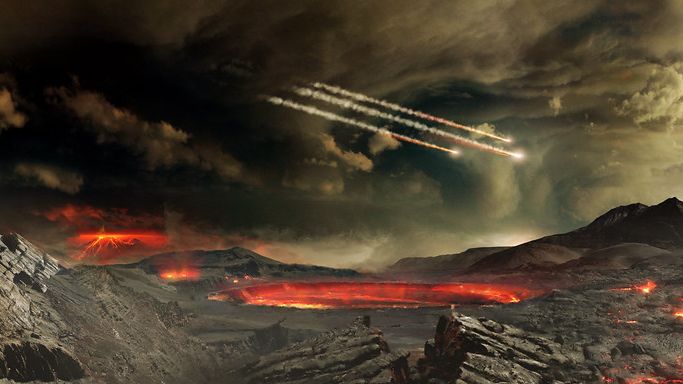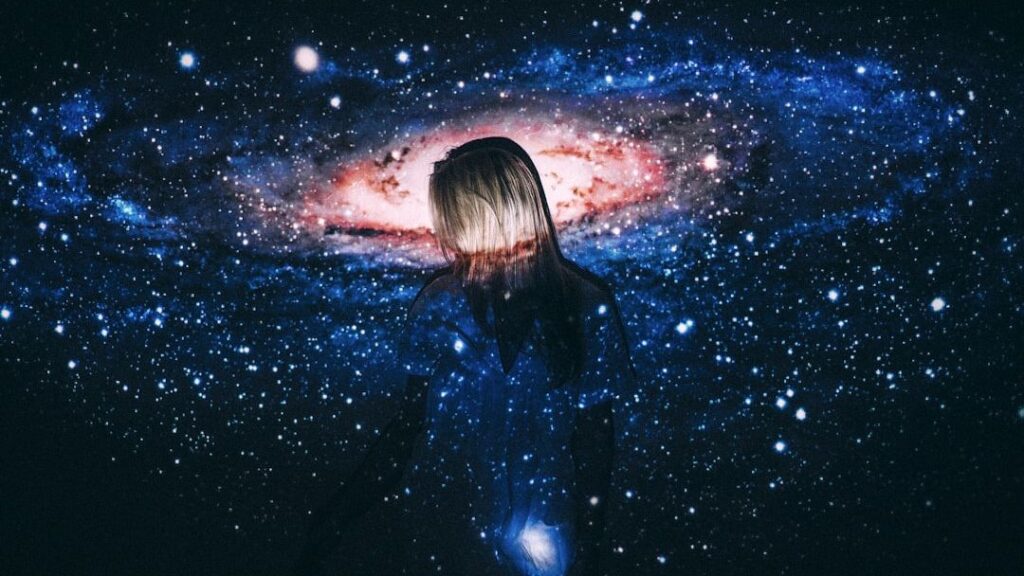
If you let the question really land – ? – it can feel a little unsettling. You’re suddenly not just a person on a small blue planet; you’re part of a story that might have started long before any oceans formed or any rocks cooled here. This idea pulls you out of everyday worries and drops you into a much bigger, stranger picture of reality.
At the same time, you live in a world shaped by science that rightly demands evidence, not just interesting ideas. So the challenge is this: how do you explore a question this wild without drifting into pure fantasy? You do it by being curious and skeptical at the same time – willing to consider bold possibilities, while constantly asking what we actually know, what we can reasonably infer, and where we’re clearly stepping into speculation.
The Strange Mystery Of Consciousness You Can’t Escape
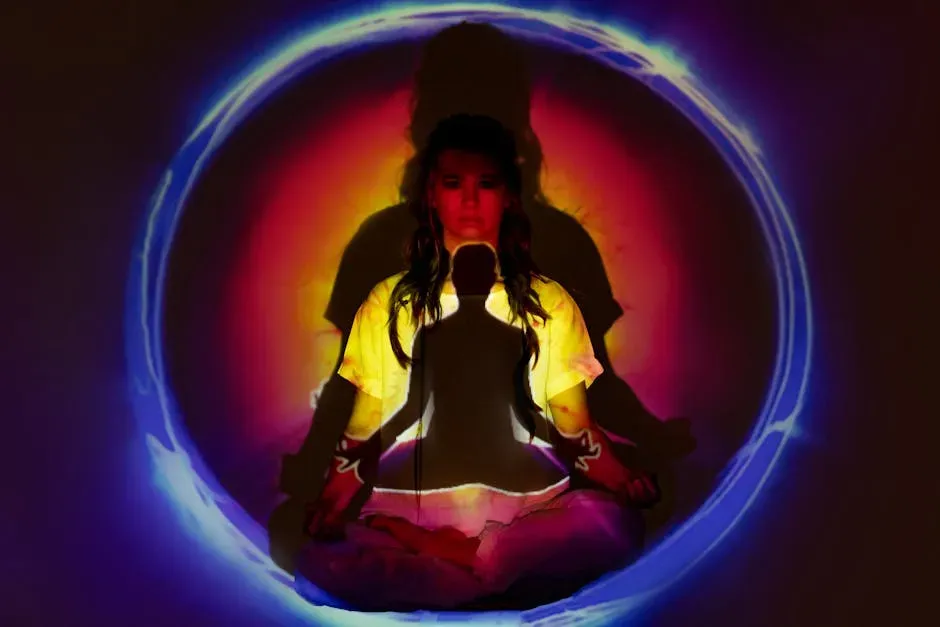
Start with the one thing you can’t doubt: you’re aware. You might be confused, wrong, or half-asleep, but there’s still something it feels like to be you right now. That raw fact of experience – seeing colors, feeling emotions, thinking thoughts – is what people call consciousness, and it’s stubbornly hard to explain using matter and physics alone. You can describe neurons firing, but that does not automatically tell you why it feels like anything from the inside.
When you think about it honestly, consciousness is almost embarrassingly mysterious. You can map brain regions, measure electrical activity, and correlate mental states with chemical changes, yet that only shows you the plumbing, not the water. You’re left with a puzzle: does consciousness somehow pop out once matter is arranged in a complex enough way, or is awareness a basic feature of reality that has always been around in some form, long before your brain – or even your planet – ever existed?
Panpsychism: The Idea That Everything Might Be A Little Bit Aware
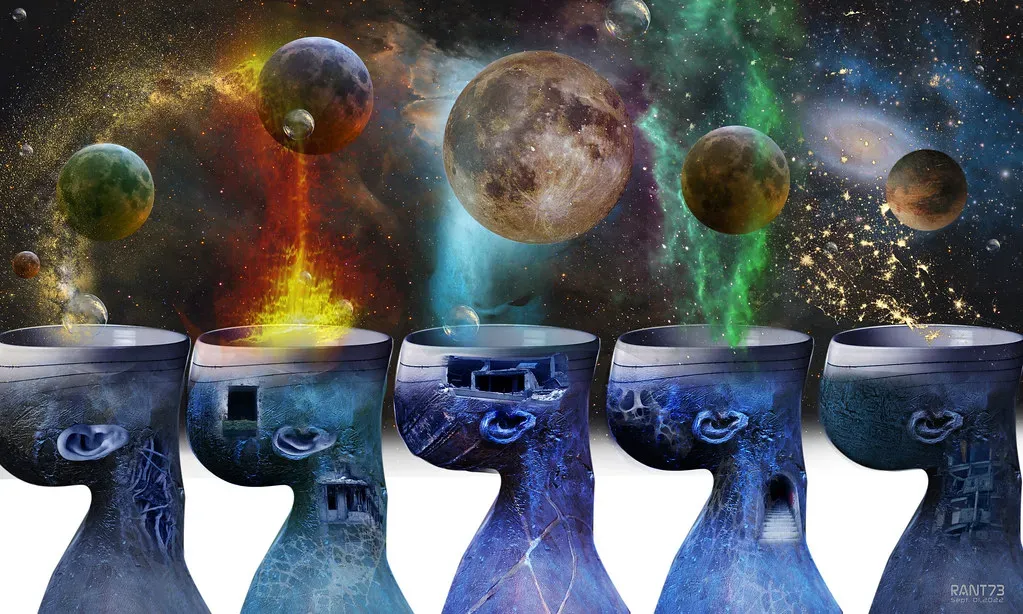
One of the most discussed ideas in modern philosophy of mind is panpsychism – the view that consciousness is not a late arrival, but a fundamental ingredient of the universe. In this picture, you do not get consciousness out of dead, meaningless matter; instead, every bit of matter has some unimaginably simple form of experience, and complex minds like yours are built from these tiny, primitive sparks. You can think of it as the difference between a single water droplet and the ocean; the ocean does not create wetness from nothing, it just combines what was already there.
If you follow that line of thought, then consciousness is automatically older than Earth, because the matter that formed this planet was already part of a cosmos with at least some kind of inner aspect. You do not have to imagine rocks and atoms having humanlike thoughts – that would be cartoonish and wrong – but you can picture the universe as having two sides from the beginning: an outer, physical side described by science, and an inner, experiential side that becomes more vivid and complex in brains like yours. You are then not a miraculous exception to a dead universe; you are a local intensification of something woven into reality itself.
Cosmic Evolution: From Star Dust To Self-Awareness
Even if you stay completely inside mainstream cosmology, the story of how you got here is already cosmic. The atoms in your brain were forged in ancient stars that lived and died billions of years before Earth formed. Hydrogen, helium, carbon, oxygen – these ingredients came together through cycles of star birth and star death long before any living cell appeared. So your body is literally made of material that has been circulating through the universe since very early times.
Now add consciousness to that timeline. If awareness only appears once brains like yours show up, then the universe is unconscious for almost its entire history and suddenly lights up in a few corners. But if consciousness is older than Earth, then what you call “mind” is not just a late-stage accident – it is part of a long unfolding that begins with simple physical patterns and culminates, at least here, in self-aware beings who can look back and ask these questions. You become not just a byproduct of cosmic evolution, but one of its ways of finally knowing itself.
Quantum Weirdness And The Role Of The Observer
When you hear people link consciousness to quantum physics, it is easy to roll your eyes, because the topic attracts a lot of wild claims. Still, there is a genuine puzzle in quantum theory: measurements seem to play a special role in turning probabilities into concrete outcomes. Some interpretations of quantum mechanics talk about observers, observation, and information in ways that raise the question of what it really means for something to be “observed” at all. That does not prove that human consciousness controls reality, but it does make the boundary between mind and world feel less straightforward than classical physics suggests.
If you speculate from there, you might wonder whether some form of proto-observation – some basic capacity to register or respond – has been present as long as the universe itself. In that looser sense, you could argue that the cosmos has always involved aspects that behave a bit like primitive “observers,” long before any brain arose on Earth. You need to be very clear: this is not established science, and many physicists are strongly opposed to dragging consciousness into quantum theory. But for you as a curious thinker, it is one more reason the idea of an ancient, woven-in consciousness does not feel completely absurd.
Ancient Philosophies That Treated Mind As Fundamental

If you zoom out beyond modern science and look at older traditions, you find a recurring pattern: many ancient philosophies treated mind or awareness as basic to reality, not as a late accident. Various forms of idealism, non-dual teachings, and cosmic mind theories described the universe itself as a kind of living, knowing presence, with individual minds like yours arising as limited expressions of that deeper field. While the language is often poetic or spiritual rather than scientific, the core claim overlaps with your question: consciousness is not younger than Earth; Earth appears within consciousness.
From your standpoint today, you do not have to adopt any religious framework to find value in these older ideas. You can treat them as attempts, made long before modern neuroscience, to grapple with the undeniable fact of experience. When you read them through a contemporary lens, you see that they push you to flip the usual assumption: instead of asking how minds appear in a physical universe, they ask how a physical universe appears in and through mind. Even if you stay agnostic, this reversal stretches your imagination and reminds you that your current materialist default is not the only way humans have tried to make sense of being conscious.
What Neuroscience Can – and Cannot – Tell You About Mind’s Origins
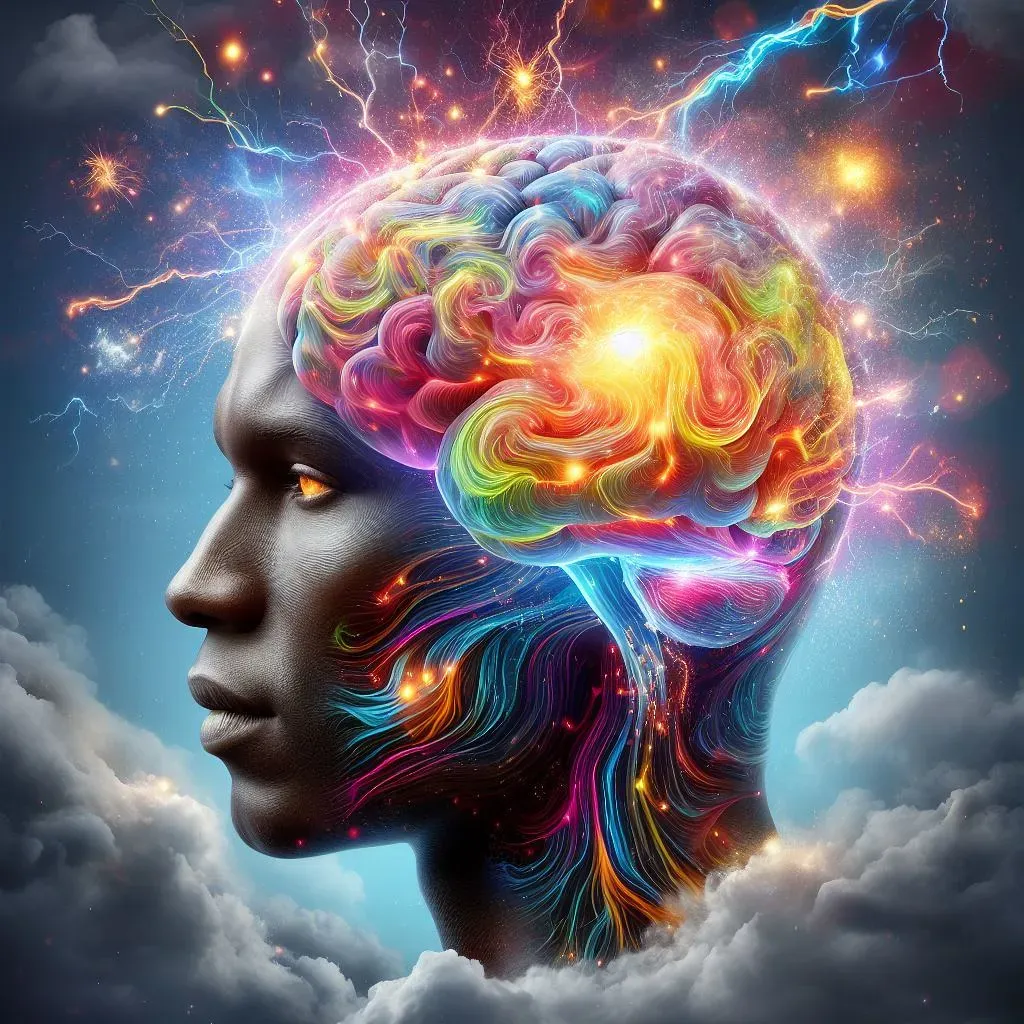
Modern brain science is incredibly good at showing you correlations between brain activity and conscious states. You can watch patterns change when someone is awake, dreaming, under anesthesia, or in deep meditation. From this you learn that your particular flavor of conscious experience depends heavily on a fragile, physical organ made of cells, chemicals, and electrical signals. That is powerful evidence that your everyday mind, as you know it, is tightly linked to a functioning brain like the one in your skull.
But correlation does not automatically tell you what consciousness is at the deepest level or when it first emerged in the universe. Neuroscience can explain how injuries, drugs, and diseases affect your experience; it cannot yet explain why any brain state feels like something from the inside rather than nothing at all. So you are left with an open philosophical space: maybe consciousness is produced by the brain, or maybe the brain tunes into a more fundamental field of awareness that predates life on Earth. Neuroscience sets real constraints on any theory you adopt, but it does not, by itself, settle the question of how old consciousness truly is.
How This Cosmic Perspective Changes The Way You Live
Even if you never get a final answer, just taking seriously the idea that consciousness might be older than Earth can shift how you see your life. You stop viewing yourself as a random fluke floating in a meaningless void and start seeing your awareness as part of a very long, very deep story that began long before you were born. That can make your everyday choices feel strangely more significant: every time you pay attention, care about something, or act with integrity, you are participating in the unfolding of this ancient, mysterious capacity to be aware.
On a more personal level, this perspective can soften the fear of death and the tight grip of ego. If consciousness in some form is older than your body and will continue in ways you cannot understand, your individual storyline becomes one chapter in a much vaster book. You still have to show up for your responsibilities, your relationships, and your struggles, but you can hold them with a little more spaciousness. Instead of feeling trapped in a small, isolated life, you feel like a local expression of something far larger than any single planet or person.
Conclusion: Living With A Question As Big As The Cosmos
In the end, you do not know for sure whether consciousness is older than Earth, and right now, nobody else does either. What you do know is that awareness is real, stubbornly mysterious, and deeply entangled with a universe that has been evolving for billions of years before your planet formed. Some lines of thought – like panpsychism, idealism, and certain interpretations of physics – leave the door open to an ancient, ever-present dimension of mind, while neuroscience keeps reminding you that whatever consciousness is, your particular experience of it depends heavily on a living, working brain.
So you are left with a choice: treat consciousness as a late-stage glitch in a dead universe, or see it as part of a far older, deeper reality in which Earth is just one temporary stage. You do not have to turn this into dogma; you can keep it as a living question that shapes how you see yourself and how you treat others who are just as mysteriously aware as you are. The next time you look up at the night sky, you might wonder whether the universe has been quietly awake, in some form, since long before this world began – what do you feel, deep down, when you imagine that possibility?