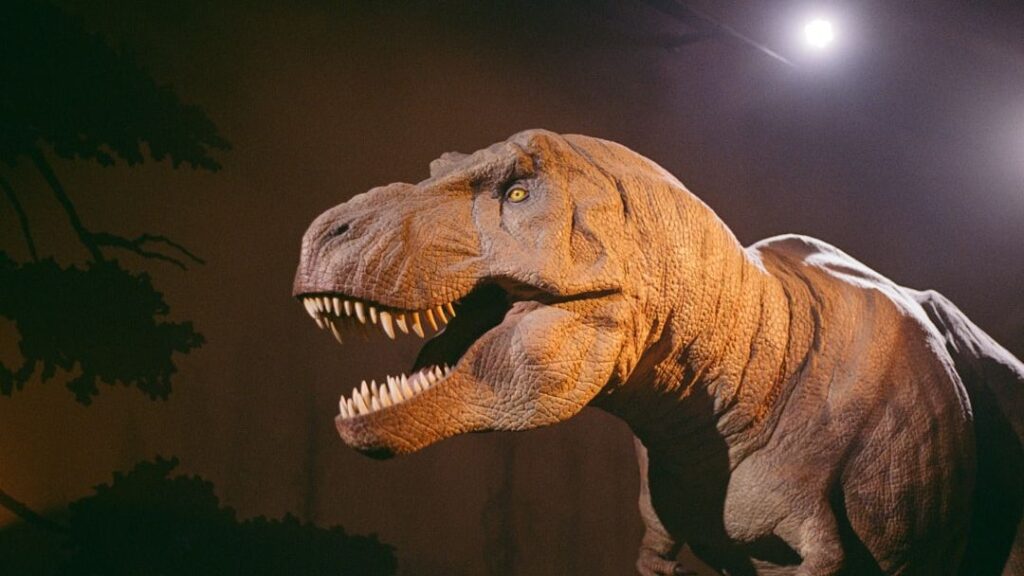
If your mental picture of Tyrannosaurus rex is a naked, gray-green, crocodile-skinned monster from a 1990s movie poster, you are probably way off. In the last couple of decades, paleontologists have completely reshaped our understanding of how this animal looked, moved, and even aged, and the real creature is stranger and more nuanced than the pop-culture version. The result is a T. rex that feels less like a movie villain and more like a living, breathing animal you could almost imagine watching from a safe distance.
That gap between the fossil-based reality and the Hollywood myth is where things get really fun. Once you start digging into the evidence – bones, microscopic structures, comparisons with living birds and crocodiles – you realize how many details of T. rex’s appearance are still being argued over. Was it fluffy as a teen? Did it have lips? How jiggly was all that flesh? Let’s walk through what we actually know, where scientists disagree, and why the true picture of T. rex is both more grounded and way cooler than the monster in your head.
The Skin: Not a Giant Scaled Crocodile, Not a Giant Feather Pillow Either
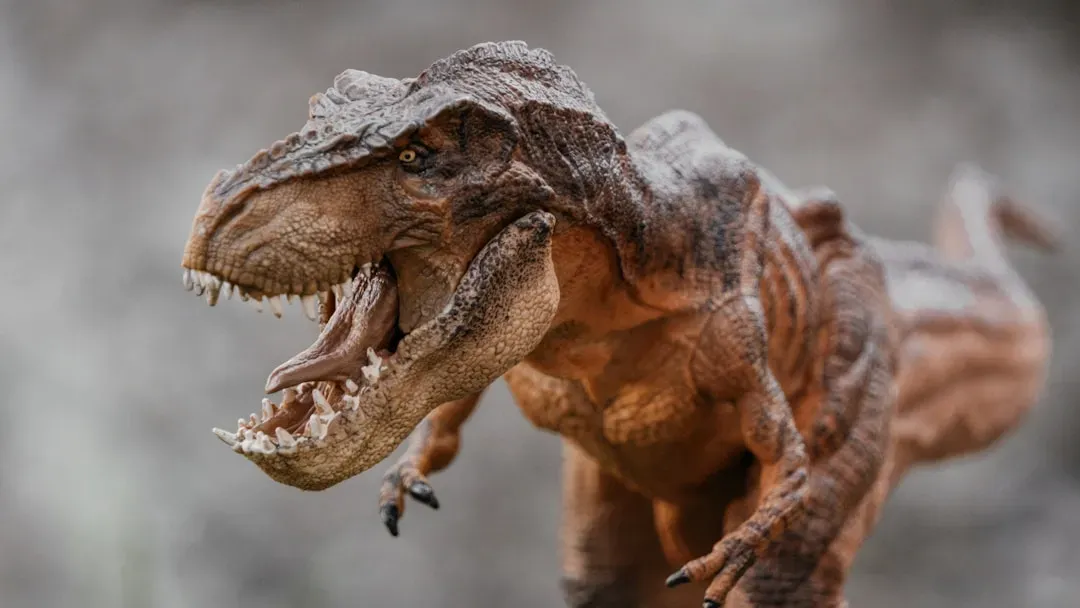
The classic image of T. rex is that of a smooth, pebbly, crocodile-like hide stretched over bulging muscles, usually colored some dull green or brown. Fossilized skin impressions from T. rex and close relatives do show patches of small, non-overlapping scales in areas like the tail and parts of the neck and pelvis, which tells us these animals were not covered head to toe in big plate-like armor. At the same time, these impressions are only from certain parts of the body, and they represent snapshots, not complete outfits, so the story is more complicated than “fully scaled” or “fully feathered.”
Evidence from earlier tyrannosauroids – smaller, more primitive cousins of T. rex – shows clear signs of filament-like feathers, especially in species from cooler climates. That suggests that some level of feathery covering was part of the family toolkit, even if adult T. rex in warm Late Cretaceous North America may have been more sparsely feathered or mostly scaly. Your mental image should probably be of a mostly scaly adult with at least some textured variation, not a uniform reptile suit and not a giant walking feather duster. In short, its skin likely looked like a patchwork of different surfaces, like a bird’s scaly legs attached to a more complex body covering.
The Face: Lips, Not a Permanent Chainsaw Grin
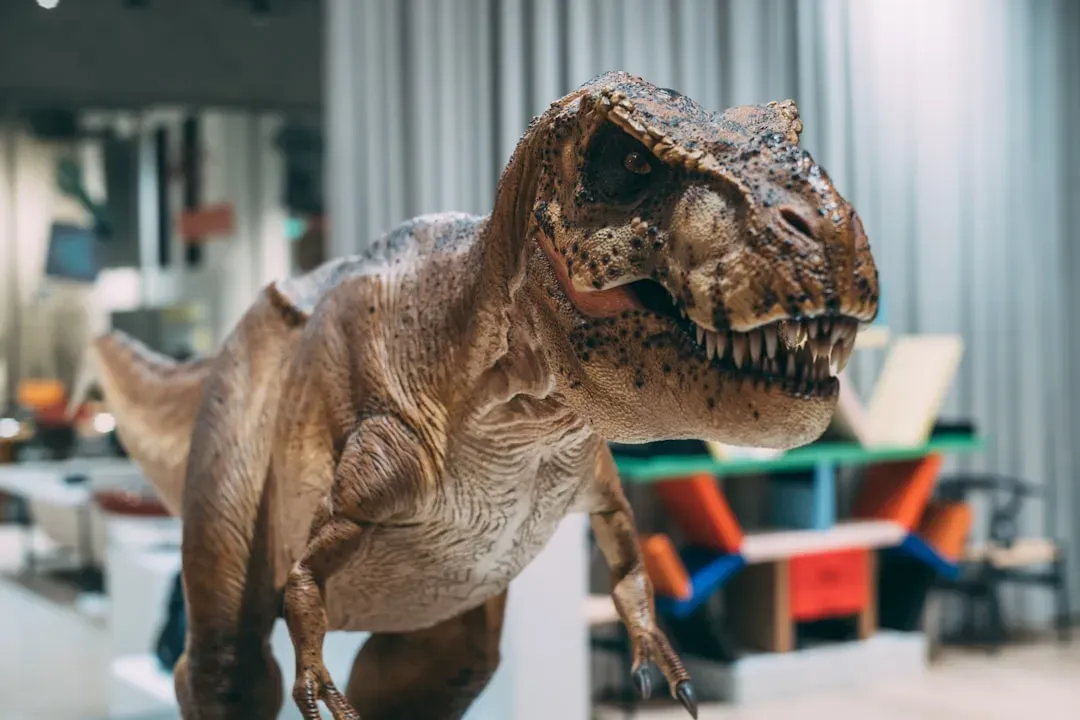
One of the most stubborn movie myths is the permanently exposed teeth: that big, toothy grin even when the jaw is totally closed. In reality, there is a strong anatomical case that T. rex had some sort of soft-tissue lips covering its teeth when the mouth was shut, much like many modern lizards. Studies comparing tooth size, wear patterns, and how teeth interact with surrounding bone in living reptiles suggest that constantly exposed teeth would dry out and crack, which is bad news if your survival strategy is basically “bite things very hard.”
That does not mean T. rex had plump, mammal-style lips that could pout, but more likely a scaly, muscular sheath that sealed the mouth and hid the bulk of the teeth at rest. This single detail dramatically changes the vibe of the animal: instead of a constantly screaming horror, you get a predator that, when relaxed, might have looked more neutral, even oddly birdlike from some angles. The monstrous grin that terrified generations is probably more of a cinematic flourish than a reflection of real anatomy, and once you accept that, the entire face of T. rex starts to feel more like a living predator and less like a Halloween mask.
The Eyes and Head: Forward-Facing Vision and A Surprisingly Expressive Skull
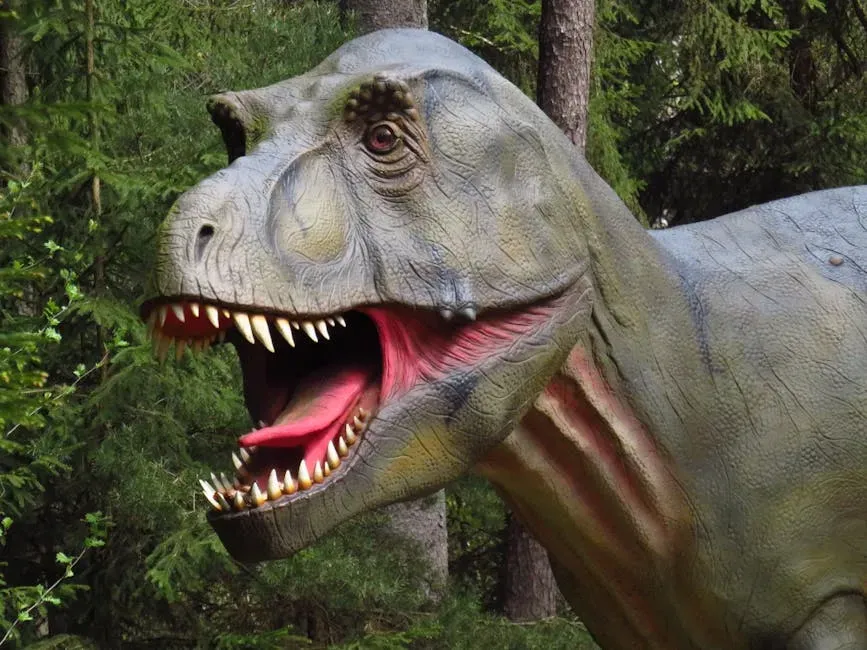
If you picture T. rex with beady little side-facing eyes like a cow or a lizard, that part is also off. The eye sockets in the skull and reconstructions of muscle attachments show that T. rex had forward-facing eyes, giving it strong binocular vision and depth perception. That is something we associate with hunters like eagles and big cats, not big, clumsy scavengers. Its braincase also reveals large regions associated with sight and smell, supporting the idea that it was a high-powered sensory machine, not a mindless biting robot.
The skull itself was not just a rigid battering ram; it was a complex structure with joints and reinforced arches that allowed it to withstand and distribute enormous bite forces while still having some flexibility. Some parts of the head contained sinuses and hollow spaces that would have changed its shape subtly in life, softening the harsh edges we see in museum skulls. Add in keratinous coverings on the snout, scales, and possibly small display structures, and you get a head that likely had more texture and variation than the smooth, bone-colored props we are used to seeing. Emotionally, it might have read more like a gigantic, intense bird of prey than a blunt-force dinosaur stereotype.
The Arms: Not Useless, Just Misunderstood and Muscular
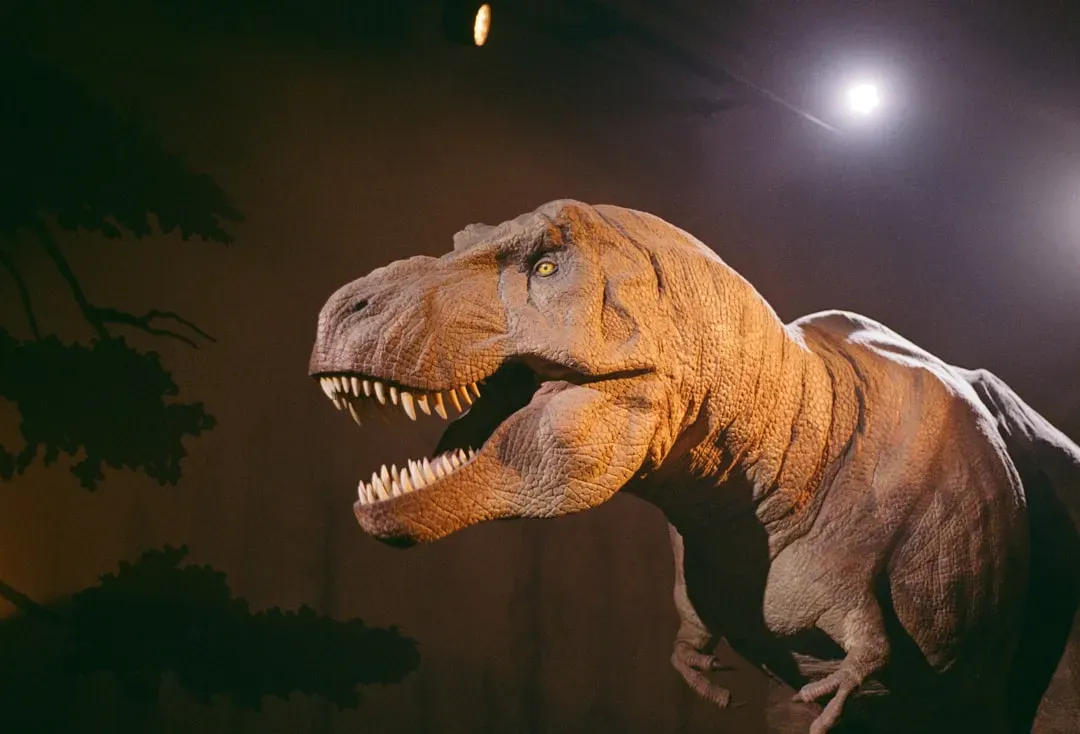
The running joke is that T. rex had “useless little arms,” good only for memes and self-deprecating T-shirt slogans. Anatomically, though, those arms were short but extremely robust, with strong muscle attachments and large claws. They were probably capable of exerting serious force at close range, more like powerful grappling hooks than withered leftovers. That mismatch between size and power is what makes them so visually strange: we see short and assume weak, but the bones tell a different story.
Functionally, the arms might have been used for holding struggling prey close, gripping a partner during mating, or helping the animal push itself up from a resting position. None of these roles require long reach; they require strength and control, which is exactly what the limbs were built for. So, while the arms looked comically small compared with the massive head and torso, they were almost certainly not the useless evolutionary joke we have made them into. If anything, the real T. rex arm story is less funny and more quietly impressive, like a compact power tool hidden on a construction vehicle.
The Body Shape: More Horizontal Athlete, Less Upright Monster
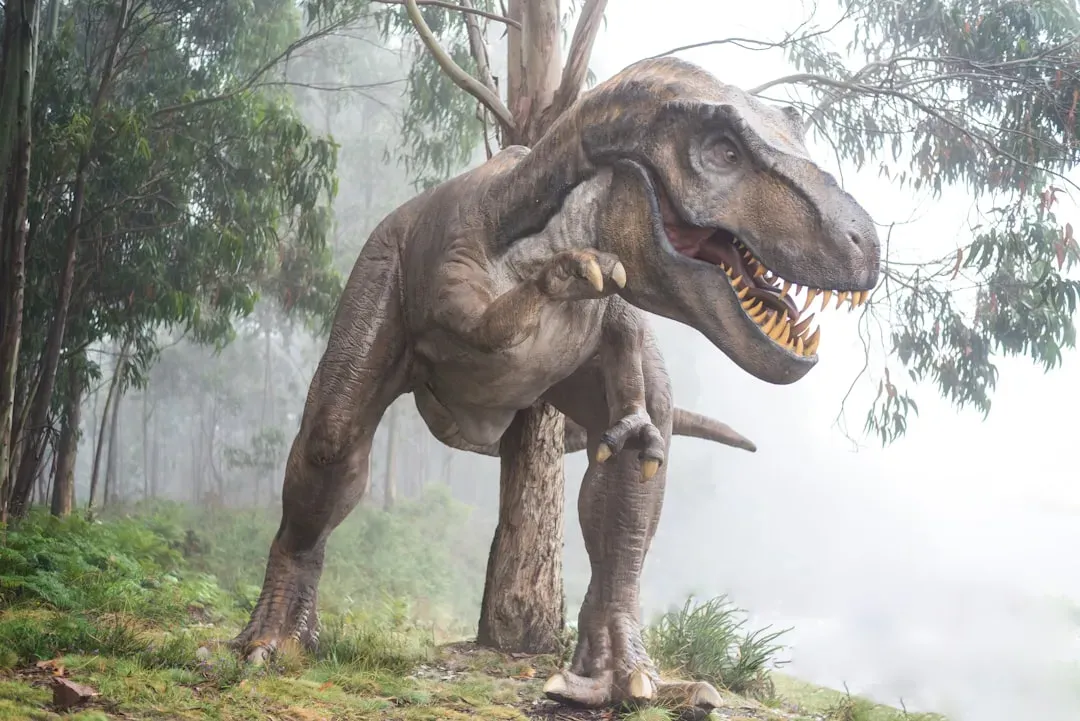
Old illustrations and early stop-motion movies often show T. rex standing almost upright, tail dragging along the ground like a giant kangaroo or an angry person in a costume. Modern biomechanical studies and trackway evidence have decisively overturned that image. The hips, leg joints, and balance of the skeleton show that T. rex carried its body in a more horizontal posture, with the tail held off the ground as a massive counterweight to the head. Think of a balancing pole used by a tightrope walker, not a limp appendage dragging in the dirt.
This posture turns T. rex from a clumsy, towering brute into more of a stretched-out, athletic predator. The torso was deep and muscular, the legs long and built for powerful, ground-covering strides rather than sprinting like a cheetah. Instead of an upright lizard-giant, the actual silhouette was closer to a monstrous, hyper-muscular bird with a long, stiff tail. If your inner picture still shows that upright, tail-dragging stance, you are essentially imagining a scientific relic that has been outdated for decades, like a medical diagram from a century ago.
The legs of T. rex are often imagined as lumbering stilts, suitable only for slow stomping and dramatic cinematic footfalls. In reality, the bones of the legs and feet show a careful balance between strength and speed, with adaptations for efficient walking and moderate running rather than top-end sprinting. T. rex was likely not the fastest thing in its ecosystem, but it did not need to be; its size, power, and endurance probably allowed it to dominate over relatively large areas without constant flat-out chases.
Footprints and biomechanical modeling suggest that while it could move faster than a human, it was not the lightning-fast terror sometimes depicted. Its power came from combining respectable speed, terrifying bite force, and a massive presence that few animals would risk challenging. The overall body, then, was that of a heavyweight predator built to control territory and win confrontations rather than dash-and-dodge acrobatics. That shift from sprinting movie monster to strategic, heavyweight hunter makes it feel more like a top-line athlete than an impossibly fast superhero.
The Texture and “Soft Parts”: Jowls, Folds, and Maybe Even a Bit of Fluff
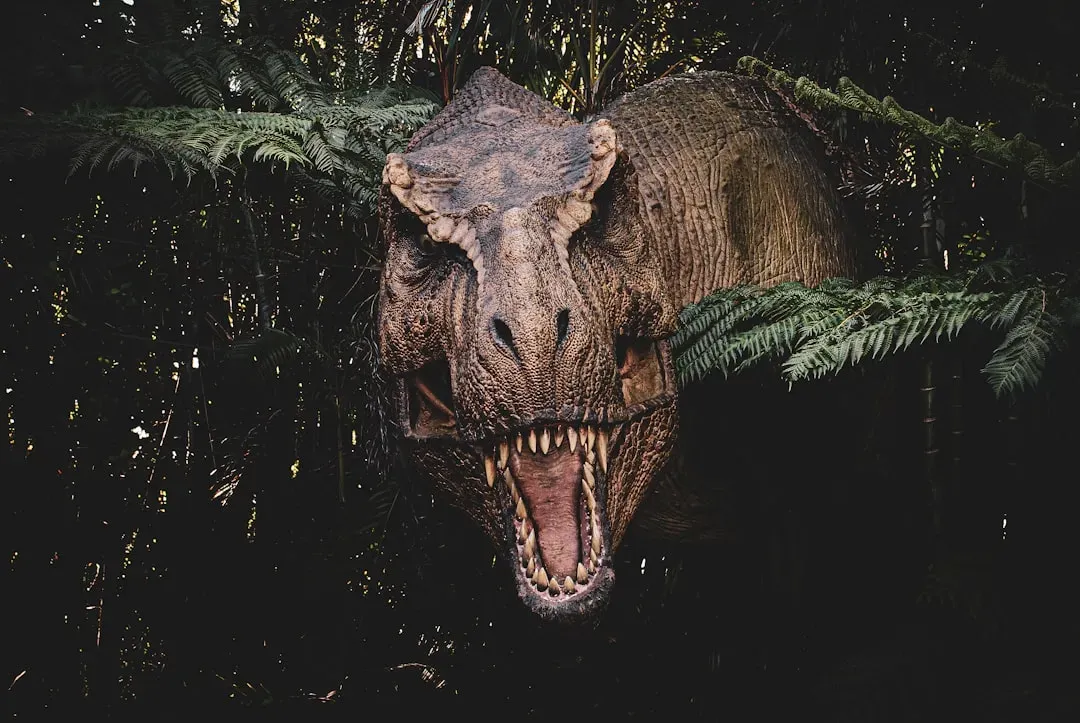
One of the biggest ways our mental image fails is that we imagine skeletons with skin painted over them, taut and smooth, like a rubber dinosaur toy. Real animals almost never look like that. They have fat pads, loose skin, wrinkles, scars, and odd little folds that catch the light in unexpected ways. T. rex would have had thick neck muscles and probably fleshy areas around the throat, similar to wattles, jowls, or dewlaps in some modern birds and reptiles. These soft parts would have softened the outline of the skull and neck, making it less bony and more organically bulky.
On top of that, there is a good chance that younger T. rexes had more feather-like filaments, especially when small, for insulation and maybe even a bit of visual display. As they grew into multi-ton adults, that insulating need may have decreased, leading to more exposed scale areas, particularly on the body and tail. The result is that there was no single texture covering the whole animal. Instead, think of a blend: smoother scales here, thicker pads there, maybe tufted or filamented patches in certain zones, like how a modern bird has bare legs, scaly feet, and fluffy feathers all on the same individual.
The Color: Not Just Gray, But Not a Rainbow Cartoon Either
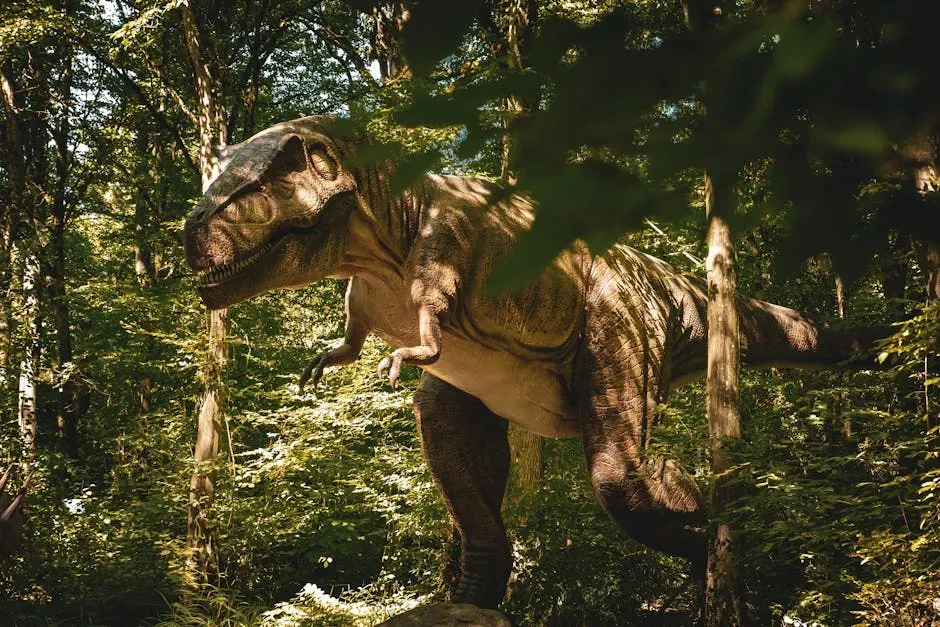
Color is where everyone wants a definitive answer and where nature stubbornly refuses to give us easy certainty. For a few feathered dinosaurs, pigment structures have been preserved, allowing rough color reconstructions, but for T. rex specifically, we do not yet have a clear pigment map. That means any specific color scheme you see in art – bright red head, tiger stripes, neon blue patches – is ultimately speculative. However, biology and ecology give us reasonable boundaries. A huge predator in a varied environment of forests, floodplains, and coastal areas is unlikely to be bright-white and glowing, and also unlikely to be a uniform slab of gray concrete.
Many large animals today use a mix of browns, tans, olives, and muted patterns to break up their outline, and it is reasonable to imagine T. rex following a similar logic. Subtle striping, mottling, or countershading (darker on top, lighter underneath) would make sense for a predator that sometimes needed to approach prey without being instantly obvious. There might also have been bolder patches of color in limited areas, especially if used for communication or display among members of its own species. So your mental image should probably shift from monotone gray monster to a more complex, earthy palette, detailed enough to look natural but not so vivid that it turns into a fantasy dragon.
The Age Factor: Cute, Gangly Teens Instead of Miniature Adults
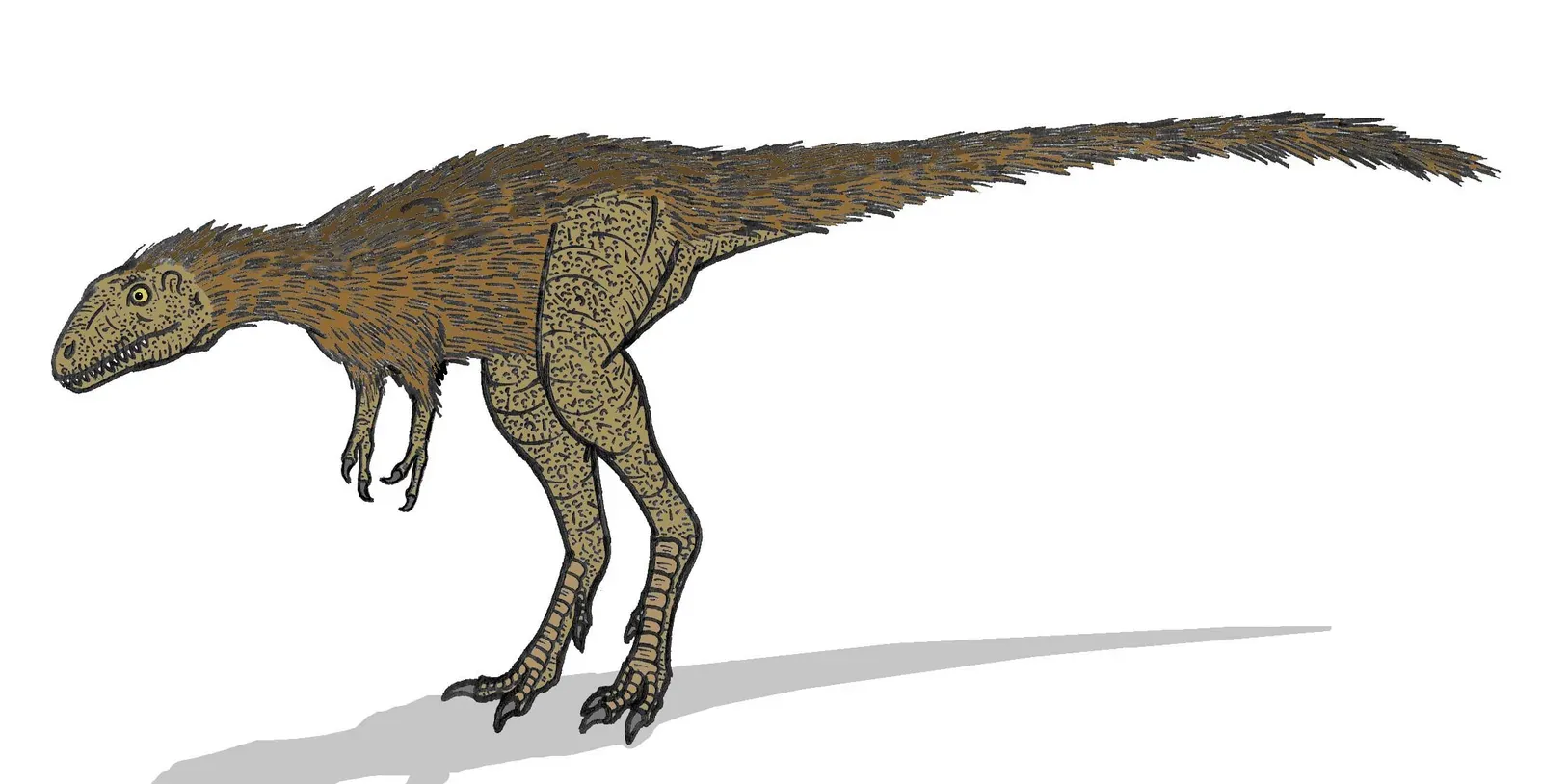
Another huge misconception is that baby and teenage T. rexes looked like tiny or slightly scaled-down versions of the adult. Fossils of juveniles show a very different body plan: slimmer skulls, longer legs in proportion to body size, and an overall more lightly built frame. Young individuals were probably faster and more agile, filling a different ecological niche than the hulking adults. Rather than being mini-tanks, they were more like long-legged, dangerous teenagers sprinting around the ecosystem.
This means that the iconic T. rex “look” is actually just the final chapter of a long growth story. Over years, a juvenile would slowly bulk up, the skull would deepen and broaden, the bite force would skyrocket, and the body would transition from a pursuit-capable hunter toward a more heavyweight powerhouse. If you were dropped into the Late Cretaceous, you could see multiple very different-looking animals at different ages, all of them technically T. rex. Our mental image is stuck on the giant, but the reality is an animal whose appearance changed dramatically with age, almost like watching a greyhound slowly turn into a bulldog over time.
So What Did T. Rex Really Look Like? A Living Animal, Not a Movie Monster
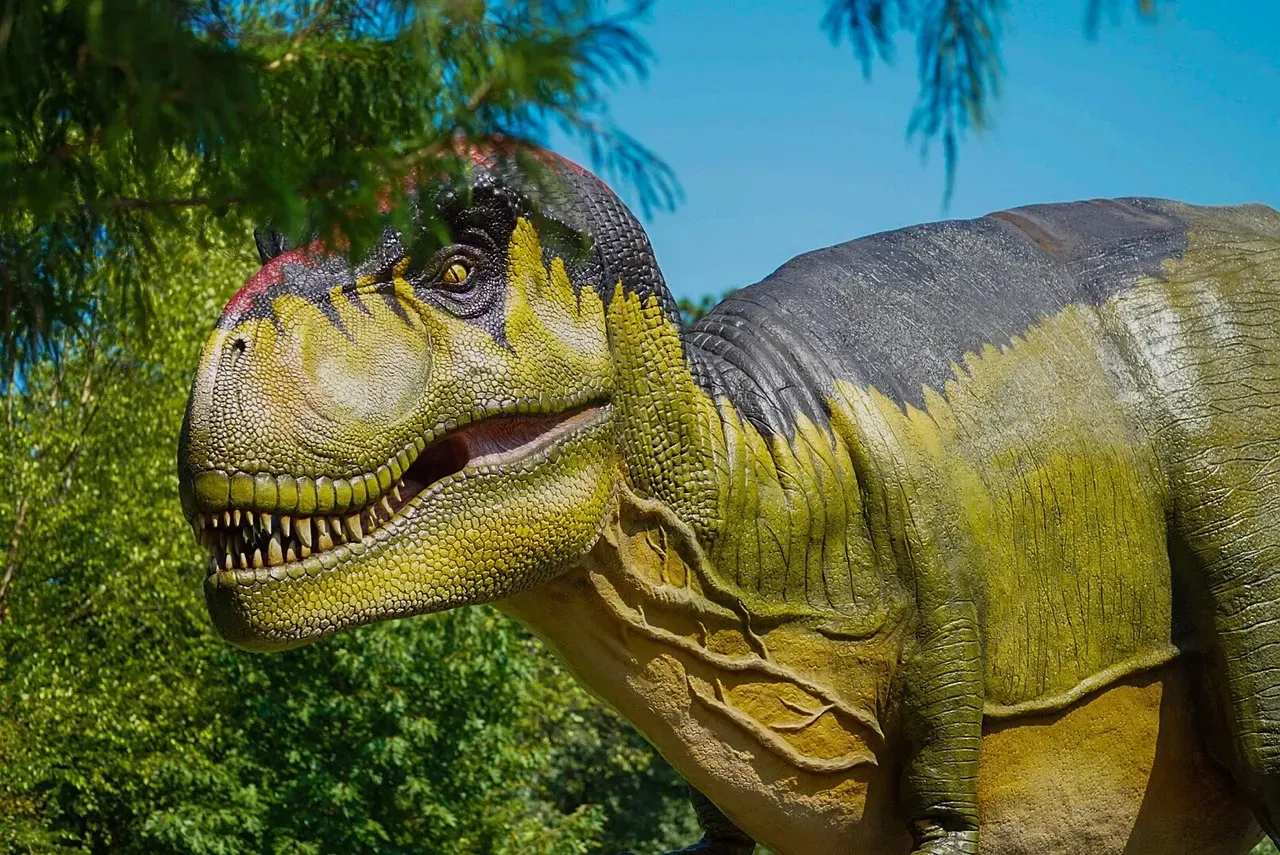
Put all of this together and the real T. rex is less of a horror-movie caricature and more of a complex, evolving set of possibilities bounded by hard evidence. It likely had a mostly horizontal posture, forward-facing eyes, powerful jaws with teeth covered by lips when closed, muscular but short arms, and a body wrapped in a mix of scales and limited soft-tissue ornamentation, with color patterns tuned for its environment. Juveniles were lean and fast, adults were bulky and imposing, and in both cases, the animal would have been full of subtle details – wrinkles, scars, slight color variations – that never show up in clean digital models. The more you think of it as a gigantic, predatory bird-reptile hybrid rather than a movie monster, the closer you get.
My own opinion is that our old mental image of T. rex is not just outdated, it is weirdly unfair to the animal. We flattened it into a symbol of terror and forgot that it was once a real, living creature navigating a complicated world with instincts, senses, and behaviors tuned by evolution. Accepting that we do not know every detail of its appearance is not a weakness; it is what makes this animal endlessly fascinating. The truth is, the real T. rex was probably stranger, subtler, and in many ways more impressive than anything we have put on screen so far. Next time you picture one, will you still see a roaring, lipless monster, or can you let your imagination make room for the real, messy, magnificent animal that once walked the Earth?