
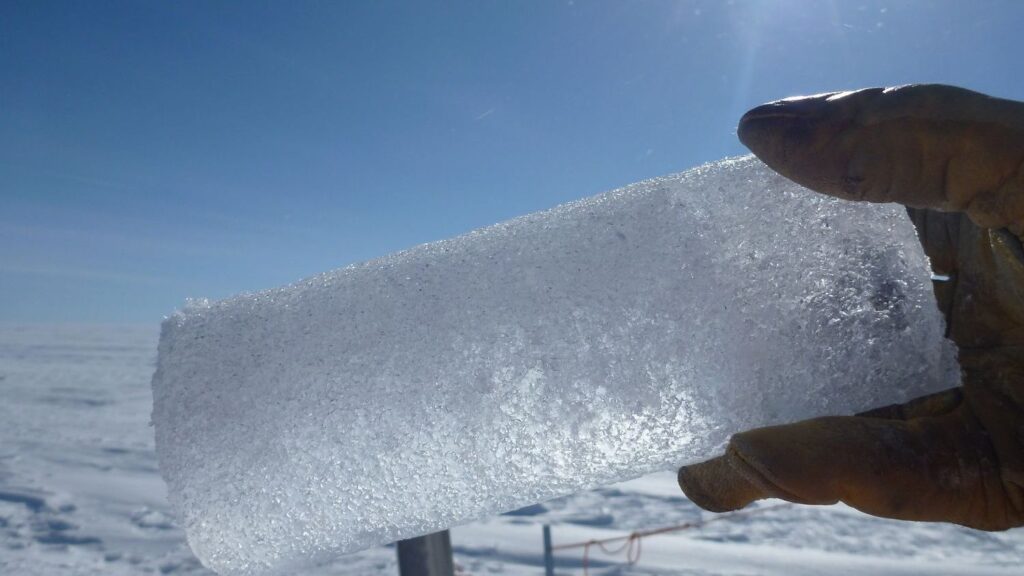
Imagine opening a time capsule that has been quietly filling, snowflake by snowflake, for more than one hundred thousand years. That is essentially what scientists do when they drill deep into Greenland’s ice, hauling up cylinders of layered ice that record ancient temperatures, greenhouse gases, volcanic eruptions, and even microscopic life. Over the last few years, those cores have delivered something unsettling: evidence of a past climate jolt that is sharp, weird, and stubbornly out of sync with the computer models we use to understand our future.
What makes this so gripping is that it is not a sci‑fi story or a vague warning; it is physical, frozen evidence that our climate system is more twitchy and creative than we thought. Buried in the ice are fossil pollen grains, tiny shells, trapped air bubbles, and chemical fingerprints that together hint at a fast and dramatic reshuffling of temperature, sea ice, and ecosystems. Researchers are now stuck with a maddening puzzle: the data are real, but our best models cannot quite recreate what happened. When the past refuses to line up with our theories, it is usually a sign that something big is missing from the picture.
The Ice Core That Reads Like a Climate Thriller
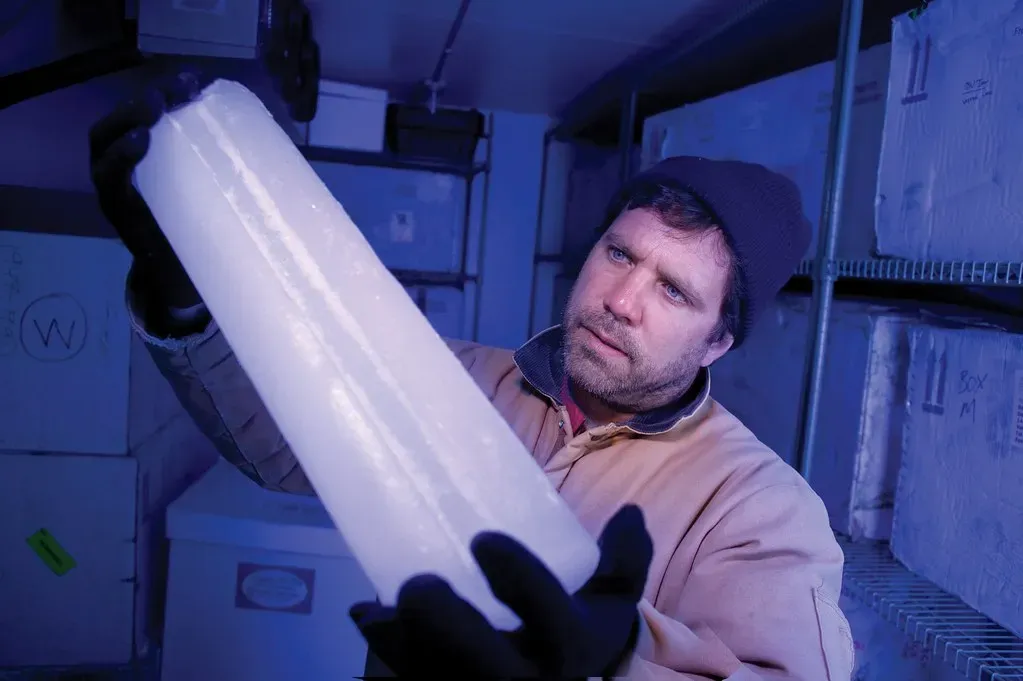
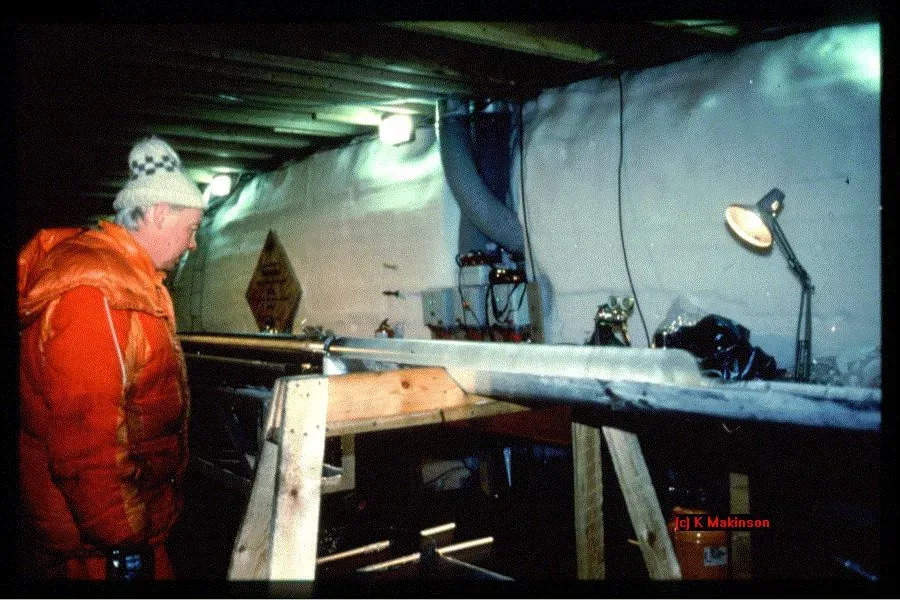
One of the strangest things about Greenland’s ice cores is how detailed they are. In places like the North Greenland Eemian (NEEM) and GISP2 cores, you can literally count annual layers like tree rings, tracking how conditions changed almost year by year across the last ice age and earlier warm periods. Within those layers are sudden jumps in temperature that happen over a human lifetime or two, not over slow, geologic ages. These jumps are often linked to the so‑called Dansgaard–Oeschger events, abrupt warmings in the North Atlantic that still make climate scientists a bit nervous.
What has really turned heads recently, though, is evidence of an event that does not neatly fit the usual pattern: it is abrupt, regionally extreme, and comes with biological and chemical signals that do not quite match the “standard” explanations involving ocean currents alone. For example, isotopes of oxygen and nitrogen in the ice point to a very rapid warming and a shift in atmospheric circulation, while the fossil record in the same layers suggests ecosystems reacted in ways our models do not predict. It is like reading a familiar genre of novel and suddenly hitting a chapter written in a completely different style.
Fossil Clues Frozen in Time: From Microscopic Shells to Ancient Pollen
![Fossil Clues Frozen in Time: From Microscopic Shells to Ancient Pollen (Source and public domain notice at Dartmouth College Electron Microscope Facility ([1], [2]), Public domain)](https://nvmwebsites-budwg5g9avh3epea.z03.azurefd.net/dinoworld/6f90c121a7923b59ca32e54ffa5825d3.webp)
When most people hear “fossil record,” they think of bones in rock, not microscopic remnants in ice. But Greenland’s cores are full of biological breadcrumbs: pollen grains blown from distant forests, fragments of tiny marine organisms carried in sea spray, soot from ancient wildfires, and even DNA traces in some layers. Each of these tells a small part of the story of what was happening in the atmosphere and oceans at the time the snow fell. If you zoom in on a thin slice of ice under a microscope, it can feel like looking at a ghostly snapshot of an entire region’s climate.
In the layers tied to this odd climate event, the mix of fossils and particles looks off compared with other known warmings and coolings. Pollen suggests changes in vegetation that are faster and sometimes in the “wrong” direction compared with what simple temperature shifts would cause. Some marine microfossils hint at surprising changes in sea ice and open‑water conditions near Greenland, again on timescales that seem too quick based on standard ocean circulation speed. You end up with a mismatch: the frozen fossils are shouting that something wild happened, while our tried‑and‑true explanations shuffle their feet and look away.
Isotopes, Ash, and Ancient Air: Technical Signals of a Strange Spike
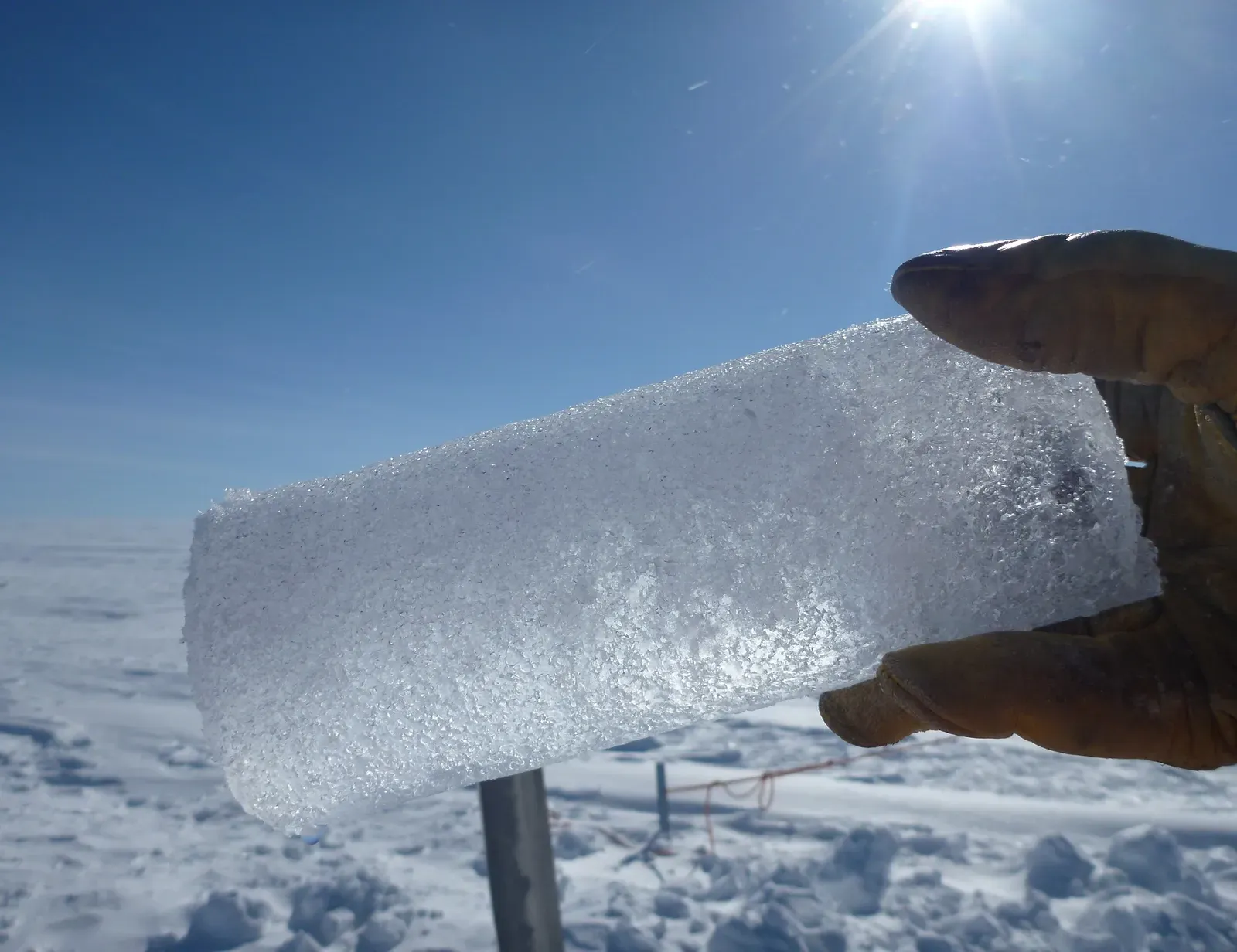
Beneath the biological clues sits a hard scientific backbone: the chemistry and physics recorded in the ice itself. Ratios of heavy to light oxygen and hydrogen isotopes track temperature and the origin of moisture. Nitrogen and argon isotopes reveal how the thickness of the atmosphere above the ice sheet changed, which is linked to temperature and circulation. Dust layers measure how windy and dry distant continents were. Trapped air bubbles preserve past concentrations of greenhouse gases like carbon dioxide and methane, creating a direct window into the ancient atmosphere.
In the interval connected to this “model‑breaking” event, several of these indicators do something unusual at the same time. There is evidence for a temperature jump that is very steep, a sudden change in the path of storms reaching Greenland, and a shift in dust and sea salt that implies a rapid rearrangement of sea ice and open water. Volcanic ash layers nearby help anchor the timing, making it harder to blame the signal on dating errors. When you line all of that up, the sequence of changes looks out of order compared with what current climate models say should happen when the planet is forced to warm or cool.
The Climate Event That Defies the Textbook Narrative
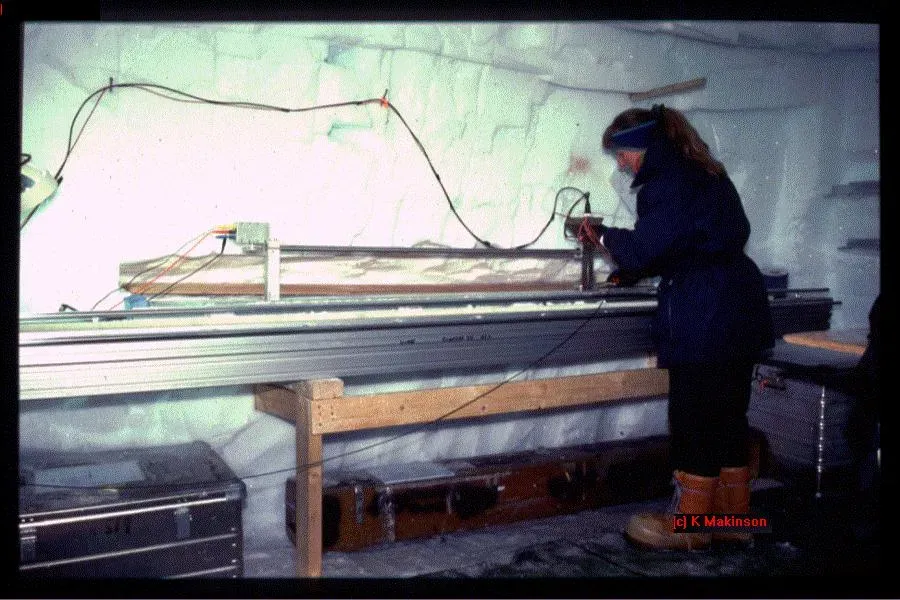
So what exactly is this event that fits no current model? It appears to be a rapid reorganization of the North Atlantic climate system, possibly at the tail end of a glacial period or within an already warm interval, that unfolds in a matter of decades with outsized regional impacts. Temperatures over Greenland climb dramatically, sea ice retreats or shifts location, and ecosystems on land and in the ocean respond almost immediately. The kicker is that the global average forcing, from greenhouse gases or orbital changes, does not seem strong enough on its own to explain such a punchy, localized response.
In simpler terms, our equations say the climate should have walked, but the ice record shows it sprinted. This is not just an academic nitpick. The models we rely on to predict future warming are tuned to reproduce past events; when a real event shows up that they cannot recreate, it sends a clear signal that some process or feedback is missing or underplayed. That might be something about how sea ice interacts with ocean currents, or how atmospheric rivers carry heat into the Arctic, or even how ice sheets themselves respond and amplify changes. Whatever it is, the Greenland fossil and isotope record is basically calling our bluff.
Why Leading Climate Models Stumble Over This Past Shock
Current climate models are impressive pieces of software, but like any tool, they are only as good as the physics and biology they include. Many of them handle slow, large‑scale changes very well: gradual warming from rising greenhouse gases, century‑scale ice sheet shrinkage, long swings driven by Earth’s orbit. They struggle more with sharp tipping points, regional extremes, and rapid reorganizations of circulation patterns. The Greenland event in question seems to live right in that awkward space where small nudges can lead to big, fast consequences.
When researchers try to force models with realistic past conditions to reproduce this spike, they either get nothing this abrupt or they must crank up feedbacks beyond what seems reasonable. That mismatch suggests we are underestimating how sensitive certain parts of the climate system are, especially in the North Atlantic and Arctic. It might mean sea ice can vanish or relocate more suddenly than we thought, or that meltwater and ocean currents can flip into new states like a light switch, not a dimmer. For a world now pouring heat into the system at an unprecedented rate, that is not a comforting thought.
What This Mystery Says About Arctic Tipping Points Today
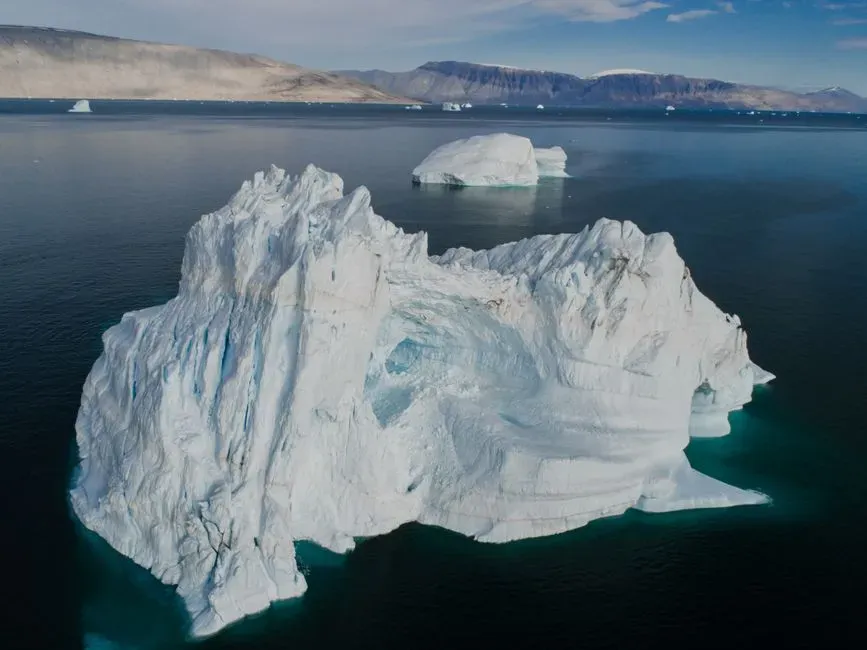
It is tempting to look at a weird ancient event and shrug it off as a relic of a very different world. But Greenland’s ice does not let us off the hook that easily. The basic ingredients in play back then – sea ice, Atlantic circulation, Arctic amplification, greenhouse gases – are the same ones in play today, just arranged differently. If the past shows that this combination can deliver unexpected, rapid jumps, then it is fair to ask how close we might be to similar thresholds now, even if the exact trigger and sequence differ.
Modern observations already show the Arctic warming several times faster than the global average, sea ice shrinking dramatically, and fresh meltwater from Greenland flowing into the North Atlantic. Ocean circulation measurements hint at possible weakening of key currents. When you put that next to an ancient episode where the Arctic climate snapped into a new state faster than models predict, it becomes less of a distant curiosity and more of a warning label. We may not be replaying that old event scene‑for‑scene, but the mood of the story feels eerily familiar.
How Scientists Are Updating the Playbook in Real Time
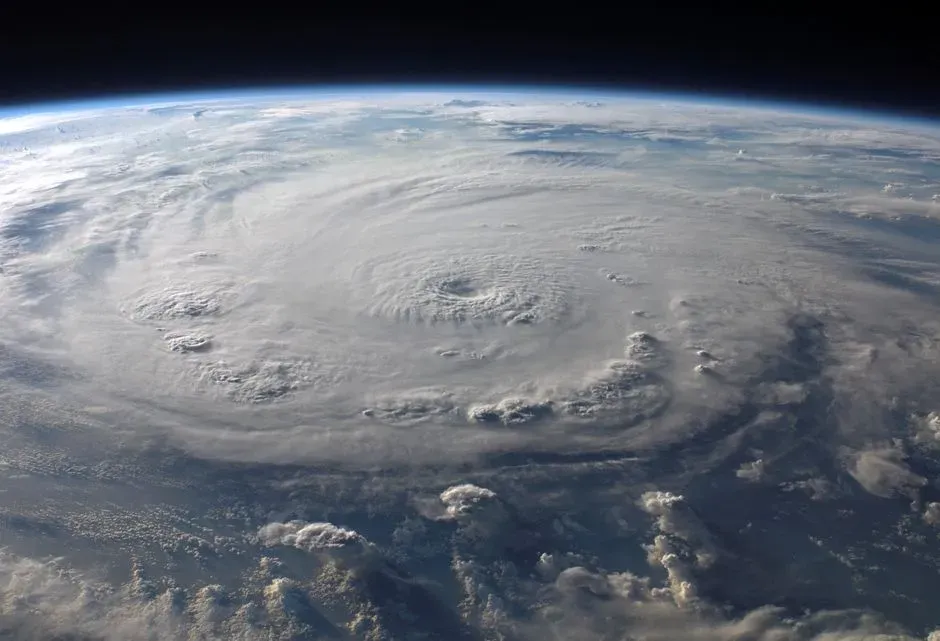
The good news is that climate scientists are not just staring at this mismatch and shrugging. They are drilling more cores, including from parts of Greenland that preserve older intervals and from places that can be cross‑checked against each other. They are re‑measuring fossils and isotopes with better instruments, narrowing down uncertainties in age and interpretation. Some teams are even pulling ancient DNA out of ice or sediments to see which species lived through these shocks and how ecosystems actually shifted on the ground.
On the modeling side, researchers are building higher‑resolution simulations that treat sea ice, ocean eddies, and ice sheet dynamics in more detail, and then deliberately stress‑testing them against these puzzling events. Instead of just tuning models to match average temperatures, they are asking hard questions: can your model reproduce abrupt Greenland warmings, weird circulation shifts, and the timing seen in the fossils without cheating? This is messy, incremental work, and there is no guarantee of a neat, single explanation. But in a way, that is the point: by letting the data from Greenland bully the models, we stand a better chance of catching the surprises before they catch us.
What It Means for How We Talk About Climate Risk
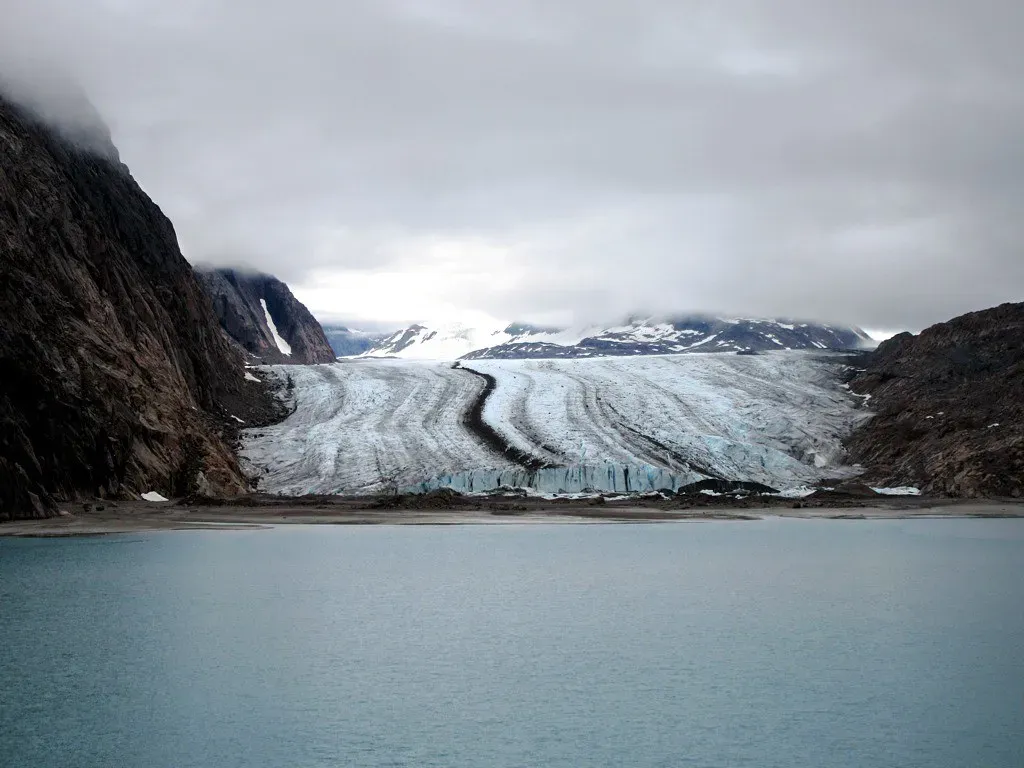
One uncomfortable implication of all this is that our usual way of talking about climate change – smooth curves, gradual warming, century‑by‑century projections – may be emotionally soothing but scientifically incomplete. The Greenland ice record is a persistent reminder that Earth’s climate has a taste for lurches as well as slides. When an event comes along that our best models cannot replicate, it does not mean the event was a fluke; it often means we are still underestimating how nonlinear and jumpy the real system is.
From my perspective, the honest takeaway is that we probably lean too heavily on “most likely” scenarios and not enough on plausible, high‑impact surprises. The strange fossil and chemical signatures in Greenland’s ice are basically the climate system tapping us on the shoulder and saying: do not assume the future will play out in tidy, predictable steps. That does not mean doom is guaranteed, but it does argue for a bit more humility and a lot more resilience in how we plan, build, and invest. When the planet has a history of plot twists, you do not bet your future on a single, neat storyline.
Conclusion: When the Past Refuses to Behave, We Should Listen
For me, the most striking thing about this Greenland mystery is not just that it breaks our models; it is that it breaks our sense of comfort with gradual change. Here we have a frozen archive calmly insisting that the climate can shift faster, in more complicated ways, than our equations currently allow. The fossils, isotopes, and microscopic traces do not care what we think is reasonable; they just sit there, layer after layer, telling the same unsettling story over and over. Ignoring that because it is inconvenient for neat projections would be like covering the warning lights on a dashboard with a sticker.
If anything, I think this event should tilt our mindset from “we mostly understand the risks” to “we understand enough to know we are probably underestimating the wild cards.” That is not a reason to panic, but it is a powerful reason to move faster on cutting emissions, to design infrastructure that can handle shocks, and to keep pouring effort into the unglamorous work of drilling, measuring, and refining models. The ice in Greenland is quietly reminding us that the real climate story has always been more dramatic than the simplified graphs we draw – so the question is not whether the past fits our models, but whether we are willing to update our models to fit the past. Did you expect ancient snow to be this argumentative?