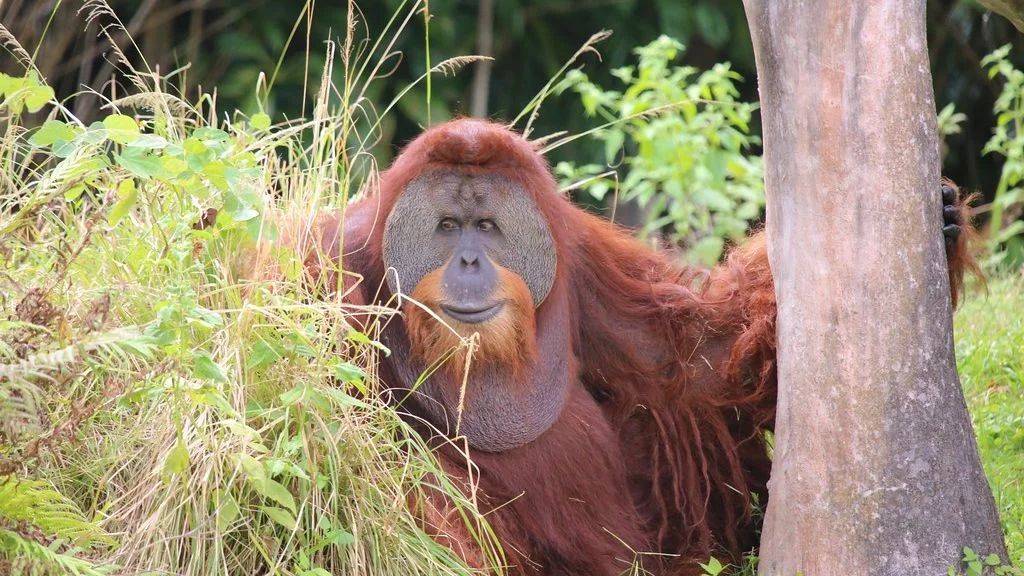
North Sumatra, Indonesia — A young male Sumatran orangutan paused midway across a rope canopy bridge, peering down at the road below before continuing into the forest on the other side. Researchers captured this moment on camera traps after two years of patient monitoring, marking the first time such a crossing by the species had been filmed. The event unfolded high above the Lagan-Pagindar road in the Pakpak Bharat district, where habitat fragmentation had long isolated wildlife populations.
The Long-Awaited Crossing
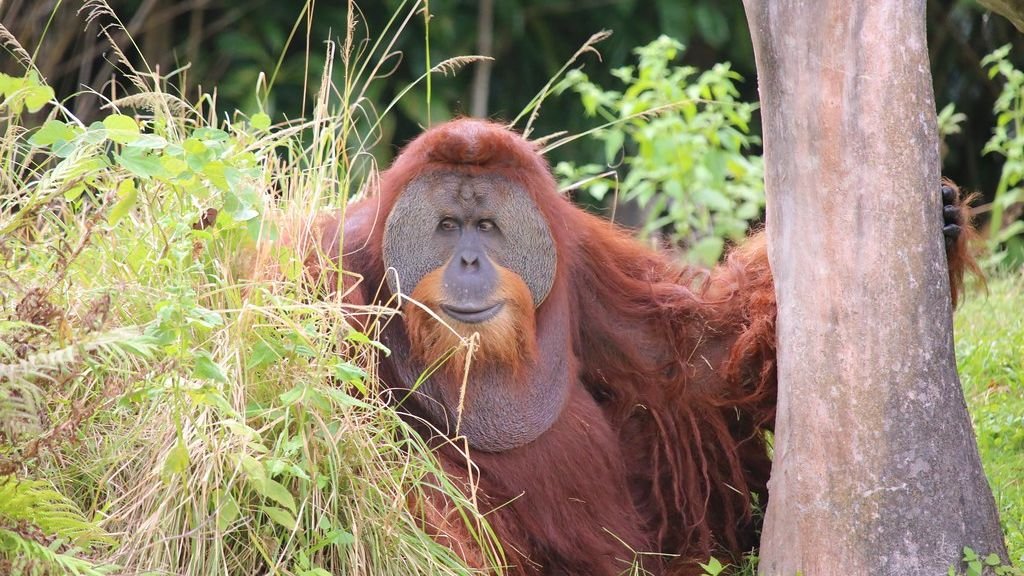
The Long-Awaited Crossing (Image Credits: Flickr)
Conservation teams installed camera traps along the bridge in 2024, but smaller animals tested it first. Plantain squirrels, black giant squirrels, long-tailed macaques, black Sumatran langurs, and agile gibbons traversed the structure before the orangutan appeared. When the young male finally edged onto the ropes, the footage showed his cautious progress, including a glance back at the camera.
Helen Buckland, chief executive of the Sumatran Orangutan Society, described the reaction: “You should have heard the cries of delight from the team. After two long years, it’s finally happened.” This breakthrough came after the 2023 upgrade of the Lagan-Pagindar road widened the canopy gap, making ground-level crossings too dangerous for the arboreal primates.
Engineering a Wildlife Corridor
Local authorities and conservation groups built five canopy bridges along the road to reconnect the Siranggas wildlife reserve and Sikulaping protection forest. Each structure, about 10 meters long, used roughly 200 meters of rope and took a team of 12 people three to four days to install. Designs varied to suit different species: single-rope for agile climbers, horizontal ladders for heavier animals, and hybrids for broader use.
The Sumatran Orangutan Society partnered with Tangguh Hutan Khatulistiwa, known as TaHuKah, and the Pakpak Bharat district government. Erwin Alamsyah Siregar, TaHuKah’s director, noted that natural crossings had become “impossible for wildlife” due to the road’s expansion. Vertical Rescue Indonesia assisted with installation, ensuring the bridges withstood the weight of large primates.
Threats Facing Sumatran Orangutans
Only about 14,000 Sumatran orangutans remain in the wild, confined to Sumatra and classified as critically endangered. In the Pakpak Bharat area alone, around 350 individuals split into two groups after the road divided their habitat, raising risks of inbreeding and genetic bottlenecks. These apes spend over 90 percent of their time in the canopy, relying on it for foraging, nesting, and travel.
Road development fragments forests, isolating populations in shrinking patches too small for long-term survival. Orangutans’ slow reproductive rates exacerbate the problem, as small groups struggle with reduced genetic diversity and vulnerability to disease.
| Orangutan Species | Wild Population |
|---|---|
| Sumatran | <14,000 |
| Tapanuli | ~800 |
| Bornean | ~104,700 |
A Model for Human-Wildlife Coexistence
Franc Bernhard Tumanggor, head of Pakpak Bharat district, hailed the crossing as “living proof that we need not sever the forest’s lifeline in order to build our communities’ own. Modernisation does not have to mean destruction.” The Lagan-Pagindar road serves remote communities by linking them to schools and hospitals, yet now allows wildlife passage overhead.
Monitoring continues every three months, with traffic surveys twice yearly and plans for warning signs to drivers. Local patrols aim to protect animals from hunters. Helen Buckland emphasized the broader impact: “If these fragmented populations can be protected and reconnected, the orangutans have the potential to thrive long into the future.”
- Bridges reconnect 350 orangutans across divided forests.
- Early users included five primate and squirrel species.
- Project balances road access for humans with canopy corridors for apes.
- Ongoing maintenance ensures long-term viability.
Hope Amid Habitat Challenges
This single crossing signals potential for more, as orangutans’ intelligence may encourage others to follow. Conservationists view it as a blueprint for addressing fragmentation elsewhere in Sumatra. With roads proliferating, such innovations offer a path where development and biodiversity can align, preserving these forest gardeners for generations.