When you picture prehistoric America, you probably imagine mammoths and giant sloths lumbering across frozen plains. What you might not realize is that those ancient landscapes were also crawling with predators so big and so strange that today’s grizzlies and mountain lions would look almost modest beside them. Long before you, your country, or even your species existed, North America was one of the most dangerous neighborhoods on Earth.
In this tour through deep time, you’ll meet ten of the most formidable hunters ever to stalk American soil and swamps – from saber‑toothed cats to bear‑like pigs and crocodiles the size of buses. You’ll see how they lived, what they hunted, and why they vanished. And as you go, you may start to feel something unsettling: a sense that the world you know is just the latest chapter in a much older, much wilder story.
1. Smilodon fatalis – The Saber‑Toothed Cat You Think You Know
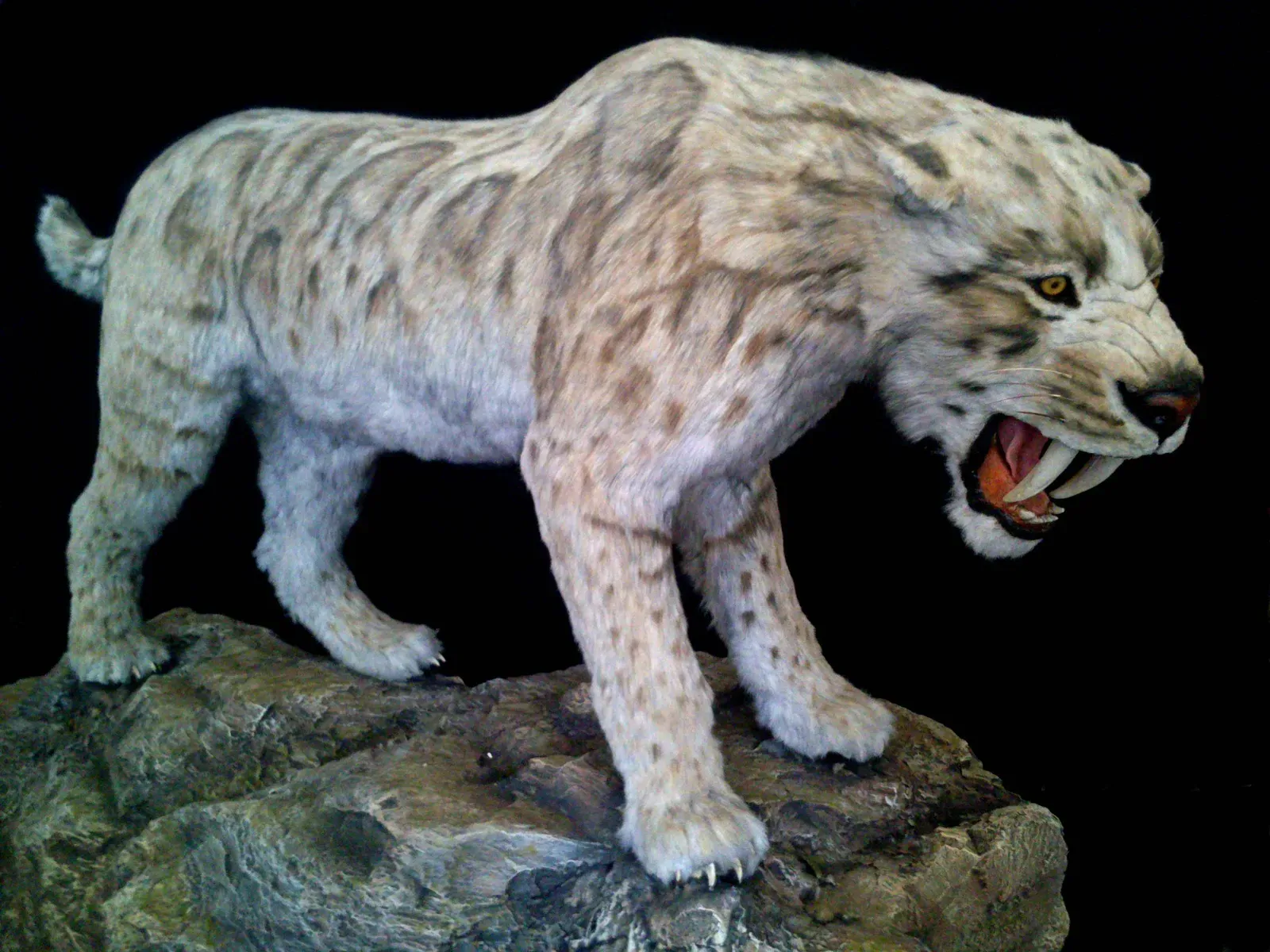
You have probably seen Smilodon fatalis on museum posters, all fangs and fury, but the real animal was even stranger than the pop‑culture version in your head. You are not looking at a turbo‑charged lion; you are looking at a heavily built ambush predator with a jaw and neck built like a specialized execution device. Its canines, longer than your hand, were surprisingly fragile if used carelessly, so Smilodon had to pin prey with powerful forelimbs and deliver precise killing bites instead of wild, slashing attacks.
If you could walk across late Ice Age Los Angeles or Nevada, you would find Smilodon fatalis lurking near waterholes and carcasses, sharing the scene with mammoths, camels, bison, and giant ground sloths. Fossil sites such as the La Brea Tar Pits show you that these cats were common and often died in desperate struggles over trapped animals, hinting at a risky, high‑stakes lifestyle. Instead of sprinting down prey like a cheetah, this cat probably waited in cover, launched short powerful attacks, and used teamwork or social tolerance more than most people expect from big cats today.
2. Arctodus simus – The Giant Short‑Faced Bear That Ruled the Ice Age
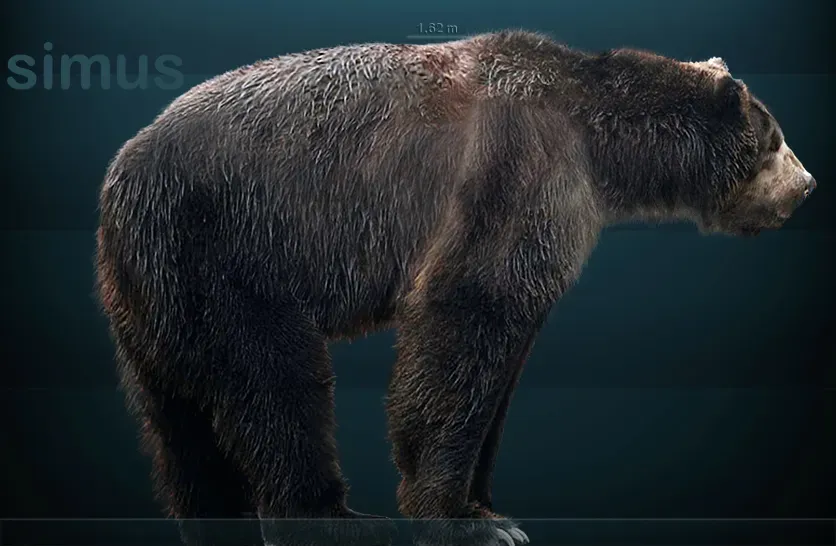
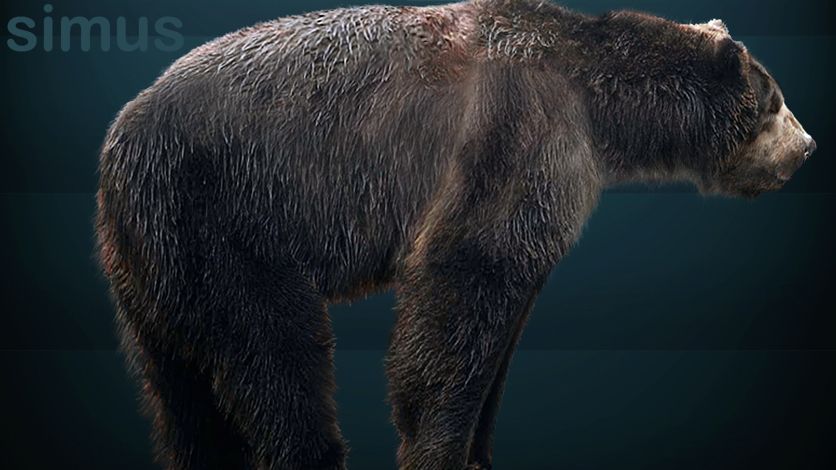
When you picture a bear, you probably imagine a lumbering omnivore that grazes as much as it hunts. With Arctodus simus, the giant short‑faced bear, you are dealing with something on a different scale entirely. This Ice Age titan stood higher at the shoulder than you do, could have towered over three and a half meters tall when it reared up, and may have weighed as much as a compact car in the largest males. Long legs, a deep chest, and a short, broad snout gave it a strange, almost alien outline compared with modern bears.
For a long time, you would have read that Arctodus was a super‑fast pursuit predator, racing down horses and bison across open plains. More recent research points you toward a different picture: a wide‑ranging omnivore and powerful scavenger able to cover huge distances efficiently, bully other predators off carcasses, and switch its diet as needed. You can imagine it as a mobile mountain of muscle roaming from Alaska to Mexico, following migrating herds, sniffing out kills, and turning every other carnivore’s hard‑won meal into its own dinner whenever it felt like it.
3. Panthera atrox – The American Lion That Out‑Sized Today’s Big Cats
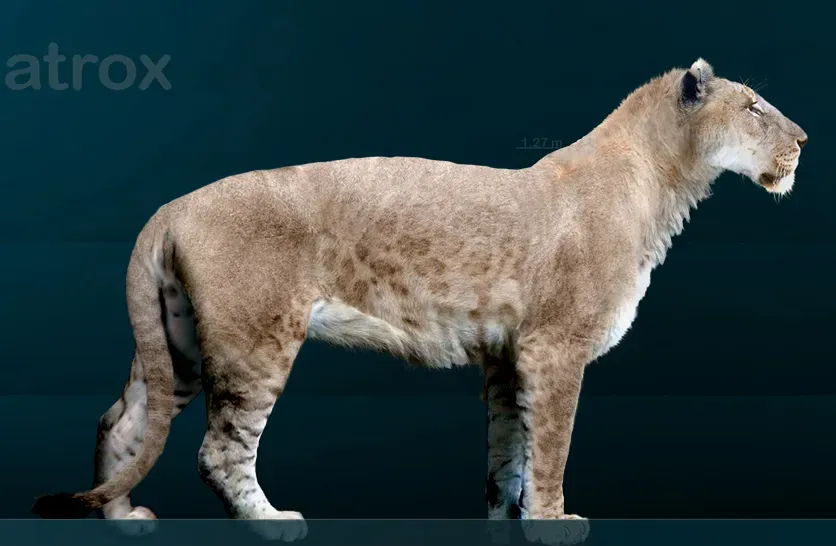
If you dropped a modern African lion into Pleistocene North America, you would not be looking at the top cat in the room. That title probably belonged to Panthera atrox, often called the American lion. You can think of it as a close relative of modern lions, but scaled up: more robust, with a body length and mass that put it among the largest cats that ever lived. Standing next to one, you would feel like a child beside an oversized, heavily muscled version of a very familiar shape.
Fossils place this predator across much of what is now the United States, from plains to open woodlands, where it likely hunted bison, young mammoths, horses, and camels. You can picture it working a bit like modern lions do, using speed, stealth, and group tactics when possible, but in a world where almost every prey animal was big, tough, and often armored with horns or tusks. If you were a human arriving late in this story, you would have shared the landscape with these cats, forcing you to compete with them for meat and to avoid becoming meat yourself.
4. Dire Wolf – The Heavy‑Duty Cousin of Your Familiar Gray Wolf
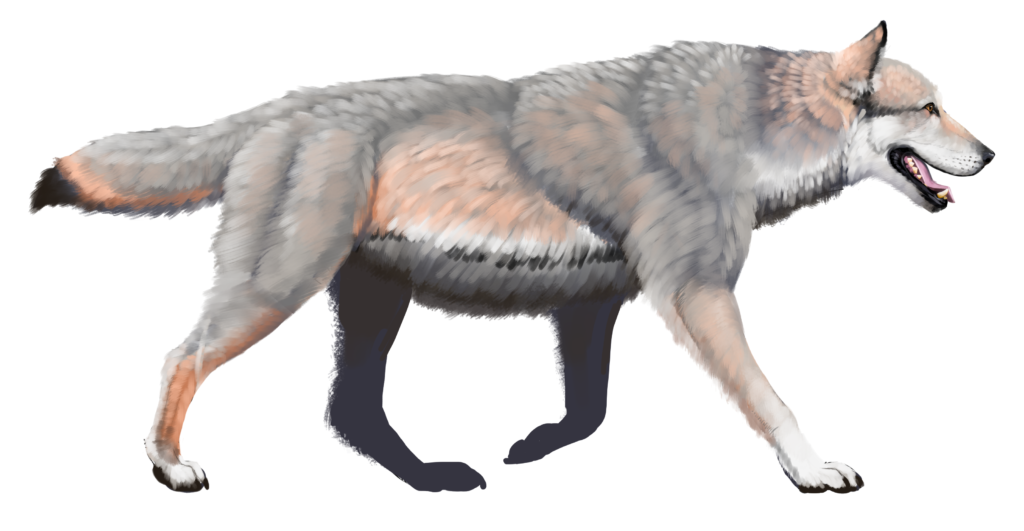
When you hear “dire wolf,” your brain might jump straight to fantasy shows, but the real animal was all too real on ancient American prairies. Compared to today’s gray wolf, you are looking at a stockier, heavier‑jawed canid built for tackling large prey rather than chasing small deer and rabbits. Its skull and teeth tell you it could crush bone efficiently, making scavenging and carcass‑stripping an important part of its lifestyle.
Across Ice Age North America, you would have seen dire wolves traveling in packs, working the same herds of bison, horses, and camels that drew in saber‑toothed cats and lions. Fossil deposits with dozens of individuals show you that they often died together, probably when they rushed in to exploit an easy meal and got trapped or injured in the process. If you were on that landscape, these wolves would have been constant, watchful shadows at the edges of every kill, always testing whether they could steal food from bigger predators or from one another.
5. Titanis walleri – The Terror Bird That Invaded from the South
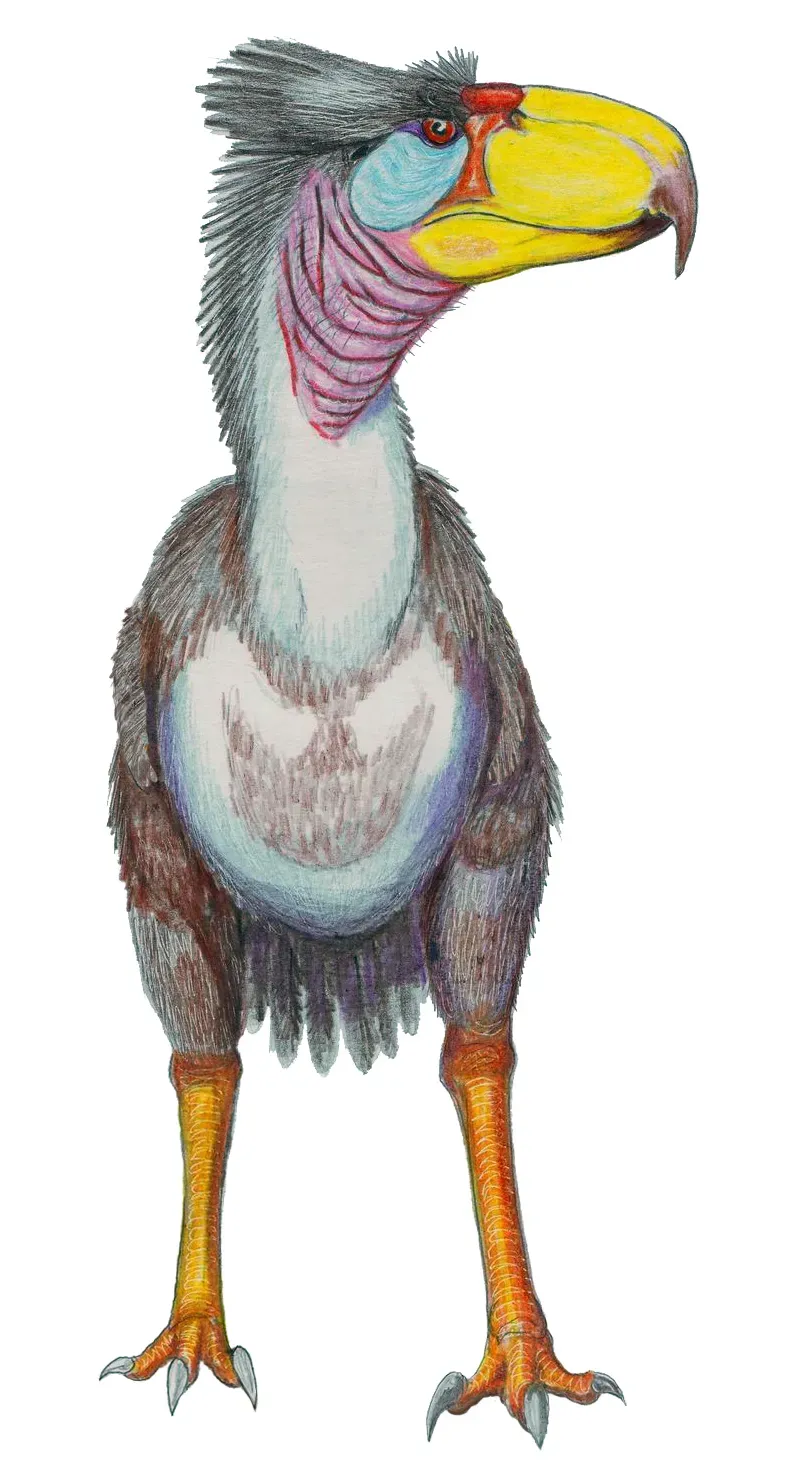
You do not normally think of North America as a land of giant killer birds, but for a slice of the Neogene, that is exactly what it became. Titanis walleri, the so‑called North American terror bird, walked on long, powerful legs and stood about as tall as you do, but with a beak like a hatchet and a skull designed for delivering devastating blows. This bird was flightless, but that did not make it slow or harmless; instead, it turned its wings into balance aids while it ran down and grappled prey.
Titanis arrived during the great faunal exchange when animals crossed between North and South America through the emerging Isthmus of Panama. If you were in the southeastern United States several million years ago, you might have seen this predator stalking small horses, early deer, or juvenile ungulates through open woodland and grassland. You can imagine it striking down with its beak, stunning or killing prey with repeated blows, then tearing off chunks of flesh with movements that would make today’s birds of prey look almost delicate.
6. Deinosuchus – The Crocodilian Ambush Along Ancient Coasts
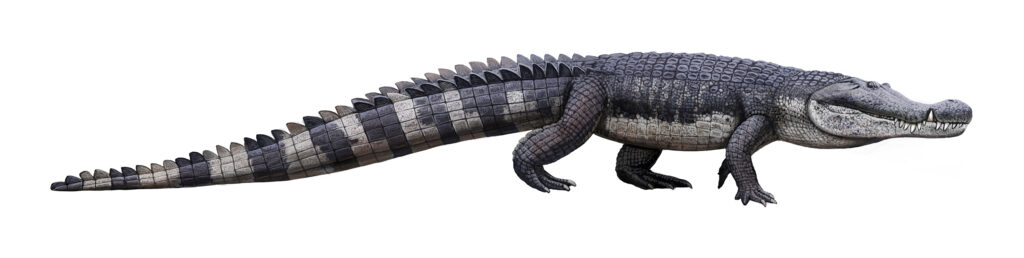
When you stand near a modern alligator in the American South, you already feel a certain primal caution. Now stretch that animal in your mind until it reaches bus‑like proportions, and you are getting close to Deinosuchus. This giant crocodilian, whose name roughly means “terrible crocodile,” lived along coastal swamps and estuaries of Late Cretaceous North America, long before mammals dominated the land. You would have found it lurking in brackish waters, waiting in almost perfect stillness.
Deinosuchus shared its world with dinosaurs, and there is good evidence that it preyed on them, especially juveniles or unwary individuals that came too close to the water’s edge. If you were a duck‑billed dinosaur stopping for a drink, you would be rolling the dice each time your feet touched the shallows. Even large predators like tyrannosaur relatives had to respect the waterline, because one surprise lunge from Deinosuchus could drag a multi‑ton victim into the depths with a crushing bite and a violent roll.
7. Daeodon – The “Hell Pig” That Wasn’t Really a Pig
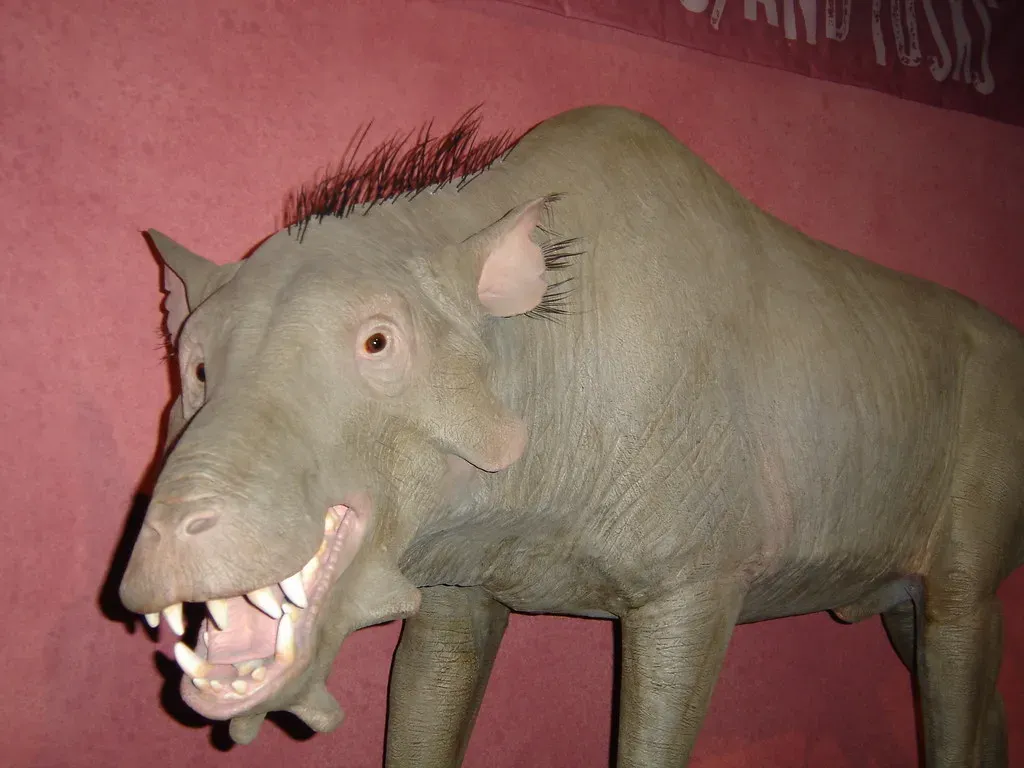
If you walked across the Great Plains around twenty million years ago, you might have spotted a bulky, high‑shouldered figure on the horizon and thought you were seeing some nightmare boar. In reality, you would be looking at Daeodon, a member of a group called entelodonts that are more distantly related to pigs and hippos than they appear. You can recognize it by its massive head, almost as long as your torso, with bony flanges on the sides of the jaw and heavy teeth hinting at both bone‑crushing and omnivorous habits.
Daeodon roamed North America’s open landscapes, where it likely played the role of an opportunist more than a pure hunter. If you were there, you would probably watch it bully smaller predators off carcasses, raid nests, and scavenge almost anything remotely edible. At the same time, its teeth and jaw strength suggest it could chase down and kill smaller or weaker animals when the opportunity arose, making it a roaming, unpredictable threat that blurred the line between predator and scavenger in a way that feels unsettlingly modern.
8. Borophagus – The Bone‑Crushing “Hyena Dog” of the Miocene
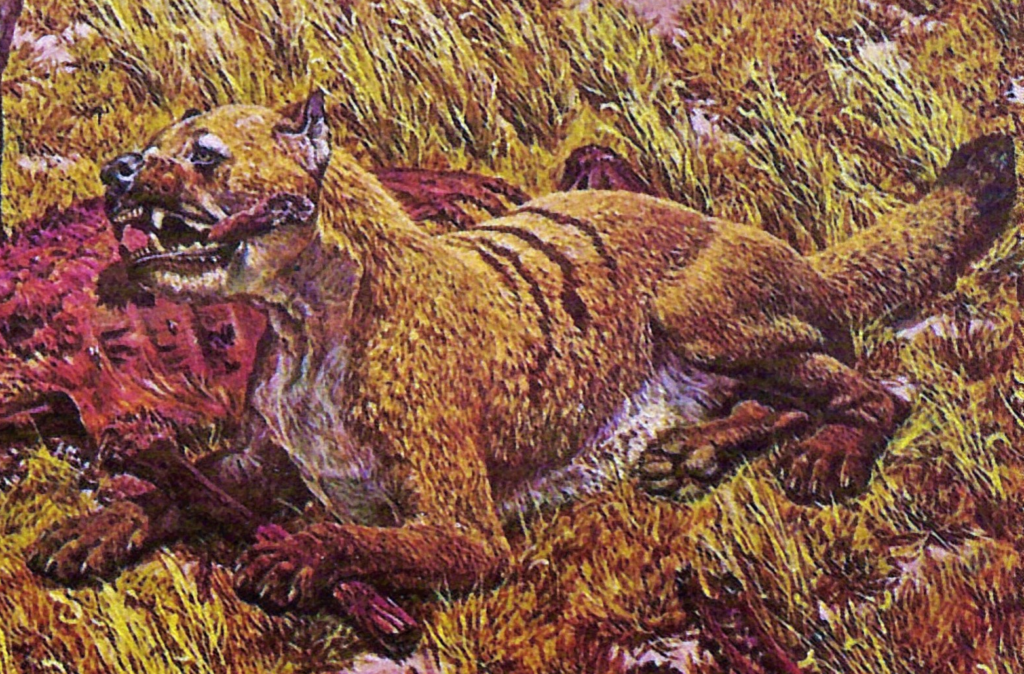
Long before coyotes and gray wolves spread across North America, you would have met a very different kind of dog: Borophagus, sometimes called the bone‑crushing dog. If you imagine a wolf with a shorter, deeper muzzle and teeth built to crack bones, you are on the right track. This animal did not just nibble leftovers; it was designed to turn entire carcasses, including the hard parts, into calories.
In Miocene and Pliocene North America, you would have seen Borophagus in open habitats where herds of early horses, camels, and antelope‑like animals roamed. It likely hunted in groups and then processed carcasses so thoroughly that little remained for other scavengers. If you were another carnivore on that landscape, you would have learned quickly that once Borophagus arrived at a kill, the clock was ticking: bones that might have sustained you for days could vanish into its powerful jaws in a fraction of that time.
9. Acheroraptor and Dromaeosaur Relatives – The Sickled‑Clawed Stalkers
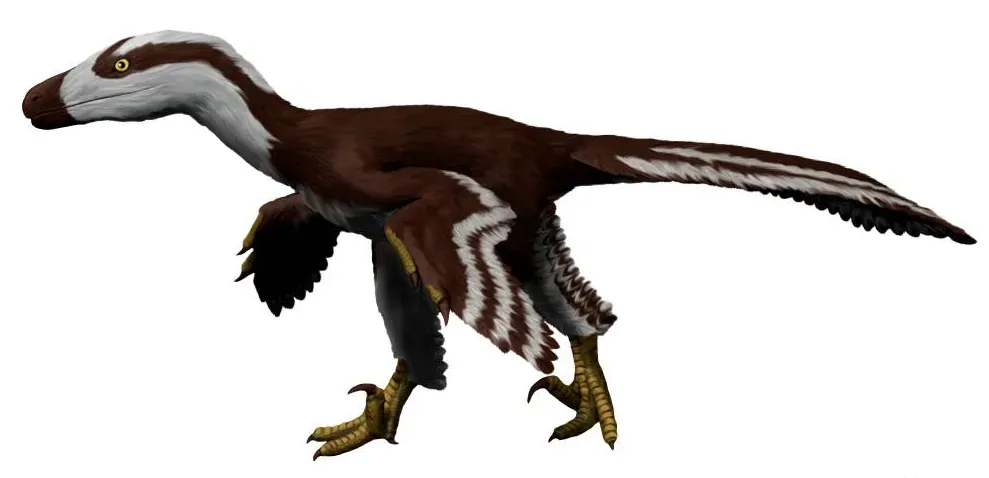
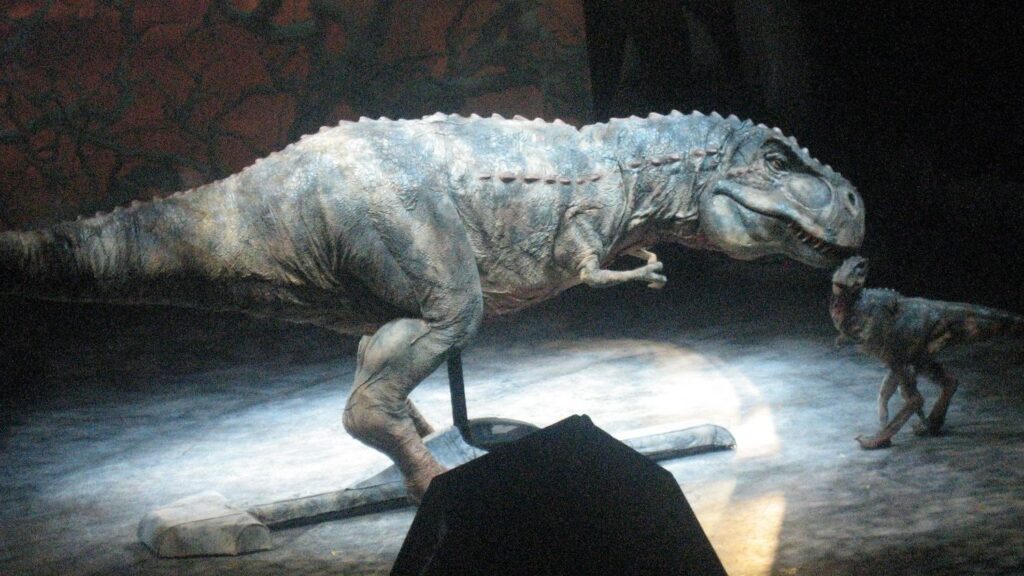
To understand America’s truly ancient predators, you have to step back into the age of non‑avian dinosaurs, when mammals like you were still tiny side characters. In Late Cretaceous North America, you would have found dromaeosaurs such as Acheroraptor and close relatives, small to medium‑sized predators armed with curved, sickle‑shaped claws and serrated teeth. These were not the oversized movie monsters you might know; instead, they were agile, intelligent hunters filling a niche somewhere between foxes and mid‑sized cats.
If you walked along the shorelines and floodplains of what is now Montana or the Dakotas, you might have caught glimpses of these animals weaving between ferns and conifers, eyes fixed on small dinosaurs, lizards, or even carrion. Their stiff tails acted like balancing poles, letting them pivot and leap with great precision. You can imagine them using quick coordinated attacks when possible, but also relying on stealth and speed, harassing prey much larger than themselves if the conditions looked safe enough to risk it.
10. Hyaenodon horridus and Other Early Mammalian Super‑Predators
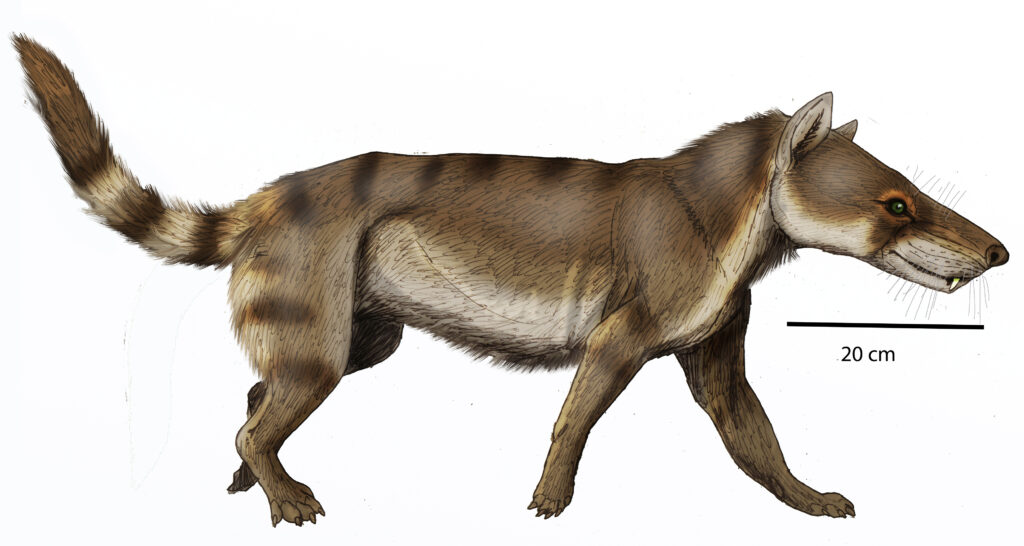
Before the familiar carnivore groups you recognize today – cats, dogs, bears – took over North America, their ecological roles were already being tested by older lineages. One of the most impressive was Hyaenodon horridus, part of a broader group of mammalian predators with long jaws and slicing teeth. If you saw one, you might think you were looking at a mash‑up of hyena, dog, and something entirely unfamiliar, all stretched over a lean, muscular frame built for pursuit and powerful bites.
During the early Cenozoic, you would have watched Hyaenodon roaming open woodlands and floodplains, preying on early herbivorous mammals that were still evolving into the recognizable forms you see today. Its skull was proportionally massive, with shearing teeth that worked like meat scissors, letting it process flesh efficiently. In many ways, you are seeing a preview of the roles modern big carnivores would later fill, a reminder that ecosystems keep rehearsing similar solutions even as the cast of species changes completely.
When you step back from all these predators, you start to see North America not as a stable, familiar stage, but as a constantly shifting arena where size, speed, and strategy were endlessly tested and replaced. Each of these hunters ruled for a while, then yielded to new climates, new rivals, or new prey communities, leaving behind only bones and clues for you to piece together. The landscape you know now, with its bears, cougars, and wolves, is just the latest version of a dangerous continent that has been rewriting its list of top predators for tens of millions of years.
As you look out at modern North American wilderness, can you imagine how differently you would move, camp, or even breathe if Arctodus, terror birds, and saber‑toothed cats still watched from the shadows?