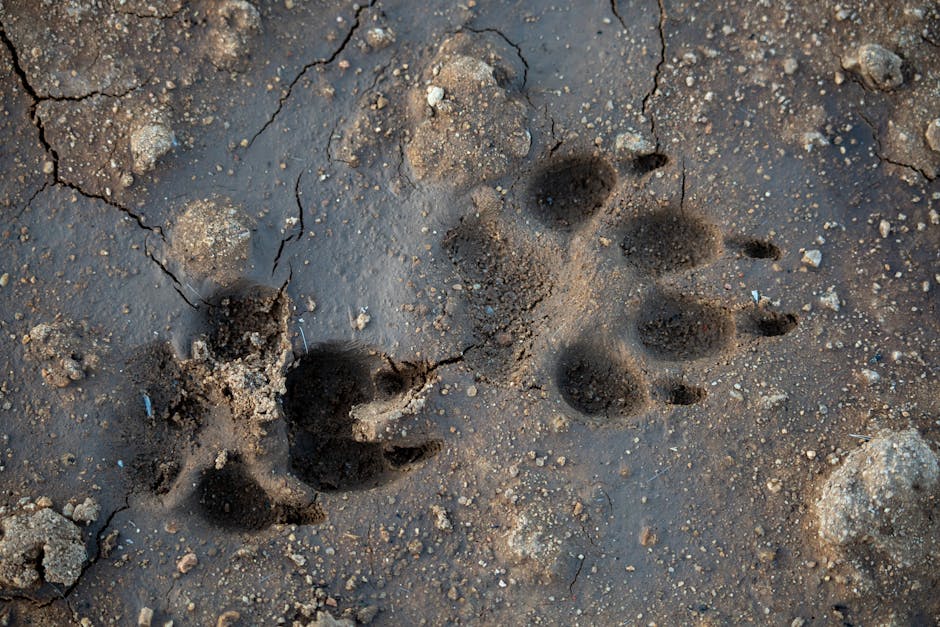
Eyre Peninsula, South Australia – Palaeontologists have uncovered a series of fossilized footprints along this remote coastline, providing compelling evidence that thylacines, the carnivorous marsupials known as Tasmanian tigers, once prowled the region. The tracks, preserved in ancient dune layers, date to between 110,000 and 130,000 years ago. This find expands our understanding of the predator’s range during the Pleistocene era, a time when mainland Australia teemed with megafauna.
Stumbles into Prehistory
Stumbles into Prehistory (Image Credits: Pexels)
A team from Flinders University struck gold in early March 2026 while scouring coastal outcrops. Led by palaeontology lecturer Aaron Camens, the group included researcher John Sherwood and retired national parks ranger Ross Allen, who knew the local fossil hotspots intimately. Their target: the Bridgewater Formation, a stack of calcareous dune ridges exposed along the shoreline near Coffin Bay and Lincoln National Park.
These layered sediments, often resembling pancake stacks, formed through a unique process. Sea spray settled on fresh footprints in the sand, creating salt crusts that wind-blown dunes quickly buried. Over millennia, this preserved impressions from a vanished world, though erosion now threatens many sites with relentless ocean swells.
Unraveling the Tracks’ Secrets
Spotting thylacine prints demands a keen eye. The impressions appear as subtle circular marks, akin to those of a dog, but context rules out later arrivals like dingoes, which reached Australia only thousands of years later. Repeating patterns across the layers – consistent shapes and spacing – signal trackways left by the marsupial predator.
“You might not see something that you can clearly say, ‘Oh, yeah, that looks like a thylacine print,’ but if you see a repeating pattern… then that means you’re probably looking at a trackway,” Camens explained. Ross Allen added that the prints stand out once recognized: “They’re just a circular impression… made by a dog species, and there were no dingoes back over 100,000 years ago.” Such details distinguish them amid tracks from birds like oystercatchers and larger megafauna.
A Snapshot of Pleistocene Diversity
The footprints paint a picture of a thriving ecosystem. Alongside thylacines roamed extinct kangaroos, massive herbivores related to Diprotodon, the marsupial lion Thylacoleo, and even Tasmanian devils. Smaller creatures added to the mix, revealing a landscape far richer than the sparse modern one.
Camens highlighted the variety: “There’s a huge range of animals represented… elements of the megafauna… but we also find some of the smaller animals.” This discovery pushes the known thylacine range farther along South Australia’s coast, challenging assumptions about their distribution before mainland extinction around 2,000 years ago.
From Widespread Hunter to Iconic Loss
Thylacines once spanned mainland Australia, Tasmania, and even Papua New Guinea. European settlers dubbed them tigers for the stripes across their backs, though they were marsupial carnivores with pouches. By the time Europeans arrived, numbers dwindled to about 5,000 in Tasmania alone.
The last known individual died in a Hobart zoo on September 7, 1936, sealing their fate amid bounties and habitat loss. Fossil evidence had hinted at broader ranges, but these coastal prints offer direct proof of their presence in South Australia during the Pleistocene.
Guarding Fossils Against the Tide
Today’s cliffs, some towering 20 meters, crumble under wave attack, exposing prints briefly before they vanish. Protected pockets near Coffin Bay fare better, but human pressures compound the risks. Allen urged action: “Our wildlife is under threat constantly from… human impacts… people need to be aware that they can play a big part in looking after the future welfare.”
These fragile archives demand protection to illuminate Australia’s deep past. The find underscores how much remains hidden in eroding edges, waiting for the next careful explorer.
Key Takeaways
- Footprints date to 110,000–130,000 years ago in the Bridgewater Formation.[1]
- Identified by circular, dog-like prints forming trackways, absent dingoes at the time.
- Reveal diverse megafauna alongside thylacines, expanding known range.
- Highlight erosion threats and need for coastal fossil conservation.
This breakthrough revives the ghost of a formidable predator, reminding us that Australia’s story holds more secrets in its sands. What do you think this means for our view of prehistoric life? Tell us in the comments.