You probably learned that chameleons camouflage themselves, snakes are stone deaf, and Komodo dragons kill with filthy bacteria-laden mouths. You probably repeated at least one of these as fact at a dinner party. Here’s the uncomfortable part: none of that holds up, and in most cases, nobody bothered to actually test it before it became “common knowledge.”
A surprising number of the reptile facts stuffed into textbooks, nature documentaries, and classroom posters trace back to a single flawed study, one uncontrolled field observation, or a hypothesis that sounded so elegant nobody questioned it for decades. Herpetologists have spent years quietly dismantling these claims, and what replaced them is often stranger and more interesting than the myth. Here’s what actually happened, one busted “fact” at a time.
#13 – Chameleons Don’t Change Color to “Match” Their Surroundings
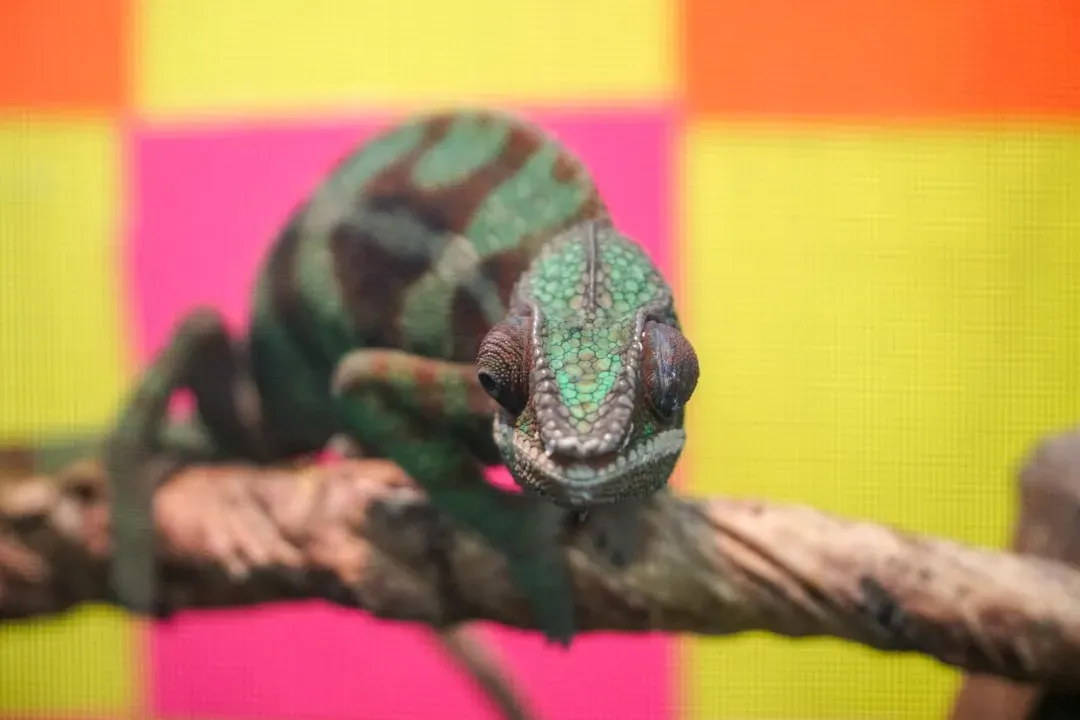
The camouflage story is the most repeated chameleon myth on the internet, and it’s largely backwards. Popular nature writing latched onto the idea that chameleons shift color to blend into leaves or bark, turning them into a symbol of perfect disguise. That framing came from casual naturalist observation, not controlled experiments, and it stuck because it made a great story.
Comparative studies across dozens of chameleon species tell a very different story: color shifts track mood, temperature, and social signaling far more than background matching ever could. A chameleon defending its territory turns vivid and eye-catching, not invisible. The truth is that color change is a conversation, not a disguise – and that reframes basically everything nature specials have told you about this animal.
#12 – Snakes Are Not Actually Deaf
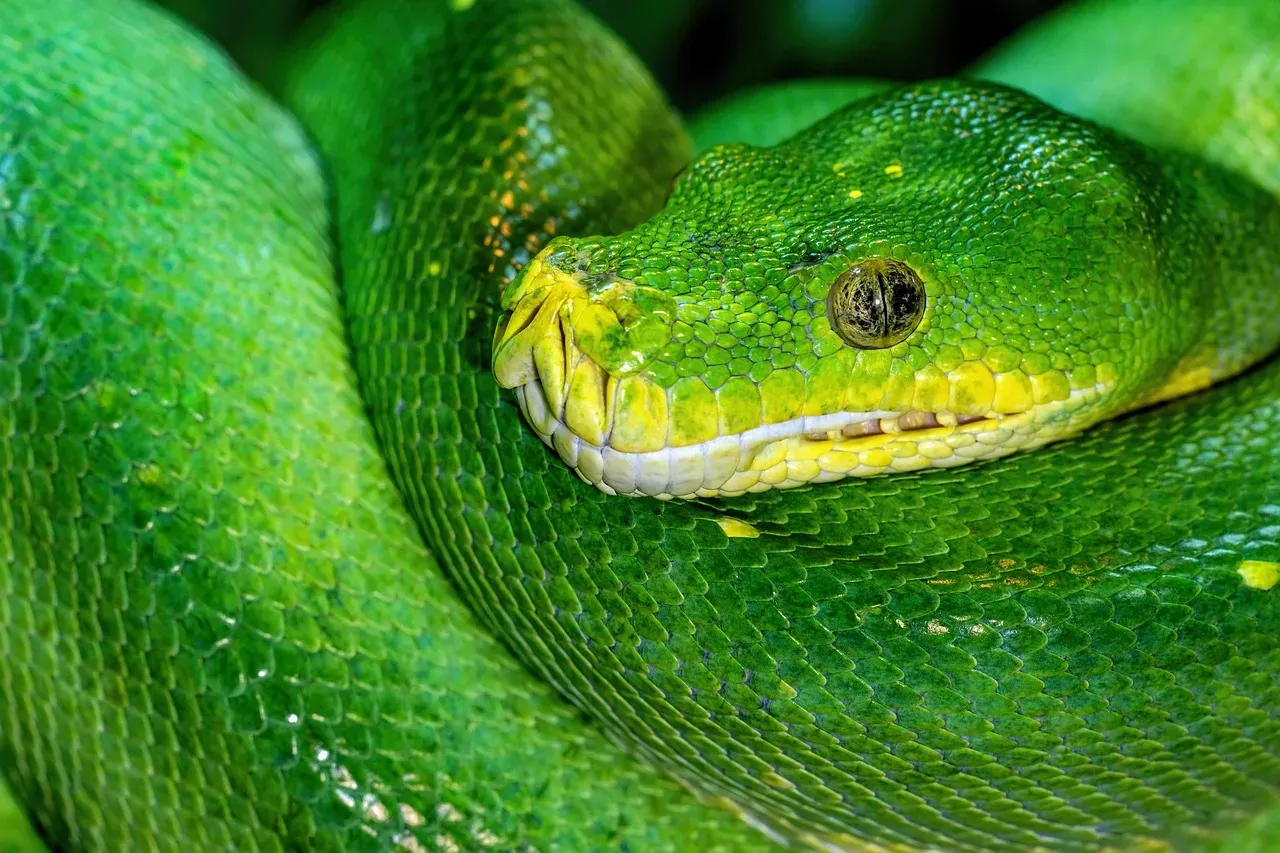
For most of the last century, field guides insisted snakes were completely deaf, able to sense the world only through ground vibrations felt in their jawbones. It made intuitive sense on paper: snakes lack external ears and eardrums, so early researchers assumed airborne sound simply didn’t register. That assumption got repeated in wildlife documentaries for generations until it hardened into fact.
Then someone actually tested it. Snakes possess a functioning inner ear connected to the skull and jaw that lets them pick up airborne sound waves through bone conduction, not just ground tremors, and behavioral trials confirmed they react to speaker-generated sound in lab settings. That shouldn’t happen if they were truly deaf. The “vibration-only” story wasn’t malicious – it just went unchallenged for decades because nobody thought to check it.
#11 – “Cut and Suck” Snakebite First Aid Was Based on Bad Science

Generations of campers were taught to cut a snakebite wound open and suck the venom out. It doesn’t work, and it never did. The technique spread through military and scouting manuals for decades, built entirely on the untested assumption that suction alone could pull meaningful venom back out of tissue.
When researchers finally strapped commercial venom-extraction devices to bite wounds and measured what came out, it was almost nothing – often less than one percent of the injected dose. Worse, cutting the wound increased infection risk, sped venom absorption into damaged tissue, and delayed real treatment. Medical guidance flipped completely: immobilize the limb, stay calm, get to a hospital, because the old advice didn’t just fail to help – it often made things worse.
Worth Knowing
- Stay still and calm, and remove jewelry or tight clothing before swelling starts
- Clean the bite with soap and water, then cover it loosely with a clean, dry bandage
- Position the affected limb at about heart level to help slow the spread of venom
- Never slash or cut the wound in any way, no matter what old advice says
- Skip the tourniquet, ice, and any attempt to remove the venom yourself
#10 – Reptiles Were Wrongly Labeled Incapable of Learning
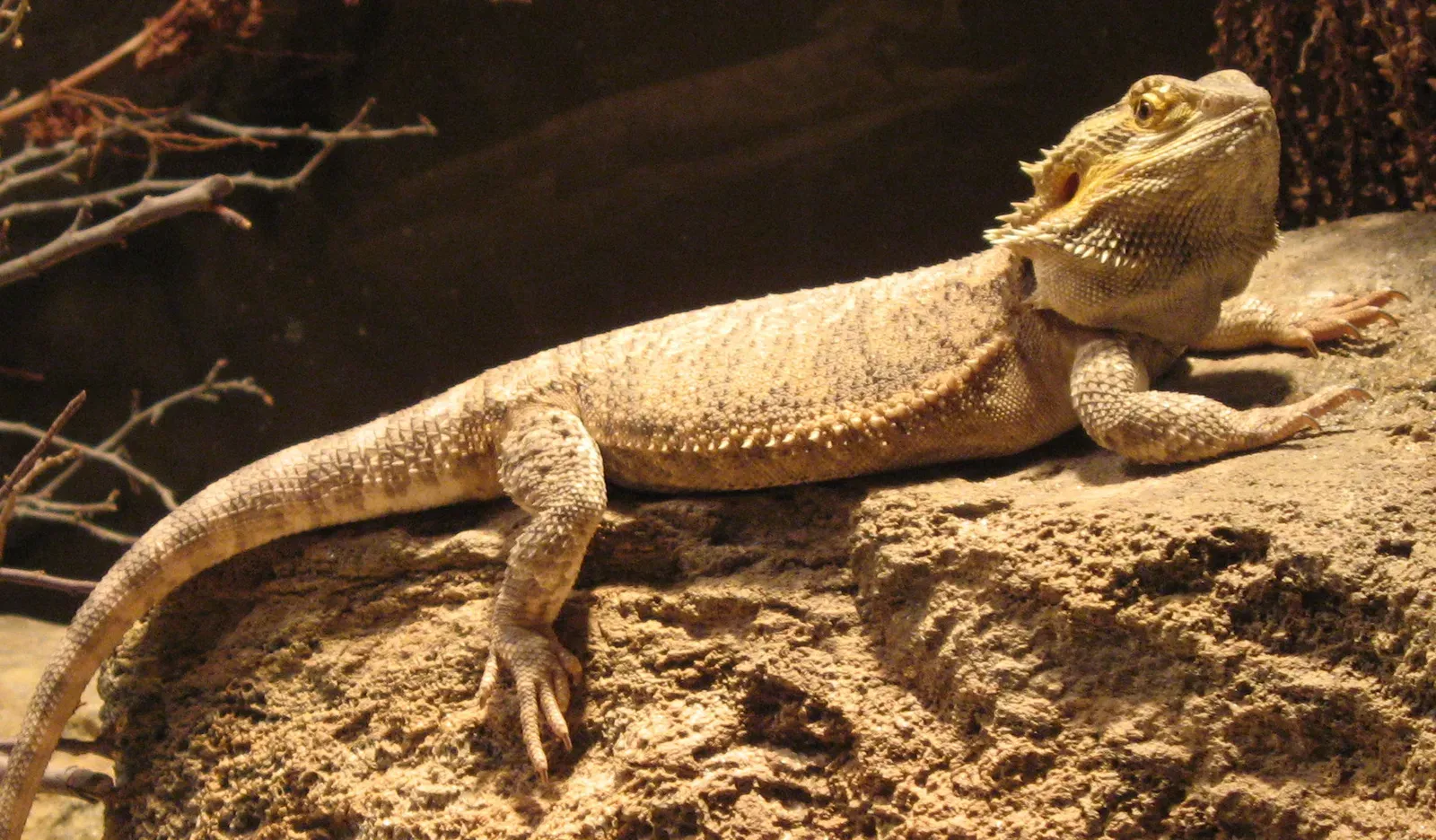
“Reptiles run on pure instinct” was practically a scientific commandment for most of the 20th century. Early comparative psychology experiments used crude, poorly controlled setups to test reptile cognition, and when lizards and turtles underperformed compared to mammals, researchers concluded reptiles simply couldn’t learn complex behavior. That verdict got baked into biology textbooks for generations.
Then the tests got better, and the myth fell apart. Bearded dragons have been shown to learn a task simply by watching another lizard perform it, a form of social learning once thought exclusive to birds and mammals. Tortoises have solved mazes and retained the solution months later without retraining. The “instinct machine” label was never really evidence-based – it was a byproduct of testing reptiles with methods built for rats and pigeons, then blaming the reptiles when the results didn’t match.
#9 – The Basilisk Lizard Doesn’t Walk on Water Using Surface Tension
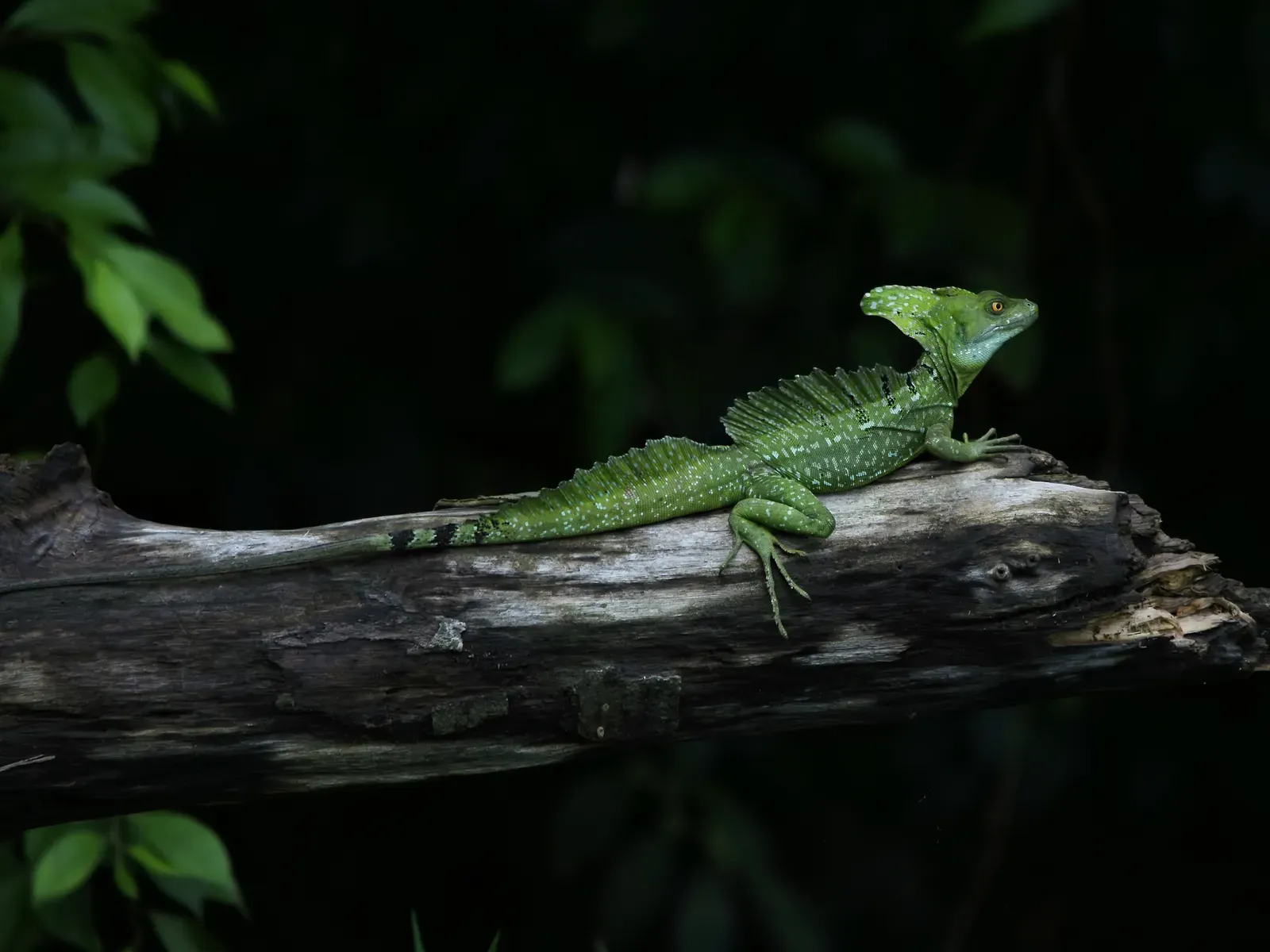
The “Jesus Christ lizard” nickname implies some kind of surface-tension miracle, similar to how a water strider skates across a pond. Popular science ran with that comparison for years, treating the basilisk’s trick as passive and effortless. It’s a nice image. It’s also not what’s actually happening.
High-speed footage tells the real story: the lizard slaps its foot down hard enough to create a temporary air-filled cavity, then strokes backward against that pocket before it collapses, generating genuine mechanical thrust rather than floating on surface film. Surface tension only plays a minor supporting role, and the lizard can’t sustain the trick indefinitely – after a burst of slapping strides, it drops beneath the surface and simply swims the rest of the way. That’s not a miracle. That’s raw biomechanics working overtime.
#8 – Reptiles Were Assumed Not to Feel Pain
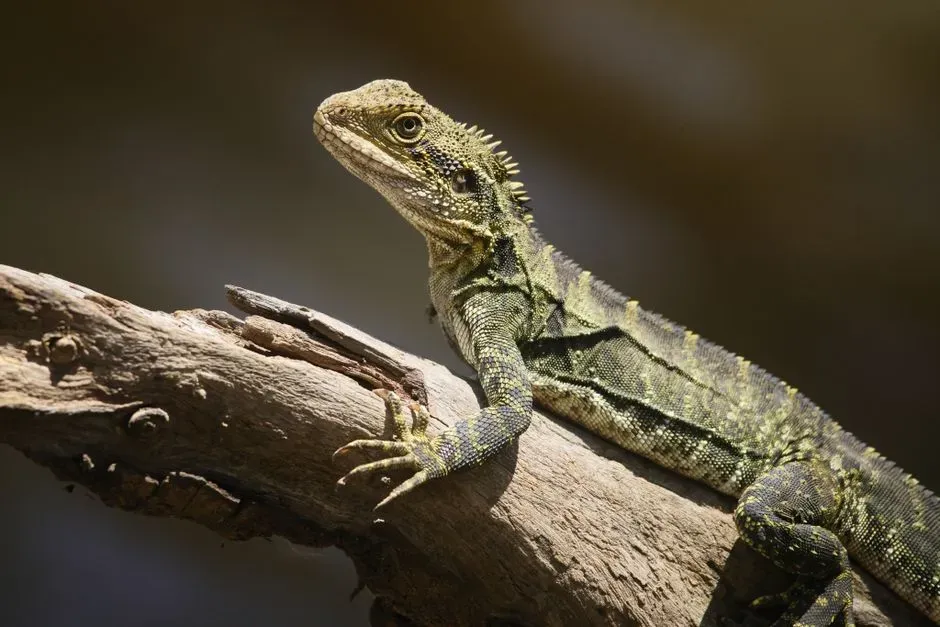
Veterinary and research guidelines spent decades operating on the assumption that reptiles didn’t experience pain the way mammals do. That belief was tied to the idea that pain required a mammalian-style neocortex, a brain structure reptiles lack in that specific form. Because of that assumption, some older handling and research practices skipped anesthesia entirely for reptile procedures.
Later physiological research documented measurable stress-hormone spikes and clear behavioral changes in reptiles following injury – patterns consistent with genuine pain, not simple reflex. That evidence forced a real shift in veterinary standards, and most professional guidelines now require pain management for reptile surgery and injury care. The old assumption wasn’t cruelty by design; it was a definition of pain that was too narrow and never actually tested on the animals it was supposed to describe.
#7 – Crocodiles Are Not “Unchanged Living Fossils”
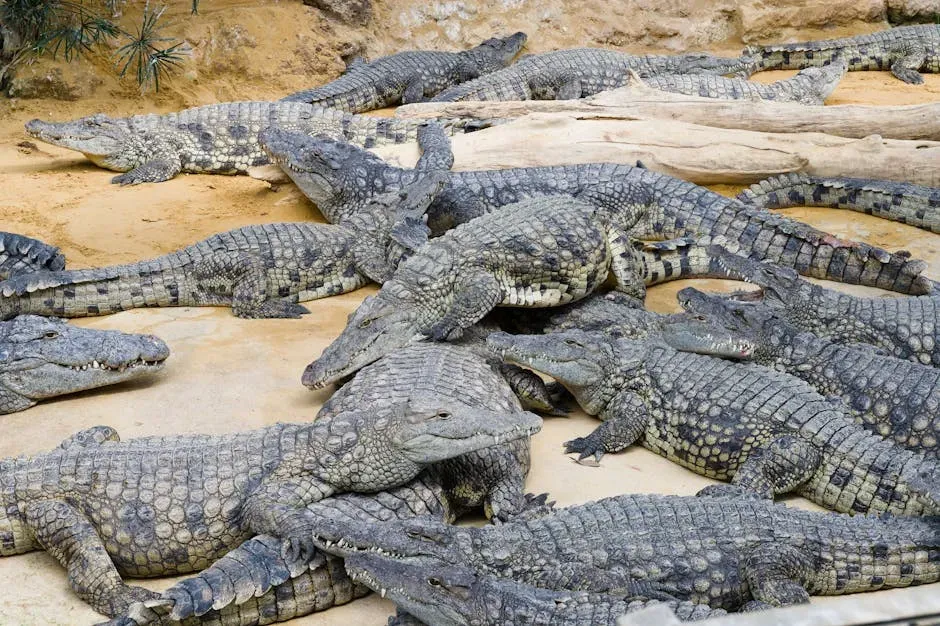
Calling crocodiles living fossils implies they’ve been frozen in place since the dinosaur age. The phrase stuck because modern crocodilians resemble ancient depictions in general body shape, and that surface similarity got mistaken for evolutionary stagnation. It’s a tidy narrative that skips over an enormous amount of extinct diversity.
The broader crocodylomorph lineage once included fully marine species with flippers and tail flukes, along with fast land-running forms that looked nothing like a modern gator. Today’s crocodilians represent a narrow, specialized surviving branch of a once far more varied family tree, not proof the group stopped evolving. The animals basking on riverbanks today are survivors of a massive evolutionary pruning, not unchanged relics.
#6 – Alligators and Crocodiles Are Not the Same Animal
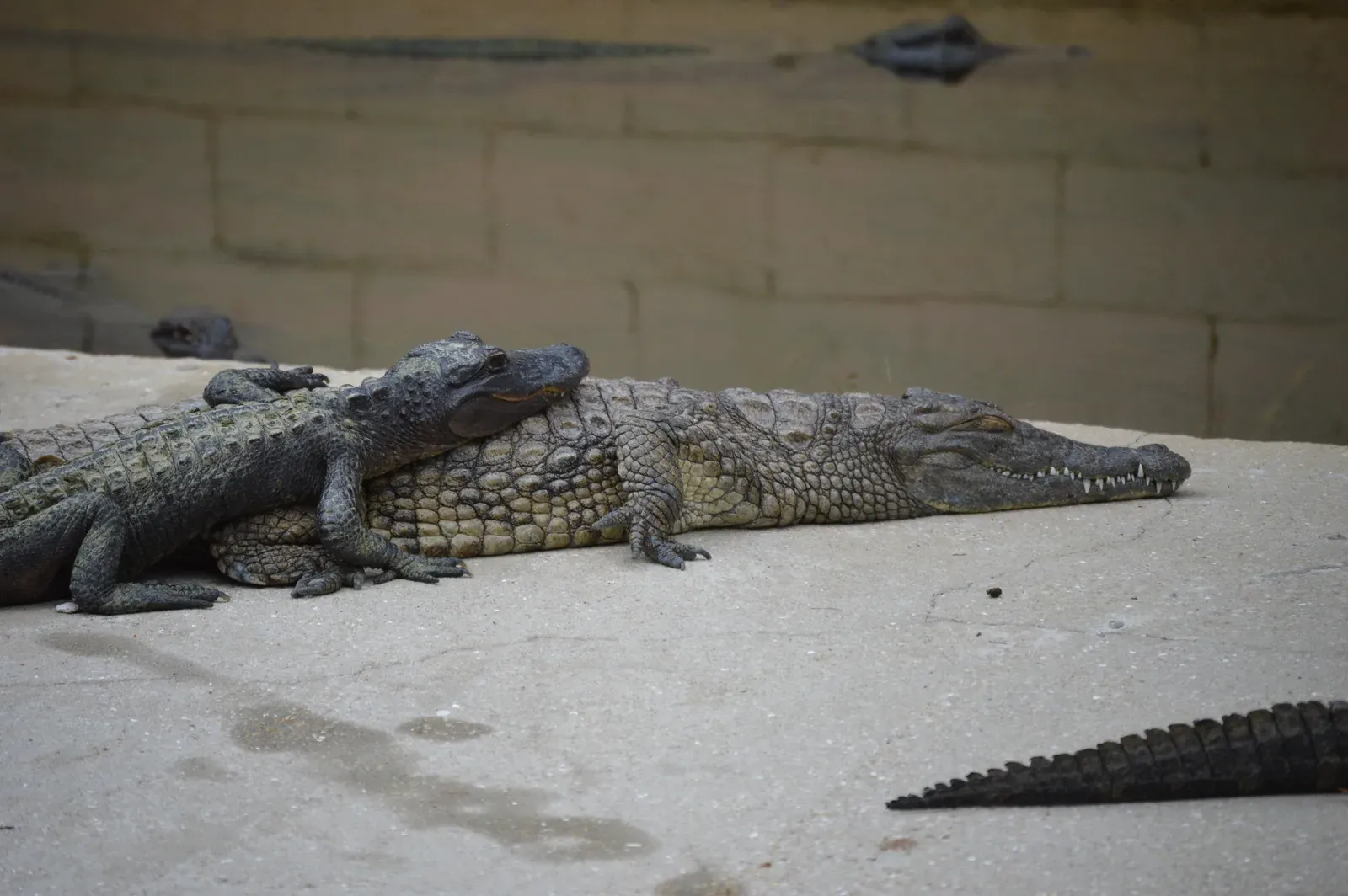
Casual media use the words interchangeably, which has convinced a huge share of the public that “alligator” and “crocodile” are just regional nicknames for one species. They’re not. These are two entirely separate families that diverged tens of millions of years ago and evolved distinct anatomy for different environments.
Alligators have broader, rounder snouts and mostly stick to freshwater, while crocodiles have narrower snouts and functioning salt glands that let them tolerate ocean water. The easiest field identifier: crocodiles show a visible lower tooth jutting up outside a closed mouth, while an alligator’s lower teeth stay hidden. This isn’t a controversial correction among scientists – it’s just a persistent gap between popular vocabulary and actual taxonomy.
Quick Compare
- Snout shape: Alligator – broad and U-shaped | Crocodile – narrow and V-shaped
- Home water: Alligator – freshwater rivers and swamps | Crocodile – freshwater and salt water alike
- Visible teeth at rest: Alligator – hidden | Crocodile – lower tooth exposed
- Typical range: Alligator – southeastern U.S. and China | Crocodile – tropical regions worldwide
#5 – The Iguana’s “Third Eye” Doesn’t Actually See Images
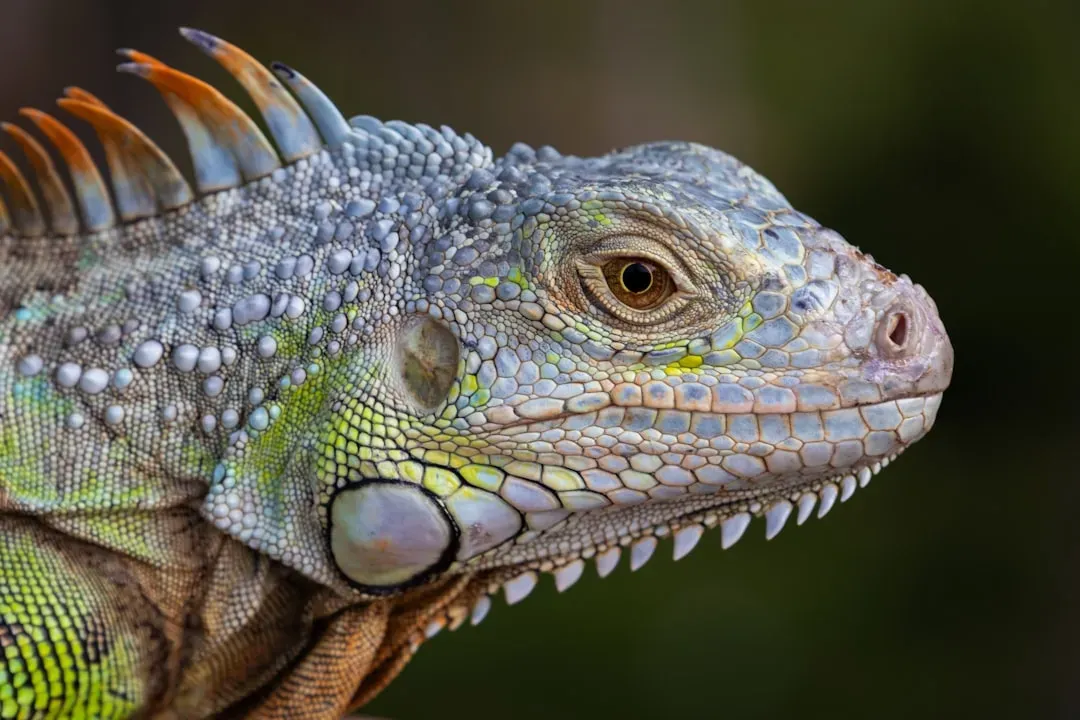
The parietal eye sitting on top of an iguana’s head sounds like something from science fiction, and the myth around it leans hard into that. Many people assume this structure functions like a normal eye, feeding the iguana a second stream of visual images from above. It doesn’t work that way at all.
The parietal eye has a lens and a retina-like layer, but no muscles to focus or move it, so it can only detect broad changes in light and shadow overhead – not shapes or detail. That light-sensing ability still matters enormously: it triggers predator-avoidance reflexes when a shadow suddenly passes overhead, and it helps regulate hormone cycles and thermoregulation. It’s a genuinely fascinating organ. It’s just not a second set of functioning eyes.
#4 – Gecko Feet Don’t Stick With Suction Cups
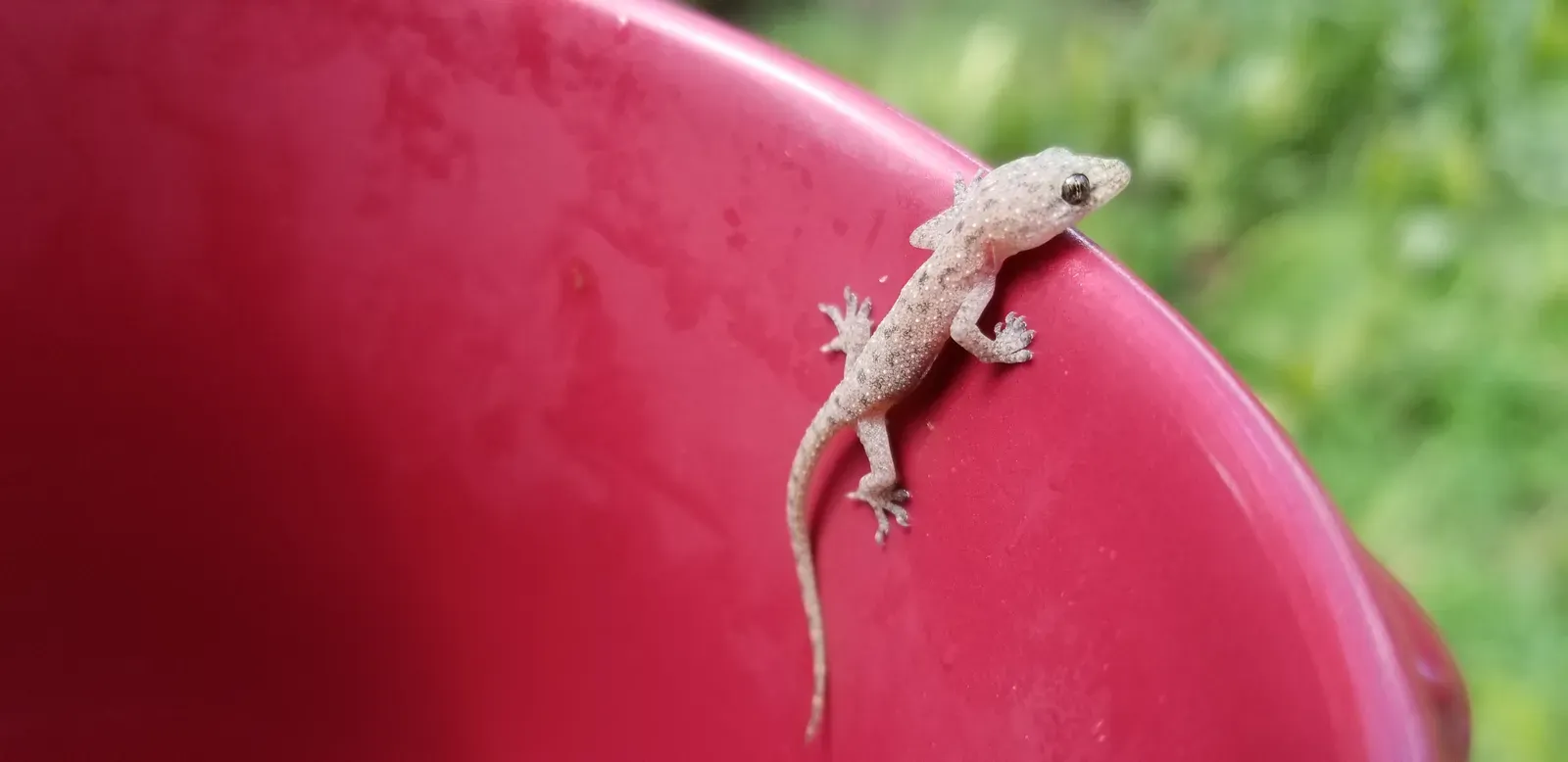
For most of scientific history, nobody actually knew how geckos scaled glass and hung from ceilings by one toe, and the guesses were wrong for decades. Early explanations leaned on sticky secretions or tiny suction cups – ideas that felt intuitive but collapsed under testing. Close examination revealed there was no stickiness on a gecko foot at all, and the suction-cup theory should have died immediately, since gecko feet still stick even in a vacuum, where suction is physically impossible.
The real mechanism wasn’t confirmed until researchers tested it directly in 2000. Gecko feet carry hundreds of thousands of microscopic setae that generate adhesion through van der Waals forces – weak molecular attractions that add up to serious grip on even the slickest surfaces. No glue, no suction, just physics operating at a scale too small to see with the naked eye.
Fast Facts
- Each gecko foot carries about five hundred thousand setae, hair-like structures thinner than a human eyelash
- Every seta splits at the tip into 100 to 1,000 even smaller pads called spatulae, which is where the real grip happens
- Adhesion experiments carried out in a vacuum confirmed suction plays no role at all in how geckos stick
- The adhesion works through pure molecular attraction, so it leaves zero residue behind – no glue, no tackiness, nothing
#3 – The “Snake Venom Evolved Only Once” Claim Is Now Heavily Disputed
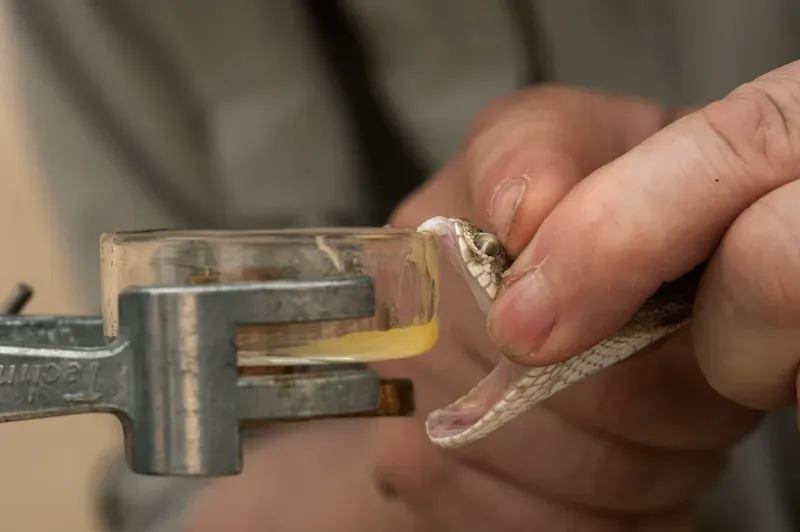
One of the biggest headline-grabbing reptile claims of the 2000s might be resting on shakier ground than most people realize. A widely cited hypothesis proposed that venom didn’t evolve separately in different reptile groups, but appeared a single time in a shared ancestor of snakes and several lizard families, a group collectively named the Toxicofera. The idea spread fast because it was elegant, tidy, and tied a huge swath of reptile diversity together under one dramatic evolutionary event.
Independent teams testing the claim found serious cracks. The hypothesis proved remarkably pervasive for almost a decade before anyone actually tested it, and once researchers checked both new and old data, the theory started to unravel. Many of the lizard groups it depends on show no actual venom gene expression or function at all – which means one of the tidiest evolutionary stories in modern herpetology may need a full rewrite.
#2 – Humans Don’t Have a “Reptilian Brain” Controlling Instinct
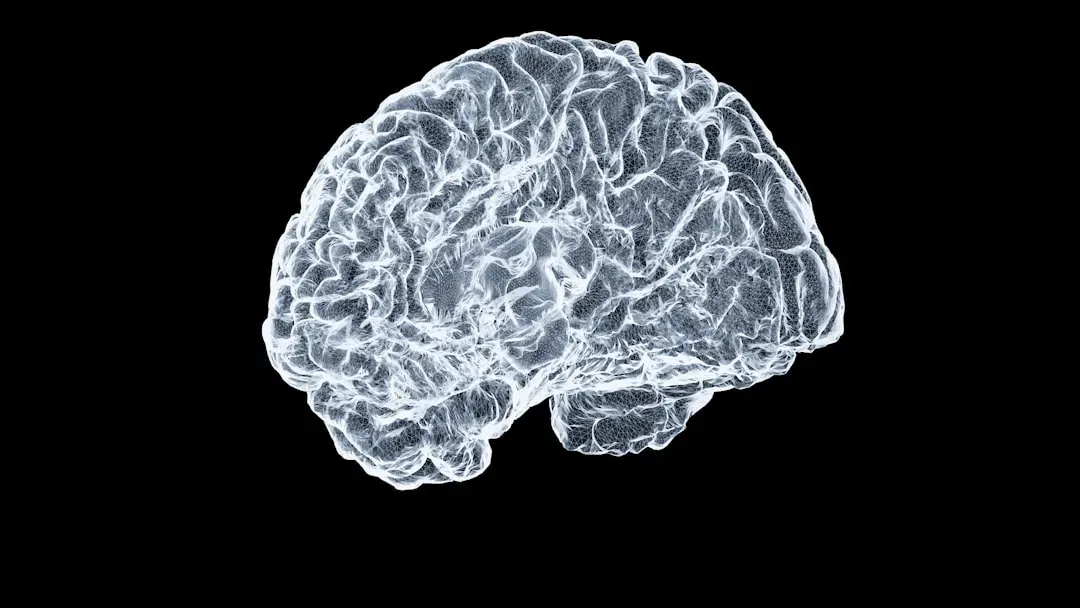
This one isn’t really about reptile biology at all – it’s a myth built on a misreading of reptile brain anatomy that somehow took over pop psychology for sixty years. In the 1960s, a neuroscientist proposed that the human brain evolved in three sequential layers, with a primitive “reptilian complex” at the core driving aggression and instinct, later layered over by emotional and rational structures. The idea exploded in popularity after a famous science communicator repeated it in a bestselling book.
The science behind it never actually held up. Since the 1970s, the triune brain concept has faced steady criticism in evolutionary and developmental neuroscience, and it’s now widely regarded as a myth. A 2022 brain-mapping study comparing lizards and mice found the relevant neurons scattered throughout the brain instead of concentrated in one “reptilian” zone – meaning there’s no clear reptilian portion of the mammalian brain waiting to hijack your worst decisions.
At a Glance
- 1960s – a Yale physiologist and psychiatrist first proposed the triune brain theory
- 1977 – the idea reached a mass audience through a Pulitzer Prize-winning bestseller
- 1970s onward – evolutionary and developmental neuroscientists began openly criticizing the model
- Post-2000 – most comparative neuroscientists no longer support the hypothesis at all
- 2022 – direct brain-mapping in lizards and mice found no isolated “reptilian” zone to blame for instinct
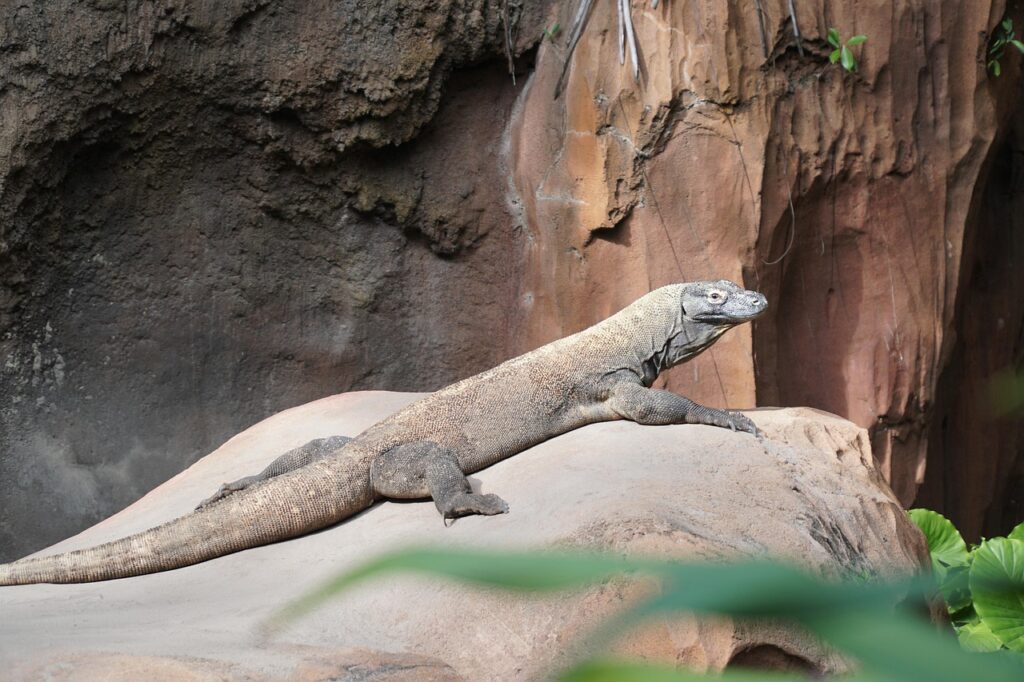
#1 – Komodo Dragons Don’t Kill With “Toxic Bacteria” Saliva

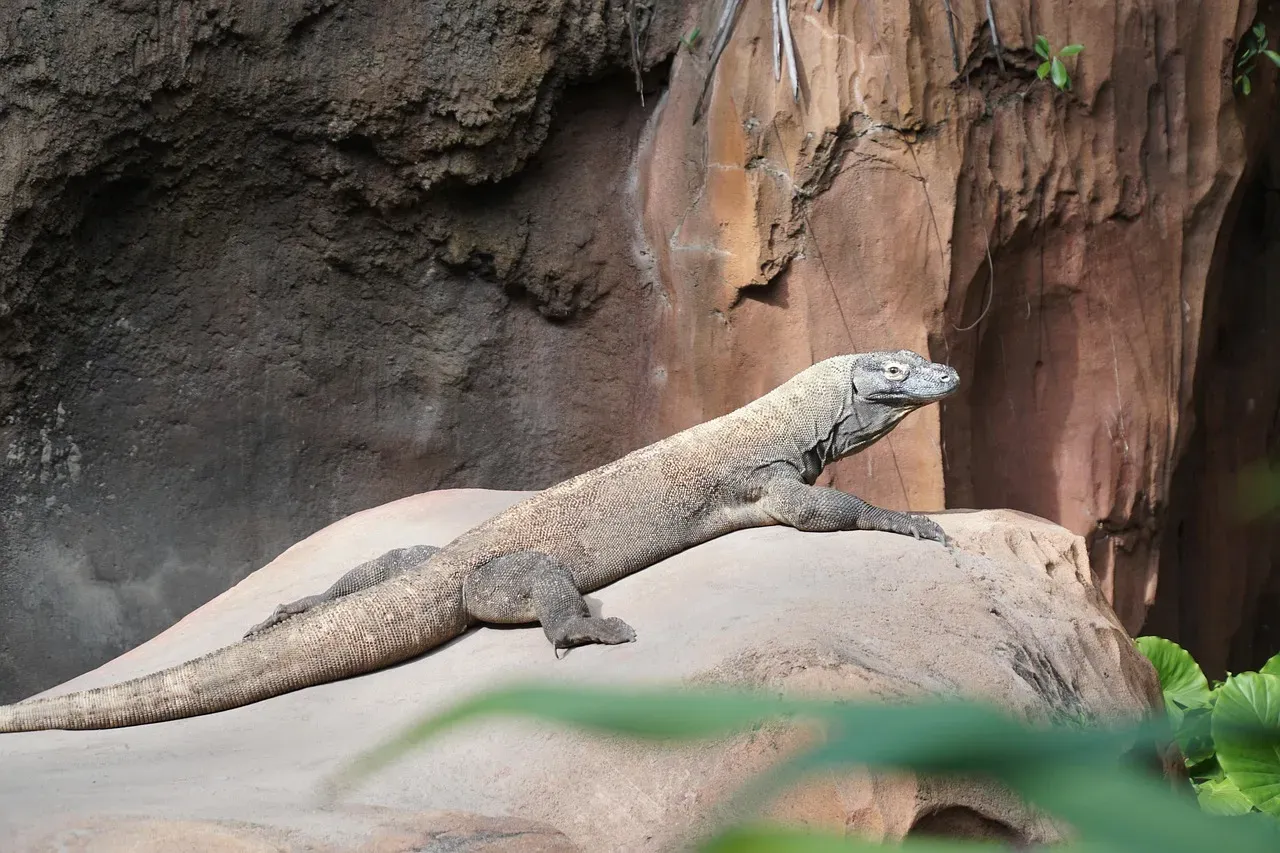
This is the granddaddy of every reptile myth on this list, repeated in documentaries for nearly three decades before it finally collapsed under direct testing. A biologist who moved to Komodo in 1969 to study the dragons spent a year watching them and noticed something disturbing: large animals bitten by dragons often died of infection days later. Based on that single observation – and no actual evidence – he suggested the dragons used bacteria as a biological weapon, and that explanation became gospel almost overnight.
It had long been believed that Komodo dragon bites were fatal because of toxic bacteria in the reptiles’ mouths, but the new study found that the mouths of Komodo dragons are surprisingly ordinary.
University of Queensland research team, 2013 findings
The real answer only emerged in 2009, when a research team put a dragon’s skull through a medical scanner and found venom glands loaded with toxins that lower blood pressure, cause massive bleeding, prevent clotting, and induce shock. Follow-up bacteriology work sealed the case shut. Nearly thirty years of documentaries got the mechanism completely wrong, all because one field observation went unchallenged for a generation.
The Bottom Line
The pattern across every entry on this list is almost identical: one early observation, one unreplicated study, or one elegant-sounding hypothesis got repeated so often it hardened into “common knowledge” long before anyone actually tested it. The Komodo dragon myth alone survived for nearly three decades on a single scientist’s field notes, and the triune brain myth shaped how millions of people think about their own anger for sixty years. That should worry anyone who assumes textbook facts are automatically settled facts.
If you ask me, reptile science has earned a reputation it doesn’t deserve – not because the animals are boring, but because we kept writing down the first plausible explanation and calling it done. The real lesson isn’t about lizards or crocodiles at all. It’s that “everybody knows this” is one of the weakest forms of evidence there is, and it took actual scientists decades to prove it. Which of these surprised you the most – and which reptile “fact” do you think is still hiding an untested assumption? Drop it in the comments.