If you could rewind time a hundred thousand years, your first impression might be that nothing is moving. No cities, no roads, no recorded history. But beneath that silence, small bands of humans were walking, coast-hopping, and river-following in ways that would quietly redraw the map of the entire planet. Every border you know today, every language family, and even many of the genes in your own body still carry the fingerprints of those ancient journeys.
When you look at prehistoric migrations, you are not just learning dates and routes; you are peeking into the most important road trips in human history. These movements were not simple straight lines from point A to point B. They happened in pulses, stalls, and surprising detours, often driven by climate swings, changing landscapes, and plain curiosity. As you follow these five astounding migrations, you start to see how deeply you’re connected to people who walked out of Africa with no idea what waited beyond the next hill.
The First Great Exodus: When You Walk Out of Africa
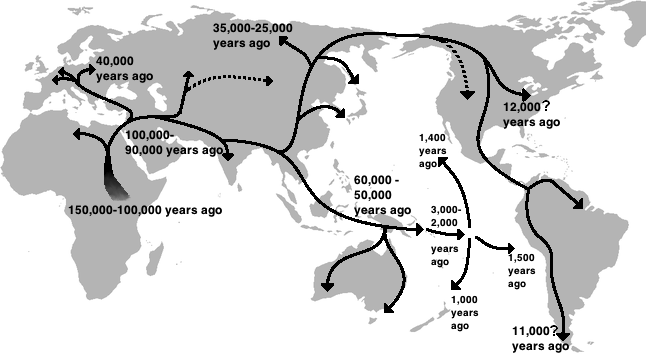
Imagine standing somewhere in eastern Africa roughly about seventy thousand years ago, part of a small group of modern humans who look very much like you do today. You do not know it, but your decision to wander north or east, following game or fresh water, is one of the most consequential moves in human history. Genetic evidence suggests that nearly all non-African people alive today can trace their ancestry back to one relatively small population that left Africa during this period, carrying with them a narrow slice of the larger African genetic diversity. When you picture this, you see not hordes of people surging over a border, but a few hundred or a few thousand individuals gradually spreading out over generations.
As you follow these early migrants in your mind, you watch them move through the Sinai Peninsula or along the southern Arabian coast, hugging shorelines where food is reliable and climates are milder. You can imagine parents teaching children the safest routes to water, which shellfish are edible, and how to read the stars above unfamiliar horizons. At each step, you see these people encountering new landscapes and perhaps even other human cousins like Neanderthals, exchanging genes as well as tools. When you look at your own reflection, you are looking at the distant outcome of that walk out of Africa, a journey that turned one regional species into a truly global one.
Island-Hopping to a New World: Your Ancestors’ Leap into Australia
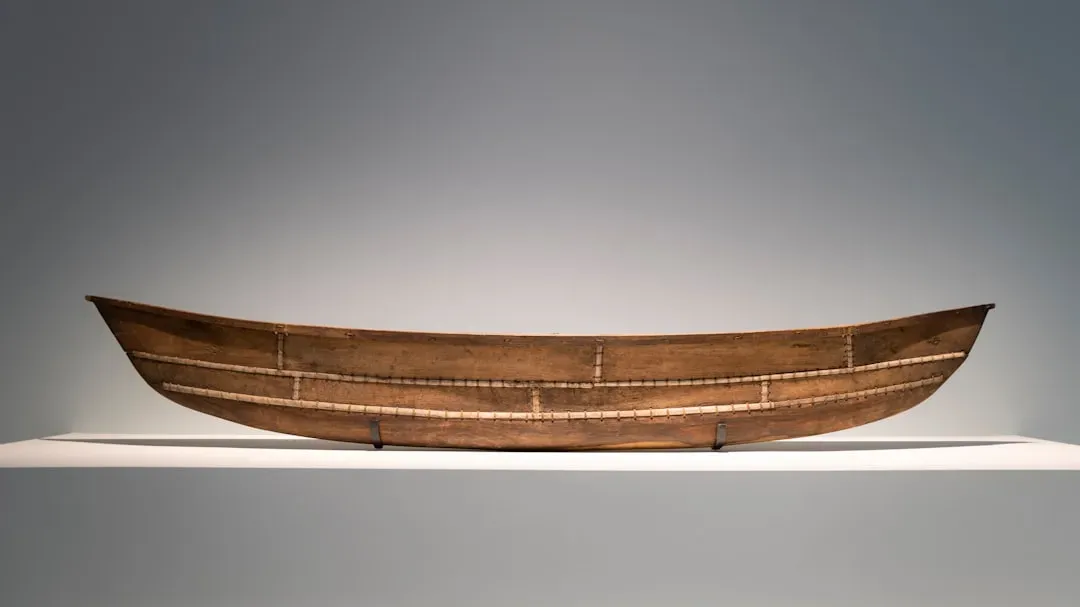
Now shift your focus eastward, to the ancient region scholars often call Sahul, which once linked what you know today as Australia, New Guinea, and Tasmania. Between about fifty thousand and sixty-five thousand years ago, humans reached this vast continent-sized landmass, and you can picture the courage that would have required. Even with sea levels lower during the Ice Age, these migrants still had to cross stretches of open water using simple boats or rafts, guided by coastlines, wind, and perhaps the memory of islands glimpsed on the horizon. When you step into their sandals, you realize they were not just wanderers; they were intentional explorers willing to push into the unknown.
Once you arrive with them in ancient Australia, the world around you feels almost alien. You see giant marsupials, enormous birds, and predators unlike anything in Africa or Eurasia, and you have to rapidly adapt your tools, hunting strategies, and stories to make sense of this place. Rock art and archaeological sites show that humans spread quickly across the continent, leaving traces from tropical coasts to arid interiors. When you think about this migration, you start to understand that early humans already possessed complex planning skills, seafaring know-how, and social cooperation strong enough to pull off a multi-stage island-hopping journey. In a very real way, when you watch modern people cross oceans today, you are seeing a very old habit being expressed with new technology.
Facing Giants in the North: Your Encounter with Neanderthals in Eurasia
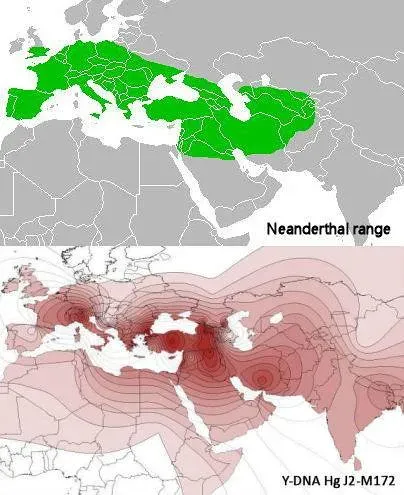
When you follow prehistoric humans northward into Europe and western Asia, you are not walking into empty land. You are stepping into territories long occupied by Neanderthals, another human species well adapted to colder climates, with strong bodies and sophisticated tools. For a long time, people thought your species simply replaced them, but genetic research now lets you see a more complicated picture. If you have ancestry from Europe or parts of Asia, there is a good chance you carry small amounts of Neanderthal DNA, meaning your distant relatives did not just compete with Neanderthals – they formed families with them.
As you imagine that meeting, you might picture two different accents of humanity sharing a valley, watching each other’s hunting techniques, maybe copying useful ideas and even trading mates. Over thousands of years, the balance shifts as your species becomes more numerous, perhaps aided by different social structures, broader food strategies, or subtle cognitive advantages. Yet Neanderthals do not simply vanish without leaving a trace. Tiny fragments of their genes in your own DNA can influence things like immune responses and adaptation to cold. When you walk through a snowy landscape today dressed in modern gear, you are still faintly echoing an ancient partnership between your lineage and those northern cousins.
Riding the Monsoon Highways: Your Expansion Across South and Southeast Asia
If you turn your attention to South and Southeast Asia, you see one of the most complex prehistoric mosaics of all. You are not dealing with a single simple wave of people, but with repeated pulses of migration interacting with shifting climates, sea levels, and forests. As early humans followed coastlines and river systems, you might picture yourself moving from mangrove-lined shores in India to lush tropical islands in what is now Indonesia, adjusting your diet from large game to fish, shellfish, and plant foods. Along the way, you encounter different groups, some descended from earlier waves out of Africa and others arriving later, blending cultures and lineages as you go.
Over tens of thousands of years, rising seas flood low-lying areas and carve the modern shapes of the Bay of Bengal and the many islands of Southeast Asia, forcing you and your kin to adapt again. You may shift from a more nomadic lifestyle to one that takes advantage of seasonal monsoons, fishing runs, and plant cycles, developing knowledge of winds and tides that rivals any modern sailor’s skill. Archaeological and genetic evidence suggests that the people you see today in this region reflect an intricate layering of these ancient movements, rather than a single founding population. When you walk through a modern city in South or Southeast Asia, you are literally walking across the crossroads of multiple prehistoric journeys that folded into each other like waves crashing on the same shore.
Crossing into the Americas: When You Step onto a New Continent
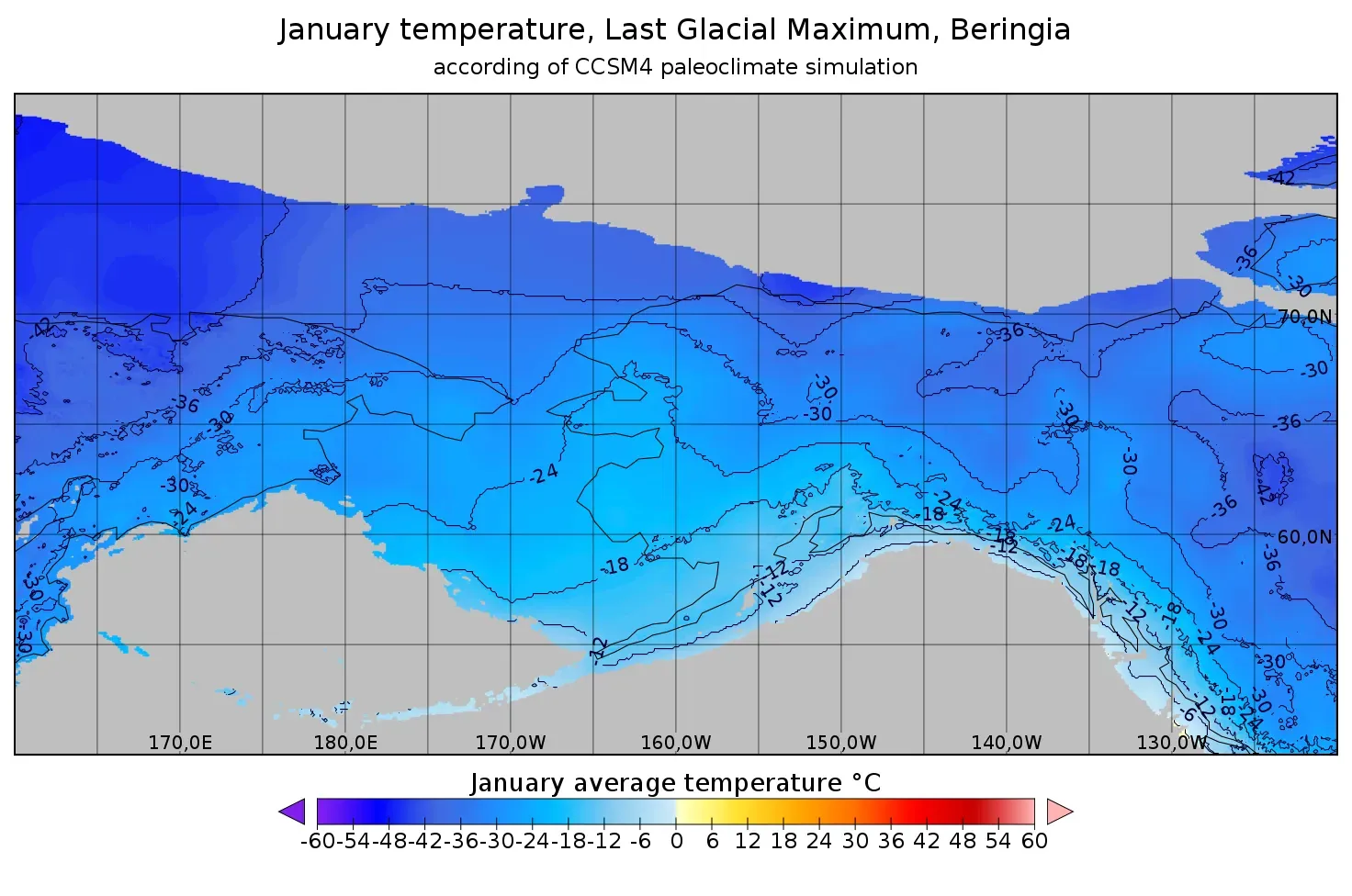
Finally, imagine standing at the edge of an Ice Age world somewhere in northeast Asia, with massive ice sheets looming in the distance and herds of animals migrating along seasonal paths. Between roughly about twenty thousand and fifteen thousand years ago, groups of your ancestors made the leap into the Americas, turning what had been a human-free continent into a vast new homeland. For a long time, people thought this happened only across an exposed land bridge called Beringia, followed by a trek through an inland corridor between melting ice sheets. But as you follow the latest evidence, you see a richer story that might include coastal routes, where small bands traveled along shorelines using boats, beaches, and rich marine resources.
Once you set foot in the Americas, you find enormous, unfamiliar animals like mammoths, mastodons, and giant ground sloths, along with dramatic new landscapes from Arctic tundra to tropical forests. You and your descendants spread astonishingly quickly southward and eastward, leaving stone tools and ancient campsites as breadcrumbs from Alaska to Patagonia. Over time, diverse cultures and languages blossom, shaped by mountains, rivers, and plains, long before any written records exist. If you have Indigenous American ancestry, your roots reach back to those first bold crossings; if you do not, you are still connected through the way this migration completed the human map of the globe. With this step, your species finally occupies every major landmass, turning Earth into a fully human planet.
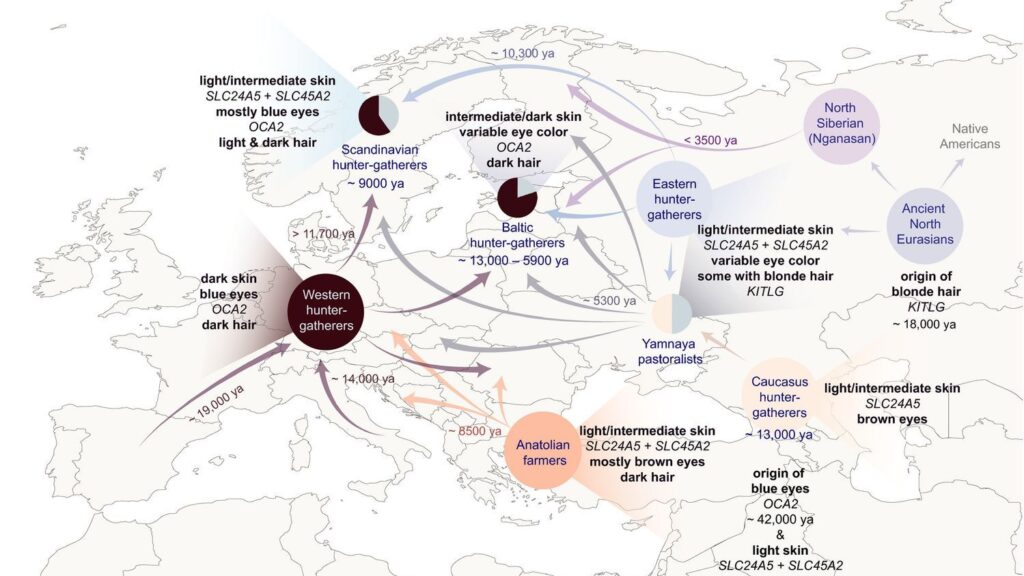
How These Migrations Still Live Inside You Today
![How These Migrations Still Live Inside You Today (Skin colour and vitamin D: An updateProvided under Creative Commons free license (p.1, with link to Attribution 4.0 International (CC BY 4.0) page)"This is an open access article under the terms of the Creative Commons Attribution License, which permits use, distribution and reproduction in any medium, provided the original work is properly cited. © 2020 The Authors. Experimental Dermatology published by John Wiley & Sons Ltd" [1], CC BY-SA 4.0)](https://nvmwebsites-budwg5g9avh3epea.z03.azurefd.net/dinoworld/5c0caa84ff9b200276143667595846ed.webp)
Provided under Creative Commons free license (p.1, with link to Attribution 4.0 International (CC BY 4.0) page)
“This is an open access article under the terms of the Creative Commons Attribution License, which permits use, distribution and reproduction in any medium, provided the original work is properly cited. © 2020 The Authors. Experimental Dermatology published by John Wiley & Sons Ltd” [1], CC BY-SA 4.0)
When you pull back and look at all five of these migrations together, you start to see a pattern in yourself. You are the product of movement, mixing, and adaptation, not of one static ancestral homeland frozen in time. Your DNA quietly records past routes, bottlenecks, and encounters, from the small founding group that walked out of Africa to the unexpected meetings with Neanderthals and the daring sea crossings toward Australia and the Americas. Even if you never leave your hometown, your body remembers a lineage of travelers who rarely stayed put for long.
You can also feel these migrations in the stories you tell and the way you think about the world. Curiosity about what lies over the next horizon, the urge to explore, and the willingness to adapt to new environments are not modern inventions; they are old survival strategies wired into you by countless generations who walked, sailed, and endured. When you look at modern debates about borders, identity, and belonging, you can see them differently through this deep-time lens. Humans have always moved, mixed, and reinvented themselves in new places. The question you are left with is not whether migration shaped your world, but how you choose to understand your place in that long, astonishing journey.
In the end, these prehistoric migrations are not remote trivia from a forgotten age; they are the opening chapters of your own story. By imagining yourself walking alongside those early bands of humans, you gain a new respect for their resilience and a new perspective on your everyday life. The roads you drive, the languages you speak, and even the foods you eat sit on top of paths carved thousands of years before anyone wrote a word. When you step outside tomorrow and feel the ground under your feet, will you think differently about the ancient footsteps that paved the way for yours?