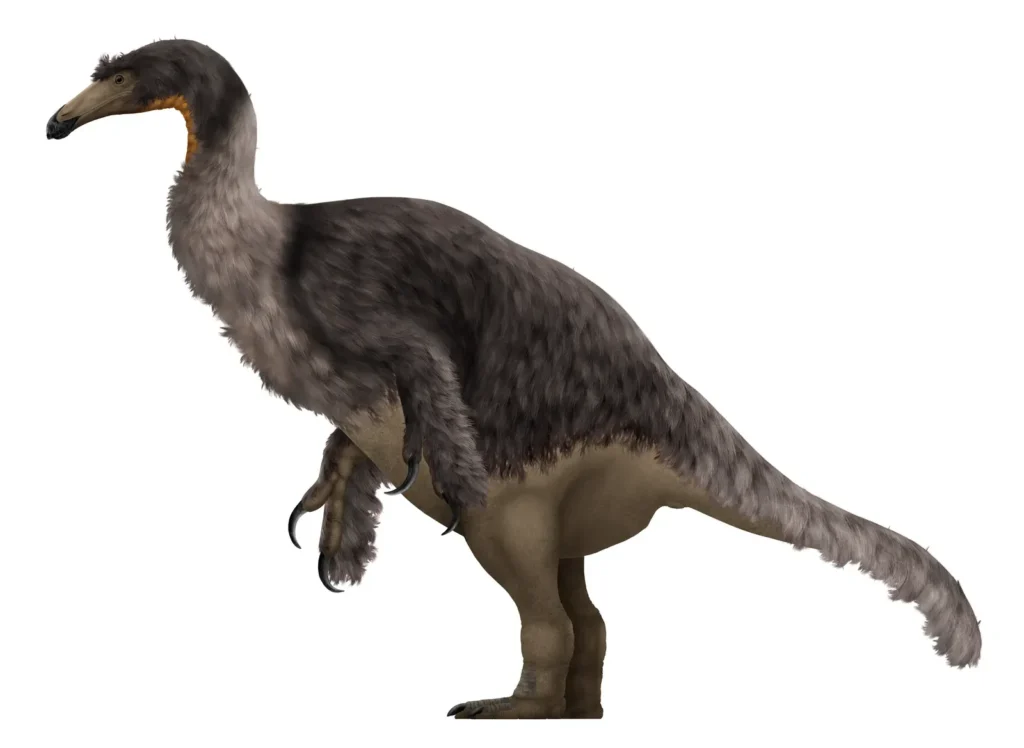
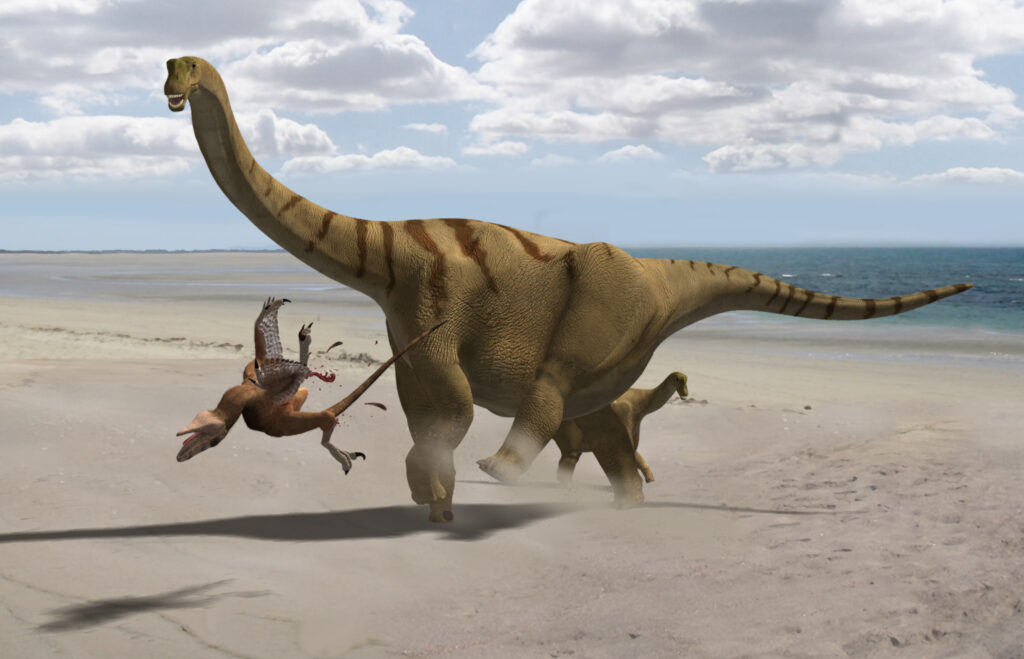
Imagine stumbling across an ancient field where thousands upon thousands of fossilized eggs are scattered beneath your feet, each one a tiny, fragile window into a world that vanished roughly 66 million years ago. It sounds like pure science fiction. Yet these places are very real, spread across continents, and they continue to stun scientists with every new layer of sediment peeled away.
You might wonder what it takes for an egg, something so delicate and temporary, to survive millions of years of geological upheaval, volcanic activity, and slow erosion. The answer, honestly, is a rare combination of luck, sand, mud, and perfect environmental timing. These sites are not just large in scale. They are large in scientific importance, each holding secrets about dinosaur reproduction, behavior, and ultimately, extinction. Let’s dive in.
1. Qinglongshan, Yunyang District, China – The World’s Largest Dinosaur Egg Fossil Site
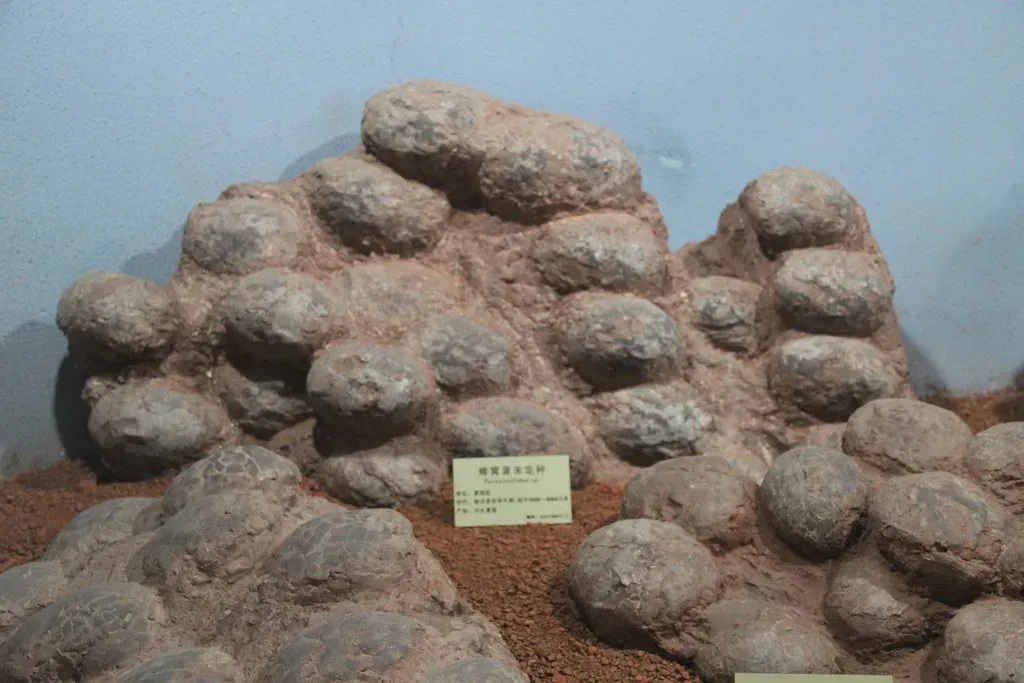
Here’s a jaw-dropping number for you: more than three thousand fossilized eggs preserved in one place. The dinosaur egg fossil site in Shiyan’s Yunyang District dates to approximately 60 to 80 million years ago, and was discovered in 1995, and it is considered the world’s largest dinosaur egg fossil site. That is a title that carries real weight, and the sheer scale of preservation here is something that is very hard to wrap your head around.
The site is known as Qinglongshan, located in the Yunyang District of Shiyan, and more than 3,000 fossilised eggs have been found at this site, most of which are three-dimensionally preserved, largely intact, and display minimal deformation. Think of it like a prehistoric nursery, perfectly frozen in time, where the eggs have barely changed their original shape.
So far, nearly 3,000 well-preserved dinosaur egg fossils have been excavated and protected, which can be identified and classified into at least 220 nests with unique arrangements. In 2025, researchers made headlines by dating the eggs directly for the first time, using a method described as an “atomic clock” for fossils. Scientists in China calculated the direct age of a fossilized dinosaur egg for the first time, and the newly dated egg, from a cluster of 28 found at the nesting area in Shiyan, is around 85.9 million years old, according to a study published in Frontiers in Earth Science.
The eggs have mostly remained in their original location and show only minimal deformation, and the majority is thought to belong to a single species, Placoolithus tumiaolingensis, which belongs to the family Dendroolithidae, a group characterized by highly porous eggshells. I think what makes this site so compelling, above all else, is that it is not just a dump of old bones. These are intact, three-dimensional eggs, still sitting in their original nesting layers, telling a story that science is only beginning to fully decode.
2. Auca Mahuevo, Patagonia, Argentina – A Titanosaur Nursery Frozen in Time
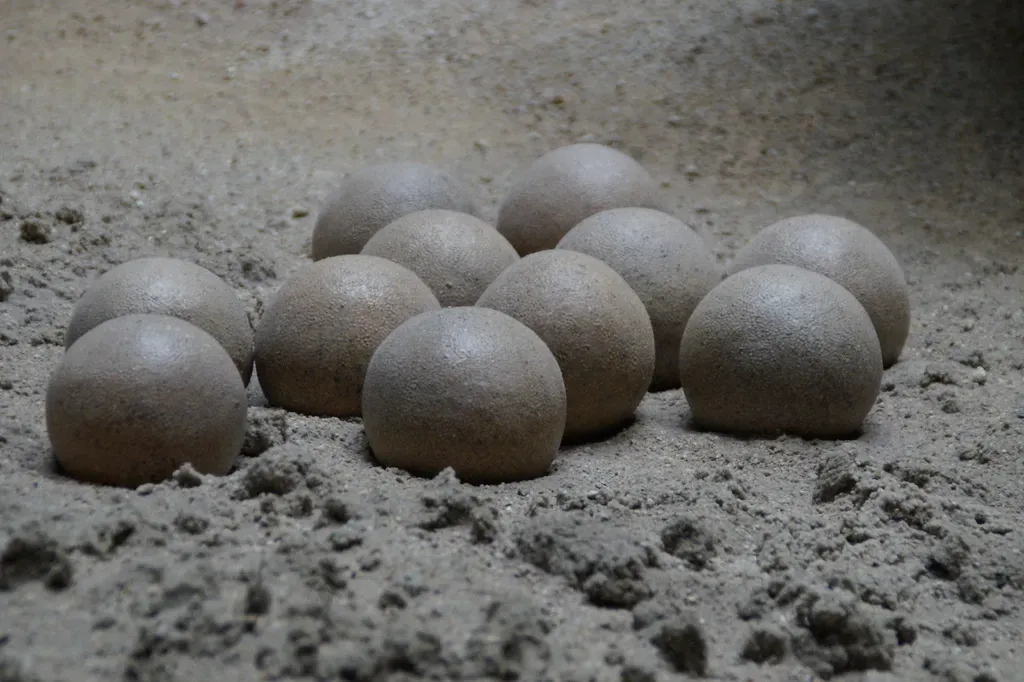
Auca Mahuevo is a Cretaceous lagerstätte in the eroded badlands of the Patagonian province of Neuquén, Argentina, and the sedimentary layers of the Anacleto Formation at Auca Mahuevo were deposited between 83.5 and 79.5 million years before present, offering a view of a fossilized titanosaurid sauropod hatchery. A lagerstätte, for those unfamiliar, is essentially what paleontologists dream about – a site of exceptionally preserved fossils, where conditions conspired to keep everything almost exactly as it was.
Thousands of eggs are distributed over an area greater than 1 km², and the proportion of eggs containing embryonic remains is high, with over a dozen in situ eggs and nearly 40 egg fragments encasing embryonic material recovered. That last part bears repeating. Embryos. Inside the eggs. Intact. That is extraordinarily rare in the fossil record, and it is what catapulted Auca Mahuevo to global scientific fame.
A high concentration of eggs is evident at Auca Mahuevo, with 30 clusters of eggs mapped in a 600 square meter area of egg layer 3 and over 200 eggs found distributed over a quarry of just 30 square meters of that same egg layer. The density is almost bewildering. The context revealed a vast rookery of excavated nest structures that can be compared to living egg-layers such as turtles, crocodilians, and birds, and even their spacing within the nesting locality, two to three meters apart, can be assessed, with reconstruction of nesting strategies suggesting that shallow pits with rims were excavated and plant material incorporated into the surface.
Honestly, you have to picture it: a flat ancient floodplain covered in hundreds of shallow pits, each dug by an animal weighing dozens of tonnes, each holding a cluster of bowling-ball-sized eggs slowly warming in the Cretaceous sun. Embryonic remains are also strikingly abundant at Auca Mahuevo, with at least a third of the in situ eggs examined containing bones, and dozens of egg fragments on the surface of egg layer 3 producing casts of embryonic skin. It is hard to think of a more breathtaking window into the ancient past.
3. The Lameta Formation, Central India – One of the Largest Hatcheries on Earth
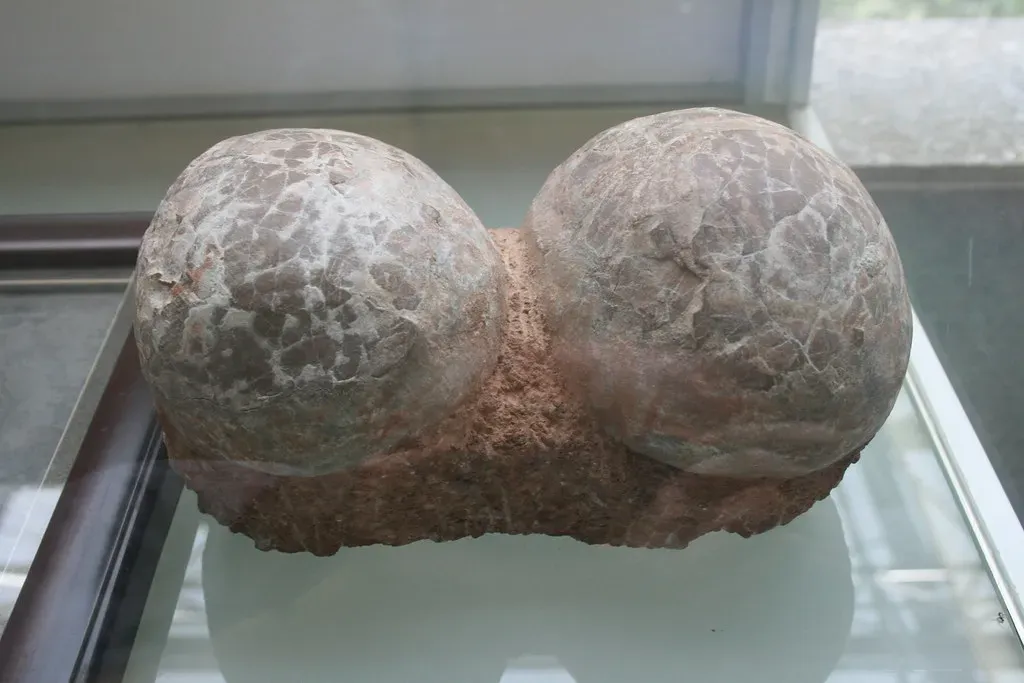
Paleontologists in central India have uncovered 92 preserved dinosaur nests and 256 eggs in an extensive fossilized hatchery, and during the Late Cretaceous period, this breeding ground belonged to long-tailed, long-necked titanosaurs. When this discovery was formally published in 2023, it sent ripples through the paleontology world and for good reason.
A study published in the journal PLOS ONE found evidence of six different types of fossilised egg across the Lameta Formation in central India, and they date to the Late Cretaceous, thought to have been buried by lava during the eruption of the volcanic region known as the Deccan Traps. So these eggs were essentially sealed away by volcanic catastrophe, which is both tragic and extraordinarily useful for preservation.
These eggs were found in the Narmada Valley of central India, and date back to the Upper Cretaceous more than 66 million years ago in what may have been a floodplain. Together with previously known nearby sites, the total scale of the Indian hatchery is staggering. Together with dinosaur nests from Jabalpur in the east and Balasinor in the west, the new nesting sites from Madhya Pradesh’s Dhar District cover an east-west stretch of about 1,000 kilometres, constituting one of the largest dinosaur hatcheries in the world.
Among the 256 eggs found at the site, one in particular caught researchers’ attention, as it appears to show a layer of eggshell inside another egg, with its shape suggesting it had always been this way, and while multi-shelled eggs are not uncommon in birds and reptiles, the researchers believed this fossil was something different, thinking it is an ovum-in-ovo egg, where one egg is found inside another. If confirmed, that would be a first not just for dinosaurs, but for all reptiles ever studied.
4. The Southern Pyrenees, Spain – 300,000 Eggs in a Single Block of Stone
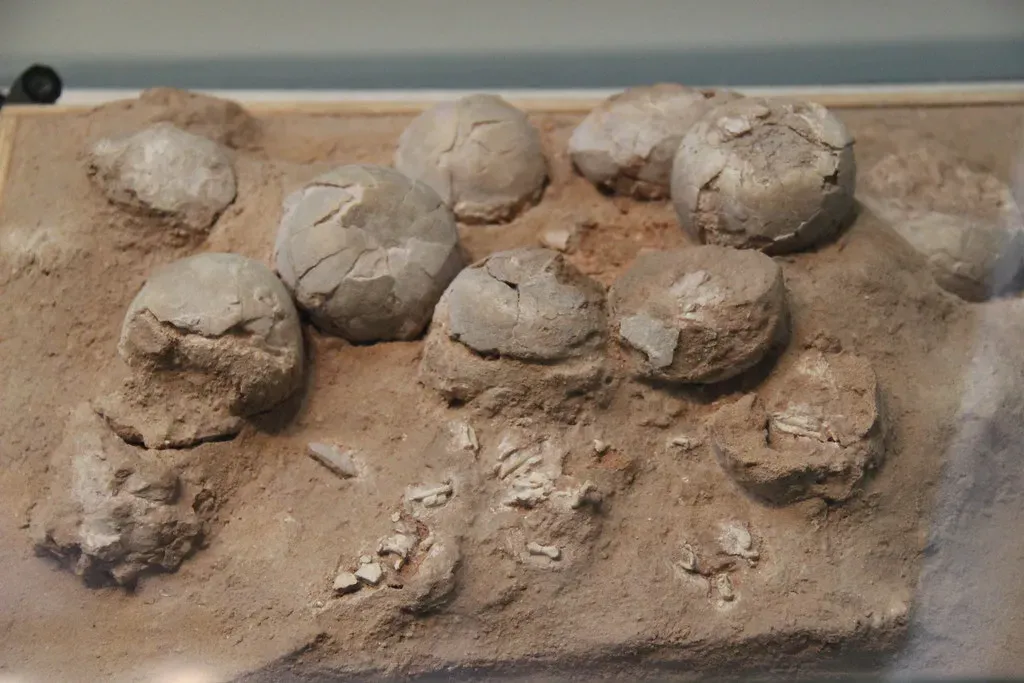
Let’s be real, when you hear “300,000 eggs,” your brain almost refuses to process it. In the late 20th century, Spanish paleontologists found the remains of a huge nesting site in the southern Pyrenees in Spain, where Jose Luis Sanz, a paleontologist at the Autonomous University of Madrid, and his colleagues found about 300,000 eggs in one large piece of sandstone, in an area that would have been a beach about 65 million to 70 million years ago.
Beach sands were a good place for dinosaurs to lay their eggs because the sand would be effective at absorbing and holding enough heat to incubate the eggs, and one ancient beach deposit in northeastern Spain actually preserves about 300,000 fossil dinosaur eggs. The sheer mathematics of that statement is dizzying. This was not a one-time nesting event. This was a site that dinosaurs returned to, season after season, for possibly thousands of years.
The find wasn’t just one nest, but at least 24, with randomly dropped eggs, and each nest contained anywhere from one to seven eggs, which were about 8 inches wide on average, while the scientists also found small bones that may have been young dinosaurs, though researchers couldn’t determine the species of the eggs based on the fragmentary nature of the fossils. The mystery of which dinosaur laid all of these eggs adds another layer of intrigue to an already astonishing site.
The Pyrenees site is somewhat overlooked compared to Auca Mahuevo or the sites in Asia, and that is a shame, because the sheer number of eggs preserved here dwarfs nearly everything else we know about. It may never make the front pages the way embryo-bearing sites do, but in terms of raw scale, it is genuinely unmatched.
5. The Gobi Desert, Mongolia – Where the History of Dinosaur Eggs Began
Uploaded by FunkMonk, CC BY 2.0)
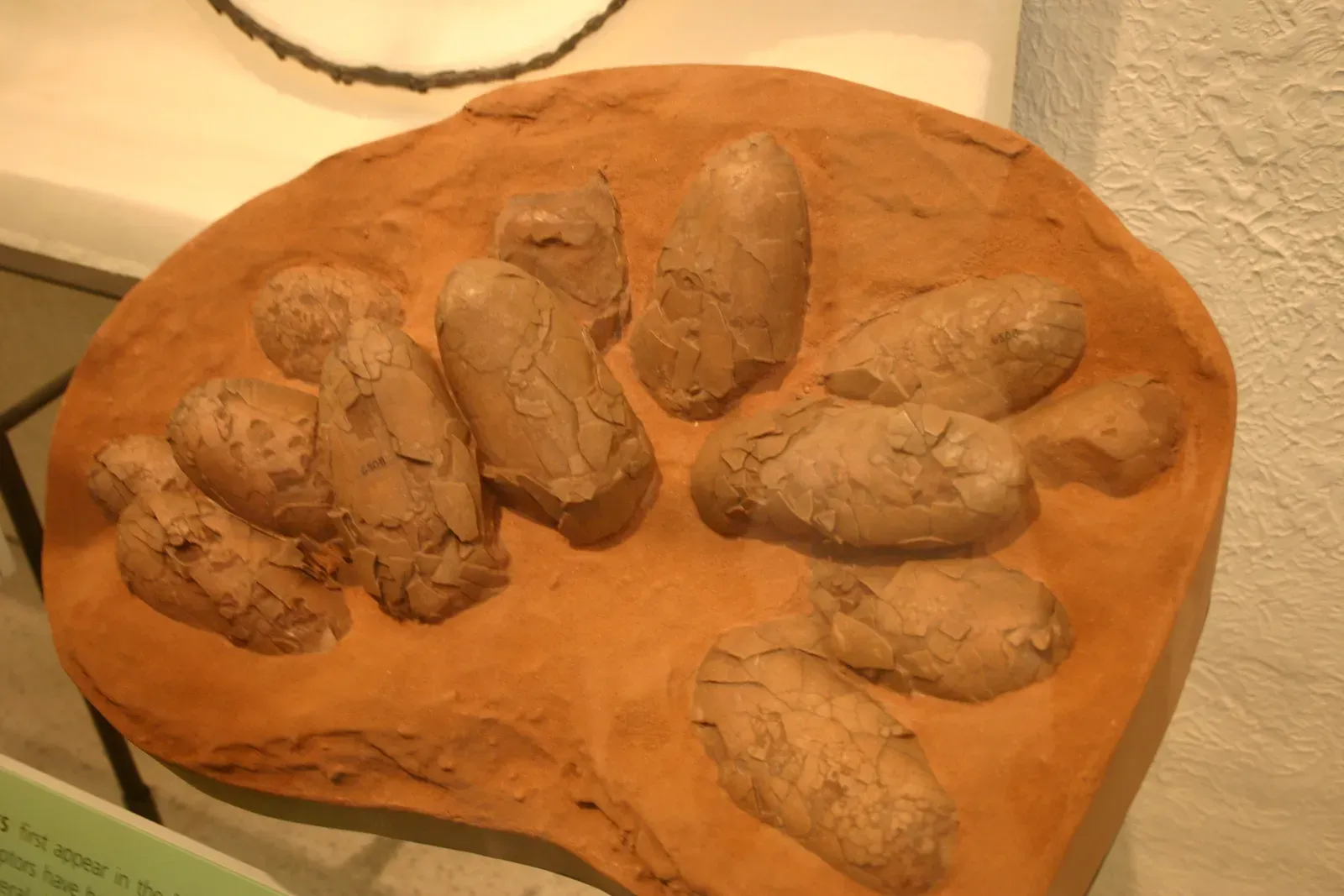
You cannot talk about the world’s great dinosaur egg sites without coming back here. An expedition to the Gobi Desert in Mongolia unearthed fossilized dinosaur eggs in a nest, confirming that dinosaurs laid eggs like the reptiles that scientists at the time thought dinosaurs were. That was in 1923, and the discovery changed everything about how humanity understood prehistoric life.
Roy Chapman Andrews named the place the Flaming Cliffs, inspired by their magnificent red-orange glow in the late afternoon sun. It is one of paleontology’s most iconic locations. According to a report submitted to UNESCO in the process of nominating the Cretaceous Dinosaur Fossil Sites in the Mongolian Gobi as a World Heritage Site, more than 80 genera of dinosaurs have been found in the Gobi in more than 60 fossil sites, and the Gobi is considered by many as the largest dinosaur fossil reservoir in the world.
Many dinosaur eggs have been recovered from sandstone deposits that formed in the ancient dune fields of what are now northern China and Mongolia, and the presence of Oviraptor preserved in their life brooding position suggests that the eggs, nests, and parents may have been rapidly buried by sandstorms. That image, a parent dinosaur locked forever in a brooding posture over a nest of eggs, is one of the most emotionally resonant fossils ever discovered.
Paleontologists had presumed that the fossil eggs at Flaming Cliffs were laid by Protoceratops because it was the most common dinosaur at the locality, but in the 1990s, Museum expeditions discovered identical eggs, one of which contained the embryo of an Oviraptor-like dinosaur, which changed scientists’ view of which dinosaur laid these eggs, and it turns out Oviraptor was a parent, not an egg thief. Science corrected itself, and the Gobi handed us yet another surprise.
Conclusion: The Eggs That Outlasted the Giants
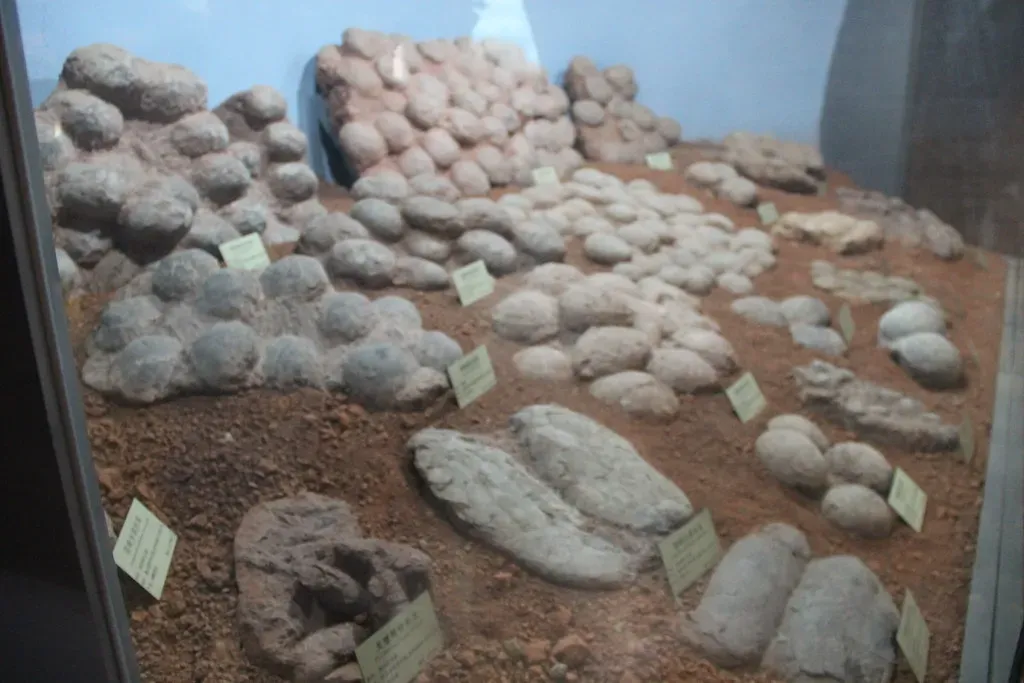
There is something deeply moving about these five sites. Giants that once shook the earth with every step left behind nothing but their eggs, and against all odds, some of those eggs survived to tell the tale. You don’t need to be a paleontologist to feel the weight of that. It’s a reminder that even the mightiest creatures leave behind something small and fragile as their last testament.
From the record-shattering number of eggs in a Spanish beach deposit to the embryo-filled nesting grounds of Patagonia, from the vast Indian hatchery to the sacred red cliffs of Mongolia and the cutting-edge research coming out of central China, these sites are not simply remnants of a lost world. They are active frontiers of discovery. Scientists are still finding new nests, dating eggs for the very first time, and unearthing behaviors that rewrite what we thought we knew. The question worth sitting with is this: given how much we have already found, what on earth are we still missing?