
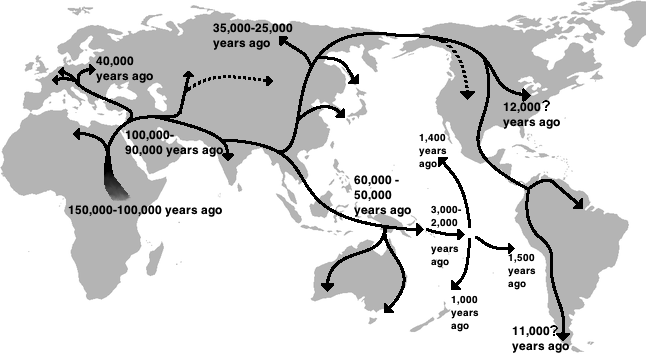
Until a few years ago, the story of how humans spread across the planet felt a bit like a half-finished jigsaw puzzle: a few clear pieces on the table, and a lot of blank space in between. Now, thanks to ancient DNA, better dating methods, and some clever modeling, researchers are finally filling in those empty spaces and tracing routes our ancestors walked tens of thousands of years ago. What they are uncovering is both familiar and wildly surprising: paths that cut across vanished coastlines, green corridors where there are deserts today, and sea crossings that would have sounded impossible a generation ago.
What makes this moment so exciting is not just that we can draw prettier arrows on maps. It is that these routes tell a very human story of risk, adaptation, and persistence, written into our bones and buried in sediments, caves, and seabeds. As scientists gain the confidence to say not just “maybe here” but “yes, they really passed through this place,” the old question of where we come from suddenly feels personal again. When you trace these six newly clarified routes, it is hard not to imagine specific families inching along shorelines, testing unfamiliar rivers, and pushing into cold, alien landscapes – without the slightest idea their footsteps would one day be decoded in a lab.
The Southern Route Out of Africa Along the Arabian and Indian Coasts
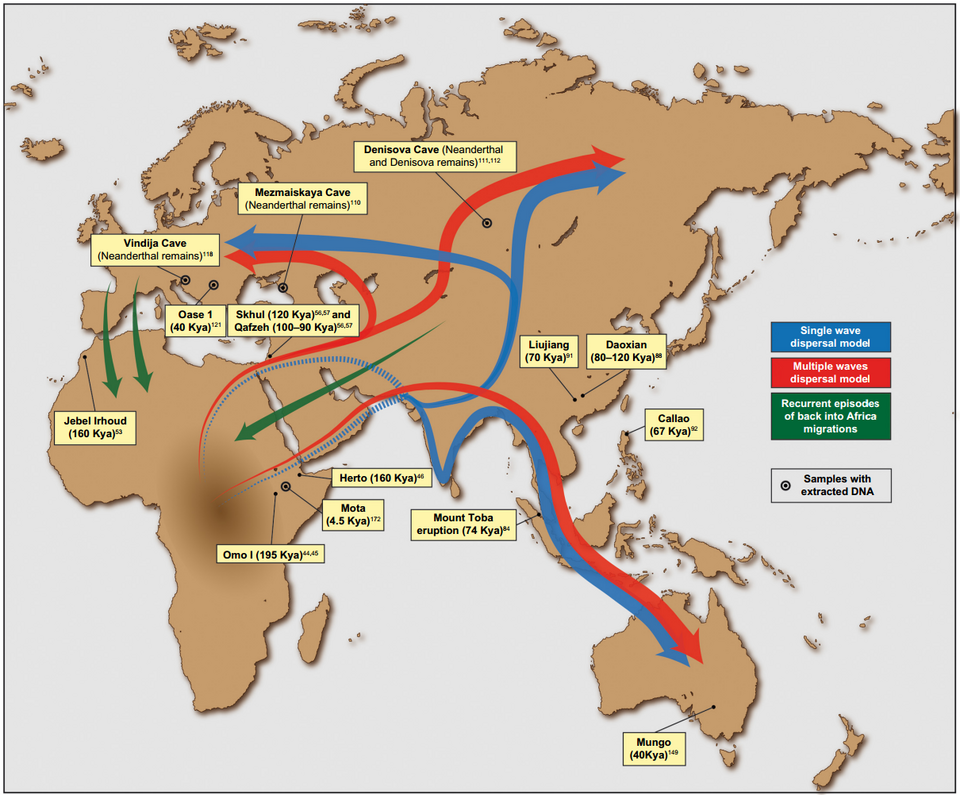
One of the most game-changing shifts in recent years is the growing confidence around a southern coastal route out of Africa. For a long time, textbooks leaned heavily on a northern path through the Levant as the main highway for early Homo sapiens leaving Africa. Now, genetic evidence from diverse modern populations, combined with a handful of key fossils and tools, is painting a different picture: small groups likely slipped out across what is now the Bab-el-Mandeb strait at the southern tip of the Red Sea, then hugged the coasts of Arabia and the Indian Ocean. In a world of lower sea levels, that shoreline was much broader, dotted with estuaries, shellfish beds, and mangroves – essentially a continuous buffet for foragers willing to move.
What has pushed this route from speculation into something much closer to consensus is the way multiple lines of evidence are finally lining up. Genetic patterns in populations from the Arabian Peninsula, South Asia, and even farther east match a scenario where early non-African humans spread rapidly along these coasts before fanning inland. Archeological finds in Arabia and India, once dismissed as too fragmentary, look more convincing when you factor in climate models showing wetter, greener conditions during key windows of time. To me, this route feels almost cinematic: imagine bands of humans following tidal rhythms and seasonal fish runs, step by step, into what for them were simply new beaches rather than the first stages of a planetary expansion.
The Green Sahara Highway Into North Africa and Beyond
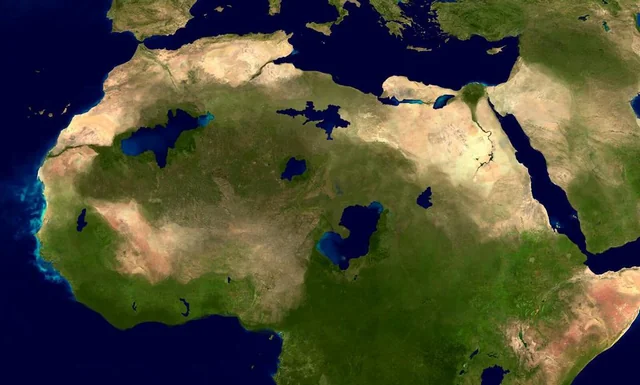
It is hard to picture now, but several times in the deep past the Sahara was not a vast, hostile desert but a patchwork of lakes, rivers, and grasslands. Over the last decade, scientists have used lake sediments, fossil fauna, and paleoclimate modeling to show that during these “Green Sahara” phases, humans could move across this region far more easily than today. That has forced a rethink: instead of viewing the Sahara as a permanent barrier separating populations, researchers are increasingly mapping it as an ancient migration highway, connecting sub-Saharan Africa with North Africa and even the Mediterranean. The idea is no longer just poetic; it is anchored in actual river channels visible in satellite imagery and in tools and bones found along those routes.
What has changed recently is the confidence with which scientists can time these movements and tie them to specific wet phases. Improved dating of ancient shorelines around long-vanished lakes, combined with genetic patterns in modern North African and Sahel populations, suggests repeated pulses of movement when the climate flipped from dry to wet. That constant opening and closing of a green corridor helps explain why some North African groups carry deep African lineages alongside influences from the Near East and Europe. When I first learned about this “breathing” Sahara – alternately a bridge and a wall – it completely changed how I imagined African history. It is not a static backdrop; it is an active character in the story, shuttling people back and forth over tens of thousands of years.
The Early Human Push Into Europe via the Balkans and Anatolia
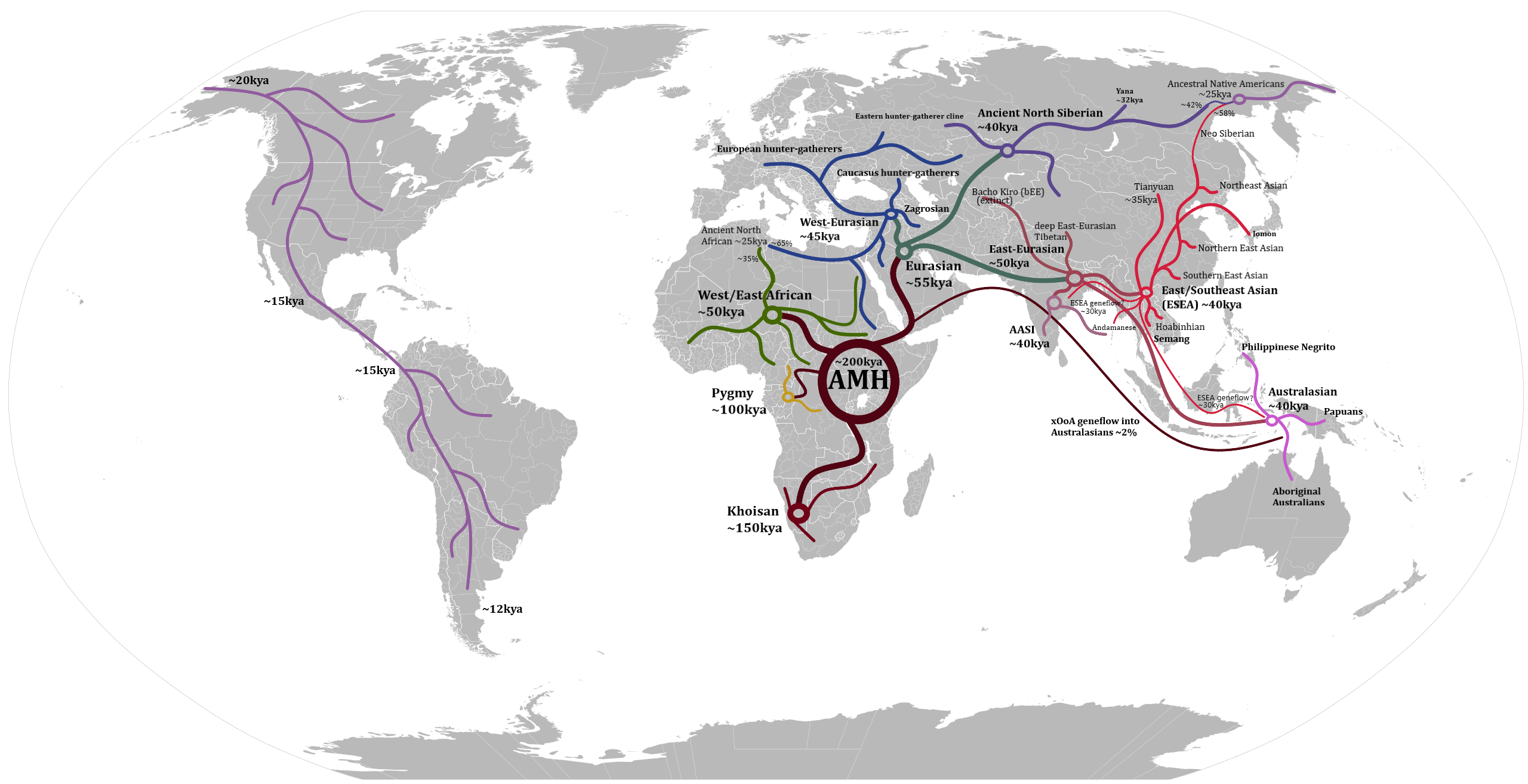
For Europe, the old narrative was simple to the point of being boring: modern humans come in from the Near East, move along the Mediterranean, slowly spread north. But in the last decade or so, high-quality ancient genomes from skeletons in places like Bulgaria, the Balkans, and Anatolia have brought that picture into sharper focus. Instead of a vague arrow, we now see a complex but traceable wave of Homo sapiens entering southeastern Europe more than forty thousand years ago, interacting with, and ultimately replacing, Neanderthal groups already living there. Stone tool traditions that once seemed hard to classify now line up surprisingly well with the genetic story, suggesting repeated pulses of movement through this southeastern gateway.
What makes this route feel newly “mapped with confidence” is that we can now follow specific ancestries as they move and mix over time. Some early European populations show a clear link to Near Eastern ancestors moving through Anatolia and the Balkans, while others later pull in additional strands from central Eurasia. A decade ago, these shifting patterns were guesswork; today, they are reconstructed from small but powerful datasets of ancient DNA. Personally, I find it a little humbling: the charming villages and tourist trails in the Balkans sit atop what was once one of the most contested, dynamic frontiers of our species, where humans carrying different toolkits, languages, and perhaps skin tones encountered each other in caves and river valleys we now walk through on vacation.
The Pacific Leap: Coastal and Island-Hopping Routes Into Australasia
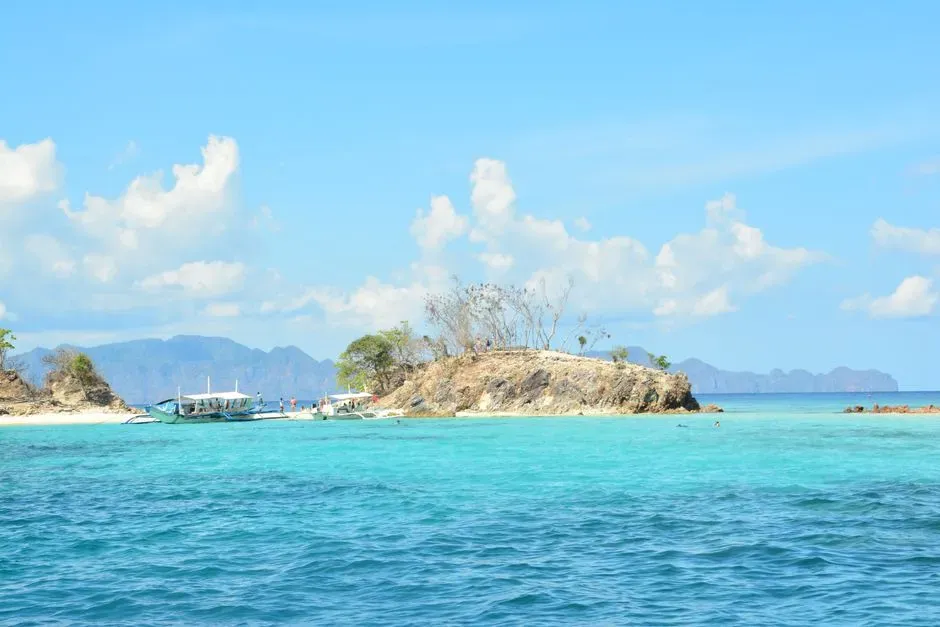
Reaching Sahul – the combined Ice Age landmass of Australia, New Guinea, and Tasmania – was one of the boldest moves in human history, requiring at least some open-water crossings. For many years that crossing was treated as a mysterious leap, with rough estimates and hand-drawn arrows. Recently, though, improved seafloor mapping, simulations of ancient sea levels, and more precise dating of early sites have given scientists enough data to model likely routes with real confidence. The picture that emerges is of people moving along the southern Asian coasts, then using a series of islands as stepping-stones, with multiple plausible paths through what is now Indonesia and the surrounding seas.
Genetic studies of Indigenous Australian and Papuan populations, together with a handful of ancient fossils and tools, support the idea that this movement happened early and relatively fast after humans left Africa. Climate and ocean current models help narrow down which island chains would have been easiest to cross, pointing to corridors where even basic watercraft and good timing could get a small group from one visible landmass to the next. On a personal level, I think this is one of the clearest rebukes to the old stereotype of “primitive” early humans; you do not accidentally island-hop your way into a new continent. It takes planning, courage, and a willingness to push into horizons where you can see land faintly shimmering in the distance and still decide to go.
The Peopling of the Americas via Beringia and an Ice-Free Corridor
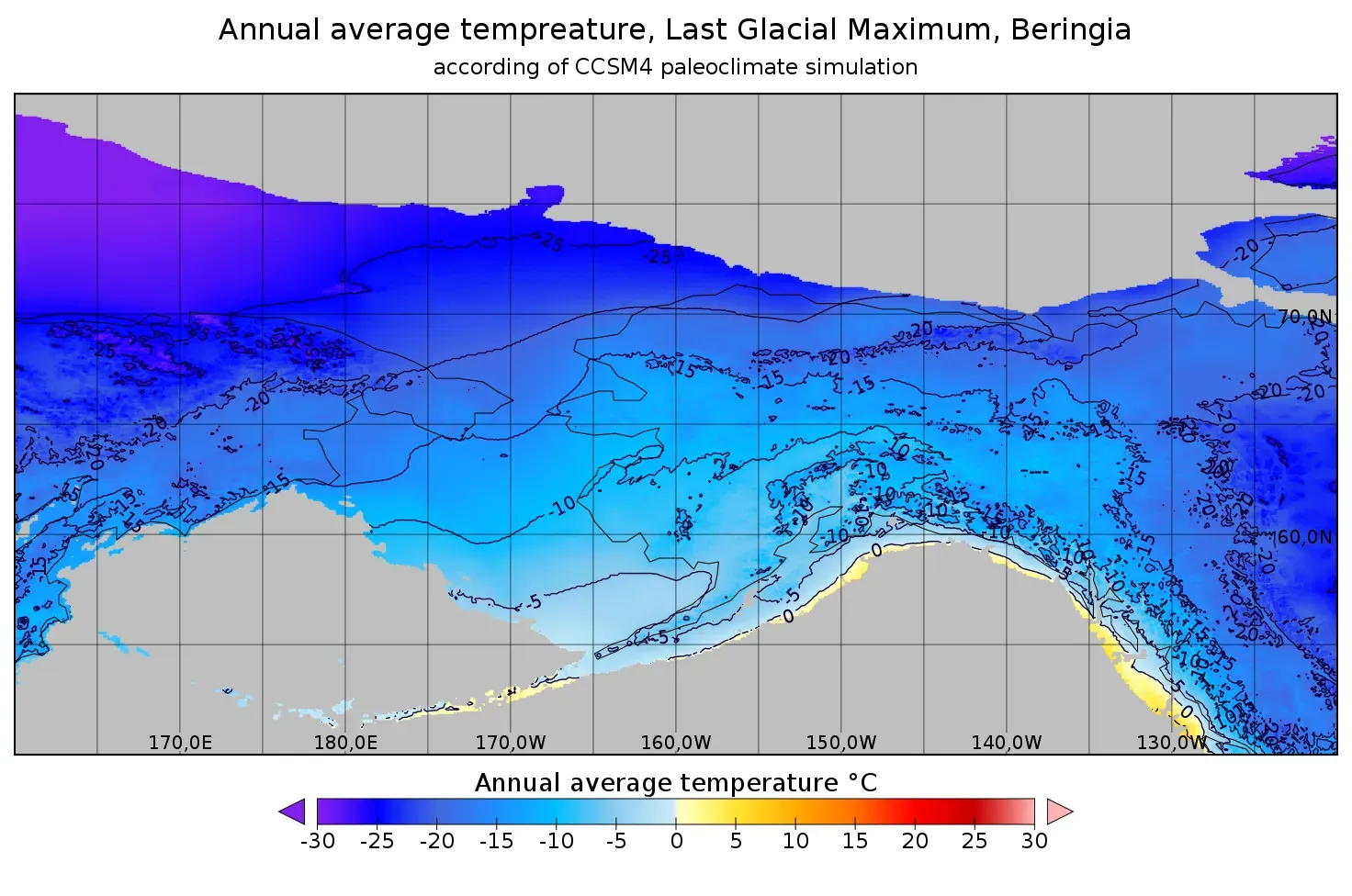
The route into the Americas has been argued about for generations, but in the last few years, the debate has shifted from wild speculation to much tighter, evidence-based scenarios. At the center of it all is Beringia, the now-drowned land bridge that once connected northeastern Asia and Alaska during periods of low sea level. Ancient DNA from both sides of the Pacific, combined with improved reconstructions of when ice sheets opened and closed, has solidified the idea that ancestral Native American populations formed in or near this region before moving south. The big question used to be whether they came through an inland ice-free corridor or along the Pacific coast; increasingly, researchers are confident that an early coastal route played a key role, with the interior corridor becoming viable later.
This shift in confidence comes from multiple angles: better dating of ice retreat, lake cores from the corridor region, coastal archeological finds, and genetic signatures of population splits. Some early sites in the Americas, once controversial, now look more plausible in light of a Pacific-hugging route that would have become ice-free earlier than the interior. To me, the most fascinating part is how the story keeps getting older and richer as methods improve. Growing up, I was taught a neat, late-arriving “Clovis-first” model; now it seems that was far too tidy. The real history is messier and more interesting, involving small groups exploring shorelines, exploiting marine resources, and gradually threading their way into a continent that had never seen humans before.
The Trans-Central Asian Corridors Linking Europe, Siberia, and East Asia
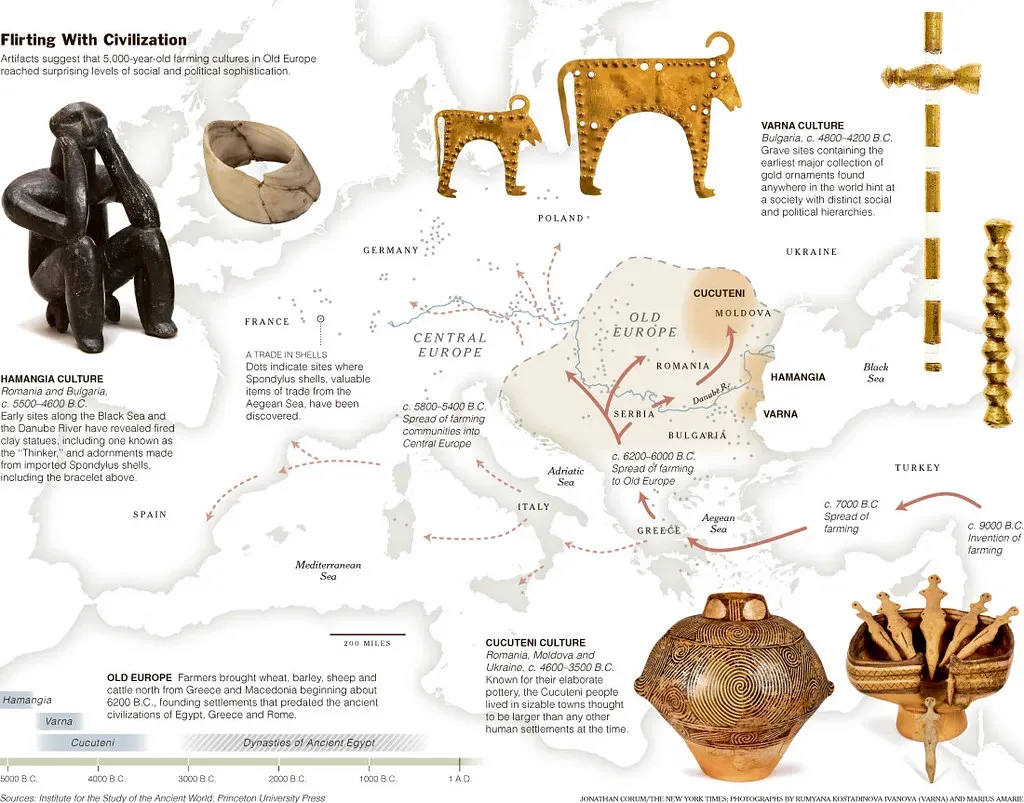
Central Asia used to be a “blank” on the map of human prehistory, a vague in-between region linking better-known stories in Europe, Siberia, and East Asia. That has changed dramatically with the recent surge of ancient DNA studies from sites in Kazakhstan, Mongolia, and surrounding areas. Researchers can now trace ancient populations moving back and forth across these steppes, deserts, and mountain passes, connecting lineages that show up in both European and East Asian genomes. This is not about the relatively recent Silk Road; it is about older corridors, tens of thousands of years deep, that carried people, tools, and eventually domesticated animals from one end of Eurasia to the other.
What makes these Central Asian routes newly convincing is the sheer number of independent strands that point in the same direction. Climate reconstructions help explain when certain valleys and plains would have been passable, while archeological cultures once thought to be isolated are now linked by shared genetic ancestry. Some modern groups in Siberia and northern Europe carry traces of these ancient steppe migrations, while others in East Asia show the flip side of that exchange. From my perspective, this undercuts any neat idea of separate, sealed-off “civilizational” zones in prehistory. Humanity has been entangled across the center of Eurasia far longer than most of us were taught, using these corridors as arteries that pumped genes and ideas for thousands of years before anyone dreamed up a trade caravan.
Conclusion: Our Past Was Never Simple, and That Is the Best Part
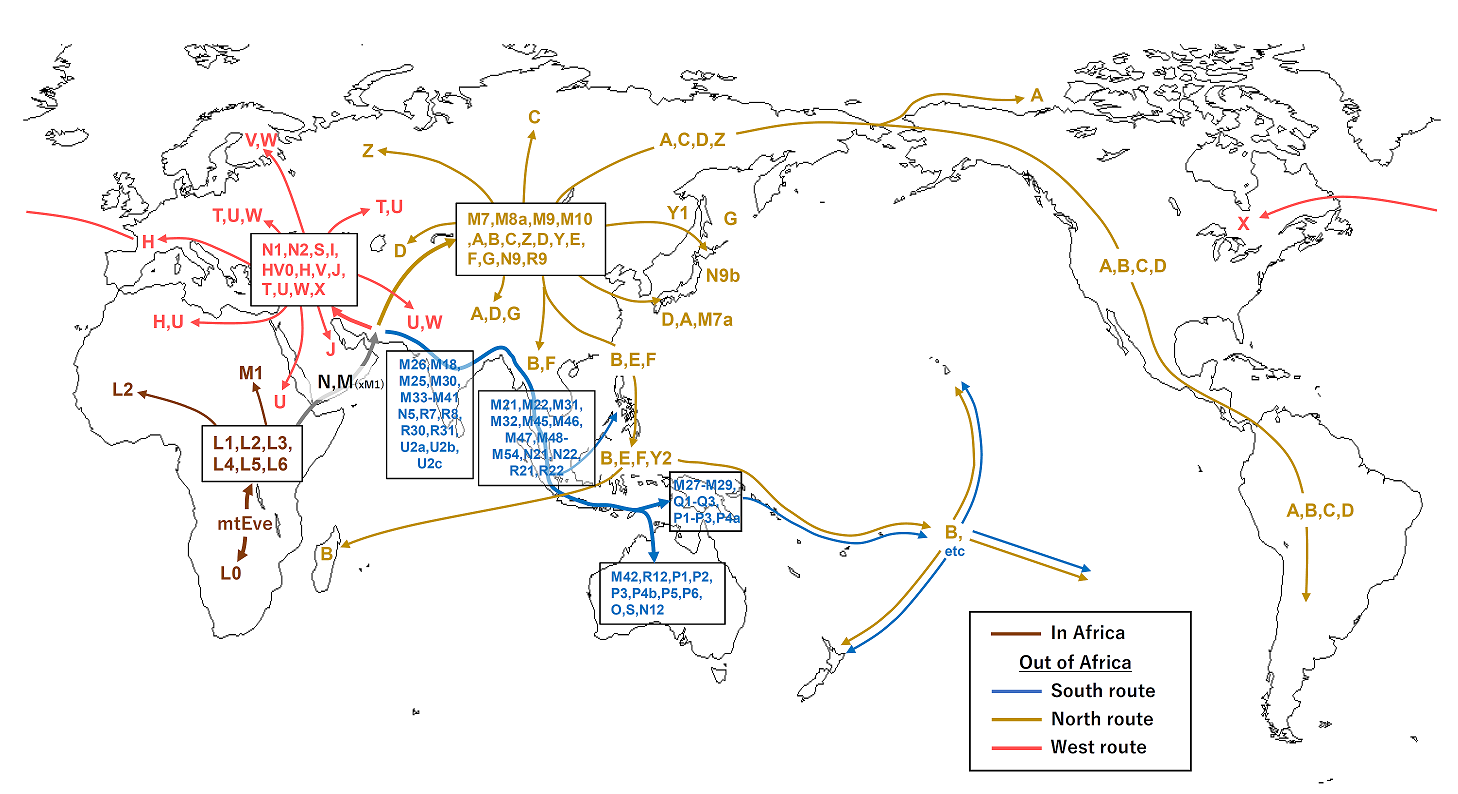
When you look across these six routes – the coastal slip out of Africa, the green Saharan bridge, the southeastern doorway into Europe, the daring leap into Sahul, the Beringian gateway to the Americas, and the web of central Eurasian corridors – one message comes through clearly: our species has never stayed put. Scientists have only recently had the tools to map these paths with real confidence, but the behaviors behind them are ancient: curiosity, opportunism, and a willingness to push into the unknown when conditions made it possible. In my view, the biggest mistake earlier generations of researchers made was assuming the simplest, straightest-line story must be true; the new evidence shows that human history is more braided river than single highway.
That complexity is not a problem to solve; it is the point. Each newly clarified route forces us to abandon tidy myths and accept that our ancestry is a tangle of movements, pauses, and returns shaped by climate swings and fragile decisions by small groups of people. I think that is a healthier, more honest way to see ourselves: not as members of neatly bounded boxes, but as descendants of travelers who rarely knew where the path would end. The next time you glance at a migration map with crisp arrows sweeping across continents, it is worth remembering the messy, courageous lives behind those lines. If anything, the real question is not how our ancestors managed to move so far – it is how we ever convinced ourselves their journey was simple in the first place.