
You ever feel like the world just doesn’t quite get you? Like you’re speaking a different language even when you’re using the exact same words as everyone else? That subtle feeling of being slightly out of sync with the people around you, no matter how hard you try to fit in?
Here’s the thing. Some of us are wired a little differently. Not in a bad way, mind you, but in ways that make us see, feel, and process the world through a lens that’s less common. If you’ve ever wondered whether your personality is one of those rare gems that flies under the radar, you’re in the right place. Let’s dive into ten personality types that walk through life feeling misunderstood more often than not.
The Advocate Who Lives in a World of Paradoxes

You might be part of the rarest personality type if you’re an INFJ, representing only about one to two percent of the population. This rare personality type mixes deep empathy with analytical thinking to create a distinctive viewpoint. What makes you so misunderstood is that you can be both incredibly emotional and fiercely logical at the same time.
You’re sometimes mistaken for a purely analytical person because you possess a balance between feeling and thinking functions, allowing you to be both emotional and analytical, as well as scientific. People don’t know what to expect from you. One moment you’re offering profound emotional support, the next you’re dissecting complex problems with surgical precision. You’re prone to overthinking, emotional exhaustion and internalizing stress, and often feel misunderstood or out of place, especially in fast-paced environments or ones that feel superficial.
You spend so much time in your head that even explaining how you arrived at a conclusion feels impossible. Your intuitive sense can be challenging to explain to others, which can leave you feeling isolated and misunderstood.
The Mastermind Stuck Between Dreams and Reality
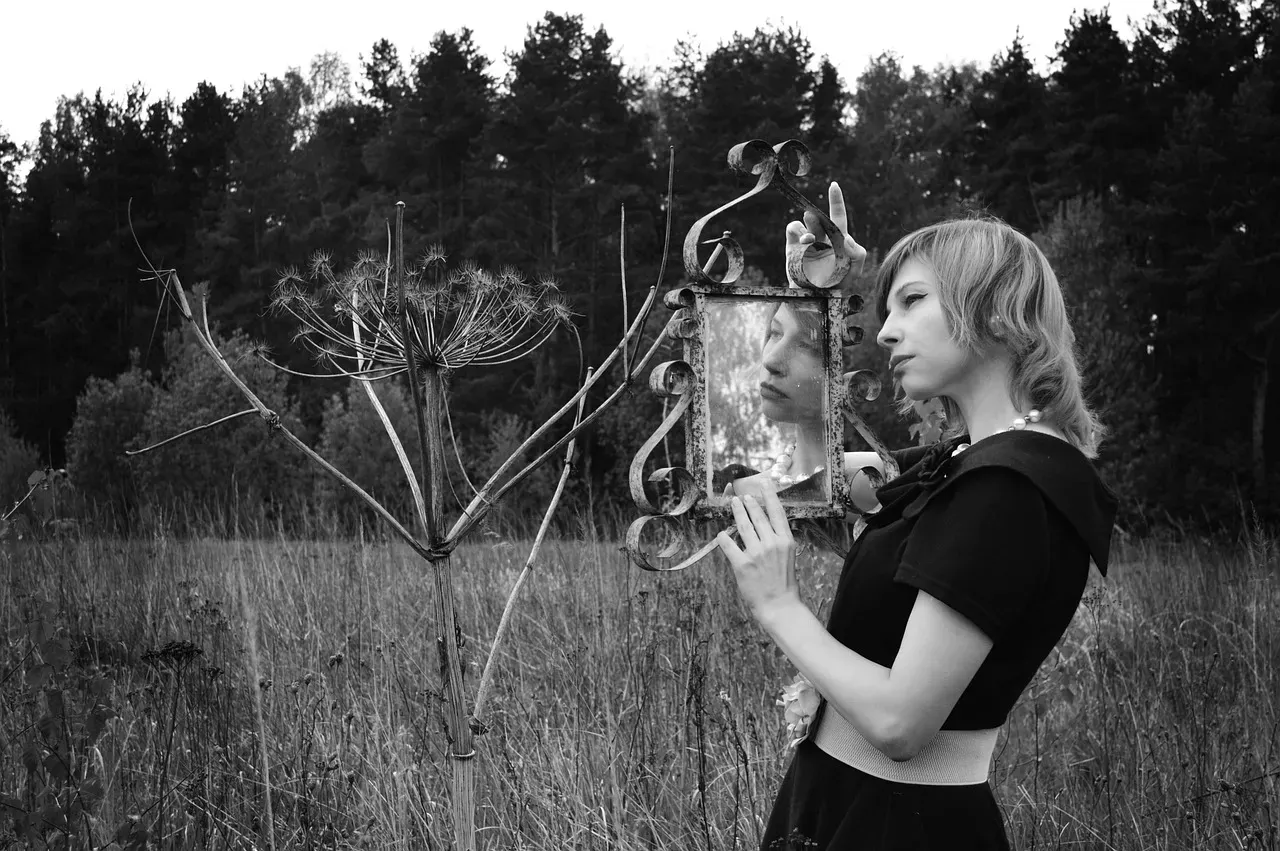
If you’re an INTJ, you’re relatively rare and make up only about two percent of the population. You’re a deep, reflective thinker with a talent for synthesizing and theorizing complex information, and you’re a quiet, sensitive and thoughtful individual. The world sees you as cold or robotic, when really you’re just selective about where you invest your emotional energy.
You possess both creative and strategic abilities in equal measure, and you aren’t satisfied just contemplating meanings; you want to ascertain how you can turn your theories into tangible and impactful action. People might call you arrogant, but honestly, you’re just confident in your ability to see patterns others miss. Your mind works like a chess game, always three moves ahead.
The misunderstanding comes from your refusal to engage with small talk or surface-level interactions. Why waste time on trivial matters when there are systems to optimize and problems to solve? You can often come off as judgmental and see people as too lazy and selfish to reach their goals. It’s harsh, sure, but that’s how you process the world around you.
The Commander Who Intimidates Without Trying

As an ENTJ, you represent about 1.8 percent of the population and are generally a strong, natural leader. You’re typically charismatic and confident, though you can sometimes come off as cocky and unyielding in your personal vision. Let’s be real, you know you’re good at what you do. The problem is that not everyone appreciates your directness.
You see the big picture and have zero patience for inefficiency or emotional excuses. When you’re focused, you can accomplish anything and drive your team to also achieve top results. However, people misread your intensity as aggression or insensitivity. You’re not trying to bulldoze anyone, you just want results.
Among women, ENTJ is one of the rarest personality types, representing less than one percent of the female population. If you’re a woman with this personality, you’ve probably faced even more misunderstanding because your assertiveness clashes with traditional expectations.
The Empathic Leader Who Carries Everyone’s Burdens

ENFJs make up only about three percent of the population, and among men, it’s even more uncommon, occurring in just two percent. You’re known for your charisma, warmth and ability to inspire others, with a natural talent for leadership and you’re deeply attuned to the emotions and needs of those around them. The world sees you as the ultimate people person, but they don’t see the toll it takes.
You absorb emotions like a sponge. As a sensitive person, you often absorb other people’s emotions, and this goes beyond mere empathy; you may experience others’ emotions in your own bodies. Walking into a room filled with tension physically affects you, even if none of that tension is yours.
Your strong people-oriented focus means you sometimes struggle with setting boundaries, as you tend to prioritize others over yourself. People think you have it all together because you’re always there for everyone else. The truth? You often forget to save any energy for yourself. Your biggest struggle is learning to say no without feeling guilty.
The Debater Who Questions Everything Including Themselves

ENTPs account for three percent of the general population, and it’s slightly more common among men at four percent, while among women it remains relatively rare at just two percent. You love a good mental sparring match and thrive on challenging ideas, but people often mistake your intellectual curiosity for combativeness.
You’re not trying to start fights. You’re trying to explore ideas from every possible angle. The problem is that not everyone wants their beliefs dissected over coffee. Your rapid-fire thoughts and tendency to play devil’s advocate make others think you’re argumentative or insincere, when really you’re just endlessly curious.
People look at you taking decisions out of the blue and think you’ve gone mad, but in reality, none of your decisions are out of the blue. Your mind processes information so quickly that by the time you voice a conclusion, everyone else is still on step one. They see impulsiveness where you see well-considered action.
The Type C Personality Who Silently Sacrifices

Type A is generally perceived as the overachiever who’s ambitious and competitive with a strong sense of achievement and success. Everyone talks about Type A and Type B, but hardly anyone mentions Type C. If you’re a Type C personality, you’re the person who avoids conflict at all costs and suppresses your emotions to keep the peace.
You can learn healthier ways to manage stress and express emotion, often beginning with small steps like practicing saying no without apology, engaging in emotional dialogue, or challenging the automatic guilt that arises when you prioritize your own needs. You’re the friend everyone leans on because you never complain or make demands. The flip side? People assume you’re fine when you’re actually drowning.
Your accommodating nature gets mistaken for weakness or lack of ambition. You’re not weak, you’re just wired to value harmony over confrontation. Emotional expression reduces physiological stress, improves immune functioning, and strengthens relationships by promoting authenticity. Learning to voice your needs isn’t selfish, it’s survival.
The Free Spirit Who Struggles With Structure

If you’re an ENFP, you’re truly a free-spirited person who hates being tied down by stringent rules and believes in being the master of your own fate. You light up every room you enter, bursting with ideas and enthusiasm. People love your energy, but they also think you’re flaky or unreliable because you resist routine and structure.
Here’s what they don’t understand. You’re not irresponsible, you’re just wired for spontaneity and creativity. Rigid schedules feel suffocating to you. People mistake you as always happy and carefree and maybe even a bit flimsy, but you’re much more than that. Behind that bright exterior is someone who feels emotions intensely and cares deeply about authenticity.
You overthink everything and your mind bounces between possibilities like a pinball machine. What looks like distraction to others is actually your brain exploring multiple pathways simultaneously. You need people who understand that your chaos is actually a form of genius.
The Quiet Analyzer Who Sees What Others Miss

ISTPs get misunderstood all the time as people look at their chill, detached vibe and assume they don’t care. You’re the person who stays calm in a crisis while everyone else panics. What folks usually miss is that you’re one of the sharpest, quickest thinkers around, especially when things go sideways, and when a crisis hits, you’re the one who calmly grabs the fire extinguisher while everyone else is screaming about smoke.
You simply stay calm and collected while you’re still planning things inside your head, and you’d rather keep things quiet until they’re in motion. People think you’re lazy or uninterested because you don’t broadcast your thoughts. The reality is that you’re constantly observing, analyzing, and problem-solving in silence.
Your hands-on approach to life gets misread as aimlessness. You prefer action to words, results to theories. While others are still debating the best course of action, you’re already halfway through fixing the problem. Your understated competence is your superpower, even if nobody notices until after you’ve saved the day.
The Performer Who Craves Depth Beneath the Surface

ESFPs tend to be misunderstood as being attention-seeking, shallow, or lazy, but average or healthy ESFPs aren’t like this at all. You care deeply about people and want to show them positive experiences and enjoyments, and you’re mentally wired to make the most of the moment, to be resourceful, and enjoy the simple pleasures in life.
You live in the present moment with such intensity that people assume you don’t think about deeper issues. You pay more attention to what’s happening now and what’s needed now than what happened a long time ago or what some concept means that has no realistic application in the moment. That doesn’t make you shallow, it makes you grounded in reality.
You often enjoy deep conversations about people and psychology. You just prefer those conversations to be rooted in real human experiences rather than abstract philosophy. Your emotional intelligence is off the charts, even if people mistake your spontaneity for superficiality.
The Loyal Independent Who Refuses to Follow the Crowd

You can be intensely loyal to values and to people you love, and fiercely independent in how you live those loyalties, showing up for people at six in the morning with no questions asked, and then saying no to the trend everyone else is chasing by noon because you serve your principles, not the crowd. This paradox confuses the heck out of people.
Independence gets misread as rebellion or contrariness, but for many of us, it’s about integrity; we’d rather disappoint expectations than betray what we know is right. You’re not being difficult when you go against the grain. You’re being authentic. You’ve simply chosen to answer to your own moral compass rather than society’s expectations.
You feel others’ emotions vividly and still say that something doesn’t work for you, and people hear a thoughtful no as unfriendliness, but you know the alternative, smiling through what you don’t mean, rots relationships from the inside. Your honesty might sting in the moment, but it builds trust over time. Those who truly know you understand that your loyalty runs deeper than conformity ever could.
Conclusion

If you recognize yourself in any of these rare personality types, take a breath and know this. Being misunderstood doesn’t mean something’s wrong with you. It just means you’re part of a smaller slice of humanity that processes the world differently.
The people who get misunderstood the most aren’t broken or aloof; they’re often carrying rare strengths that don’t announce themselves with flashing lights, and they move a little differently, quieter, deeper, more intentional, and the world, which likes things tidy and obvious, sometimes reads those differences as flaws. Your uniqueness isn’t a bug in the system, it’s a feature.
The world needs people who think differently, who challenge norms, who feel deeply, and who refuse to settle for shallow connections. Your rarity makes you valuable, even when it makes you lonely. So the next question becomes, how will you use that uniqueness moving forward?
What personality type resonates most with you? Does it match how you’ve always seen yourself, or did something here surprise you?