Imagine you are standing on an ancient shoreline, roughly 100 million years ago. You glance upward and the shadow that sweeps across you is not a bird. It is not a bat. It is something altogether more spectacular, a leathery-winged colossus with a wingspan that could rival a small aircraft. Pterosaurs were not just prehistoric curiosities. They were the undisputed lords of the air for an almost unimaginable stretch of time, and their story is far more dramatic, complex, and frankly awe-inspiring than most people realize.
You have probably heard the word “pterodactyl” tossed around in movies or at natural history museums. Yet the real picture of pterosaurs is so much richer and more nuanced than Hollywood has ever cared to show you. From tiny insect-hunters no bigger than a sparrow to titans that dwarfed any creature in the air today, these animals conquered the prehistoric sky in ways that continue to astonish scientists in 2026. Let’s dive in.
The First True Masters of the Sky
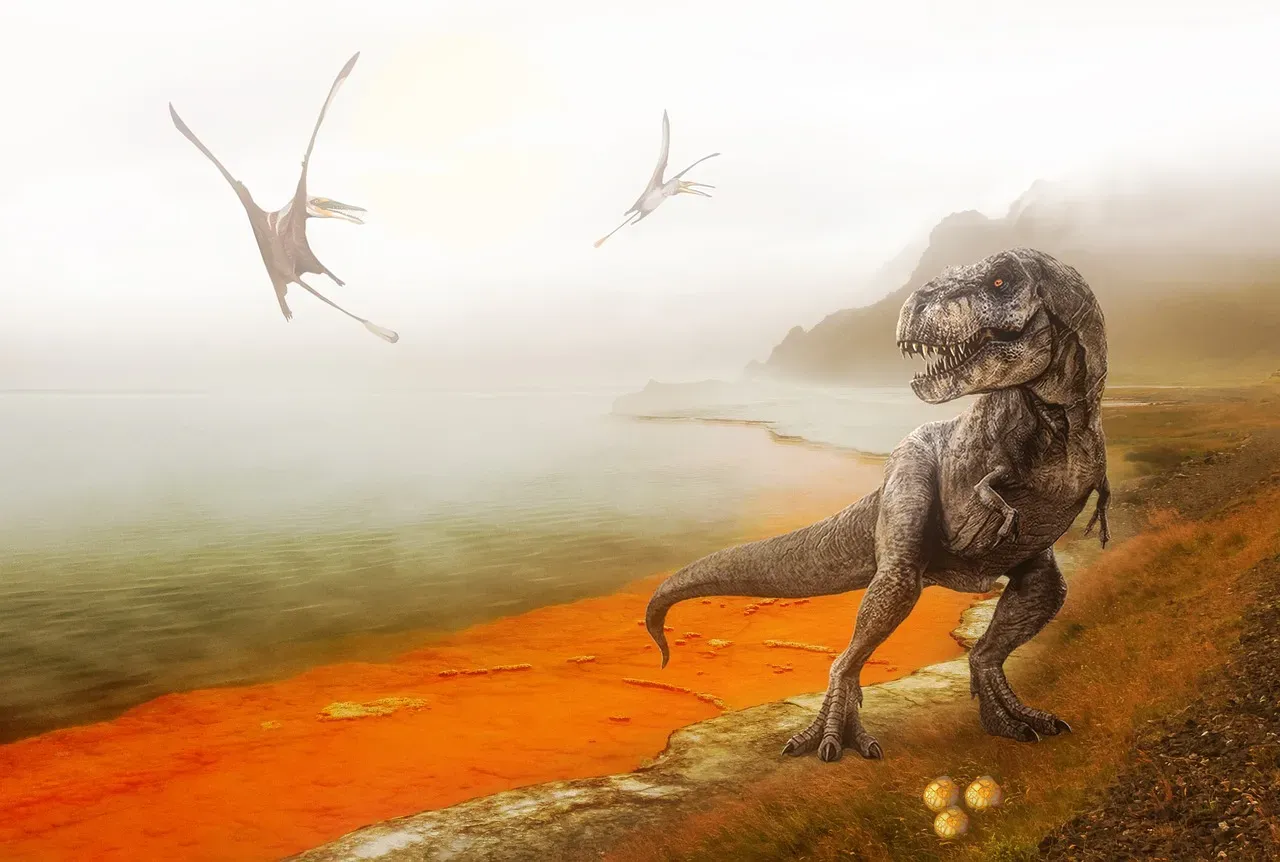
If you want to understand the scale of pterosaurs’ achievement, consider this: before them, no backboned animal had ever taken to the air under its own power. Pterosaurs were the first vertebrates to evolve true flapping flight, a complex and physiologically demanding activity that required profound anatomical modifications. This was not a small evolutionary step. It was a revolutionary leap that changed the entire dynamics of ancient ecosystems.
Pterosaurs were the first vertebrate creatures to evolve powered flight and conquer the air, long before birds took wing. They prevailed for more than 160 million years before vanishing along with the non-bird dinosaurs at the end of the Cretaceous period, around 66 million years ago. To put that into perspective, modern humans have been around for roughly 300,000 years. Pterosaurs outlasted us by a factor of over 500. That is not a footnote. That is a dynasty.
When and Where It All Began
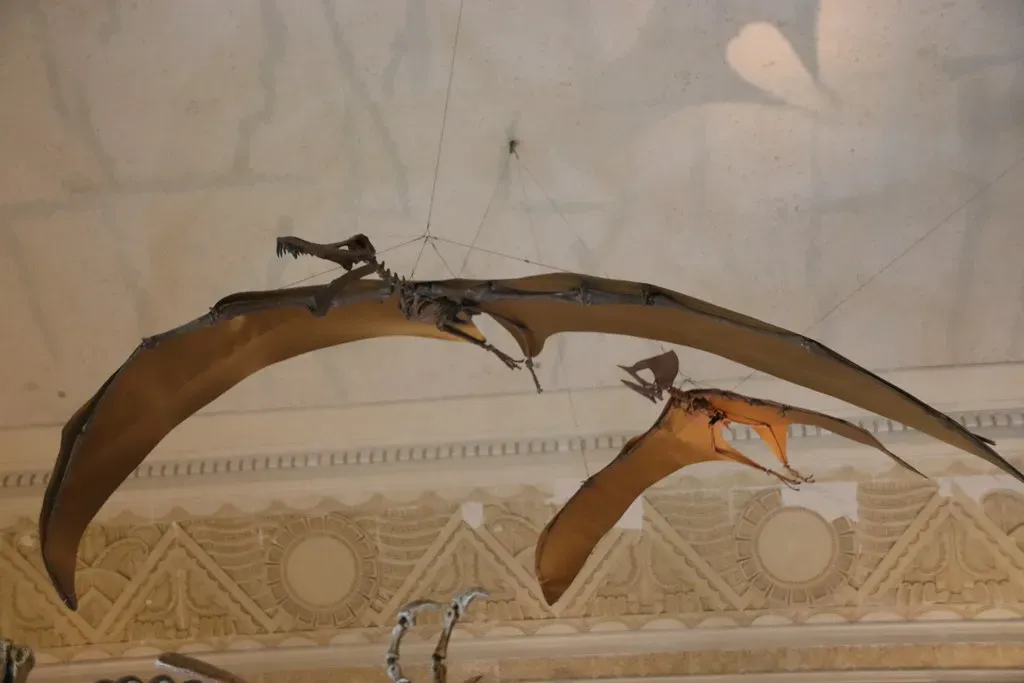
Pterosaurs first appeared in the fossil record during the Late Triassic period, approximately 228 million years ago, and persisted until the end-Cretaceous mass extinction event 66 million years ago. Their origins remain somewhat mysterious, though scientists believe they evolved from small, possibly bipedal archosauromorph reptiles. Honestly, the mystery of their exact origin is one of the most tantalizing puzzles in all of paleontology.
The earliest known pterosaur fossils come from Alpine regions of northern Italy, with species like Eudimorphodon representing these pioneering aerial reptiles. What makes pterosaur evolution particularly remarkable is how rapidly they appear to have developed the complex adaptations necessary for powered flight. Unlike birds and bats, which evolved flight independently and much later, pterosaurs left relatively few transitional fossils showing the step-by-step evolution of their flight capabilities. It is as if nature pressed fast-forward on one of its most extraordinary experiments.
The Secret Weapons of Their Anatomy
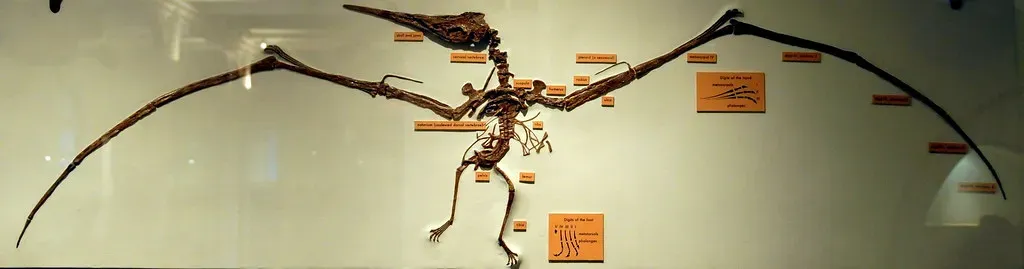
Here is the thing: you cannot rule the skies for over 160 million years without some seriously clever engineering. The anatomy of pterosaurs was highly modified from their reptilian ancestors by the adaptation to flight. Pterosaur bones were hollow and air-filled, like those of birds. This provided a higher muscle attachment surface for a given skeletal weight. The bone walls were often paper-thin. Think of it like a carbon-fiber bicycle frame. Incredibly strong, almost absurdly light.
They had a large and keeled breastbone for flight muscles and an enlarged brain able to coordinate complex flying behaviour. In some later pterosaurs, the backbone over the shoulders fused into a structure known as a notarium, which served to stiffen the torso during flight, and provide a stable support for the shoulder blade. Every bone, every joint, every fused vertebra was whittled down by millions of years of evolution into a near-perfect flying machine. It is hard not to be in awe of that.
Wings Unlike Anything Alive Today
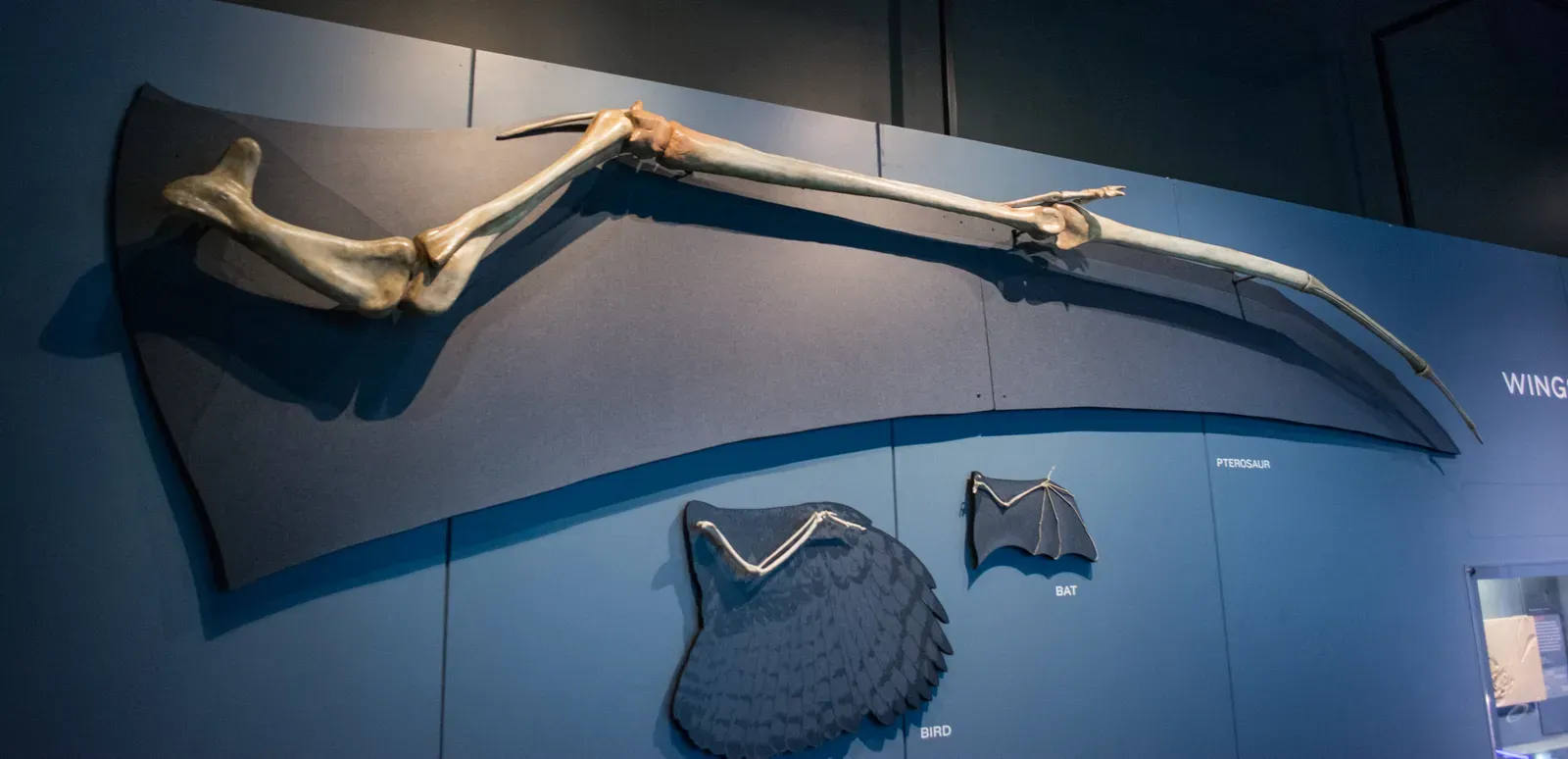
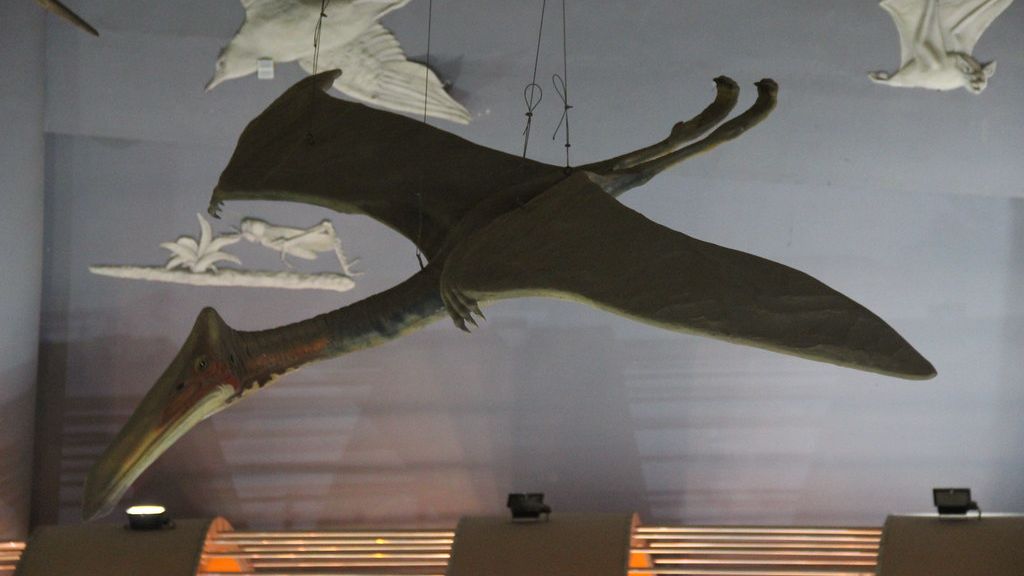
You might think a pterosaur wing was similar to a bat’s wing, or perhaps like a bird’s feathered arm. You would be wrong on both counts. Their wings were formed by a membrane of skin, muscle, and other tissues stretching from the ankles to a dramatically lengthened fourth finger. That single, enormously elongated ring finger is what held the entire wing aloft. One finger. Doing the work of a whole limb.
Their wings were made of a dynamic membrane hoisted on an elongated fourth finger and were probably covered in a fur-like outer protective layer. That fur-like covering, known as pycnofibers, suggests pterosaurs were likely warm-blooded and far more bird-like in their physiology than in their reptilian looks. Instead of bones, pterosaurs had fibres running down and across the wing, giving it structure. It was a biological airfoil, millions of years ahead of anything humans would design.
A Breathtaking Range of Sizes
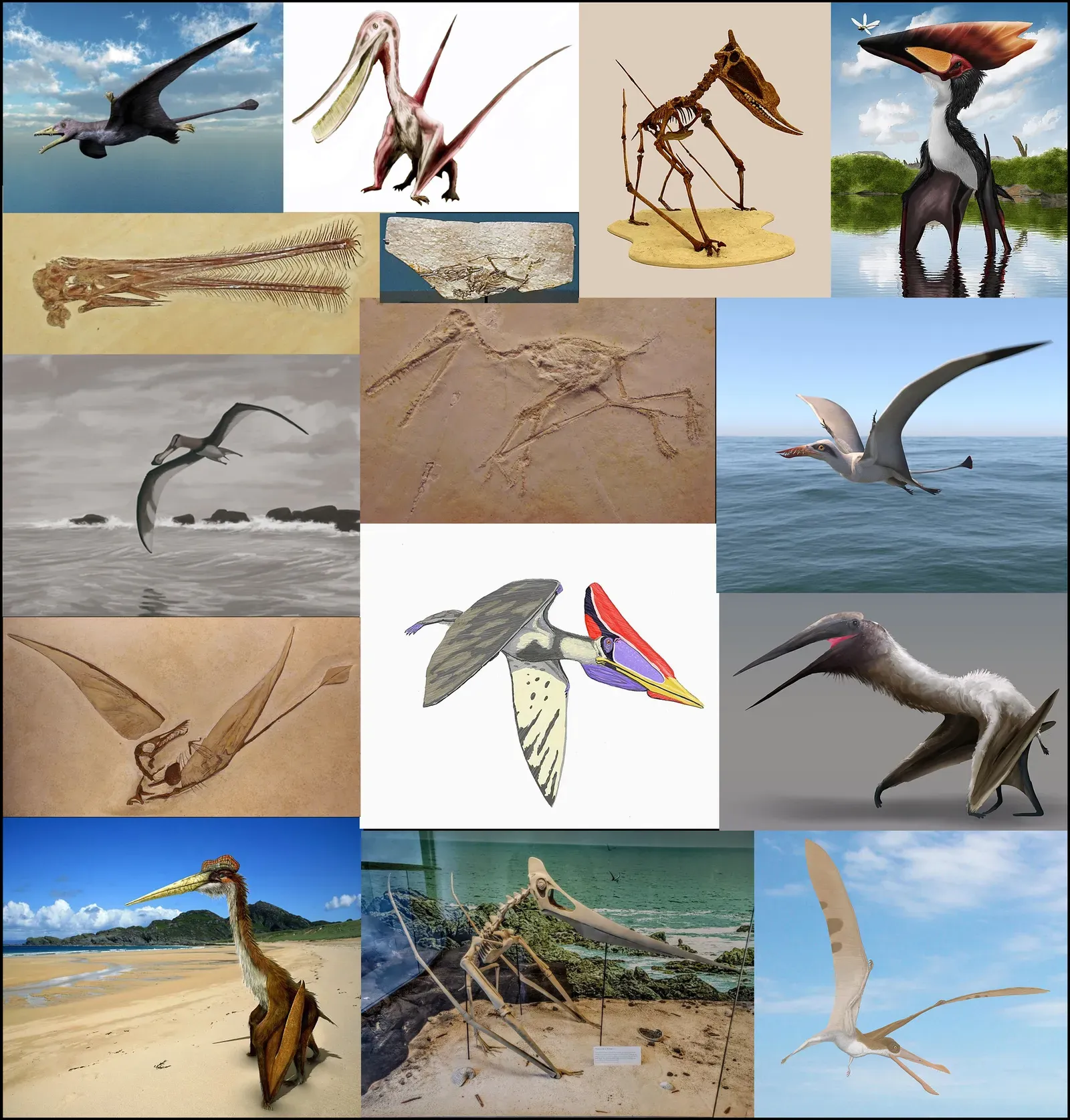
Let’s be real: when most people picture a pterosaur, they imagine something enormous. The truth is they came in a wild range of sizes that would genuinely surprise you. The smallest of these aerial predators was the size of a sparrow. The largest had a wingspan that rivaled that of an F-16 fighter jet. Many possessed heads larger than their bodies, making them, in essence, flying jaws of death. That contrast alone is almost comically extreme.
The largest pterosaurs were members of Azhdarchidae such as Hatzegopteryx and Quetzalcoatlus, which could attain estimated wingspans of 10 to 11 metres and weights of 150 to 250 kilograms. Yet even those giants started out tiny. Pterosaurs evolved a broad range of body sizes, from small-bodied early forms with wingspans of mostly 1 to 2 metres to the last-surviving giants with sizes of small airplanes. Since all pterosaurs began life as small hatchlings, giant forms must have attained these enormous proportions through remarkable developmental processes that researchers are still studying today.
What They Actually Ate: A Surprisingly Complicated Answer
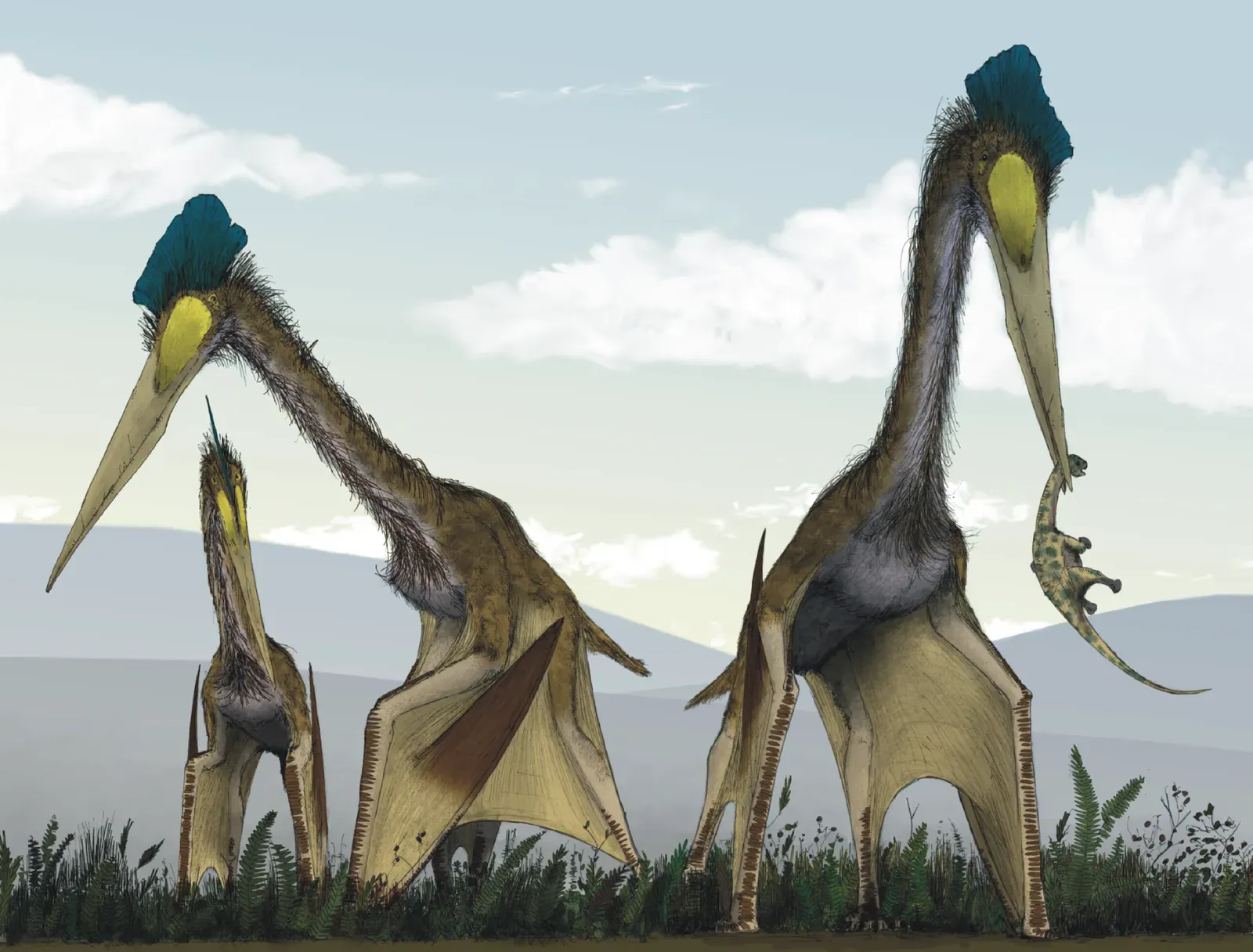
You might assume that creatures that spent so much time in the air were primarily fishers, swooping down to snatch prey from the ocean surface. The truth, it turns out, is far messier and far more interesting. Numerous dietary hypotheses have been proposed for different pterosaur groups, including insectivory, piscivory, carnivory, durophagy, herbivory and frugivory, filter-feeding and generalism. That is a staggering menu of options for a single group of animals.
Research reveals direct evidence of sympatric niche partitioning, with Rhamphorhynchus identified as a piscivore and Pterodactylus as a generalist invertebrate consumer. Scientists propose that the ancestral pterosaur diet was dominated by invertebrates and that later pterosaurs evolved into piscivores and carnivores. Even within the same ancient environment, different pterosaur species carved out their own dietary specialties, much like how different bird species today share the same forest without competing directly for food.
How They Launched and Soared
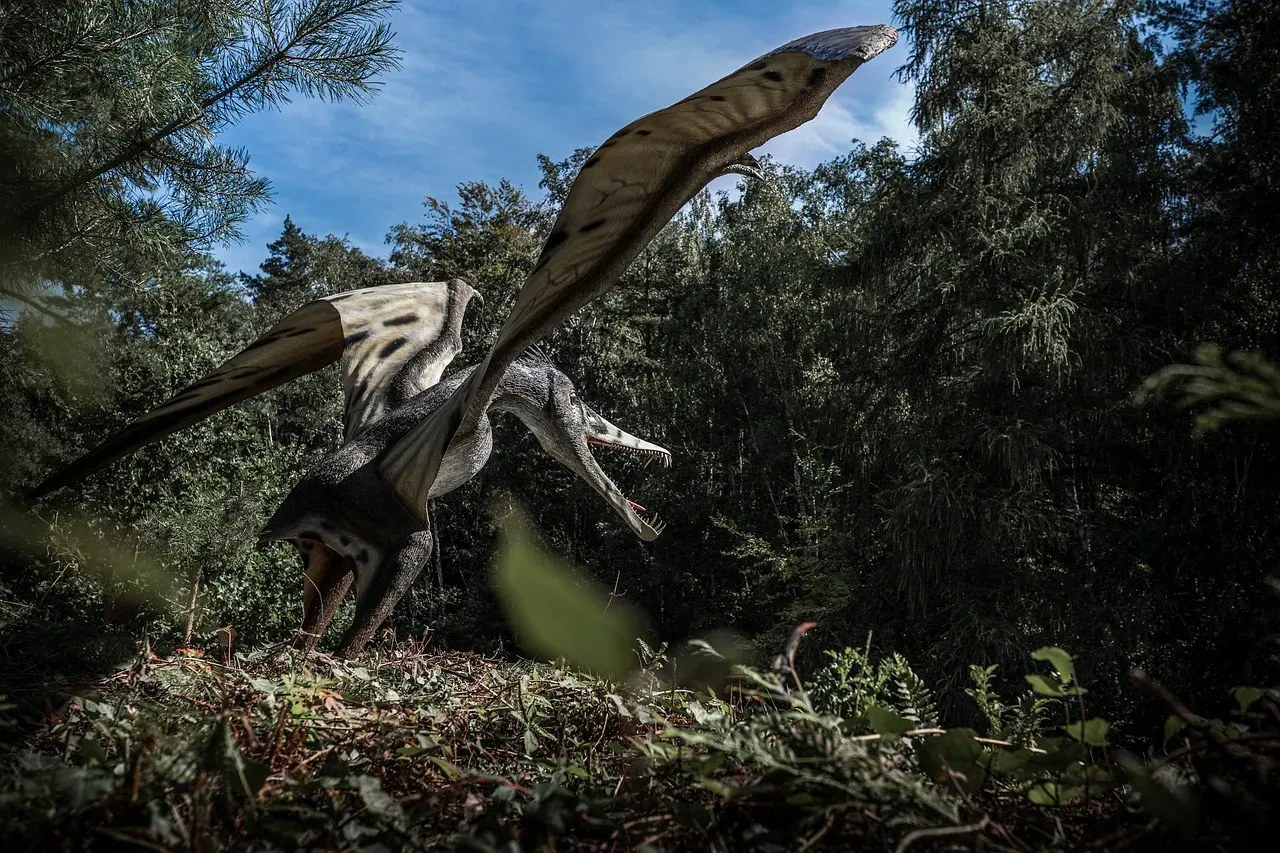
Here is something most people never stop to consider: how does an animal the size of a giraffe actually get off the ground? For pterosaurs, the answer lies in one of their most underappreciated features. Pterosaurs were quadrupedal on the ground, and their wings folded up and served as walking, and therefore jumping, limbs. Numerous exquisitely preserved fossil trackways confirm this odd aspect of pterosaur anatomy. They essentially pole-vaulted into the sky using all four limbs simultaneously.
Being quadrupedal drastically changes the maximum size of a flying animal. Pterosaurs could use not only their hind limbs for launch but also their much larger forelimbs, thereby more than doubling the available power for takeoff. They had the perfect combination of adaptations to become aerial behemoths. Once airborne, pterosaurs had a highly effective flow-through respiratory system, capable of sustaining powered flight, predating the appearance of an analogous breathing system in birds by approximately seventy million years. Their lungs were, in short, generations ahead of the competition.
Their Fall: Going Out at the Top of Their Game
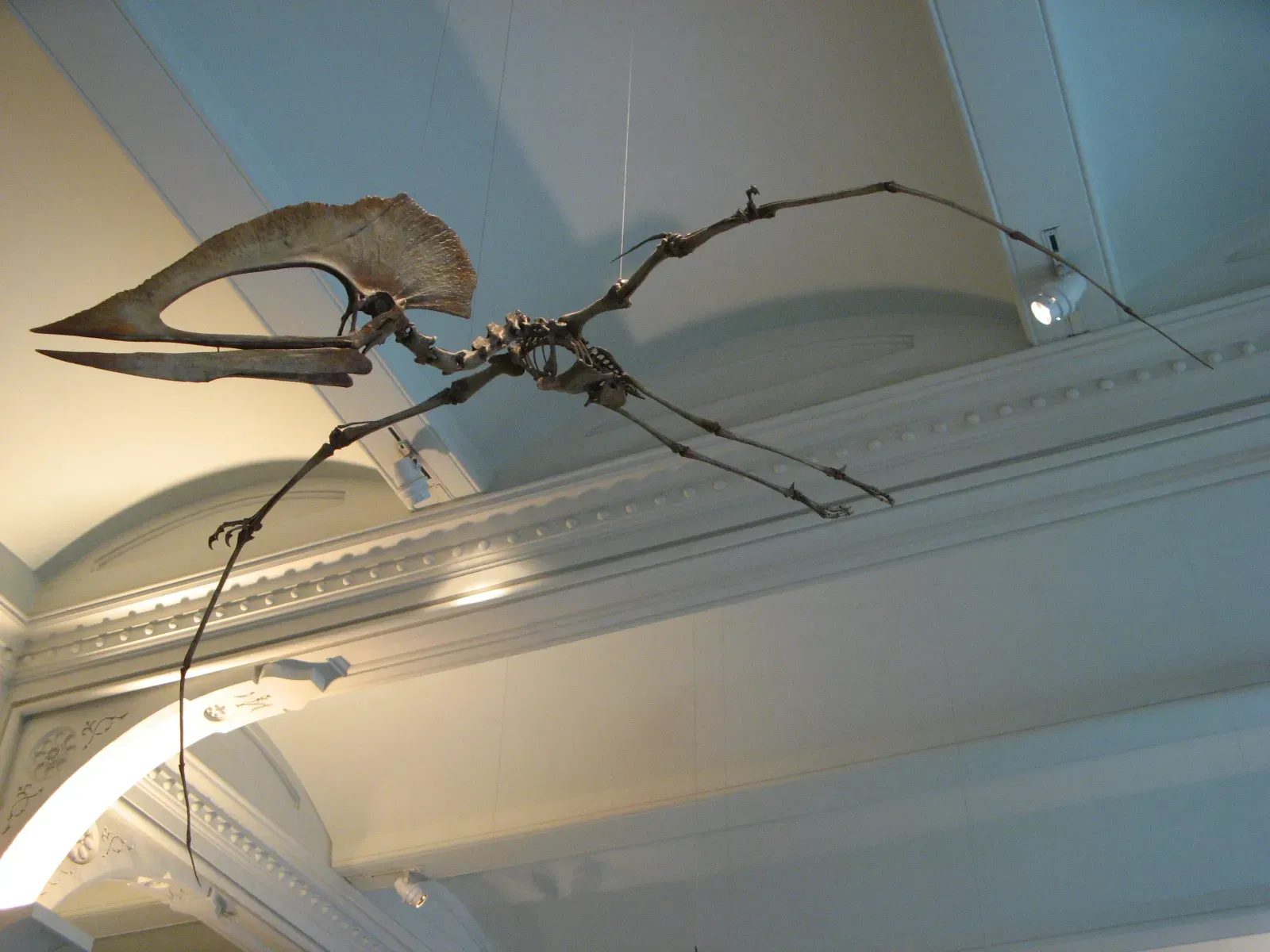
For decades, the scientific assumption was that pterosaurs were already in decline when the end came. As it turns out, that assumption was wrong. Fossils of six new species of pterosaurs, giant flying reptiles that flew over the heads of the dinosaurs, have been discovered, revealing that this lineage was killed off in its prime. Analysis of the fossils shows that, contrary to previous studies, there was still remarkable diversity among pterosaurs up to the point of their extinction. They were not limping toward oblivion. They were thriving.
Rather than gradually losing out to birds over the course of the Cretaceous, pterosaurs remained dominant in all ecological niches for wingspans of two metres or more. Their extinction was caused by a large asteroid that struck the Earth in what is now the Yucatán Peninsula, igniting a series of events that led to the extinction of all non-avian dinosaurs, pterosaurs, large marine reptiles, and countless other species. Pterosaurs lived at a huge range of body sizes, but by the end of the Cretaceous most were quite large. Living that large may have made pterosaurs more vulnerable to extinction. One catastrophic cosmic event ended a reign that had lasted over 160 million years, and no creature since has come close to matching .
Conclusion

Pterosaurs are far more than ancient background decoration for a world full of famous dinosaurs. They were pioneers, survivors, and sky-ruling marvels that deserve a spotlight of their own. From the biomechanics of their paper-thin bones to the sheer ecological diversity of what they ate and how they lived, every new discovery reveals a group of animals that was extraordinary in almost every measurable way.
What strikes you most, perhaps, is not how different they were from anything alive today, but how successful they were on their own terms. As the last pterosaurs perished, rule of the skies was finally relinquished to the birds, leaving only dusty fragments as remnants of a once great aerial dynasty. The birds that now fill our morning skies owe their dominance partly to the vacuum left behind. The next time you watch a pelican glide effortlessly above the ocean, think about the creatures that did it first, and did it bigger, and did it for over 160 million years. What do you think it would feel like to stand beneath those ancient wings? Drop your thoughts in the comments below.