
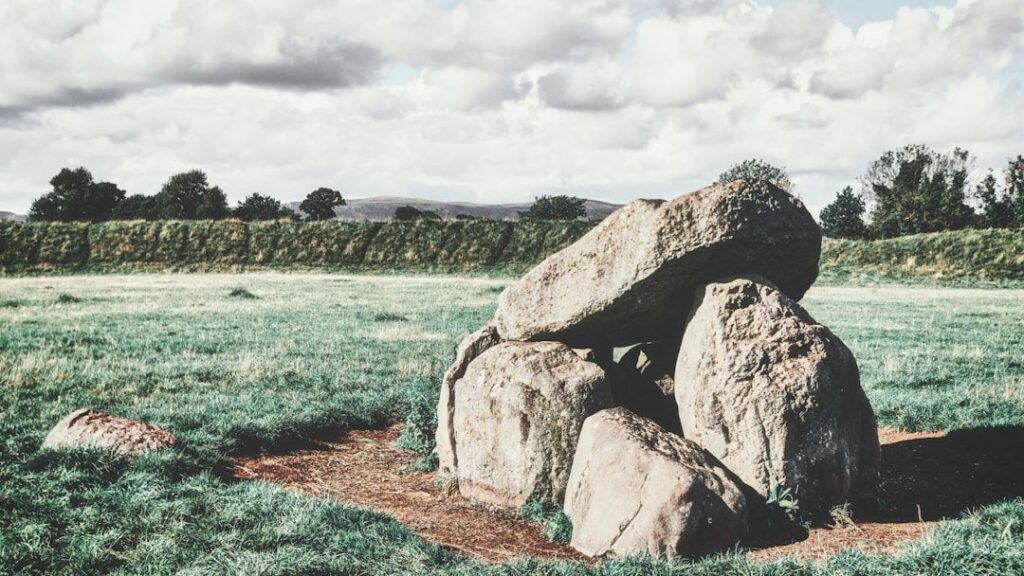
If your mental image of the Stone Age is Fred Flintstone sliding down a dinosaur’s tail after work, you’re in good company. Popular culture has turned tens of thousands of years of human history into one long gag reel of cavemen, clubs, and badly fitting furs. The real story is far stranger, much smarter, and honestly way more impressive than anything that ever happened in Bedrock.
Archaeologists today are uncovering a world where people who had no metal, no writing, and no Wi‑Fi were still solving mind‑bending problems, crossing seas, caring for the vulnerable, and decorating their lives with art that still stops us in our tracks. Once you see what they were actually doing, it gets a lot harder to look down on “cavemen” and a lot easier to feel a bit humbled by your own dependency on smartphone navigation and food delivery apps.
1. Stone Age people performed shockingly advanced brain and skull surgery

Imagine lying still while someone scrapes or drills a hole into your skull… with a stone tool. That is not a horror movie plot; it is a real Stone Age medical procedure called trepanation, and there is solid archaeological evidence that people not only did it but often survived it. Skulls from the late Stone Age show clean, carefully shaped openings with signs of bone regrowth around the edges, which means the patients lived for months or even years afterward.
Why on earth would they do this? We cannot read their medical textbooks because they did not have any, but many researchers think they were treating head injuries, seizures, or intense headaches. Some may also have believed that cutting a hole in the skull helped release harmful spirits. Whatever the reason, this was not random butchery. You can see in the bones that they avoided major blood vessels and cut in controlled, methodical ways. In other words, while Fred Flintstone was bonking people with a club in cartoons, real Stone Age healers were pulling off stone‑tool brain surgery that would make most of us faint.
2. They built houses and “neighborhoods” that did not look primitive at all
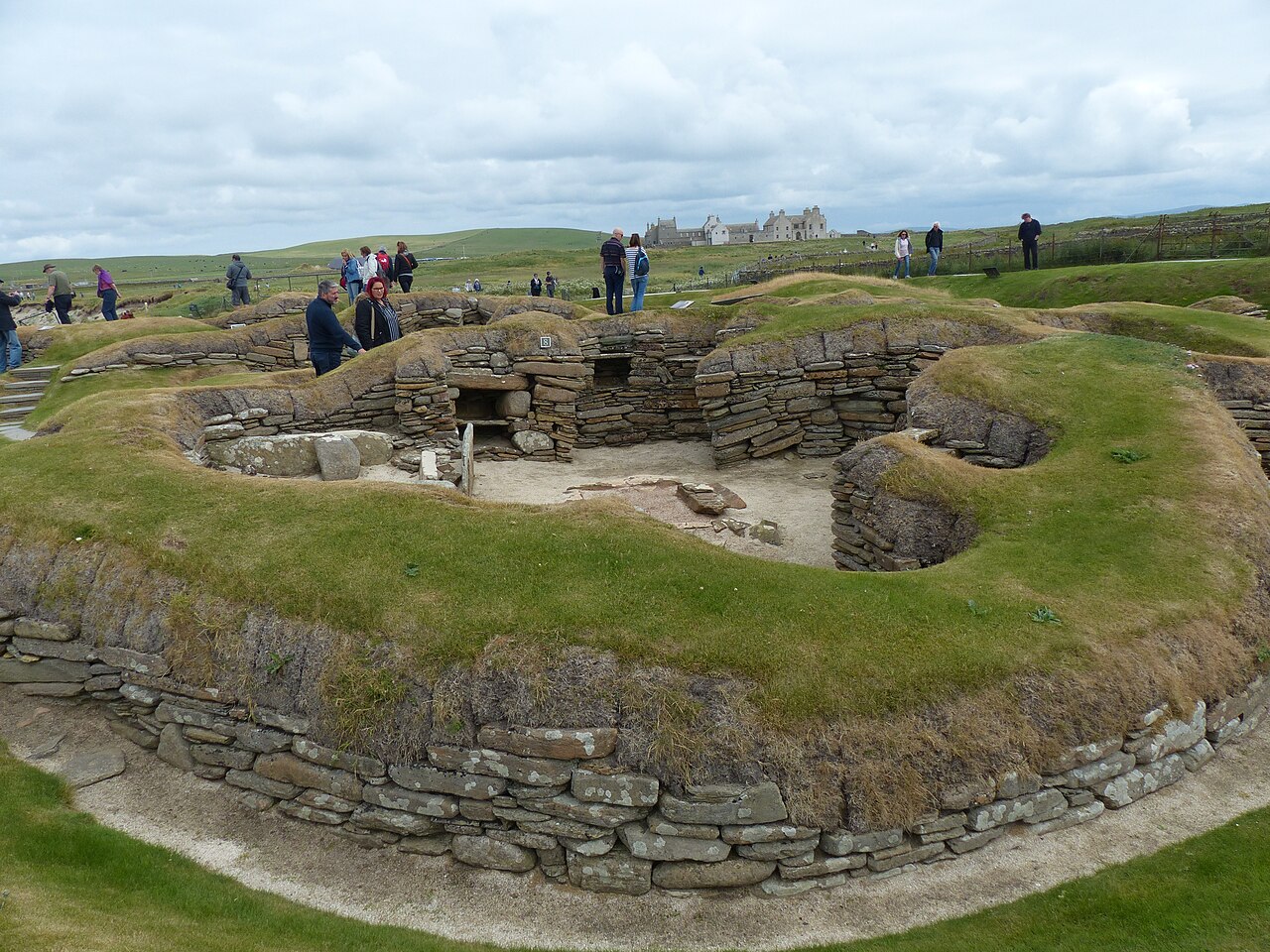
The stereotype is that Stone Age people just huddled in damp caves hoping not to die. Caves were used, sure, but archaeology has turned up villages that look more like carefully planned tiny home communities than random camps. In some parts of Europe, people built round houses with solid walls made from stacked stone, earth, and wood, often with thick roofs insulated by turf or thatch. In other places, they used mammoth bones or large timber frames, cleverly arranged to stand through harsh winters.
What really blows the old cartoon image apart is how organized some of these settlements were. You can see rows of houses following rough “streets,” shared workspaces, and even designated areas for waste. Some lakeside communities built wooden platforms and walkways over the water, almost like ancient boardwalk suburbs. These were not just survival shelters thrown up in a panic. They were homes, lived in for generations, repaired, expanded, and embedded in social life. Bedrock suddenly looks pretty basic by comparison.
3. Stone Age diets were diverse, flexible, and often surprisingly healthy
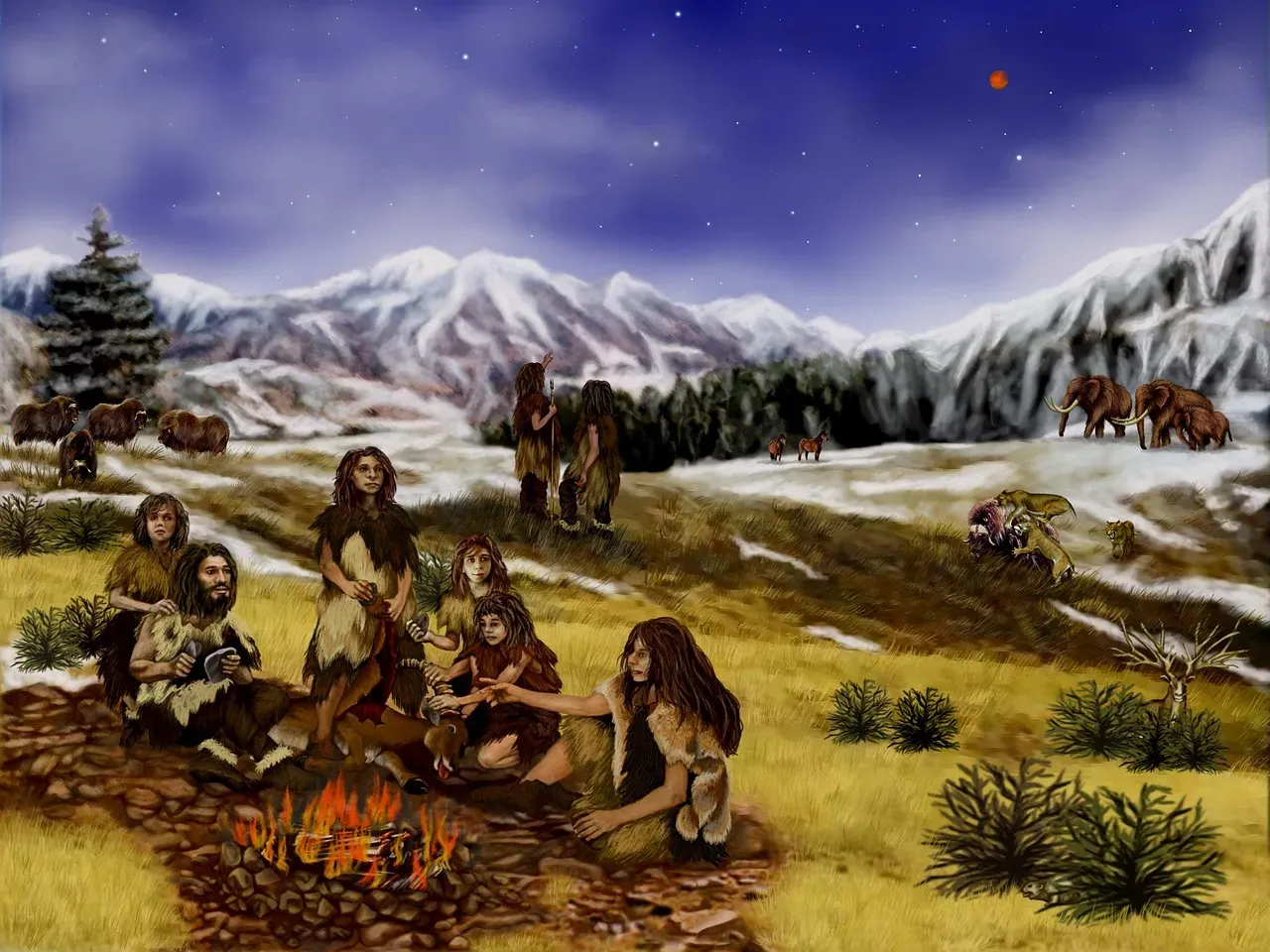
The cartoon version of Stone Age food is one word: meat. In reality, people’s plates were much more varied, and in many cases, their overall diet was healthier than a lot of modern ultra‑processed menus. Hunter‑gatherer groups ate whatever their environment offered: wild grains, nuts, berries, roots, leafy greens, fish, shellfish, and, yes, meat when they could get it. You can think of it as the ultimate seasonal, local, mostly unprocessed diet, whether they liked it that way or not.
Scientists can actually read traces of this in ancient bones and teeth. Chemical signatures and microscopic wear patterns suggest a mix of plants and animals, changing across seasons and regions. Coastal communities leaned heavily on fish and shellfish, while inland groups may have eaten more large mammals mixed with wild fruits and seeds. There were no drive‑throughs, but there were also no sugary sodas, no industrial snacks, and no refined flours. If Fred walked into an actual Stone Age camp expecting nothing but giant ribs, he would probably be handed roasted tubers, nuts, and maybe some grilled fish to go with his meat – more like a rugged fine‑dining tasting menu than a cartoon feast.
4. They crossed open water long before “civilization” was supposed to start

Cartoons act like Stone Age people barely understood the wheel, but the archaeological record shows something wildly different: people were crossing serious stretches of water tens of thousands of years ago. The very fact that humans reached places like Australia and many Mediterranean islands means they had to build some kind of watercraft and understand currents, weather, and navigation well enough not to just vanish at sea. You do not accidentally float a whole population onto another continent.
These were not metal‑hulled ships, of course, but likely rafts, canoes, or boats made from hollowed‑out logs, bundled reeds, or stitched‑together animal skins. Building one that can carry people, tools, food, and maybe even animals, then guiding it safely across open water, takes planning and knowledge passed down through teaching and practice. When you picture that, the Flintstones’ stone car looks a lot less impressive. The real Stone Age travel flex was quietly crossing seas without a compass, an engine, or any written map at all.
5. Stone Age art was more like a spiritual cinema than childish doodling
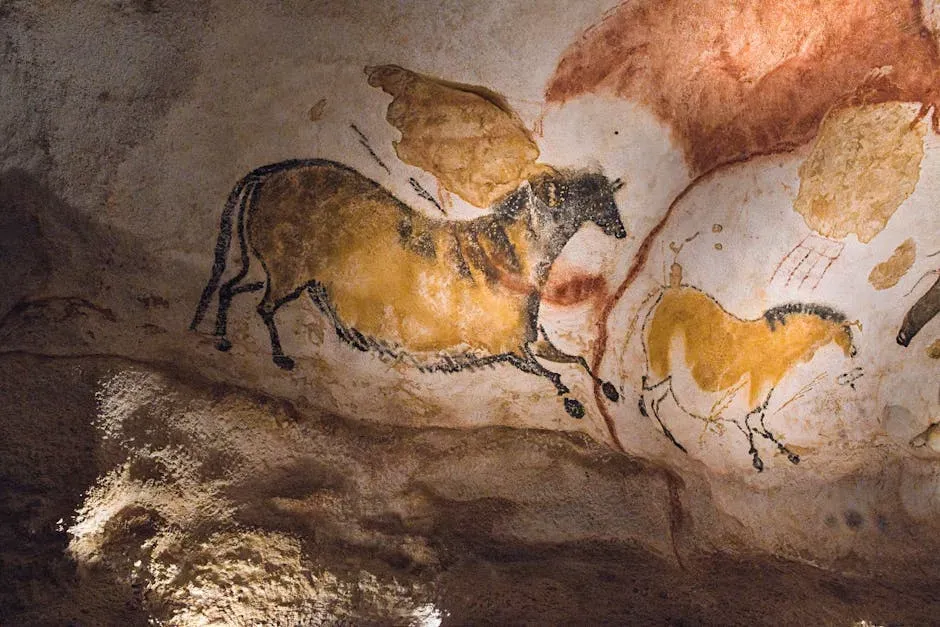
The famous cave paintings of horses, bison, and mysterious symbols are often labeled as early “art,” but that word can make them sound like simple decoration. Step back and look at the details, and it becomes clear that something deeper and more sophisticated was going on. Many of these scenes were painted far inside caves, where you could not see anything without a torch. Painters used the natural curves of the stone to give animals a sense of movement and depth, choosing pigments carefully and layering them in ways that still look powerful today.
Some researchers think these underground galleries were more like immersive spiritual theaters than anything we would call a living room wall. Imagine walking with flickering firelight into the dark, surrounded by echoing voices, then suddenly seeing glowing painted animals appear and move on the rock as the flames danced. This was not the bored finger‑painting of so‑called “cavemen.” It was a full‑on sensory experience that likely connected hunting, myth, identity, and community. Compared to that, watching a cartoon on a flat screen feels oddly flat and distant.
6. They cared for the sick, elderly, and disabled in ways that defy the “brutal caveman” myth

One of the most moving discoveries from Stone Age graves is just how many people with serious injuries or disabilities clearly lived for years, even decades. Skeletons show signs of broken bones that healed in good alignment, worn joints that would have limited movement, and congenital conditions that would have made survival alone almost impossible. Yet these individuals reached adulthood or old age, which means others were helping them with food, protection, and daily tasks.
That kind of long‑term care does not fit the harsh cartoon world where the weak are simply left behind. It suggests empathy, patience, and a social safety net built not out of policies and paperwork but out of relationships and shared responsibility. Someone had to slow down so a limping group member could keep up. Someone had to share their portion of food with a person who could no longer effectively hunt or forage. If anything, the real Stone Age looks emotionally richer than the cynical, every‑person‑for‑themselves stories we often tell about modern life.
7. Their stone tools were engineered with more skill than many modern gadgets
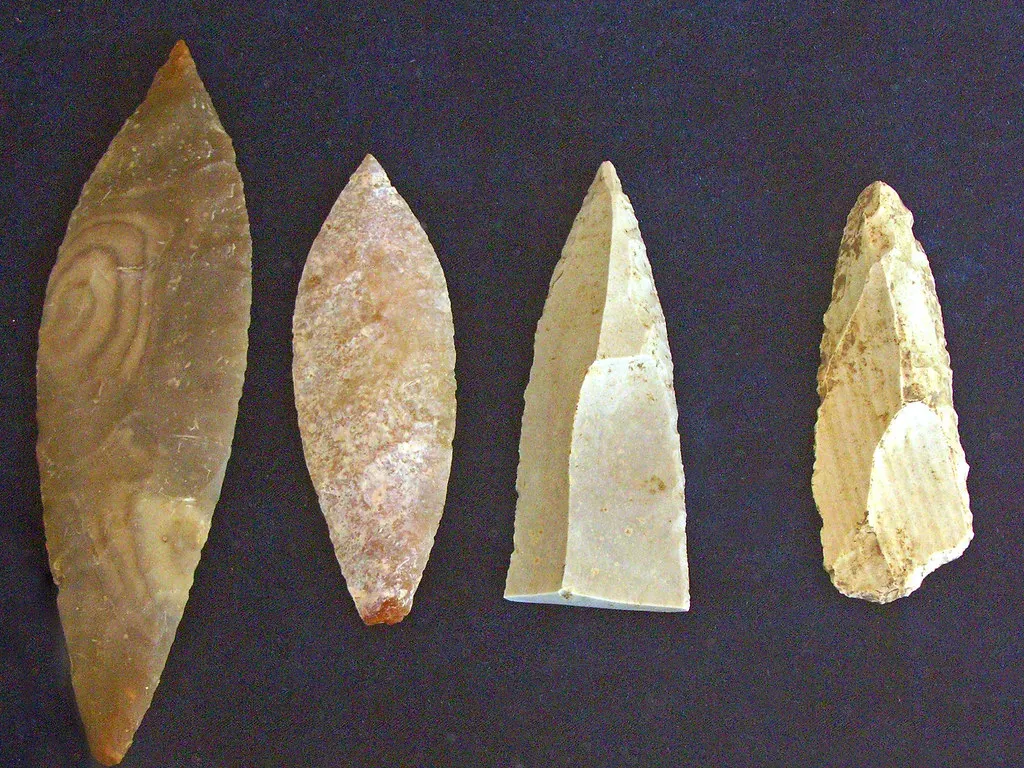
It is easy to underestimate stone tools because they look simple and old. But under a microscope, a finely made flint blade can be a masterpiece of engineering, with razor‑sharp edges, carefully shaped points, and a geometry designed for a specific job. Some tools were multi‑part setups, with stone blades fitted into wooden handles or bone shafts, secured with plant fibers and natural glues. That is more like a toolkit than a single blunt rock, closer to a high‑end multitool than a random pebble.
What really raises eyebrows is how standardized some tool types became over very long distances and times. That suggests teaching, learning, and probably something like apprenticeships, where skills were passed down and refined. People were thinking about angles, leverage, and durability in very practical ways, long before anyone wrote down the word “engineering.” If you handed a carefully crafted Stone Age spear point to Fred Flintstone, he would probably be impressed – and if you handed it to a modern camper, they might quietly wish their cheap plastic gear was built as well.
8. The Stone Age was full of culture, beliefs, and identity – not just survival

The biggest myth about the Stone Age might be that it was only about staying alive from one day to the next. Bones and tools tell us part of the story, but burials, ornaments, and ritual objects open a window into the rest. People were burying the dead with care, sometimes including items like beads, tools, or pigments – things that seem unnecessary if all you care about is calories and warmth. That points toward beliefs about death, memory, and maybe even an afterlife or spiritual world, even if we cannot decode the details.
Personal ornaments like shell beads, carved pendants, and carefully shaped teeth or bones show that people cared about how they looked and how they were seen. Clothing might have been decorated, hair styled, patterns painted on skin. Think of it as an early version of style and identity, expressed with what they had around them. So while Fred Flintstone’s outfit never really changes episode to episode, real Stone Age people were probably much more like us: worrying about how they showed up in their community, telling stories, performing rituals, and trying to make sense of a world that could be both beautiful and terrifying at the same time.
Conclusion: The joke is on us, not on them

The more we learn about the real Stone Age, the more the old caveman joke starts to feel a bit tired and unfair. These were people who operated without metal tools, engines, or written language, yet still built solid homes, navigated seas, healed damaged skulls, and invested in art, ritual, and long‑term care for one another. In a world that could turn on them with a single bad winter, they still found energy to paint, decorate, and dream. That is not the mark of brutes; it is the mark of a deeply human, deeply ingenious way of life.
If anything, they force us to ask some uncomfortable questions about our own era. We have powerful technology and staggering amounts of information, but we also struggle with loneliness, burnout, and an uneasy relationship with the natural world that kept them alive. Maybe the real twist is this: if you could bring a Stone Age person into our world, they might be just as shocked by our wastefulness and dependence on fragile systems as we are by their stone tools and cave art. So when you think of the Stone Age now, do you still see a clumsy cartoon caveman, or do you see a version of us that was tougher, more patient, and maybe, in some ways, wiser than we expected?