Picture a landscape where the ground trembles long before you see what is coming. Dust rises on the horizon, tree canopies sway, and then an entire moving forest of necks and tails emerges: a herd of Diplodocus, some longer than a city bus, quietly grinding through ferns and conifers like it is the most ordinary thing in the world. It is hard to imagine a more dramatic contrast to our time than this slow-motion parade of giants, and yet every bone we have says this world was once absolutely real. The mystery is not whether they lived this way, but how such enormous, fragile-looking animals could thrive for millions of years.
Diplodocus has become one of the poster children for dinosaurs, yet most of what people picture is outdated: a swamp-dwelling beast dragging its tail, living a lonely life in some murky marsh. Modern science paints a very different picture, one that is more dynamic, technical, and strangely relatable. When you look closely at the rocks and skeletons, you do not just see a giant skeleton; you see growth rings, healed injuries, trackways of whole herds, and the fingerprints of ancient ecosystems. The lost world of these giant herds turns out to be less like a monster movie and more like a complex, living society written in stone.
The World Diplodocus Inherited: A Greenhouse Planet of Giants
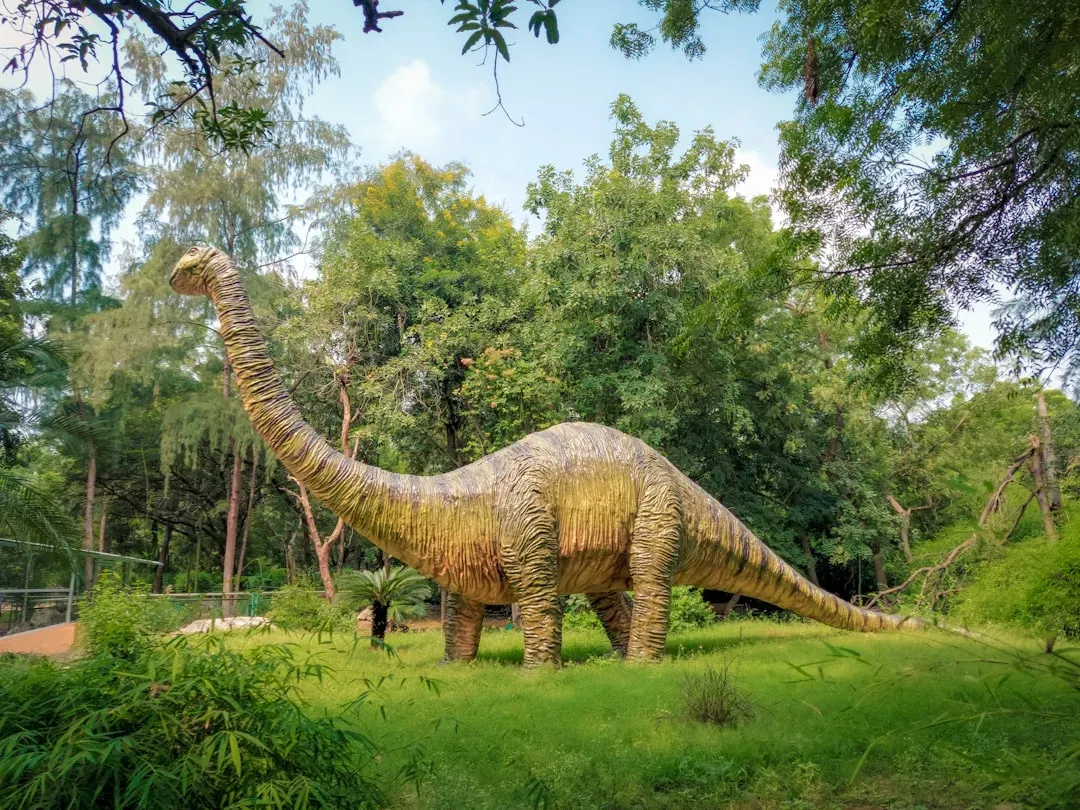
One of the most surprising things about Diplodocus is not the dinosaur itself, but the stage it walked on: the Late Jurassic world, roughly about one and a half hundred million years ago. At that time, what is now western North America was a warm, seasonal, mostly humid environment, with lush river systems, sprawling floodplains, and forests of conifers, ferns, horsetails, and early relatives of modern ginkgo. Think fewer flowers and bright blossoms and more endless green, with towering conifer trunks and fern-covered ground as far as a sauropod’s eye could see. The climate was generally warmer than today, with higher carbon dioxide levels and no polar ice caps in the way we know them now.
This greenhouse-style planet was perfect for growing both big plants and big animals, which is why Diplodocus did not walk alone. It shared its world with other huge sauropods, armored dinosaurs, and sharp-toothed predators like Allosaurus, all feeding into a relentlessly productive food web. Sediments from places like the Morrison Formation, which crops out across several U.S. states, show repeated layers of floodplain muds, river channels, and ancient soils packed with plant and animal fossils. Taken together, they tell the story of a landscape that was constantly reshaped by water and weather, but stable enough for lineages of giants to dominate for millions of years.
How Big Was Diplodocus Really? The Engineering of a Dinosaur Giant
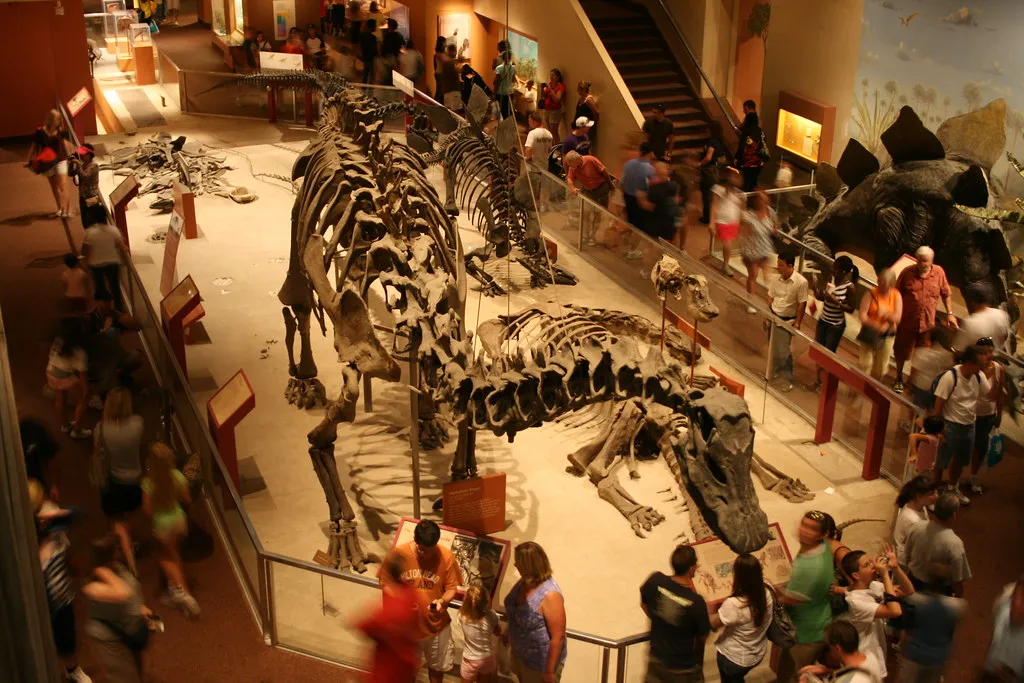
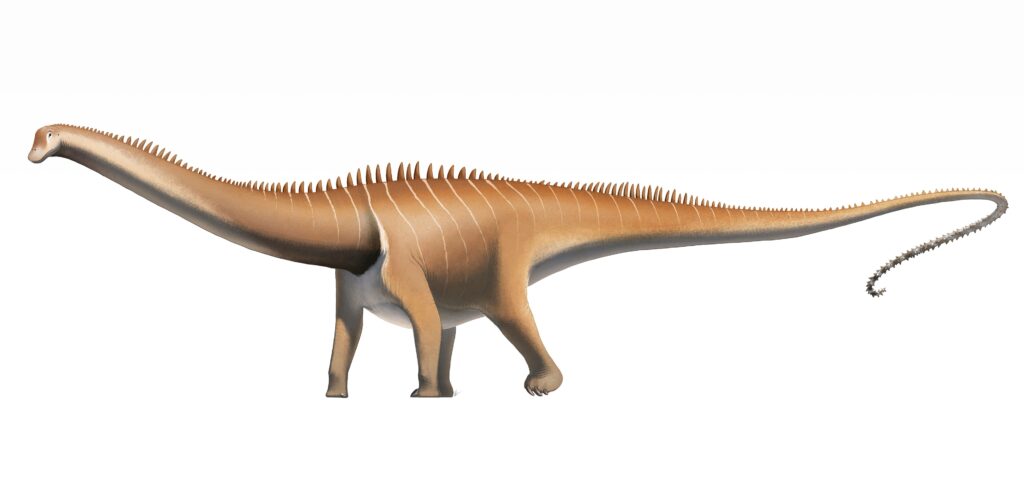
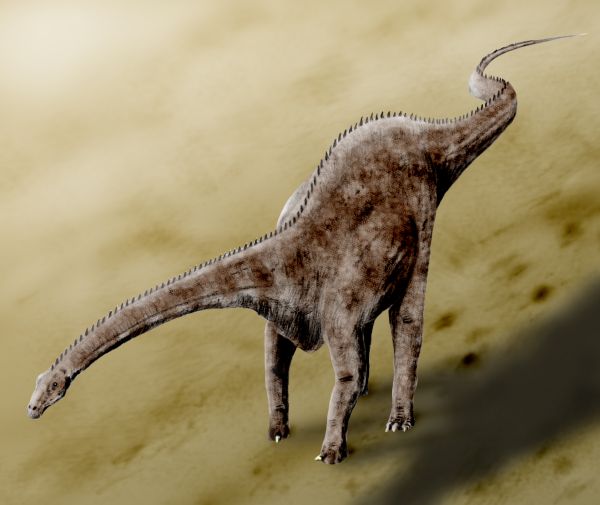
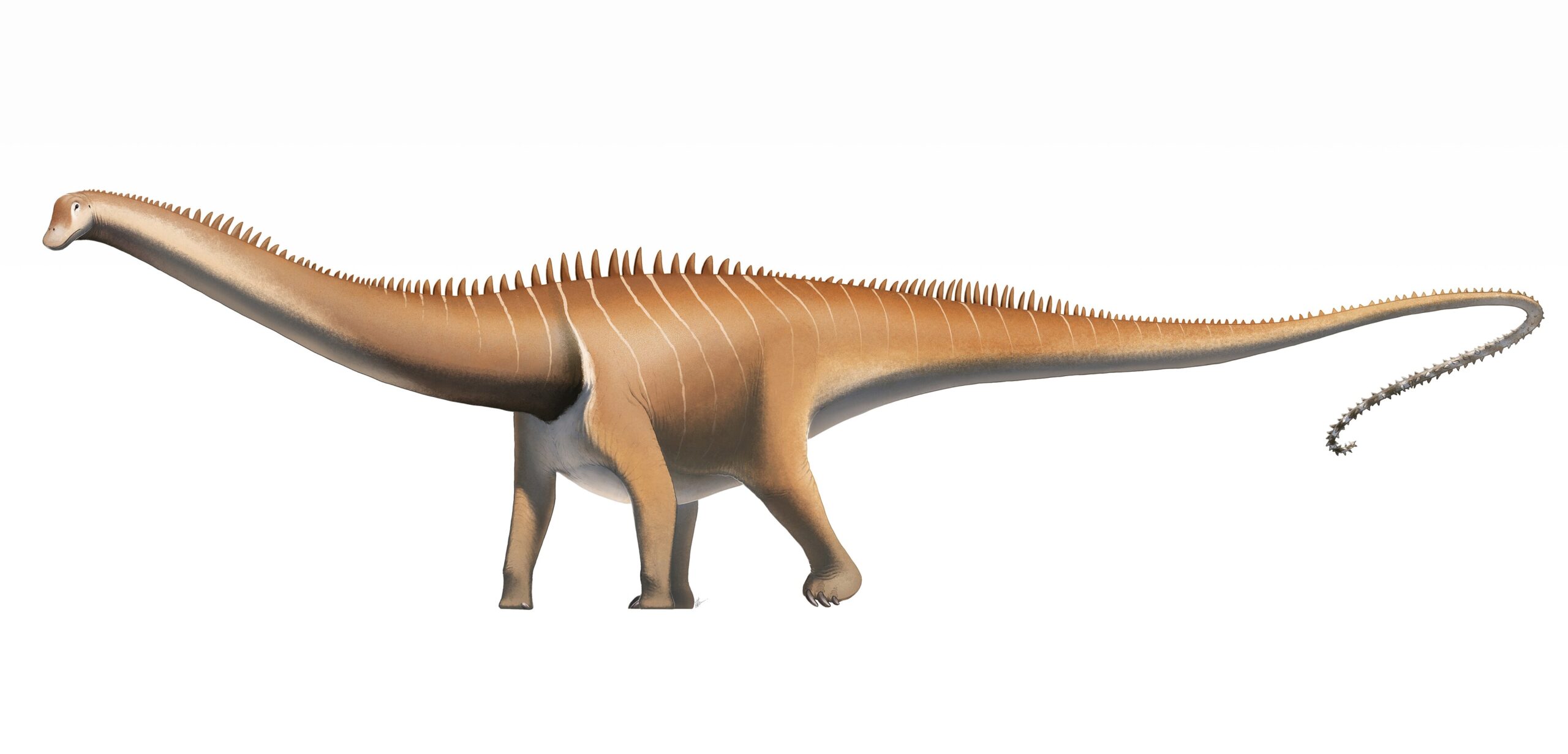
It is easy to glance at a museum skeleton and think, “Big,” but Diplodocus pushes that word to its limits. Some species reached lengths on the order of twenty to more than twenty-five meters from nose to tail tip, with much of that taken up by the extraordinarily long neck and whip-like tail. Unlike the bulky, barrel-shaped sauropods many people picture, Diplodocus had a more streamlined body, with slender limbs and a relatively light frame for its length. The secret in part lies in its bones: the vertebrae were full of air spaces, much like the bones of modern birds, which dramatically cut down on weight without sacrificing strength.
When you see that long neck, it almost feels like fantasy, but the engineering is very real. The neck vertebrae interlocked and were supported by strong ligaments and muscles, letting the animal sweep a wide feeding area without taking many steps, which would have saved energy for a creature that needed plenty. The tail, meanwhile, acted as a counterbalance and may have been flexible enough at the tip to move like a whip, perhaps even as a defensive or signaling tool, though how loud or dramatic that really was is still debated. Putting all this together, Diplodocus was not just big; it was a carefully optimized machine for being big, a living compromise between the demands of physics and the opportunities of a rich environment.
What Did Diplodocus Eat, and How Did It Feed a Body That Size?
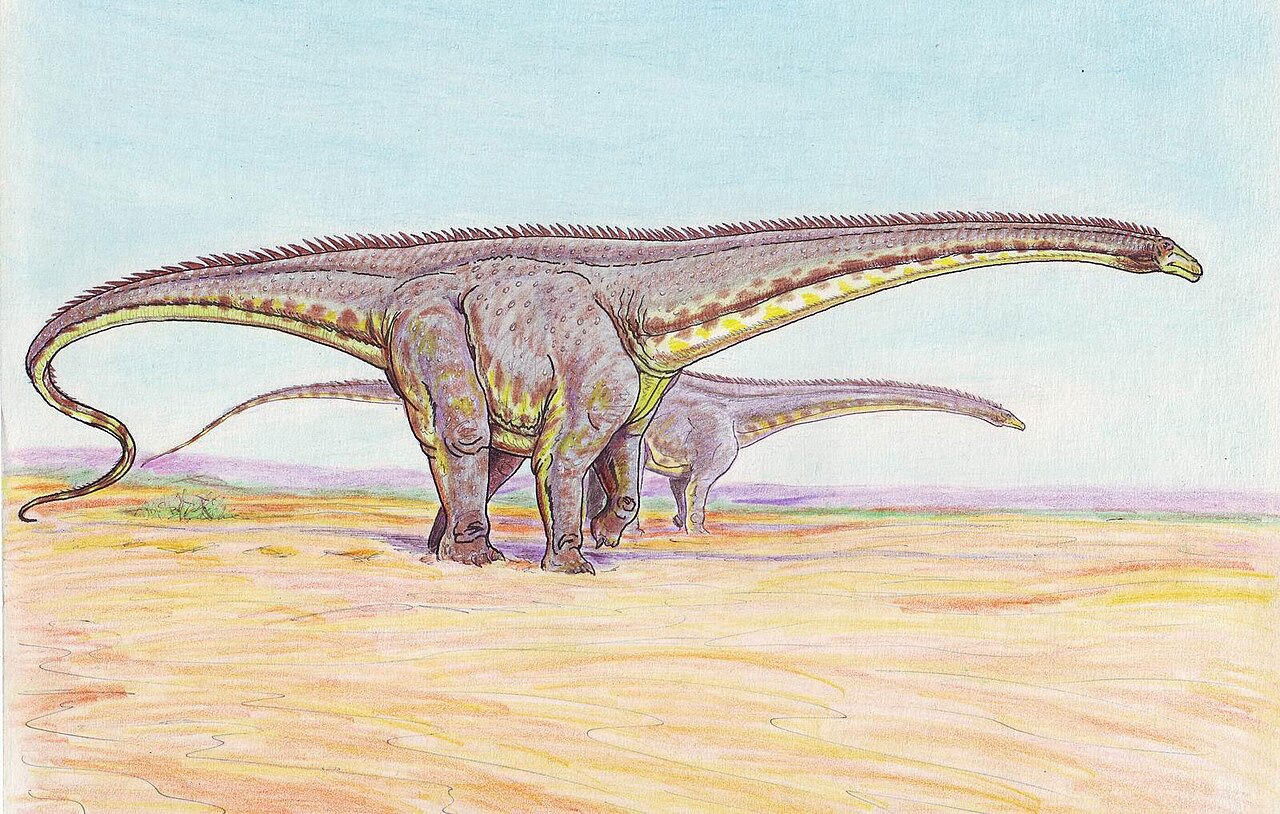
Feeding a body measured in many tons is not a casual task, and Diplodocus seems to have solved that challenge with efficiency over delicacy. Its skull was relatively small compared to its body, with peg-like, forward-placed teeth that were better suited for raking or stripping vegetation than for chewing it thoroughly. Instead of slicing and grinding, Diplodocus probably snipped off mouthfuls of leaves and soft plant material and swallowed them largely unchewed, letting its long gut do the slow work of breaking it all down. The neck allowed it to browse over a wide height range, from near the ground up into the mid-level of trees, which would have made it easier to exploit different plant layers than other dinosaurs.
Some scientists think Diplodocus might have specialized in softer vegetation, like young shoots and fern fronds, avoiding the tough, fiber-rich material that other sauropods could handle. The wear on their teeth suggests they were replaced regularly, a bit like a conveyor belt, which makes sense for an animal constantly scraping branches and stems. To keep that system running, Diplodocus likely spent a huge part of each day feeding, more like a giant cow on overtime than a dragon-like movie monster. In a way, its life was a trade: it accepted a relatively simple, repetitive diet in exchange for the safety and dominance that came with size.
Herds of Giants: Evidence for Social Life and Group Behavior
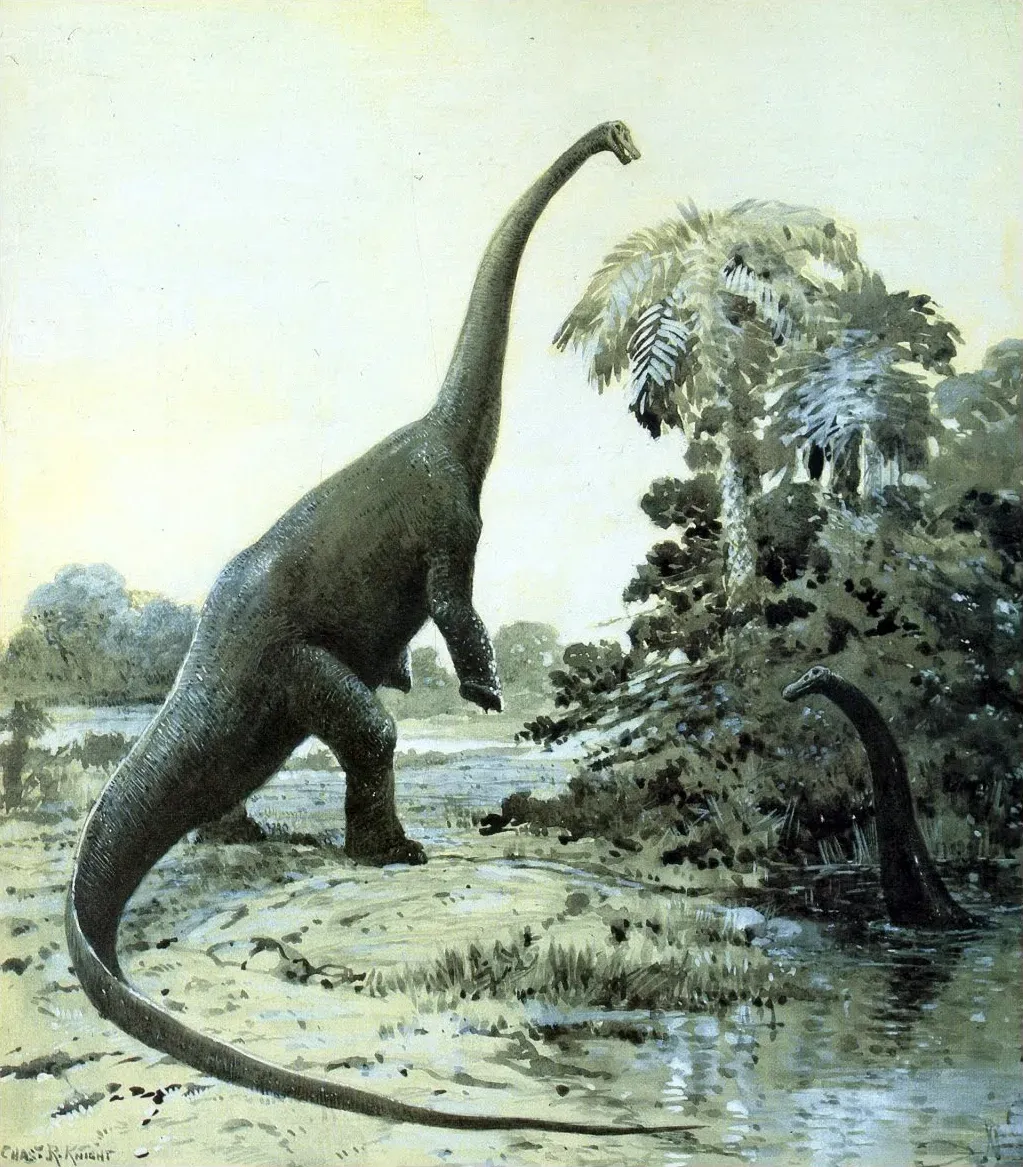
The image of a solitary Diplodocus plodding through a swamp makes for a lonely painting, and it is also probably wrong. Trackways preserved in ancient mud show multiple sauropods moving together, some with different footprint sizes that hint at mixed-age groups of adults and juveniles. These parallel track lines do not look like random chance; they look like coordinated travel, the kind of thing we see in elephants, bison, and other big herbivores today. That alone suggests that giant herds of sauropods, including animals similar to Diplodocus, were likely a normal part of Late Jurassic life.
Living in groups would have brought both benefits and challenges. On the plus side, many large bodies together present a serious deterrent to predators, and a herd can share knowledge about food and water sources across a shifting landscape. On the downside, dozens or hundreds of huge herbivores moving through the same area can strip vegetation quickly, demanding either constant movement or a landscape that could recover fast. I like to imagine these herds a bit like floating islands of living infrastructure: each one a mobile, noisy, messy community reshaping the land as it passed. Whether they stayed together for life or formed looser, changing associations is still an open question, but the ground they walked on strongly argues for lives lived in company, not in isolation.
Growing Up Diplodocus: From Tiny Hatchling to Titan
It is almost impossible to look at an adult Diplodocus skeleton and picture it as a tiny hatchling, yet that is exactly how the story started. Sauropod eggs that we have found from related species are not enormous; they are closer in size to large melons than to cars, which means the babies emerging from them were tiny compared to the adults they would one day become. That huge gap between hatchling and adult size implies years of rapid growth, with bone studies showing dense growth rings in young animals that thin out as they mature. In modern terms, imagine a calf growing into a multi-story building in not much more than a decade or two.
Growing that fast demands constant intake of food and a body finely tuned to handle it. Juvenile Diplodocus probably did not live identical lives to the adults; they may have browsed at different heights, moved in slightly different parts of the environment, or stayed closer to safer areas while older, larger animals took more risks. The balance between vulnerability and opportunity would have shaped their early years, just as it does for large animals today. There is something oddly familiar here: beneath the scales and tail, you have different life stages, different needs, and a long journey from fragile youth to towering adult, played out on a much grander scale than any human childhood.
Predators, Dangers, and the Everyday Risks of Giant Life
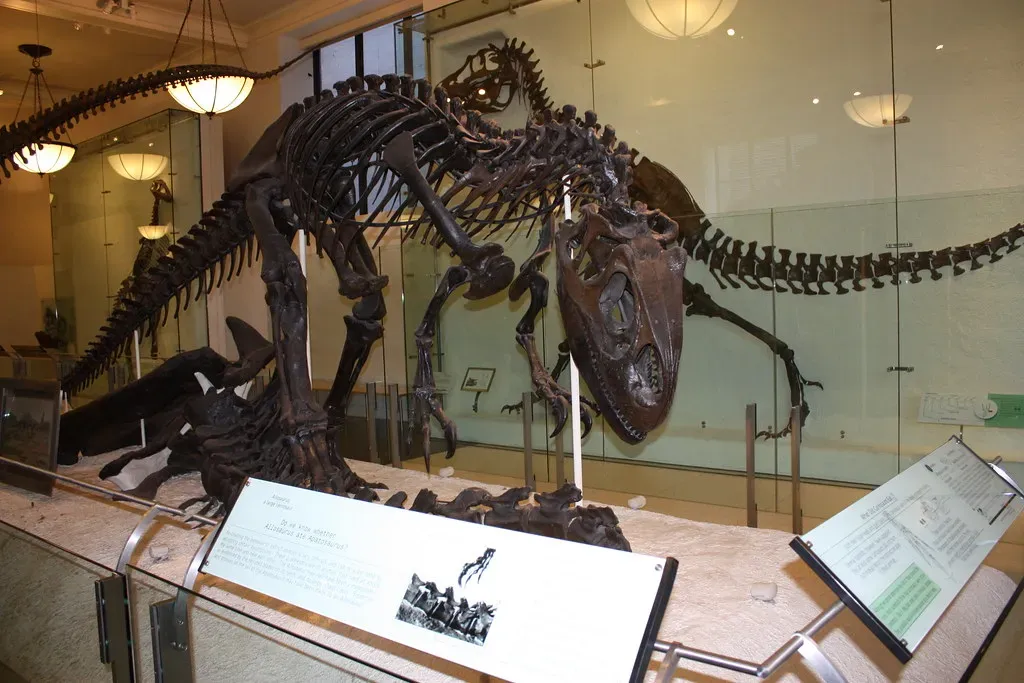
For an animal as massive as Diplodocus, the main threat was not a single enemy but a whole collection of stresses from predators to injuries to environmental shifts. Large carnivores like Allosaurus and related theropods would have been a real danger, especially to juveniles and possibly even to sick or older adults. Bite marks on sauropod bones, healed fractures, and disarticulated skeletons all hint at ecosystems where predation and scavenging were a constant background noise. Being huge helped, but it did not make Diplodocus invincible; it just shifted the kind of risks it faced.
Beyond claws and teeth, there were droughts, floods, volcanic ash falls, and the daily grind of moving such an enormous body across demanding terrain. Skeletons of large sauropods sometimes show signs of arthritis-like wear, fused vertebrae, or other chronic issues that must have made movement painful. Herd life may have softened some of these blows, but it also meant that when conditions turned bad, many animals might suffer together. To me, this is where the romantic image of the dinosaur age meets a harsher truth: even giants live on the edge of their environment’s limits, and sometimes those limits push back hard.
The End of an Era: What Diplodocus Tells Us About Change and Survival
Diplodocus did not vanish in a single dramatic catastrophe like the later asteroid impact that ended the age of non-avian dinosaurs. Instead, its particular group of sauropods seems to disappear from the fossil record as ecosystems slowly shifted, continents continued to move, and new kinds of dinosaurs and plants rose on the scene. That quiet fading is almost more unsettling than a sudden, fiery end; it suggests that even wildly successful designs can be outpaced as conditions change. What once worked brilliantly for millions of years can, given enough time, become a dead end.
Here is my opinionated take: the real power of Diplodocus as a symbol is not just in its size, but in what it says about adaptability and limits. These herds of giants were masterpieces of their world, perfectly tuned to a very specific set of climates, plants, and landscapes. When those shifted beyond a certain point, no amount of size, herding, or clever anatomy could save them. In a century when we are rewriting our own planet’s climate and ecosystems at high speed, that feels less like distant prehistory and more like a warning written across deep time. If a creature as astonishing as Diplodocus can dominate its world and still eventually lose its place, how sure are we that our own way of living is built to last?