Picture a great white shark, all teeth and attitude, slicing through the water. Now imagine something big enough to swallow that shark in a single gulp, with a skull the size of a car and jaws like a living bear trap. That was the reality of ancient oceans during the dinosaur era: not just dangerous, but downright nightmarish, filled with predators that would turn today’s sharks into background extras. The wild part is that we only know them from bones and a few impressions in rock, yet even that is enough to paint a terrifyingly clear picture.
What makes these long-extinct monsters so gripping is how alien they feel and yet how real they were. Their fossils tell stories of broken bones, crushed shells, and bite marks almost playfully stamped into other giants. When you line up some of the worst offenders against a modern great white, the shark suddenly looks almost modest, like a house pet next to a tiger. Let’s dive into nine sea monsters from the dinosaur era that really do make sharks look like goldfish.
Mosasaurus: The Apex Lizard of the Late Cretaceous Seas
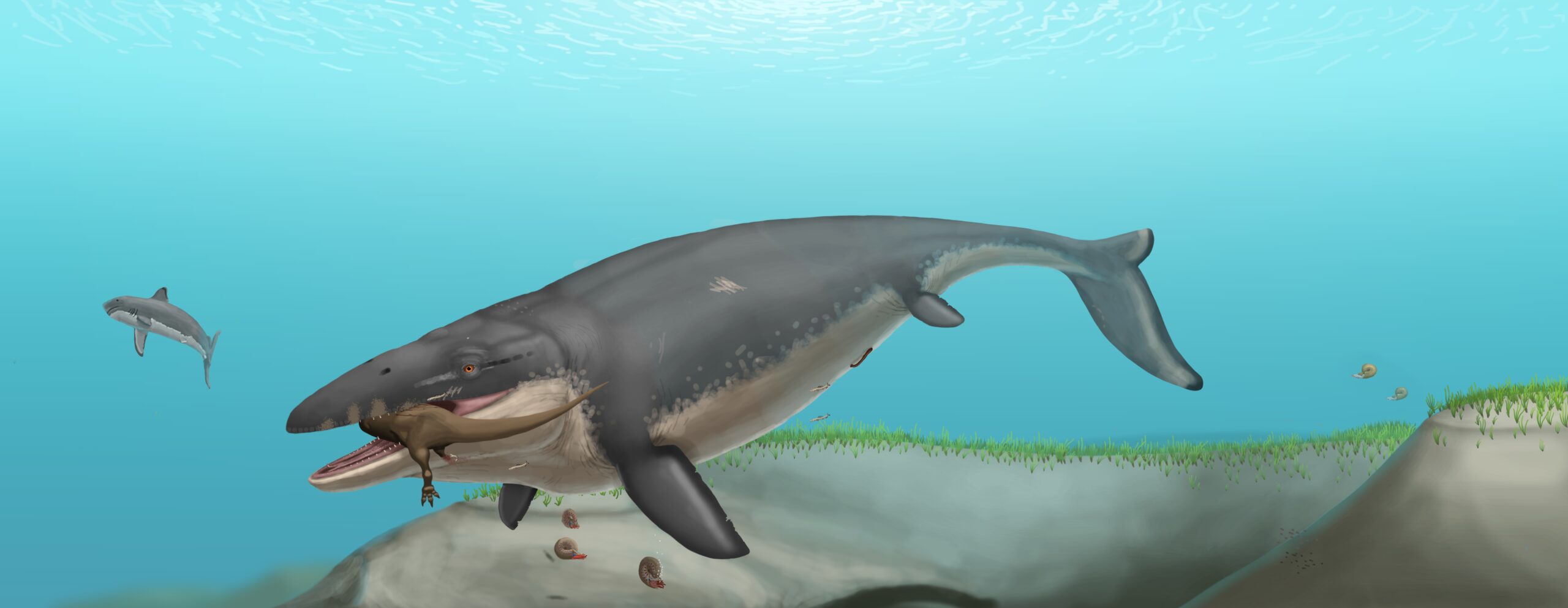
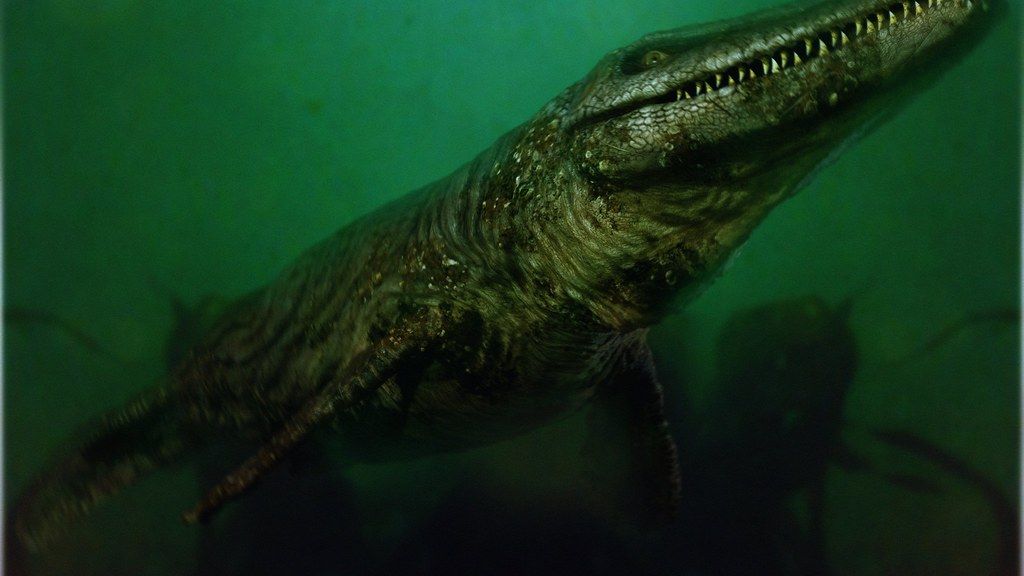
Mosasaurus was basically a Komodo dragon supercharged and dropped into the ocean, stretched out to the length of a city bus. Some species are estimated to have reached more than fifty feet long, with a skull packed full of conical, piercing teeth designed to hold onto struggling prey. Its body was powered by a strong, streamlined torso and a tail fluke similar to that of modern sharks or whales, giving it serious speed in open water. Unlike sharks, this beast had a flexible neck and jaws that could open wide enough to tackle huge chunks of flesh.
Paleontologists have found fossil remains of Mosasaurus with stomach contents that include fish, other marine reptiles, and even sea birds, suggesting it ate whatever it wanted. The shape of its teeth and jaws points to a grab-and-swallow technique, more like a crocodile than a shark, but on a massive scale. Sharks today are scary, sure, but they mostly test-bite and circle; Mosasaurus was built for a direct, overpowering strike. If a great white is a sports car, Mosasaurus was a tank with a rocket engine. Personally, if I had to pick one ancient ocean I’d never swim in, it would be the one ruled by these things.
Tylosaurus: The Spear-Headed Torpedo of the Cretaceous
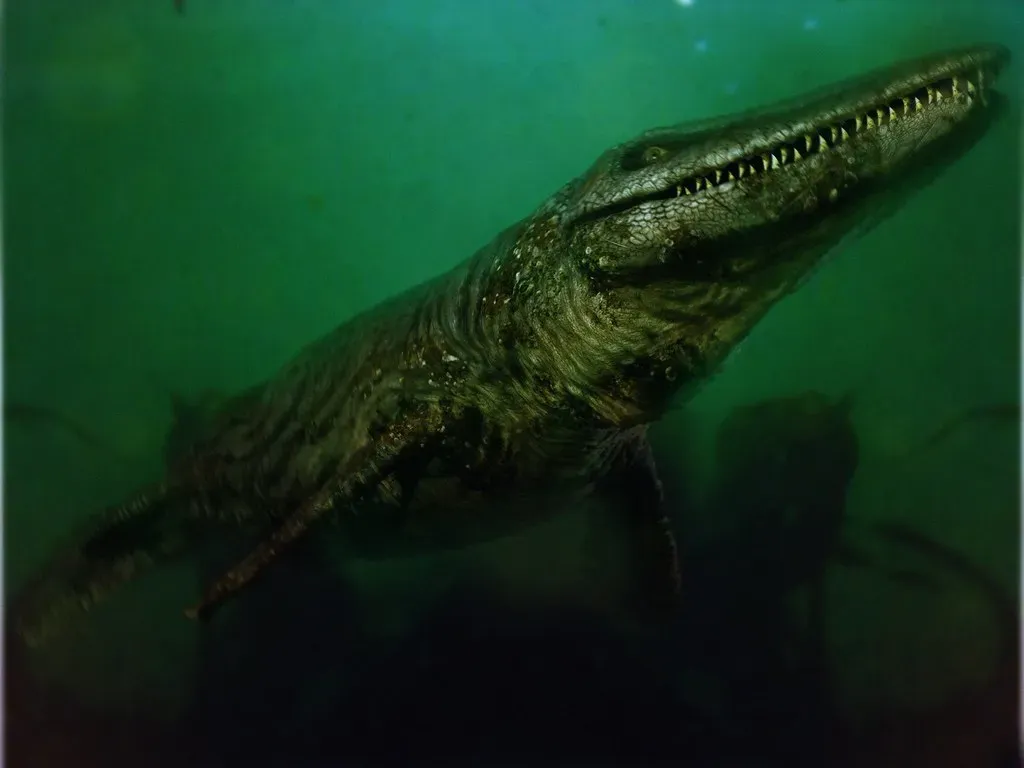
Tylosaurus was another mosasaur, but with a twist: it had an elongated, solid snout that looked like a battering ram at the front of its head. This bony “nose” may have been used to slam into prey, stunning or injuring them before the jaws even closed. Imagine a crocodile, but torpedo-shaped, with a built-in ram on the front and a shark-like tail on the back. It grew to lengths similar to or even exceeding many species of Mosasaurus, making it a serious contender for top predator status.
Fossil finds of Tylosaurus have turned up with bones of fish, sharks, other mosasaurs, and even flight-capable reptiles in their gut regions, meaning it ignored the rulebook and ate anything it could grab. Compared to a shark, which relies heavily on stealth, scent, and quick biting attacks, Tylosaurus seems almost brutally straightforward: chase, ram, and devour. It likely patrolled mid-level and surface waters, much like modern orcas, but with that unmistakable reptilian edge. If a great white crossed the path of a full-grown Tylosaurus, it would probably be the one getting out of the way. The ocean back then really did not leave much room for being second-best.
Kronosaurus: The Short-Necked Juggernaut
Kronosaurus was a pliosaur, a group of marine reptiles with huge heads, short necks, and powerful flippers, built more like underwater wrestlers than sleek sprinters. Its skull alone could reach lengths close to that of an adult human, jammed with thick, conical teeth perfectly spaced for gripping large, thrashing prey. The body of Kronosaurus was relatively compact but massively muscled, giving it explosive power when it lunged. If long-necked plesiosaurs were the elegant swans of the ancient seas, Kronosaurus was the bulldog that crashed the party.
Based on its anatomy, scientists think Kronosaurus hunted big game: other marine reptiles, large fish, anything substantial enough to justify the energy of a chase. Its bite would have been devastating, with jaws designed less for slicing and more for clamping and tearing, somewhat like a modern crocodile on steroids. Great white sharks have impressive bites, but their jaws are relatively lightweight compared to something like this. A confrontation between a Kronosaurus and a shark would likely be over in seconds, with the shark playing the role of the appetizer. To me, the idea of that huge head rising from the dim water is a lot more unnerving than any shark documentary.
Liopleurodon: The Controversial Giant With a Nightmare Bite
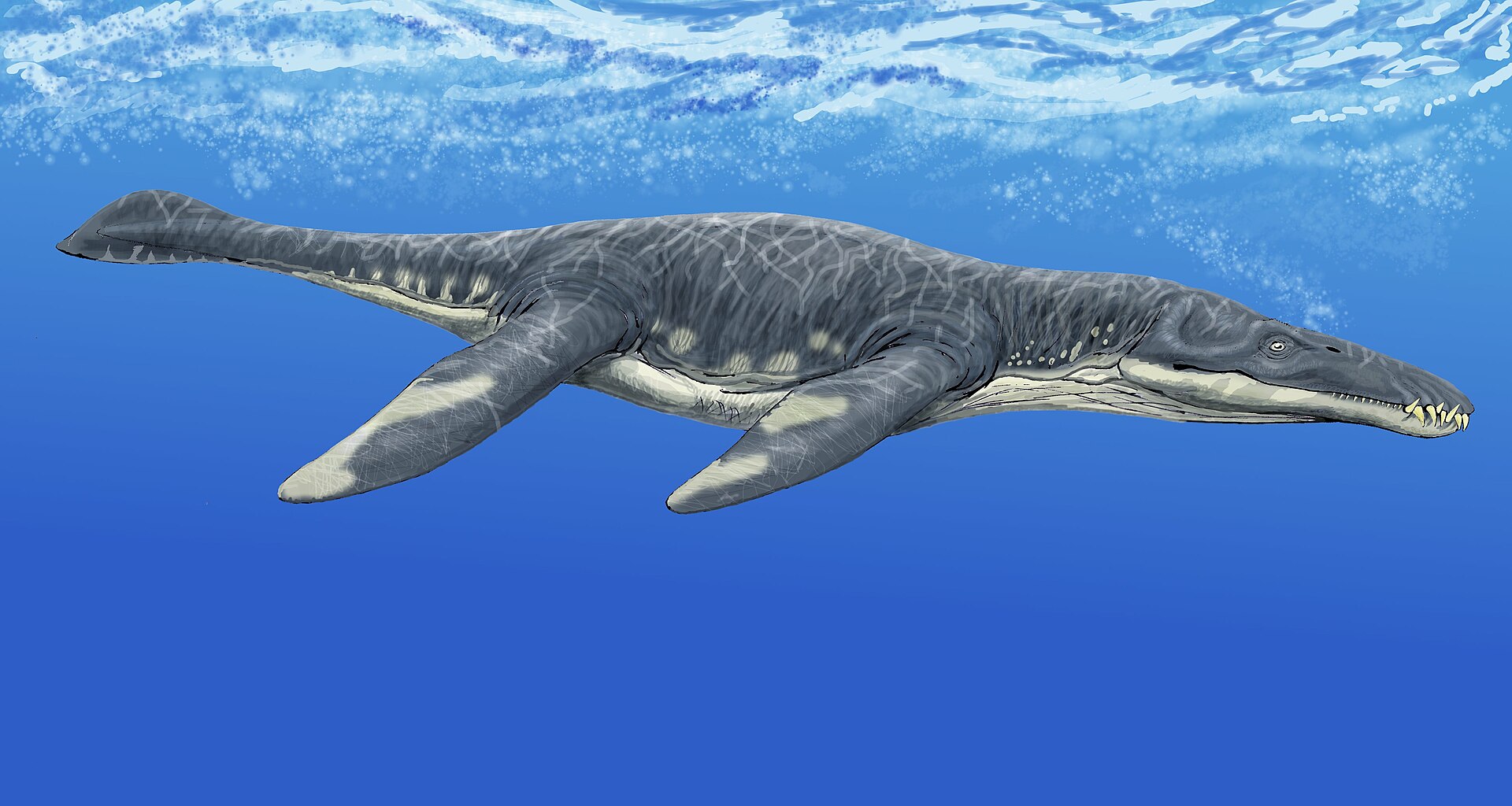
Liopleurodon is one of those creatures that got swept up in a lot of hype, with early estimates claiming ridiculous lengths that modern science has scaled back. Even at the more conservative sizes, though, you’re still looking at an animal around the length of a large bus, with a skull that could rival the size of a small car. Its teeth were long, sharply curved, and anchored in jaws powered by strong neck and skull muscles, giving it a bite force that likely rivaled or exceeded most modern predators. Think of a crocodile’s skull shape, but stretched and refined for life in deep water.
Fossil evidence suggests Liopleurodon lived in Europe during the Middle Jurassic, where it shared the seas with large fish, ichthyosaurs, and other plesiosaurs. Its body, with four strong flippers, was built for bursts of speed, not constant cruising, hinting at an ambush style of hunting. That makes it weirdly comparable to a shark in hunting style but operating at a much bigger and more muscular scale. While sharks today grab attention with serrated, saw-like teeth, Liopleurodon brought a more brutal approach: huge, conical teeth and a bone-crunching bite. Even with modern estimates toning things down, it still makes the scariest shark look like a side note.
Elasmosaurus: The Long-Necked Assassin of the Shallow Seas
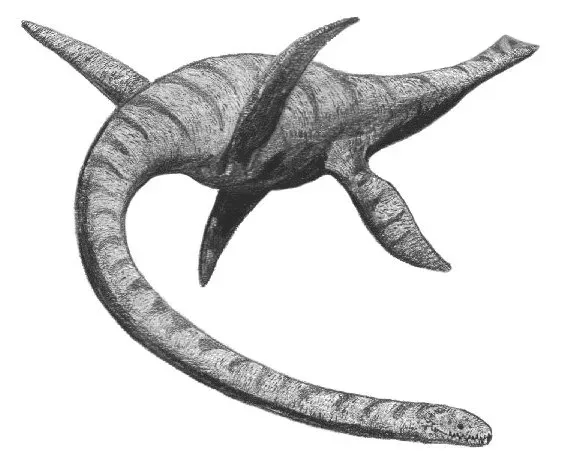
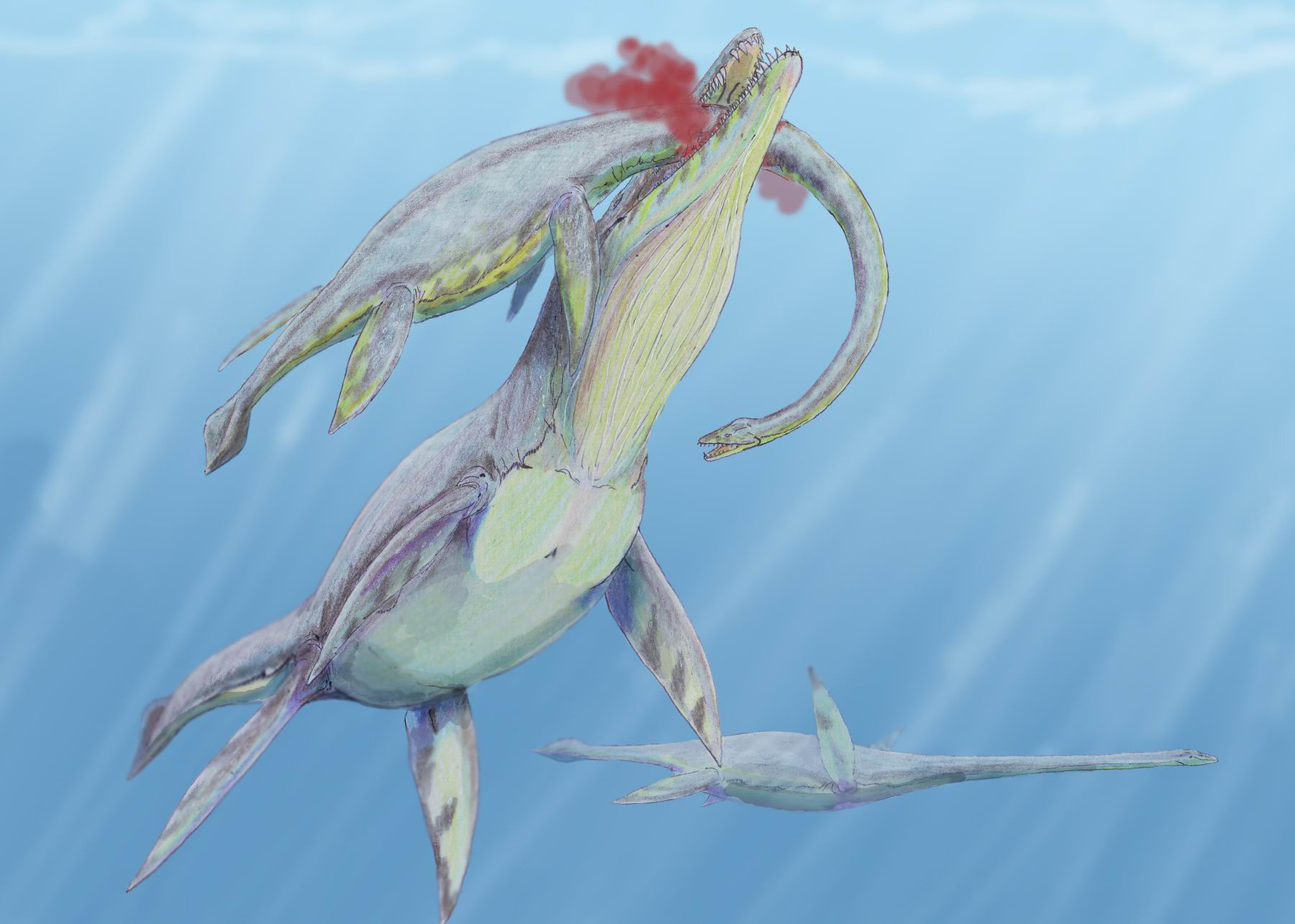
At first glance, Elasmosaurus almost looks peaceful, with its extremely long neck and relatively small head perched at the end like something from a fantasy illustration. It had a body not unlike other plesiosaurs, with four paddle-like flippers and a fairly short tail, but its neck could stretch out for many times the length of its torso. This strange build let it lurk with most of its body hidden, just its head and part of the neck maneuvering through schools of fish or in shallow waters. Instead of lunging like a shark, it could snake that long neck in quickly and grab prey before anything realized it was there.
The jaws of Elasmosaurus were filled with slender, needle-like teeth, perfect for snagging slippery fish and small cephalopods. It was not built to wrestle giant prey, but that almost makes it creepier in a different way, more like a quiet assassin than a rampaging brute. In a world where sharks rely on big, obvious attacks, Elasmosaurus played a slower game, using reach and surprise rather than raw power. Imagine swimming in calm water and suddenly something grabs you from several meters away without you seeing the body attached to it. That eerie, out-of-nowhere factor gives it a very different kind of intimidation compared to any shark.
Shonisaurus: The Whale-Sized Ichthyosaur That Dwarfed Sharks
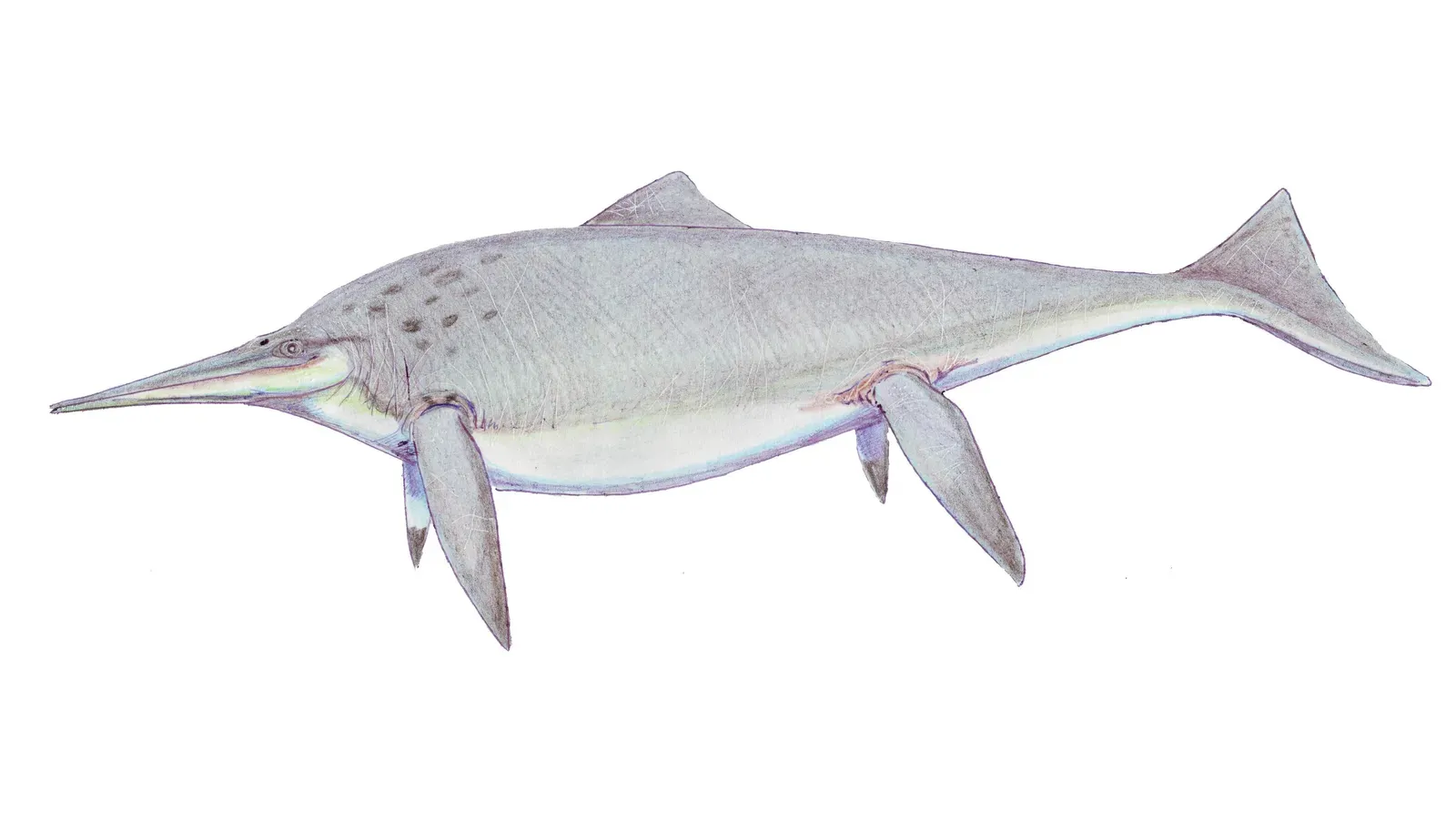
Shonisaurus looked surprisingly like a dolphin or small whale at first glance, which is wild considering it was a reptile, not a mammal. Some species reached lengths comparable to modern baleen whales, making them absolutely enormous by any standard, ancient or modern. Its body was streamlined with a powerful tail fin, making it a fast cruiser in open water and likely capable of long-distance travel. Rather than a brutal, toothy nightmare, it seems to have leaned more towards feeding on soft-bodied prey or smaller fish, depending on the species.
So why does something that was not hyper-predatory still make sharks look small? Size, mostly, but also presence. Sharing the water with a creature that could casually outsize any great white is intimidating in its own right, even if it is not hunting you specifically. Modern sharks look impressive on screen, but next to a Shonisaurus they would be the small fish darting around a giant. To me, this one really underscores how different ancient oceans were: it was not just about teeth, but about sheer scale. Even the “gentler” giants made today’s most feared predators look oddly manageable.
Thalassomedon: The Deep-Sea Stalker With Endless Neck
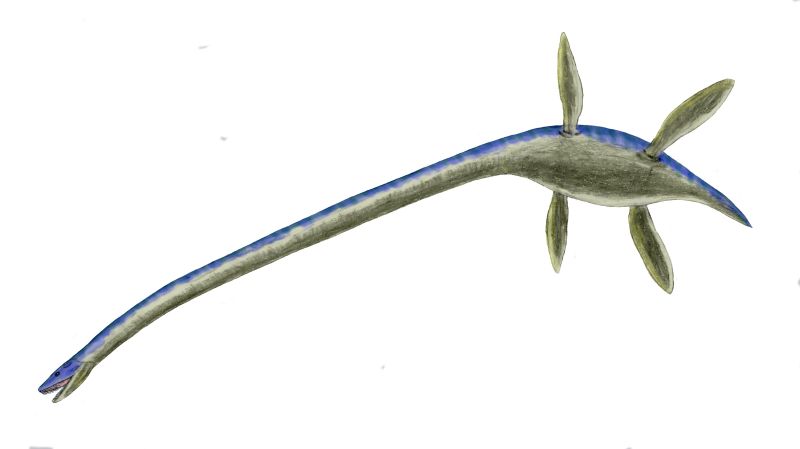
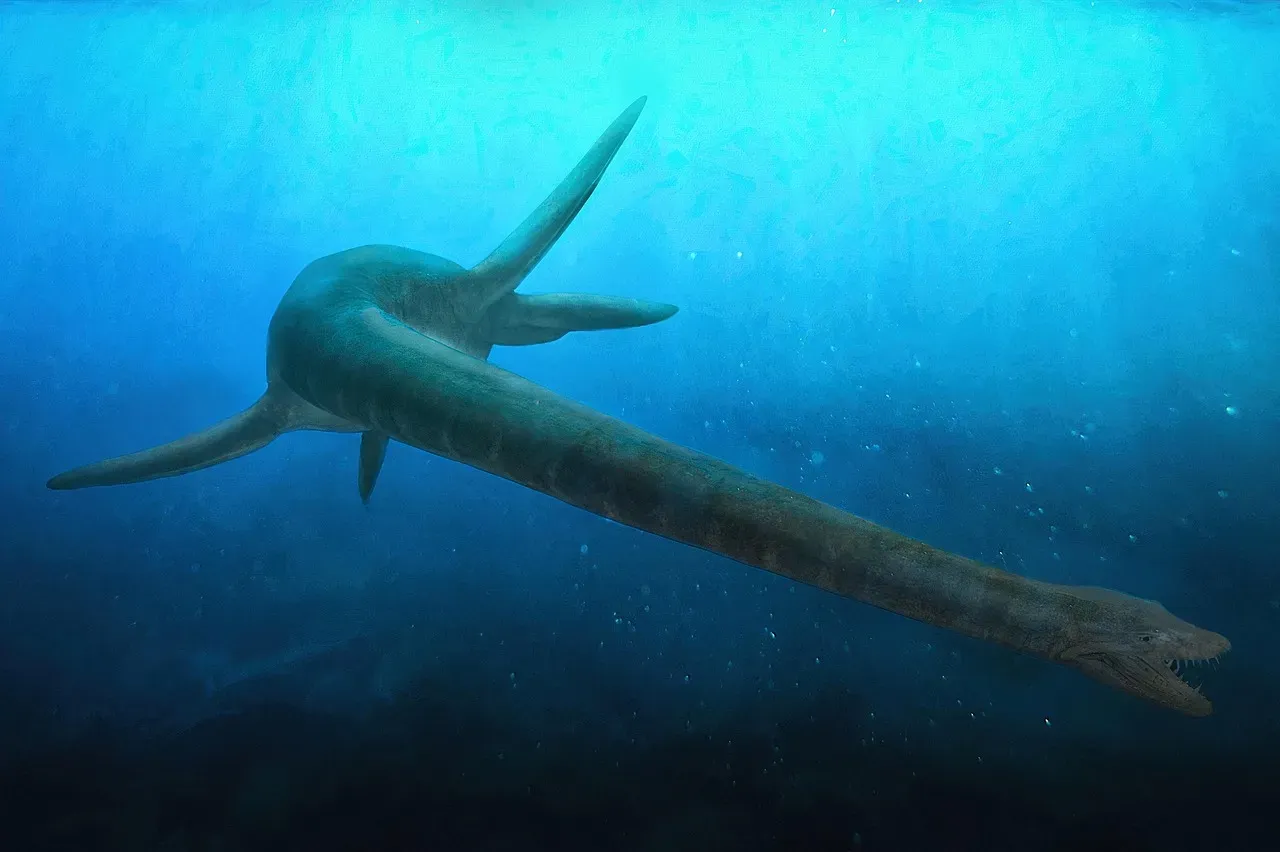
Thalassomedon, whose name basically means “sea lord,” was another long-necked plesiosaur, but it had a slightly sturdier build than some of its fragile-looking cousins. Its neck alone could be longer than a typical car, with dozens of vertebrae linking together into an astonishingly flexible reach. The head at the end of that living whip carried sharp, interlocking teeth perfect for pinning wriggling prey. It likely hunted in deeper or more open waters, using slow, steady movement from its flippers and sudden, snakelike lunges of the neck.
While a shark is very much an all-in-one package of speed and teeth, Thalassomedon felt almost modular: a body for cruising, and a neck for sudden strikes. It could keep its heavy body at a safe distance while only exposing a relatively small head and part of the neck to a tight school of fish or cephalopods. This gave it a hunting style that was almost surgical compared to the blunt power of a shark attack. Set a great white next to Thalassomedon and the shark looks rigid and straightforward, while this marine reptile comes off as disturbingly flexible and clever in how it attacked. There is something extra unnerving about a predator that can get to you while its main bulk stays hidden in the dark.
Temnodontosaurus: The Giant-Eyed Hunter of the Jurassic Seas
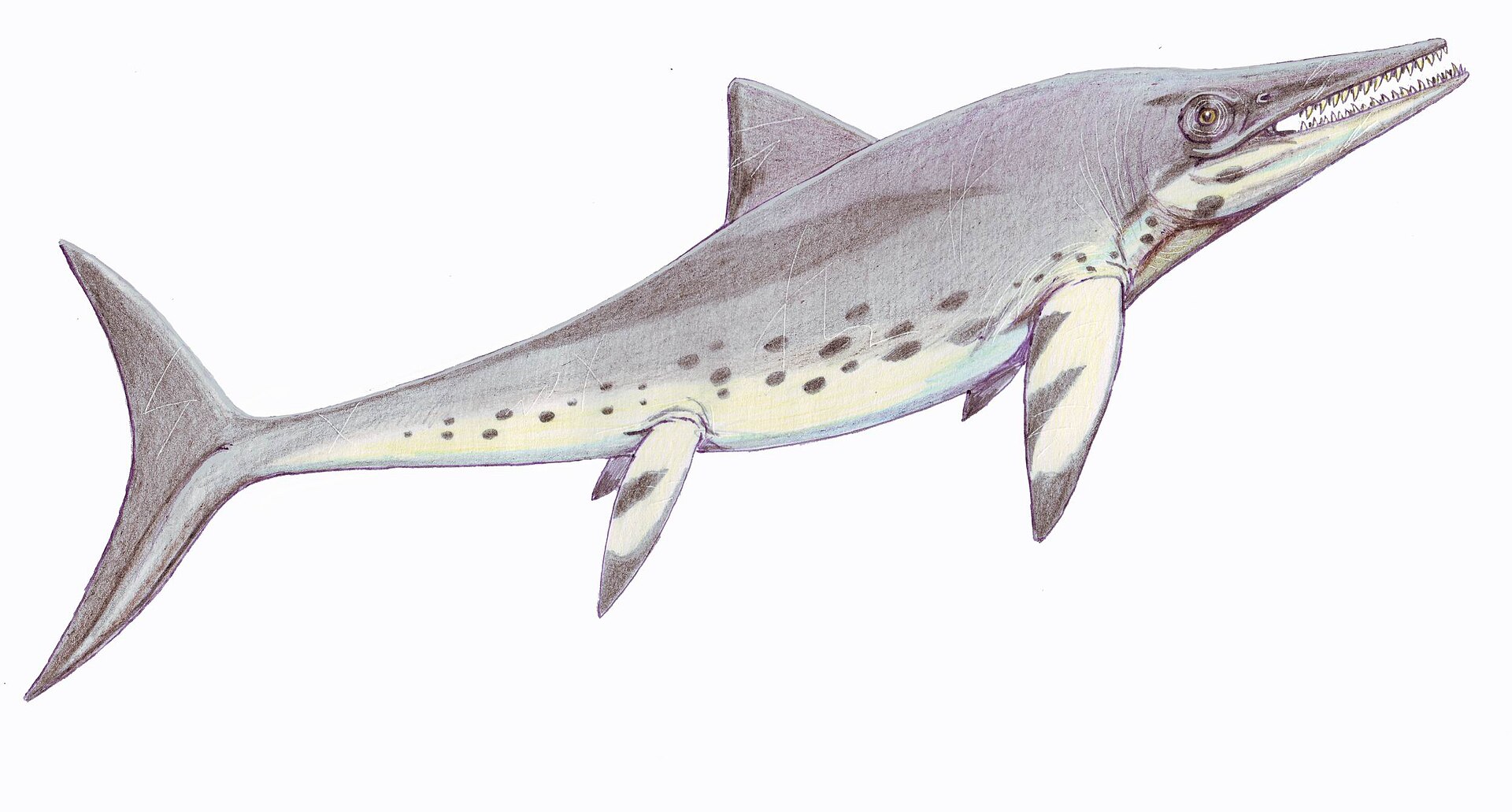
Temnodontosaurus was an ichthyosaur with a long, torpedo-shaped body and one of its most striking features: absolutely huge eyes. Some of its eye sockets are among the largest known for any vertebrate, suggesting it had phenomenal vision in low light or deep water. Picture a streamlined reptile with a dolphin-like body, but with these almost surreal, oversized eyes staring into the gloom for anything that moved. That alone gives it a slightly haunting vibe, like a deep-sea specialist patrolling the twilight zone of the ancient ocean.
Its jaws were filled with sharp, conical teeth suited to catching fish and other marine reptiles, and its body design points to high-speed chases and agile maneuvering. Compared with sharks, which have decent but not extraordinary vision, Temnodontosaurus may have hunted more by sight than by smell, relying on those big eyes to track prey in murky or dim conditions. This meant fewer ambushes and more relentless pursuit across underwater landscapes. A great white might suddenly appear out of nowhere, but Temnodontosaurus feels more like something that would follow you in the dark, always just at the edge of vision. That blend of speed, size, and eerie eyesight gives it a psychological edge that no shark documentary can quite match.
Leedsichthys: The Colossal Filter-Feeder That Redefined “Big”
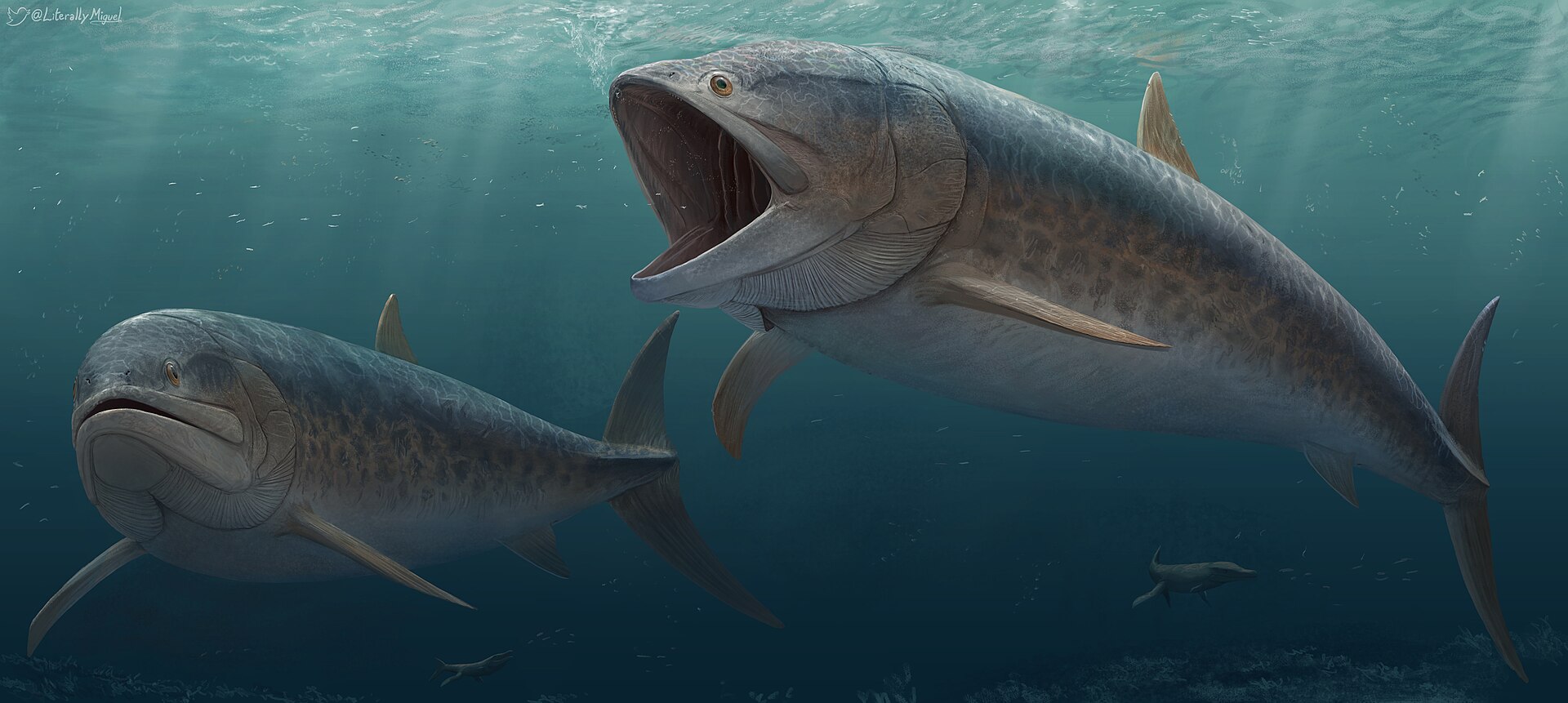
Leedsichthys was not a reptile but a gigantic bony fish, and an absolute monster in terms of size alone. Estimates suggest that it reached lengths rivaling or exceeding those of modern whale sharks, making it one of the largest fish to ever exist. It fed by filtering tiny organisms from the water, using structures in its mouth to sift the ocean much like today’s baleen whales do. Despite its peaceful diet, swimming next to one would be like paddling beside a moving wall of muscle and bone.
So how does a gentle giant make sharks look like goldfish? Scale, again, and the reminder that ancient seas supported life on a level we can barely wrap our heads around. In an ocean where your “background” herbivore-sized creature is many times the size of a great white, the whole food chain shifts into something almost alien. Sharks thrive today as top predators, but in the time of Leedsichthys they would have been just one more mid-sized threat in a world dominated by super-sized fish and reptiles. Honestly, if I had to choose between facing a hungry great white or accidentally drifting under the shadow of a thirty-plus-meter Leedsichthys, I am not sure which would make my heart jump more.
Conclusion: Ancient Oceans Make Today’s Sharks Look Surprisingly Tame
Looking back at these nine sea monsters, it is hard not to feel that we got off easy with modern sharks. Between bus-sized mosasaurs with battering-ram snouts, pliosaurs with bone-crushing bites, and whale-scale fish gliding past like moving cliffs, the dinosaur-era oceans were intense. Many of these creatures combined the worst of all worlds: the speed of dolphins, the jaws of crocodiles, the stealth of modern deep-sea hunters, and the sheer bulk of whales. Compared to that lineup, a great white starts to feel almost reasonable, like a scaled-down sequel to a much wilder original story.
For me, the most striking realization is that our planet has already hosted levels of marine horror and wonder far beyond anything we fear today. The shark that headlines modern nature documentaries would have been just another player in those ancient ecosystems, not the unquestioned star. In a way, that makes our current oceans feel both safer and a little sadder, as if we are living in a quieter, post-chaos version of Earth’s history. Still, there is something comforting in knowing that such monsters are safely locked in stone now, leaving us to marvel at them instead of swim with them. When you picture those prehistoric seas, does the great white still feel like the ultimate nightmare, or more like a leftover from a much wilder age than our own?