Imagine diving into a twilight-blue ocean where the top predators aren’t sharks or killer whales, but massive reptiles with jaws full of teeth, cruising above inky depths where giant squid lurk with curling, grasping arms. That sounds like something from a wild sci‑fi movie, but it is, in broad strokes, what Earth’s seas were like for long stretches of the age of dinosaurs. When people picture prehistoric oceans, they often think only of one creature at a time: a fearsome mosasaur here, a mysterious squid there. The reality was far messier, stranger, and more crowded.
Life in the Mesozoic seas was a layered drama, with air‑breathing marine reptiles hunting closer to the surface and deep‑dwelling cephalopods patrolling the darker waters below. These worlds overlapped more than most of us realize. Fossils of ancient squid relatives and giant ammonites show that tentacled hunters were already established long before many of the famous marine reptiles evolved, and they continued to share the same seas right up until the great extinction at the end of the Cretaceous. Once you see the oceans as a shared stage rather than a one‑monster show, the story of these animals becomes much more vivid, and honestly, a lot more fun.
The Mesozoic Oceans Were Not Empty, They Were Crowded
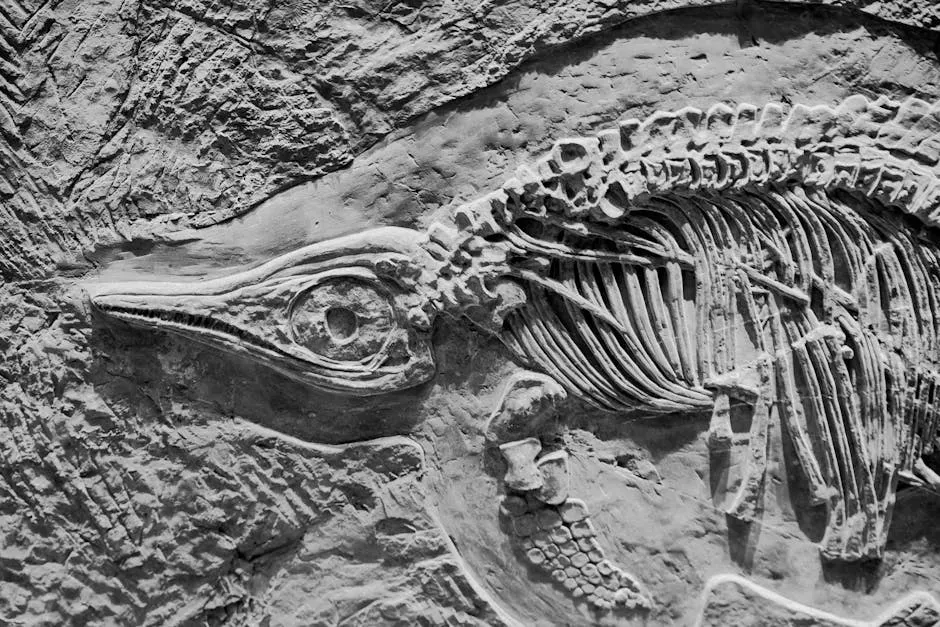
It’s easy to picture a lone sea reptile gliding over a barren seafloor, but that mental image badly undersells the chaos of the Mesozoic oceans. These waters teemed with fish, sharks, ammonites, squid‑like belemnites, plankton, crustaceans, and all sorts of bizarre invertebrates. On top of that, several unrelated groups of reptiles had independently moved into the sea: sleek ichthyosaurs, long‑necked plesiosaurs, and later, hulking mosasaurs. They were not politely taking turns in different oceans or different ages; there were long stretches of time when many of these creatures overlapped in both space and time.
In that crowded arena, giant squids and their relatives were not just background extras. Ancient cephalopods ranged from coiled‑shell ammonites the size of car tires to sleek, torpedo‑like forms with internal shells. In some layers of rock, their remains are so abundant that the rock is almost a graveyard of shells and guards. When you realize this is the same fossil record that gives us marine reptiles, it becomes obvious they were all part of the same food web. The ocean was more like a packed stadium in mid‑game than a quiet blue desert.
Ichthyosaurs and Early Giant Cephalopods: Speed Meets Stealth
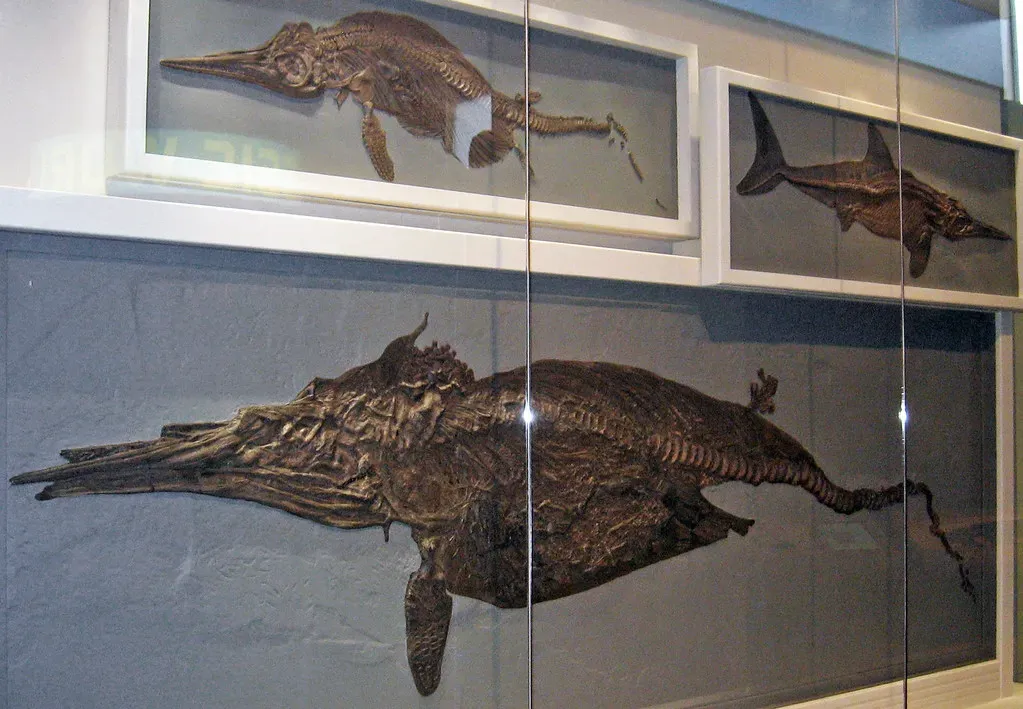
Some of the earliest big marine reptiles to dominate the seas were the ichthyosaurs, which looked uncannily like modern dolphins even though they were reptiles, not mammals. They evolved streamlined bodies, upright tail fins, and huge eyes – some of the largest eye sockets known in any vertebrate – perfect for chasing prey in dim light. These hunters patrolled the mid‑water zones of Triassic and Jurassic oceans, and among their likely prey were squid‑like animals and small shelled cephalopods. In some ichthyosaur fossils, researchers have literally found fossilized squid hooks and beaks in the gut region, a stark reminder that tentacled animals were right there on the menu.
At the same time, cephalopods were not just passive snacks. Early squid‑like creatures and their relatives used jet propulsion, ink clouds, and rapid color changes (in line with what we see in modern cephalopods) to evade hunters. Think of a high‑speed chase scene where the getaway car can both reverse in an instant and vanish into a smoke screen. Even large ammonites, with their spiral shells, were not just drifting balloons; many had complex shell structures that hint at active lifestyles and depth changes. The picture we get is one of agile, fast swimmers (ichthyosaurs) engaging in an evolutionary arms race with equally clever, if softer‑bodied, prey.
Plesiosaurs, Long Necks, and Squid‑Rich Hunting Grounds
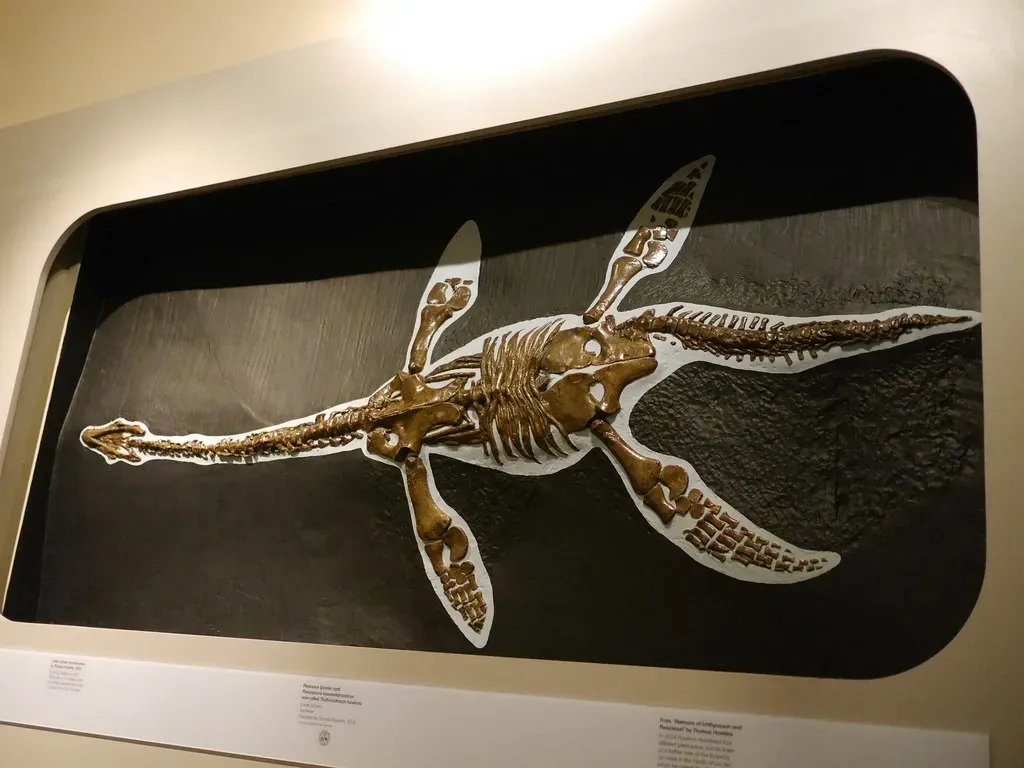
Later in the Mesozoic, another iconic group rose to prominence: plesiosaurs, with their almost surreal body plan. Some species had absurdly long necks with dozens of vertebrae, small heads, and broad, four‑flippered bodies that moved through the water like underwater “flight.” These animals likely hunted in the upper to mid‑water column, snapping up fish and squid. One widely discussed idea is that the long necks let them sneak up on schools of agile prey from unusual angles, reducing the chance of spooking them with the bulk of their bodies. Whether that is exactly right or not, the fossil record firmly places them in ecosystems that were rich in cephalopods.
In many rock formations where plesiosaurs are found, you also see piles of belemnite guards – the bullet‑shaped internal shells of squid‑like animals – and coiled ammonite shells. That co‑occurrence is not a coincidence; it is a snapshot of the communities they lived in. Picture a plesiosaur cruising through twilight water over a seafloor speckled with ammonites, while schools of belemnite‑like squid dart in and out of the gloom. I remember as a kid looking at a museum mural of this scene and thinking it looked too busy to be real. Only later did I learn that the messy, crowded composition is probably closer to the truth than the lonely‑monster posters we often see.
Mosasaurus and the Cretaceous Seas: Apex Reptiles Above, Giant Squid Below
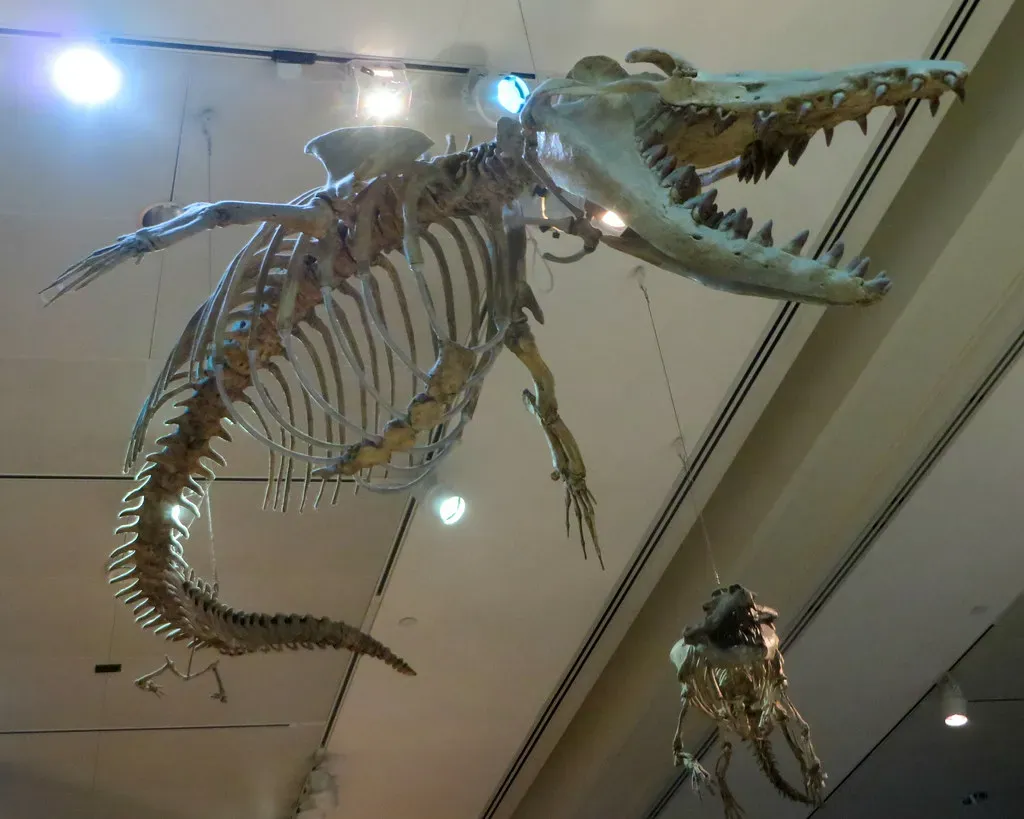
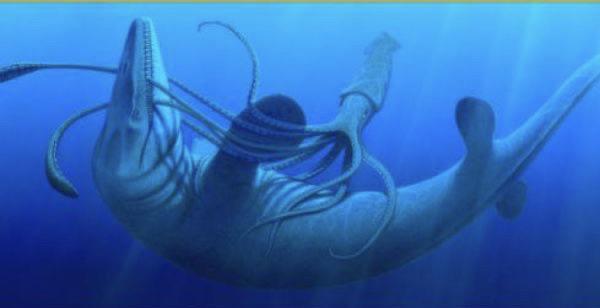
By the Late Cretaceous, mosasaurs had taken over as some of the dominant apex predators of the oceans. These were not small lizards with flippers; some species stretched longer than a bus, with massive skulls and jaws capable of crushing bone and shell. Their fossils appear in marine rocks all over the world, from shallow inland seas that once covered North America to deeper ocean basins. In the same broad window of time, large soft‑bodied cephalopods and big ammonites still haunted deeper or offshore waters. While the exact size and habits of prehistoric giant squid relatives are still debated, we know that some cephalopods attained impressive dimensions and occupied mid‑to‑deep ocean niches that would have overlapped vertically with mosasaur hunting zones.
If you imagine the Cretaceous ocean as a layered cake, mosasaurs dominated the upper and middle frosting, while giant squid‑type cephalopods patrolled the darker layers below. They did not necessarily bump into each other every day, but their habitats intersected enough that encounters were likely, especially if squids came upward at night to feed or mosasaurs dove deeper in pursuit of prey. Modern whales and giant squid give us a living analogy: we rarely see the battles, but scars, beaks, and stomach contents betray the relationship. With mosasaurs and ancient giant squids, we have fewer direct clues, but the overlap in time and environment makes it very reasonable to think they shared more than just the same ocean basin on a map.
Evidence From Fossils: Beaks, Bite Marks, and Deep‑Sea Mysteries
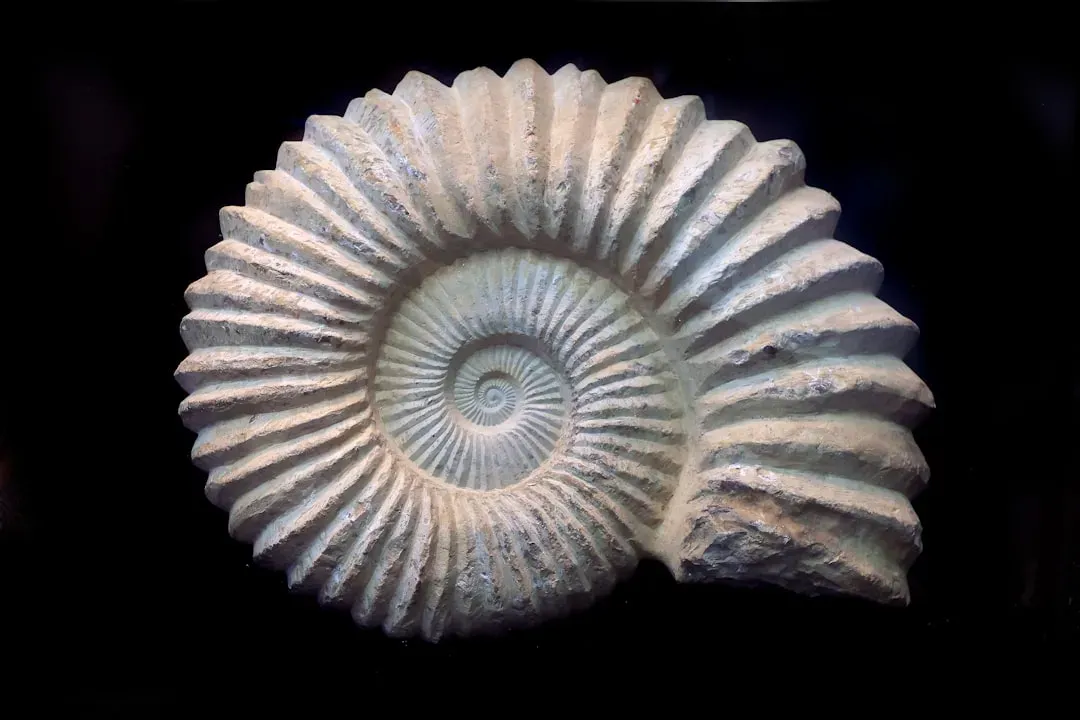
One of the most tantalizing things about this whole story is how much of it we have to infer from incomplete evidence. Soft‑bodied animals like squid are notoriously bad at fossilizing; what we usually get are hard parts such as beaks, radulae (toothed tongues), or internal shells. On the reptile side, we are sometimes lucky enough to find skeletons with stomach contents preserved. Some ichthyosaurs and plesiosaurs have yielded gut regions full of belemnite hooks and fragments of cephalopods, like the fossilized remnants of a very messy seafood buffet. These finds do not just say “cephalopods existed”; they spell out “these reptiles were actively eating them.”
There are also hints of more dramatic interactions, such as bite marks on ammonite shells that match the teeth patterns of large marine reptiles, or ammonites found in regions dominated by mosasaur fossils. However, when it comes to direct evidence of giant squid versus giant reptile showdowns, the record is thin. That is not surprising; even today, deep‑sea encounters between sperm whales and giant squid are rarely observed directly. Instead, scientists piece together the story from scars, broken bones, scattered beaks, and statistical patterns in where fossils appear. If you like detective work, paleontology in this area feels like reading a crime novel where half the pages are missing but the clues are just good enough to keep you hooked.
Reconstructing Ecosystems: Food Webs, Not Monster Posters
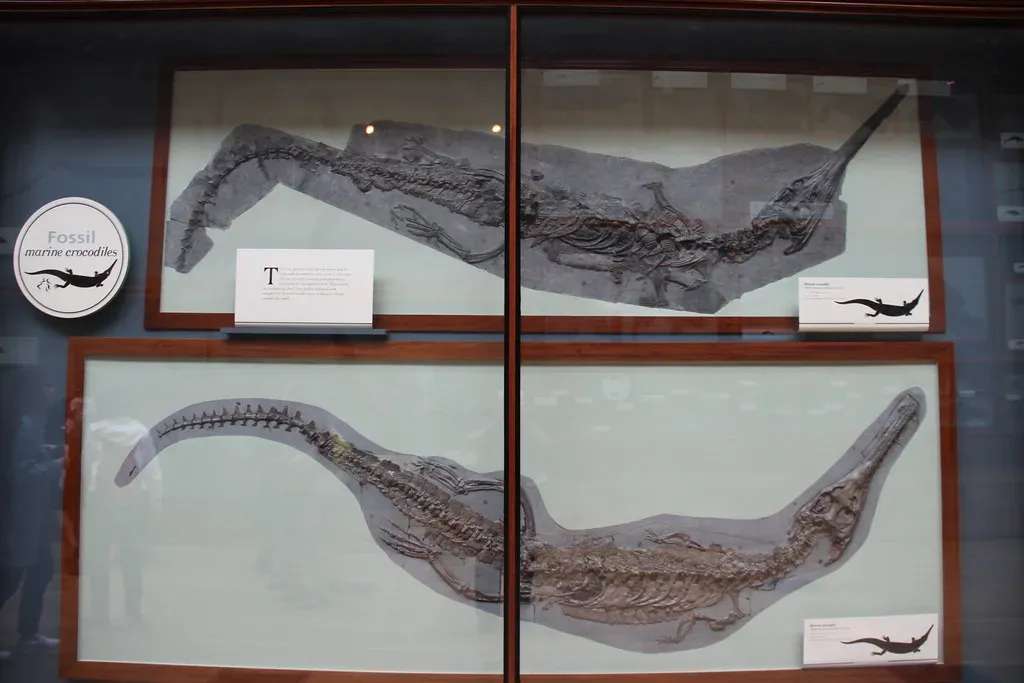
One of the big shifts in modern paleontology is moving away from focusing purely on spectacular individual species and toward understanding whole ecosystems. That means asking not only what a mosasaur looked like, but also what it ate, what ate it (if anything), and what shared its waters. When we map out these relationships across time, a clear picture emerges: marine reptiles and giant cephalopods were not separate stories, they were threads in the same tapestry. Predators, prey, scavengers, and plankton all interacted in a complex web that spanned from sunlit surface waters down to shadowy depths.
Personally, I think this ecosystem view is far more exciting than any isolated monster painting. When you realize a plesiosaur’s hunting strategy only makes sense in a squid‑rich environment, or that ammonite diversity probably influenced which reptiles thrived where, the whole ocean feels more alive and interconnected. The idea that some sea reptiles shared their world with giant squid‑like creatures is not a fun side note; it is a reminder that evolution happens in communities, not in solo careers. Next time you see a dramatic illustration of a single marine reptile against an empty blue background, it is worth remembering that, in reality, the water around it would almost certainly have been buzzing, wriggling, and tentacling with life.
Conclusion: Why This Overlap Matters More Than the Monsters
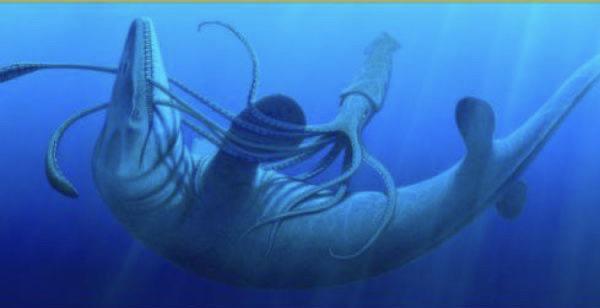
It is tempting to ask whether a particular mosasaur ever battled a specific giant squid, like some prehistoric boxing match that needs a clear winner. To me, that is the wrong question. The more interesting and scientifically grounded insight is that these animals shared overlapping oceans and likely overlapping food webs, shaping each other’s evolution in subtle but important ways. Marine reptiles were not operating in a vacuum; their size, speed, teeth, and hunting tactics made sense only in a world already crowded with fast, clever, and sometimes very large cephalopods. The coexistence itself is the headline, not any invented gladiator fight.
My opinion, for what it is worth, is that we still underestimate just how rich and dynamic those ancient seas really were. We fixate on the biggest skull or the longest tentacle, but the real magic lies in how all those creatures fit together into an ecosystem that ran without any help from us, for tens of millions of years. Knowing that some of those marine reptiles cruised above waters where giant squid‑like animals hunted in the dark makes our own oceans feel a bit more mysterious, too. Next time you think of the deep sea, with its modern squids and whales, it is worth asking yourself: how different is it, really, from the layered, shared worlds of the past – and how much of that story are we still missing?