Some Ice Age animals feel like celebrities. Everyone knows the mammoth. Saber-toothed cats show up in every documentary and video game. But lurking in that same frozen world was a tank on legs, wrapped in shaggy fur, carrying a giant horn like a battle lance: the woolly rhinoceros. It was real, it was huge, and somehow it ended up pushed to the dusty edge of prehistory’s group photo.
Once you notice that almost nobody talks about it, you start seeing the gaps everywhere. School posters of the Ice Age? Mammoths front and center. Kids’ books? Maybe a sloth, maybe a saber-tooth. The woolly rhino is either missing or crammed, tiny, in some background corner. That quiet absence bugs me, because the more you learn about this animal, the more it feels like one of the most impressive, most misunderstood creatures our planet ever produced.
The Ice Age Tank You’ve Barely Heard Of
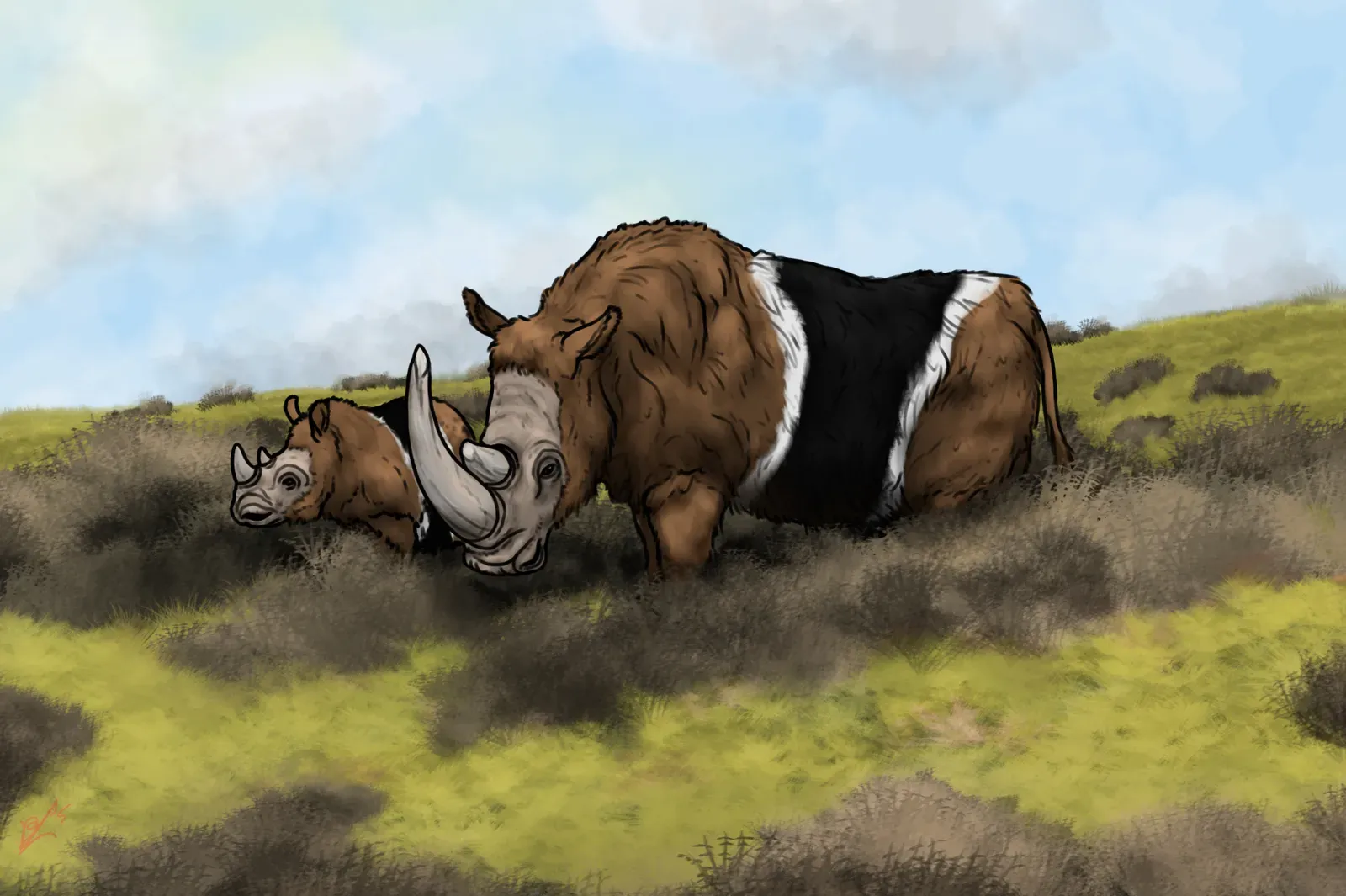
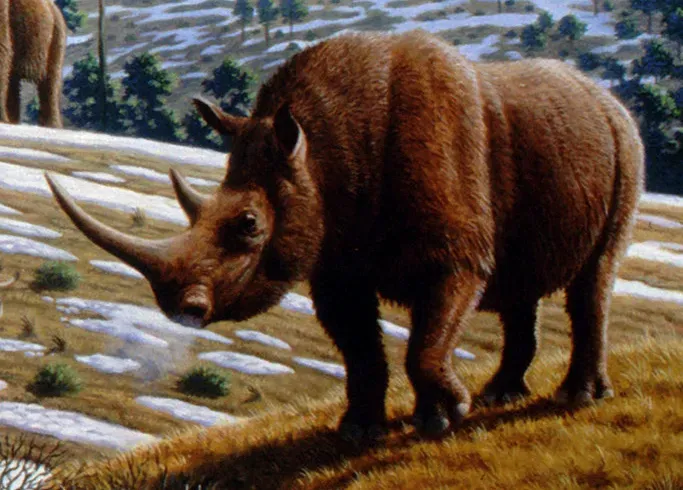
Imagine standing in a freezing steppe, wind cutting your face, and out of the haze you see a shaggy shape the size of a car, low-slung, muscled, and crowned with a horn longer than your arm. That was the woolly rhinoceros, a prehistoric heavyweight that roamed Europe and northern Asia during the last Ice Age. It was roughly as long as a modern SUV and stood about as tall as a big person at the shoulder, but what really made it unforgettable was that massive, forward-curving horn and its thick coat of hair.
This wasn’t some fantasy creature from a video game lore page; we have bones, preserved horns, and even frozen remains pulled from Siberian permafrost. Those remains show dense fur, heavy limbs, and wide, spreading feet built to handle snow and mud. In other words, this animal wasn’t just surviving the cold; it was built for it in the same way a polar bear is built for the Arctic. And yet, despite being as real as mammoths, it somehow ended up as a side note rather than a star.
Built Like a Bison, Armed Like a Knight
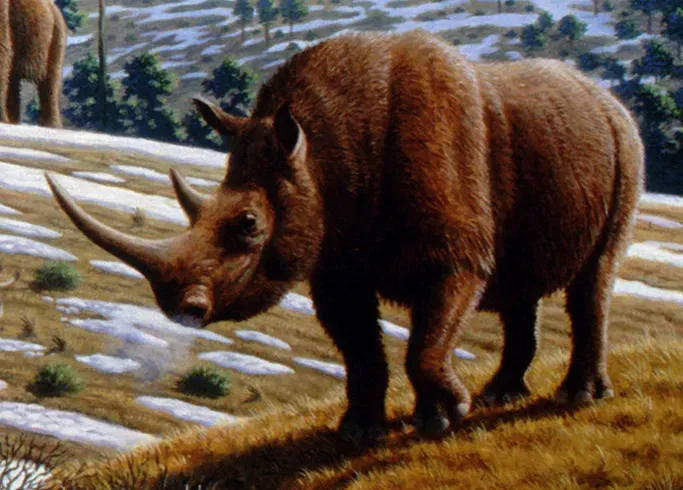
What makes the woolly rhinoceros really striking is how extreme its body plan was, even by rhino standards. Its front half was absurdly powerful, with a big muscular hump over the shoulders that supported that long, heavy horn. If you’ve ever seen a modern bison and noticed that dramatic front-heavy build, you’re in the right mental neighborhood, just add a lot more horn and stubbornness. That musculature helped it push through snow, sweep aside ice, and probably shove rivals around like living battering rams.
The horn itself could reach more than a meter in length, made of keratin like our hair and nails, and flattened from constant use. Many fossils show wear patterns along the lower surface of the horn, suggesting the animal scraped it side to side, maybe to clear snow to reach buried grasses or to display during confrontation. To me, it’s wild that we obsess over fantasy beasts in movies when real life once fielded a snow-plowing, horn-swinging tank that would have made medieval knights look under-equipped.
We also know its body was wrapped in a thick, woolly coat, with shorter fur underneath for insulation, a bit like a layered winter jacket. Combined with likely fat reserves under the skin, the woolly rhino was less “big angry cow” and more “mobile fortress of the tundra.” You can picture it trudging through a blizzard, head low, horn out front, as if the weather was just another obstacle to push out of the way.
Life on the Mammoth Steppe Superhighway
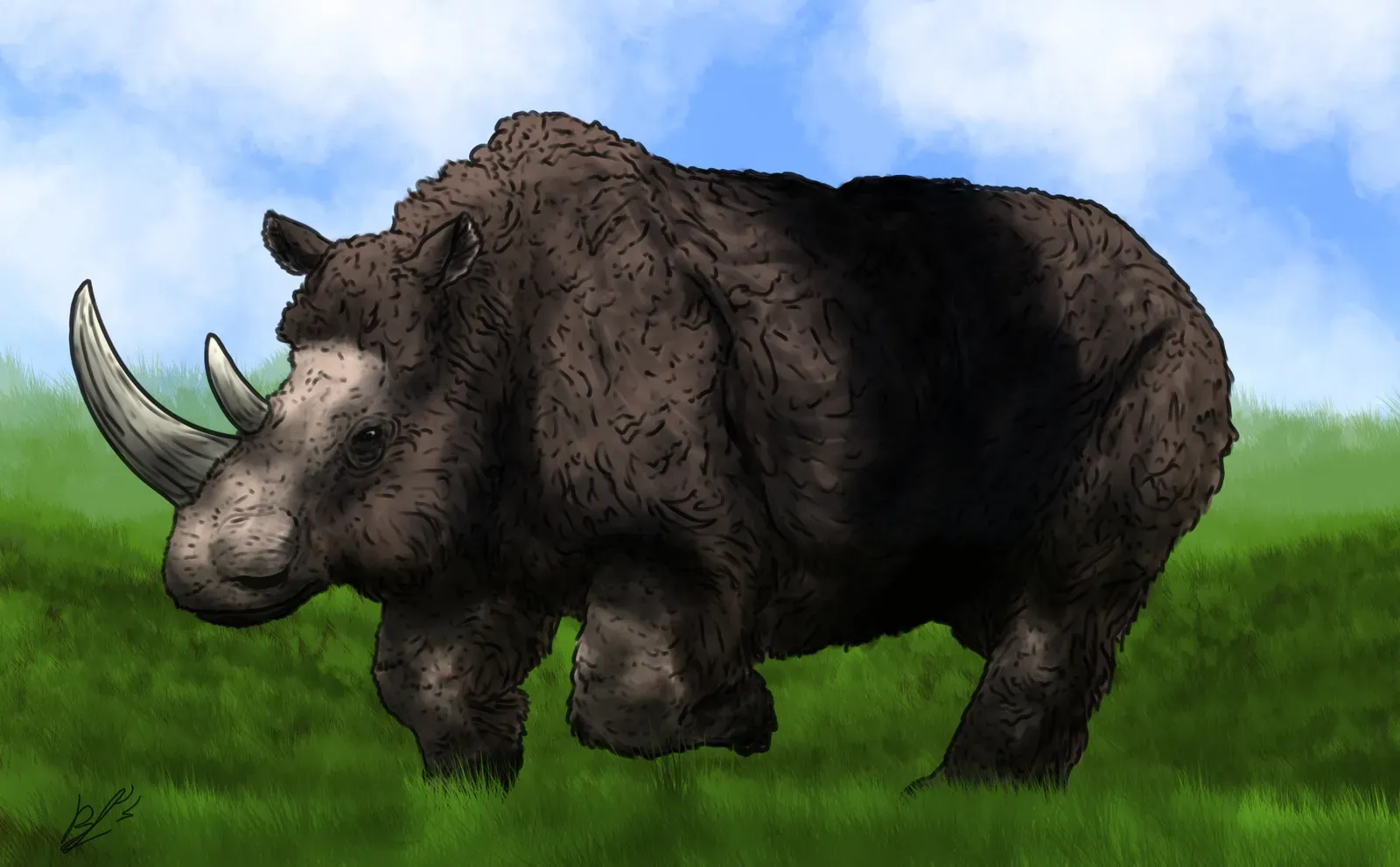
The world of the woolly rhinoceros was not endless ice; it was a vast, cold grassland known as the mammoth steppe. Picture a super-sized prairie stretching from western Europe all the way across northern Asia, open and windswept, dotted with tough grasses, herbs, and low shrubs. This was not a gentle meadow. Winters were brutal, summers short, and survival demanded constant movement and efficient foraging. The woolly rhino fit into this harsh landscape as a specialist grazer, shaped by that environment as tightly as a key to a lock.
Its wide muzzle, strong jaw, and high-crowned teeth were all tuned for grinding down coarse, frozen vegetation. The horn and heavy head let it sweep aside snow in winter to uncover edible plants beneath. In the same way that modern wildebeest define African grasslands, woolly rhinos helped define the Ice Age steppe: big bodies eating big amounts of grass, fertilizing the soil, and trampling open pathways for other species.
This landscape was crowded with other giants: woolly mammoths, steppe bison, wild horses, and predators like cave lions and wolves. The woolly rhino shared its world with them like heavy trucks share a highway with cars and buses. Each had its lane and its role, and the ecosystem functioned because those roles were balanced. When you imagine that world properly, the rhino is not some odd extra; it is one of the main characters holding the whole story together.
Up Close With an Ice Age Legend (Thanks to Frozen Time Capsules)
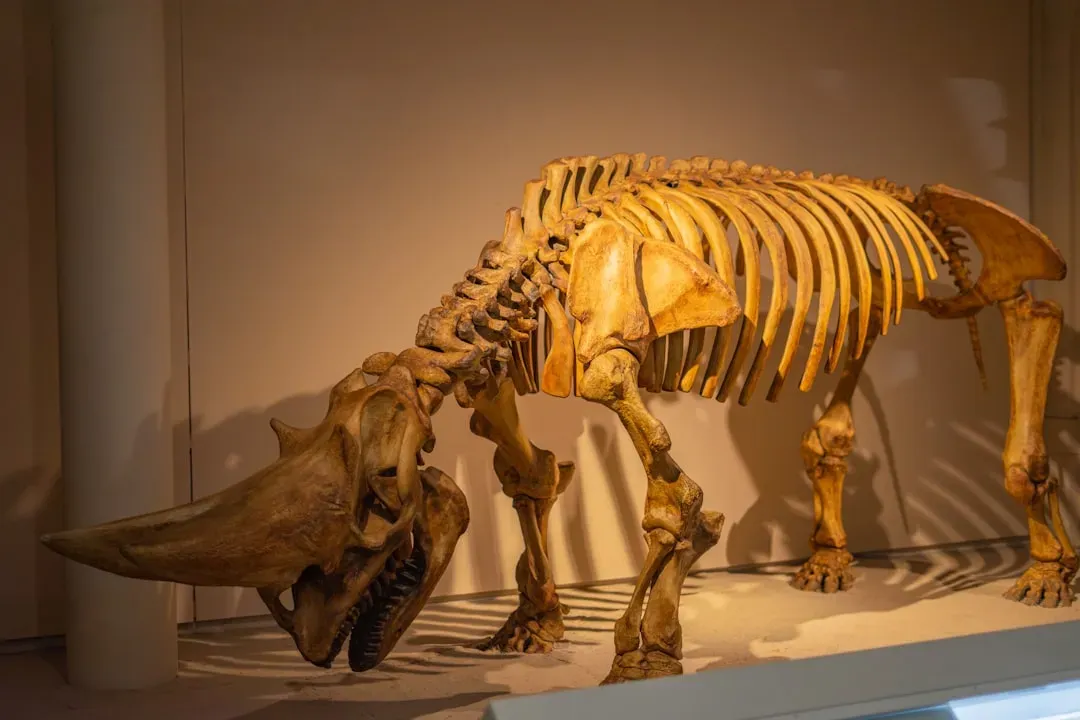
One reason we can talk about the woolly rhinoceros with surprising confidence is that parts of it were basically time-capsuled in ice. In Siberia and other far northern regions, permafrost has preserved not just bones, but skin, hair, and even the remains of horns from individuals that died thousands of years ago. It’s like the planet kept a few samples in deep storage, waiting for us to finally pay attention. When researchers study these remains, they can see details that skeletons alone never reveal.
Those frozen specimens show thick, reddish-brown fur, tough skin, and in some cases, hints about age and health. Scientists can pull ancient DNA from bones and teeth, then compare it to modern rhinos to understand how closely related they are and how their populations changed over time. It’s not just a guessing game based on artistic reconstructions; we have physical, measurable evidence. I find it almost eerie that in some museum drawers are hairs from animals that may have walked past early humans, still intact after the rest of their world vanished.
Even the horn, which rarely survives for other fossil rhinos, has been found in partial form, letting researchers confirm its structure and growth. These remains back up earlier interpretations based on cave art and bones, painting a consistent picture of a cold-adapted, heavily built grazer. When you realize how much data we actually have, it becomes even more frustrating that woolly rhinos aren’t part of the standard mental image most people have of the Ice Age.
Humans Met Them, Painted Them, and Probably Hunted Them
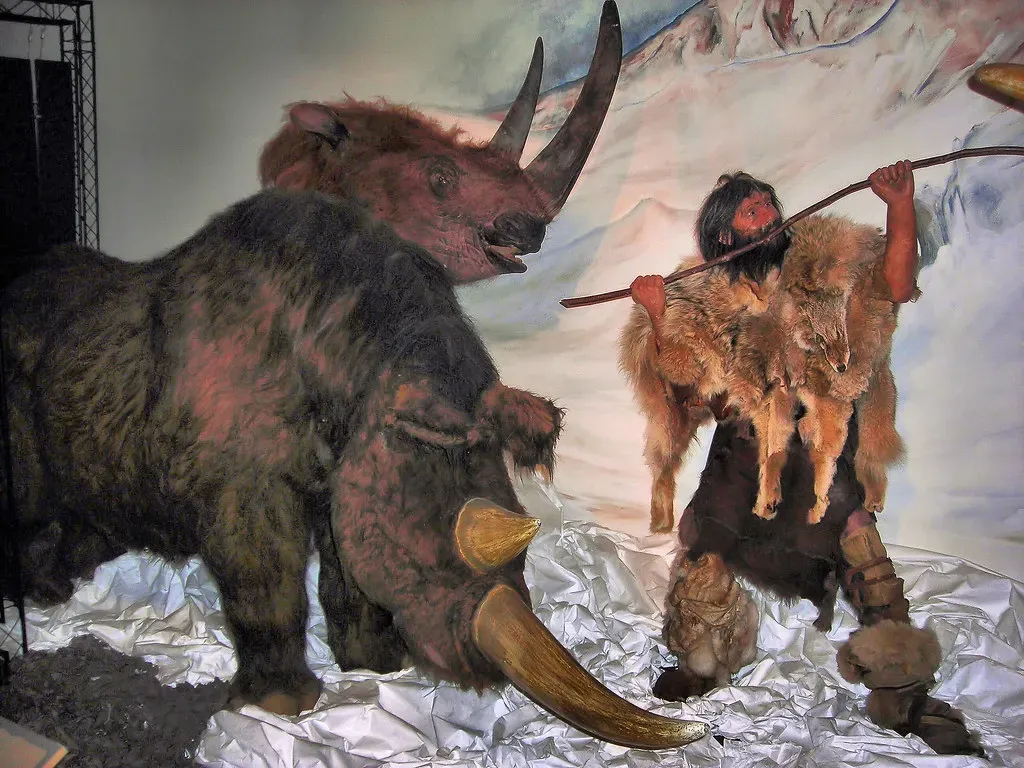
This is where the story gets uncomfortably close to home. Woolly rhinos were not just abstract prehistoric creatures; they shared landscapes with early modern humans and Neanderthals. In caves across parts of Europe, ancient artists drew or carved images of large, horned animals with sloping backs and massive front horns that match woolly rhinoceroses amazingly well. These were not quick doodles. Someone saw these animals, remembered them, and considered them important enough to include in their limited visual record.
Alongside that art, there is physical evidence that humans interacted with woolly rhinos in less peaceful ways. Some fossil bones show cut marks consistent with butchering, meaning people were probably hunting or at least scavenging them for meat, fat, hide, and maybe horn. Imagine the courage and coordination it would take to target an animal that big and that dangerous with Stone Age weapons. It’s almost bizarre that today we will binge-watch shows about fictional dragon-hunters, while the real story of humans facing down shaggy, horned behemoths in a snowstorm barely registers in popular culture.
There is a deep irony here: early humans clearly found woolly rhinos memorable enough to paint on cave walls, yet modern humans barely know they existed. Somewhere between those flickering torchlit caves and our streaming-era attention span, the woolly rhino fell out of the popular prehistoric lineup, as if we collectively decided to trim the cast list and quietly left it off.
How a Giant Disappears: Climate, Humans, or Both?
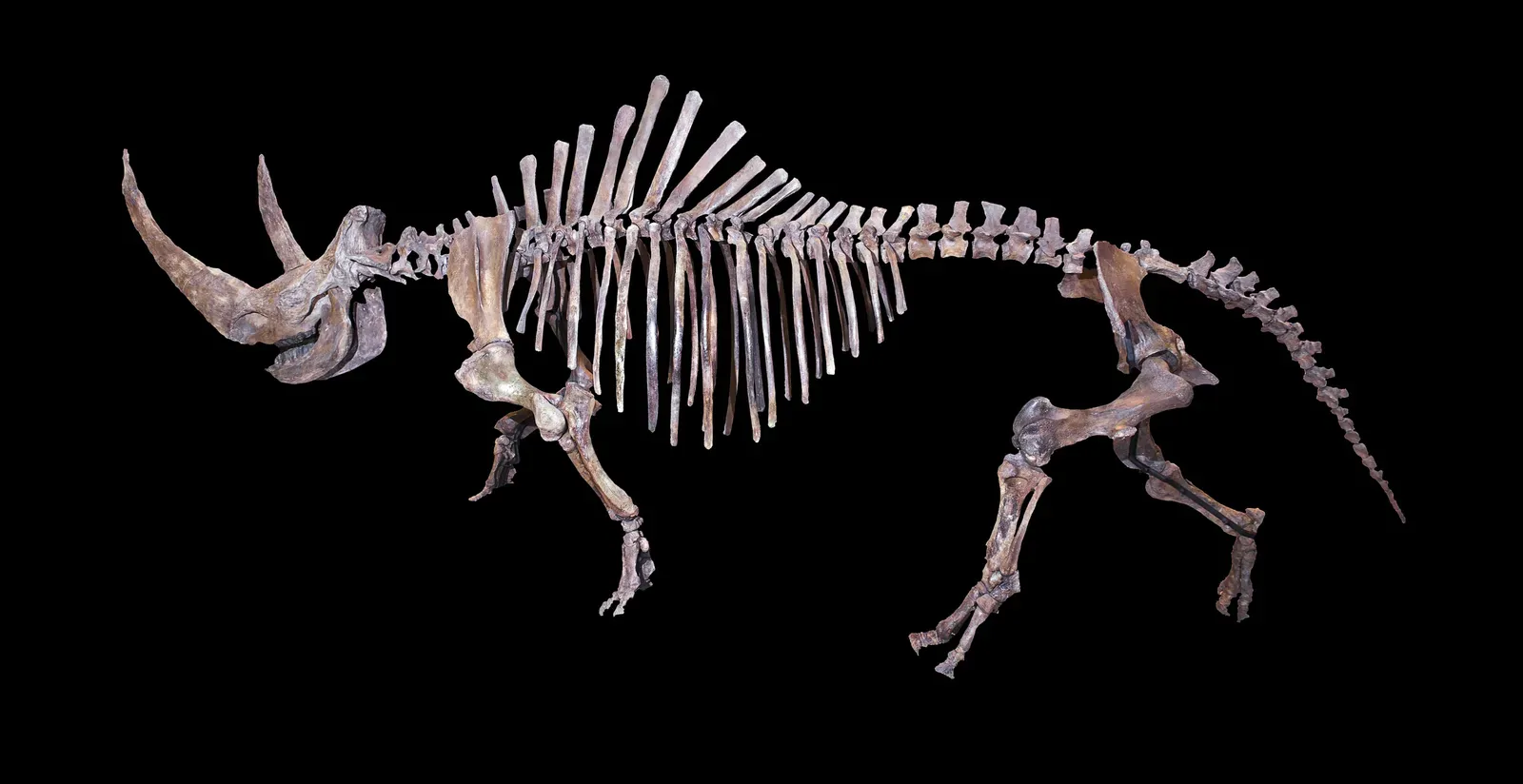
Like many Ice Age giants, the woolly rhinoceros eventually vanished, and scientists have spent years trying to untangle why. The timing of its disappearance overlaps with major climate warming at the end of the last glacial period, when the mammoth steppe began shrinking and transforming into forests and wetter habitats. For an animal specialized for cold, open grasslands, that environmental shift was like slowly pulling the floor out from under it. You can think of it as a species built for snow suddenly finding itself in a world rapidly filling with trees and bogs.
There is also the uncomfortable question of how much humans contributed. As people spread across Eurasia with better hunting tools and growing populations, the pressure on big, slow-reproducing animals intensified. Some studies suggest climate was probably the main driver, while human hunting added extra stress; others argue that human influence might have been stronger than we like to admit. The evidence is still being debated, but either way, the result is the same: by a few thousand years ago, this incredible animal was gone, leaving only bones, frozen scraps, and ancient art behind.
What bothers me is that we treat this extinction like a distant, solved chapter, when in reality it is a cautionary tale. A highly specialized grazer, dependent on a particular climate and landscape, collapses when those conditions change too fast. That story feels very familiar in an age where we watch modern species struggle under rapid warming and land use changes. The woolly rhino is not just a curiosity; it is a mirror we keep refusing to look into.
Why We Should Talk About Woolly Rhinos As Much As Mammoths
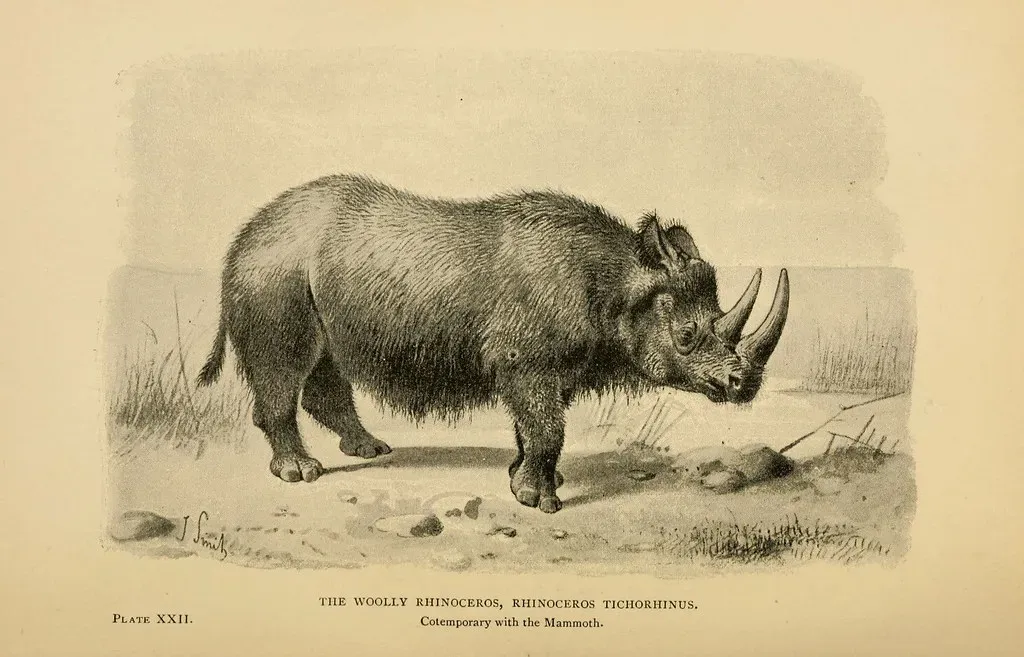
I honestly think the woolly rhinoceros deserves a full redemption arc in the public imagination. It has everything we claim to love about prehistoric life: dramatic horns, extreme adaptation to cold, direct interaction with humans, and a mysterious extinction still under active study. Yet we keep handing all the spotlight to mammoths, as if the Ice Age only had room for one charismatic megabeast per ecosystem. That feels like a lazy narrative choice rather than a reflection of how rich and varied that world really was.
Paying more attention to woolly rhinos isn’t just about fairness to a long-dead animal; it changes how we think about evolution and extinction. This was not a fantasy monster but a real, highly successful species that dominated vast landscapes for tens of thousands of years and then vanished in what is, on a geological timescale, the blink of an eye. When you look at it that way, the woolly rhinoceros stops being background decoration and becomes a central character in the story of how climate, humans, and ecosystems collide.
If we gave it the same cultural space we give mammoths, kids might grow up with a more accurate picture of the past and a sharper instinct about the fragility of the present. To me, that matters. Remembering the woolly rhinoceros is a small act of intellectual honesty: admitting that our planet once supported more variety, more strangeness, and more raw power than we usually admit.
Conclusion: The Forgotten Giant We Can’t Afford To Ignore
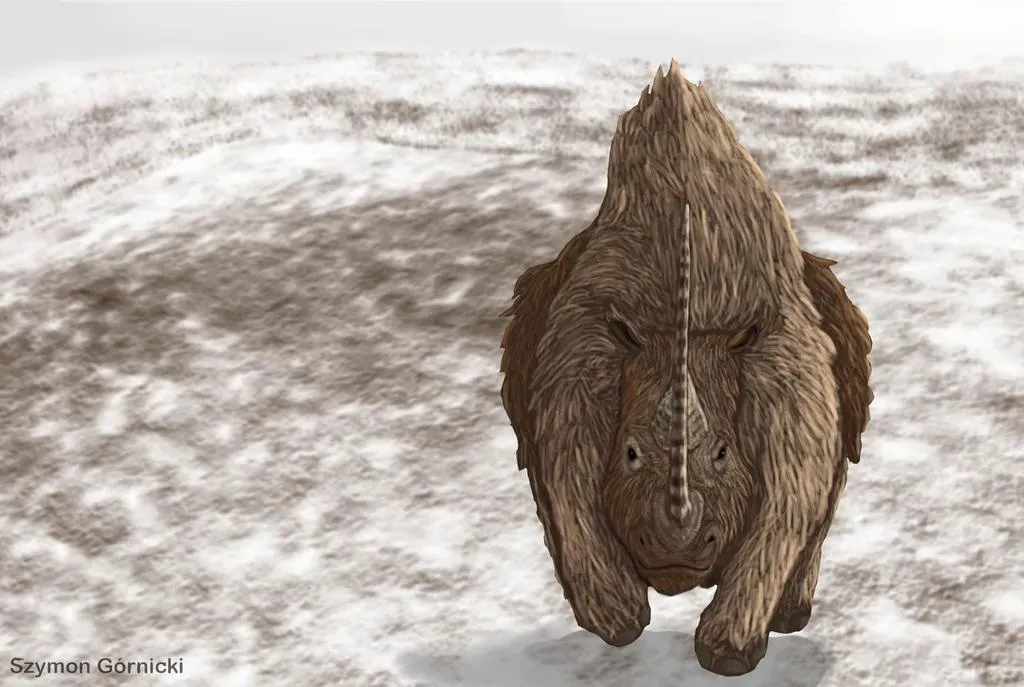
In my view, the woolly rhinoceros is one of the most unjustly overlooked animals in prehistory. It was enormous, beautifully adapted to a brutal environment, tangled up with human history, and preserved in some of the most astonishing fossils we have. Yet if you asked most people to list Ice Age animals, they might never even mention it. That cultural blind spot says more about our storytelling habits than about the animal itself.
We tend to flatten the past into a small set of familiar icons: mammoths, saber-toothed cats, maybe a cave bear if someone is feeling creative. The woolly rhino cracks that tidy picture open. It reminds us that the ancient world was crowded, dynamic, and full of lineages that were just as impressive as the ones that survived. Ignoring it is like watching a movie with half the cast cut out and pretending the plot still makes perfect sense.
Here’s the opinionated part: forgetting creatures like the woolly rhinoceros makes it easier to shrug off modern extinctions, because we quietly accept that “stuff disappears” without really examining what is lost. When you actually sit with this animal’s story – its power, its vulnerability, its abrupt exit – it becomes harder to treat disappearing species as background noise. The woolly rhino may be gone, but how we remember it is still up to us. The real question is whether we’re willing to widen our imagination enough to let this shaggy, horned tank back into the center of the Ice Age story where it belongs; now that you’ve met it properly, can you honestly say it does not deserve that space?