
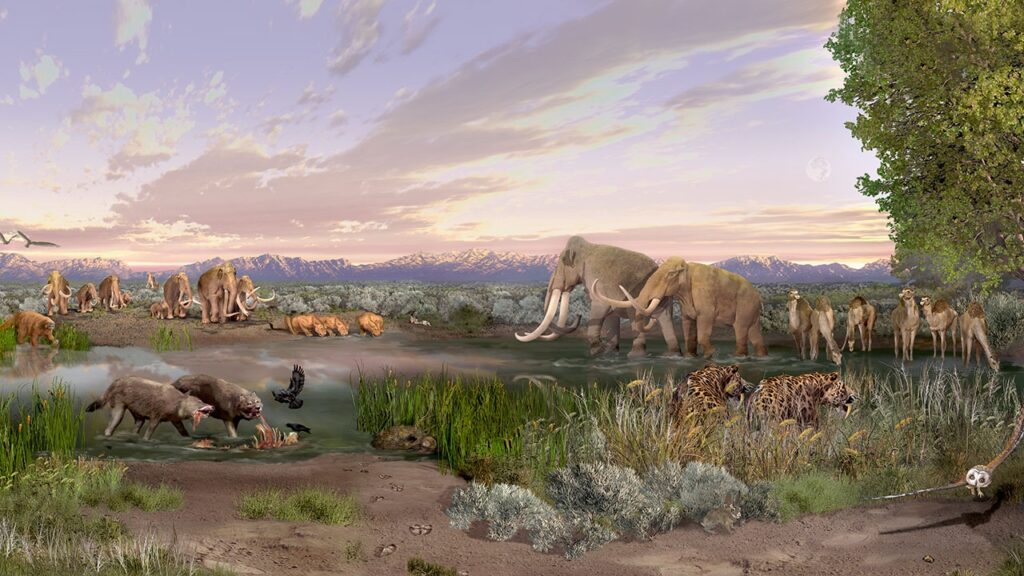
When people think of the Ice Age, they usually picture a chatty sabertooth cat, a clumsy sloth, and a neurotic squirrel chasing an acorn. Funny, sure. But the real Pleistocene world was stranger, harsher, and honestly way more epic than anything we’ve seen on screen. Entire continents were filled with giants: elephant relatives with spiral tusks, ground sloths the size of vans, and cows so huge they made modern bison look petite.
Many of these giants were not just big; they were ecological powerhouses that shaped whole landscapes. Yet somehow, they never became stars of their own animated sagas. No spin‑offs, no plush toys, no kids’ backpacks. In this article, you’ll meet ten of the most jaw‑dropping, oversized Ice Age animals that actually existed and could easily carry their own movie. Once you’ve met them, you may never look at the cartoon version of the Ice Age the same way again.
The woolly rhinoceros: the tank of the Ice Age steppes
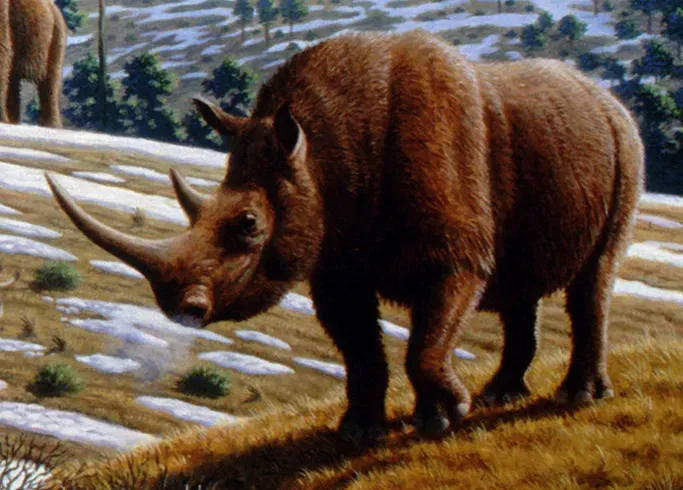
Imagine a rhino already built like a tank, then add a shaggy winter coat and a massive forward-curving horn, and you’ve got the woolly rhinoceros. This heavyweight roamed the cold grasslands of Europe and Asia, grazing side by side with mammoths and early humans. Some individuals were roughly as long as a car, and their horns alone could stretch well past the length of a human arm.
What makes the woolly rhino so fascinating is how perfectly it was engineered for brutal cold: thick skin, dense fur, and a body that could bulldoze through snow to reach buried plants. Cave paintings created by Ice Age people show these animals in striking detail, so they clearly left an impression. It’s wild that we’ve turned their home into punchline comedy but never given this shaggy juggernaut the screen time it deserves.
Megatherium: the ground sloth that could flatten your SUV
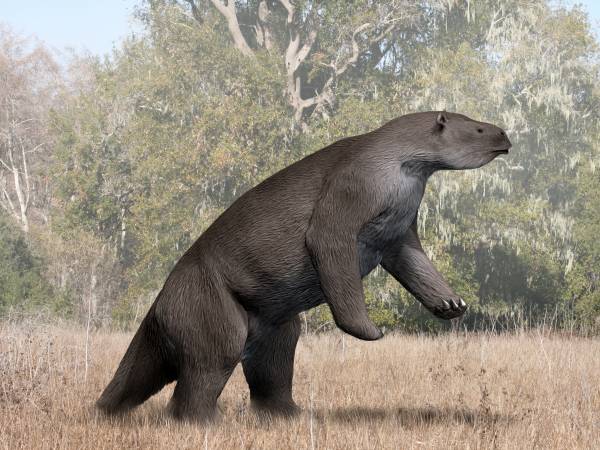
If you only know sloths as sleepy little tree-huggers, Megatherium will feel like a plot twist. This South American ground sloth stood as tall as a small house when it reared up, with huge claws that could rake branches down like a living crane. Instead of hanging from trees, it walked heavily on the ground, its bulk closer to a modern elephant than any tree-dweller.
Paleontologists think Megatherium used its claws for grabbing vegetation, not for hunting, but you still would not have wanted to annoy it. It likely reshaped forests by pulling down limbs and stripping plants, the way elephants do today. Personally, I don’t understand how a sloth roughly the size of a city bus ends up as a background idea while its much smaller cousins get to be goofy sidekicks in animated movies.
Steppe mammoth: the mammoth before mammoths were cool
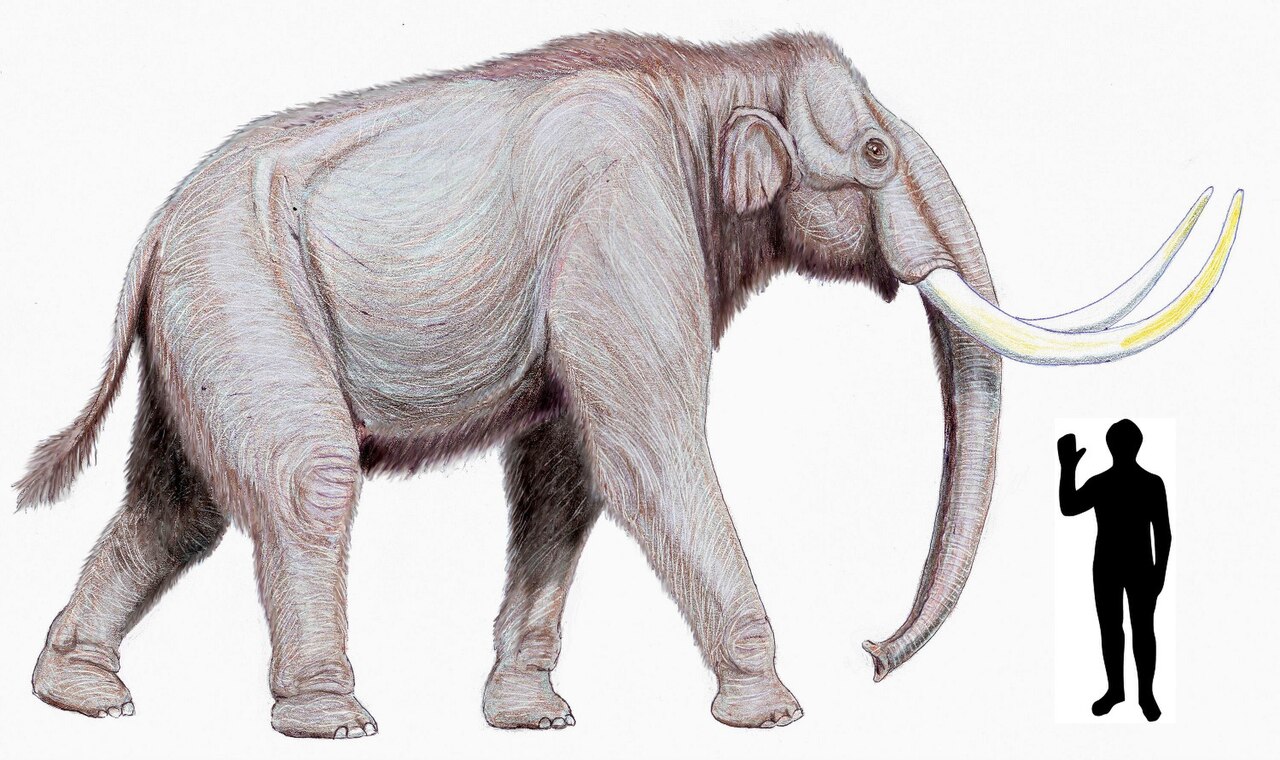
The woolly mammoth tends to steal the spotlight, but its ancestor, the steppe mammoth, may have been even more impressive. Some steppe mammoths reached heights that pushed them toward the upper limit of land animal size, with tusks that spiraled outward in long, sweeping arcs. These giants wandered across Eurasia long before the classic woolly mammoth really took over the Ice Age merch line in our imaginations.
The steppe mammoth lived in wide open, cold grasslands, using those enormous tusks to push snow aside and maybe even fight rivals. They were part of a dynamic lineage of elephant relatives that kept experimenting with size, shape, and tusk design over millions of years. If anyone deserves a prequel movie, it’s the lumbering ancestor that set the stage for all the mammoth fame that came later and then got almost completely written out of the story.
Glyptodon: the car-sized armadillo with a built-in fortress
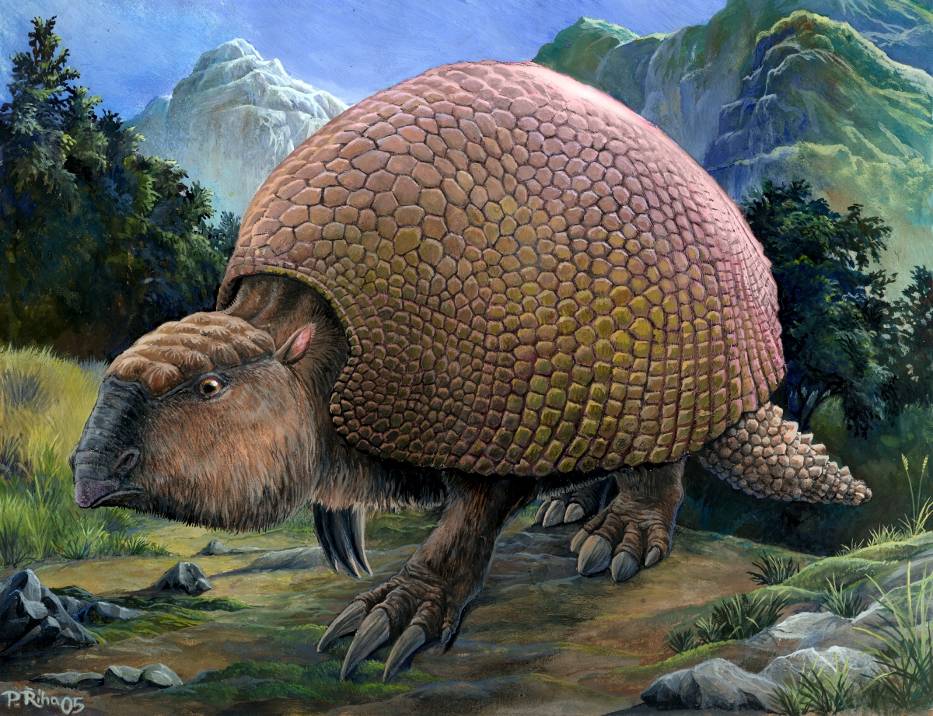
Glyptodon looked like someone crossed an armadillo with an armored tank and then hit the “enlarge” button too many times. About the size of a small car, it carried a dome of heavy bony plates on its back and a thick, reinforced tail. This prehistoric tank roamed South America’s open environments, grazing and minding its own business under that nearly impenetrable shell.
Some close relatives of Glyptodon had tail clubs that could probably crack bones if they landed a good hit, turning them into slow-moving but well-protected fortresses. You can easily picture a story built around one of these giants trudging across a changing world, trying to outlast predators and climate swings. Instead, we mostly get tiny armadillos or hedgehogs as comic relief, while the car-sized original goes completely unnoticed by pop culture.
Irish elk: the deer with antlers like flying satellite dishes
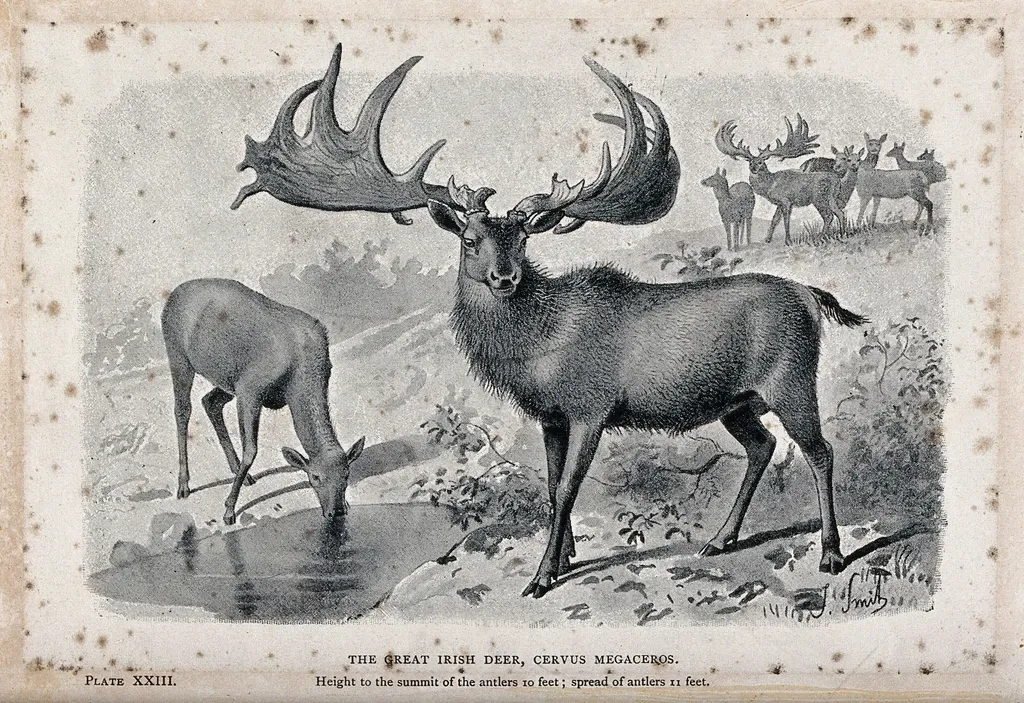
The so-called Irish elk was not just big; it was downright absurd in its antler department. This giant deer, which lived across Eurasia, carried antlers that could stretch wider than a tall person’s height, like a pair of wooden satellite dishes strapped to its skull. Despite the name, it was not a true elk in the modern sense, but it was definitely one of the most spectacular deer ever to walk the planet.
Those massive antlers were probably used for display and rivalry, turning each mating season into a high-stakes visual showdown. The sheer energy cost of growing such huge antlers every year is hard to imagine, especially in cold, lean environments. It is almost comical that animated films keep giving moose and reindeer the spotlight, while this over-the-top antler champion barely gets mentioned outside museum halls and textbooks.
American mastodon: the forest elephant that time forgot
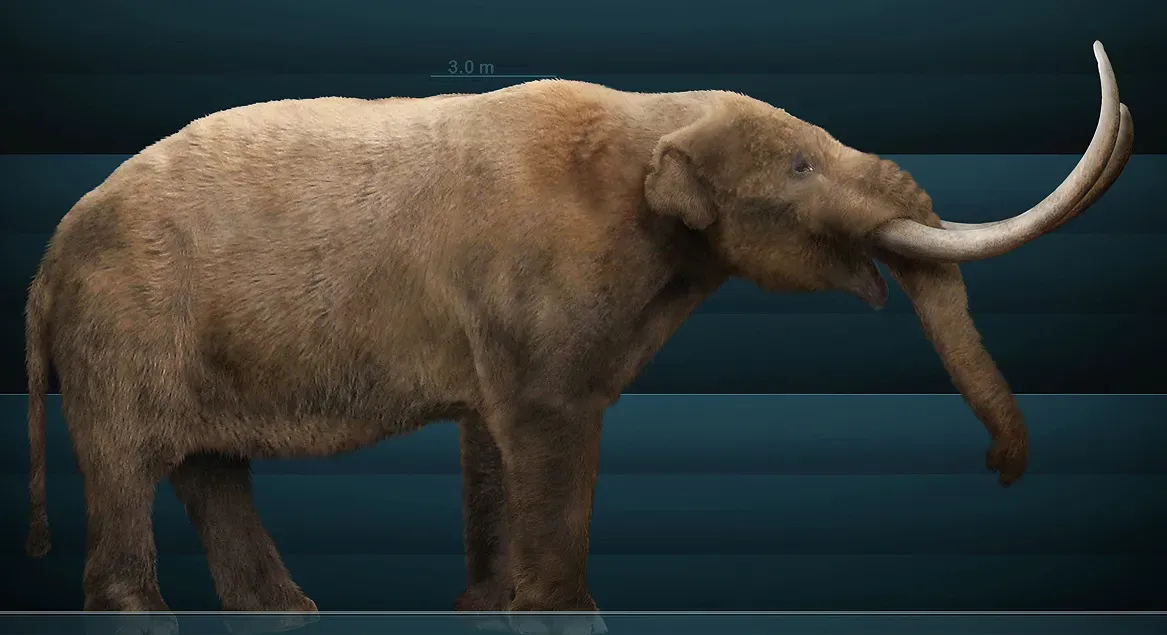
People often lump mammoths and mastodons together, but the American mastodon was its own distinct heavyweight. Stockier and shorter-legged than mammoths, mastodons were built for forests, browsing on branches, twigs, and leaves rather than open grassland. Their teeth were shaped more for crushing woody plants, which tells you a lot about their lifestyle among Ice Age trees and wetlands.
These giants shared North America with early humans and a whole suite of other megafauna, yet they somehow feel like a side note to the woolly mammoth. In reality, mastodons were widespread and successful for a long time before eventually disappearing near the end of the Ice Age. If there was ever a candidate for a thoughtful, slow-burn animated story about the quiet drama of ancient forests, an American mastodon wandering through misty woodlands would be perfect.
Paraceratherium: the prehistoric skyscraper on legs
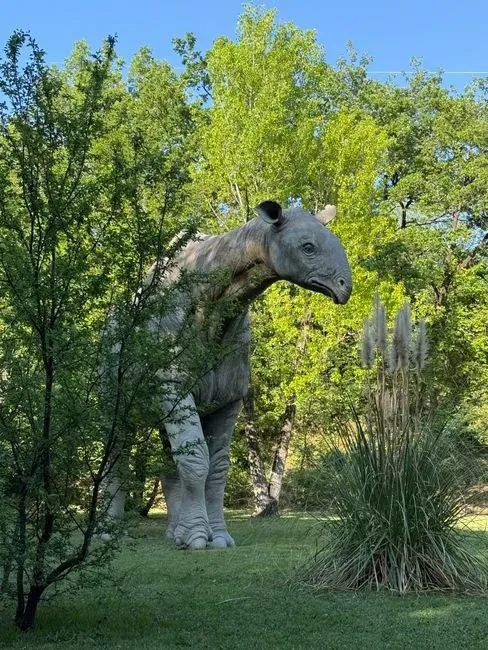
Paraceratherium did not live in the classic Ice Age period with mammoths, but it belongs firmly in the broader story of ancient giants. This hornless rhinoceros relative is one of the largest land mammals known, towering multiple times the height of a person at the shoulder. Picture a creature so tall it could browse leaves from high branches the way giraffes do today, but with the massive bulk of a rhino on stilts.
It roamed parts of Asia many millions of years before the last Ice Age, reshaping vegetation simply by existing. Its sheer scale pushes the limits of what land mammals can get away with biologically, from bone strength to heat regulation. To me, Paraceratherium feels like it should already have a moody, cinematic film about a solitary giant striding across ancient floodplains, but it mostly lives in the quiet world of scientific diagrams and museum reconstructions.
Diprotodon: the wombat that supersized into a van
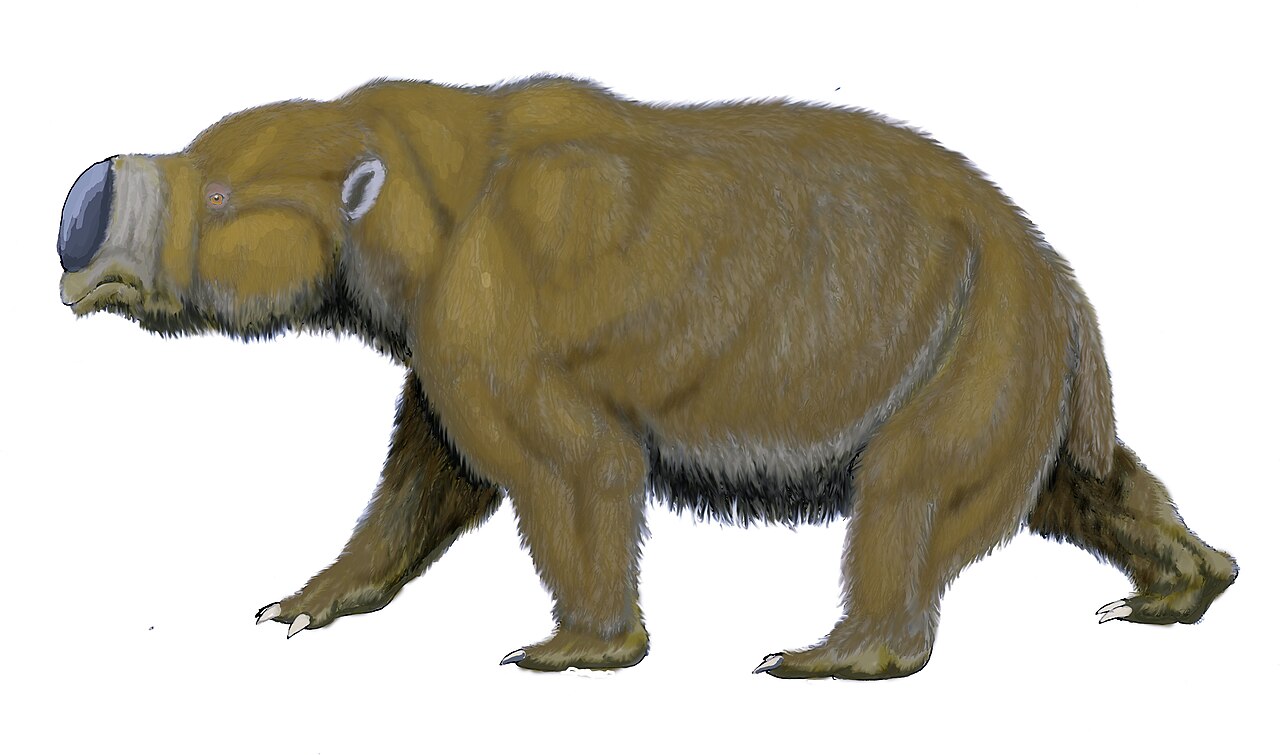
Diprotodon was essentially an Australian marsupial that looked like someone overinflated a wombat. It was the largest known marsupial to have ever existed, reaching the size of a small van in length and standing as tall as a person at the shoulder. Living in Ice Age Australia, it moved through woodlands and open areas, browsing on plants and probably facing off against some formidable predators.
For many people, it is already surprising to learn that kangaroos and wombats once shared their continent with giants that made them look small. Aboriginal oral histories may even preserve distant memories of these animals, which adds a powerful human dimension to their story. It is hard not to feel that a gentle giant marsupial wandering through a drying, changing landscape could make for a deeply moving movie, yet it rarely even gets a cameo in the public imagination.
Bison latifrons: the ice age cow with a ten-foot horn span
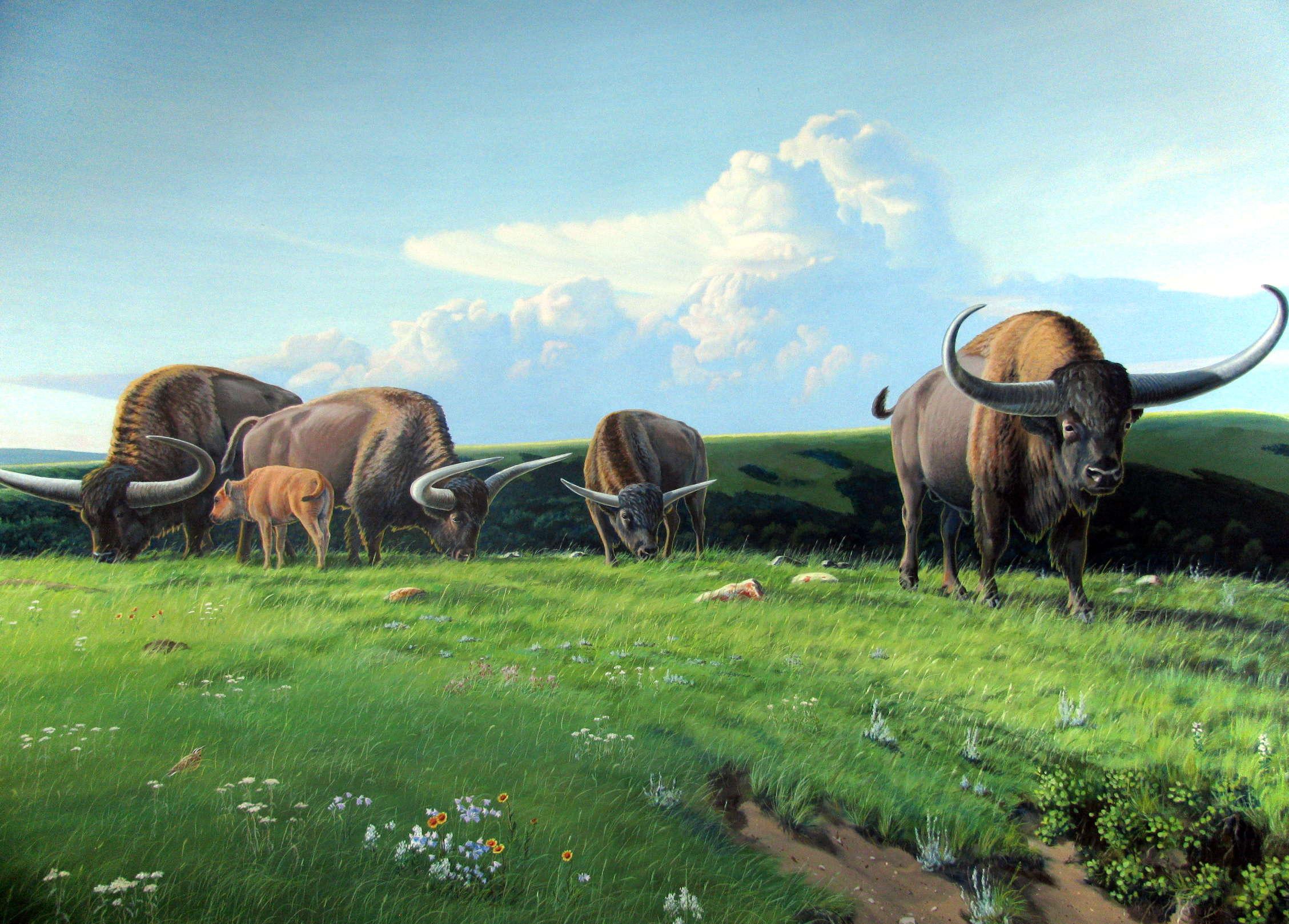
Modern bison are impressive, but Bison latifrons plays in a different league. This Ice Age bison species carried horns that could spread wider than a compact car, creating a head profile that must have looked almost unreal. Its body was larger and heavier than today’s bison, making it one of the true megafauna icons of ancient North America’s grasslands and parklands.
Those enormous horns were likely used in displays and contests between males, turning every mating season into a spectacle of clashing bone and muscle. Herds of these animals would have shaped vegetation and soils the way modern bison still do, but on an even grander scale. Given the current fascination with bison in everything from documentaries to branding, it feels like a missed opportunity that this horned giant has not gotten a heroic, dramatic retelling of its rise and fall.
Short-faced bear: the apex bully of the northern world
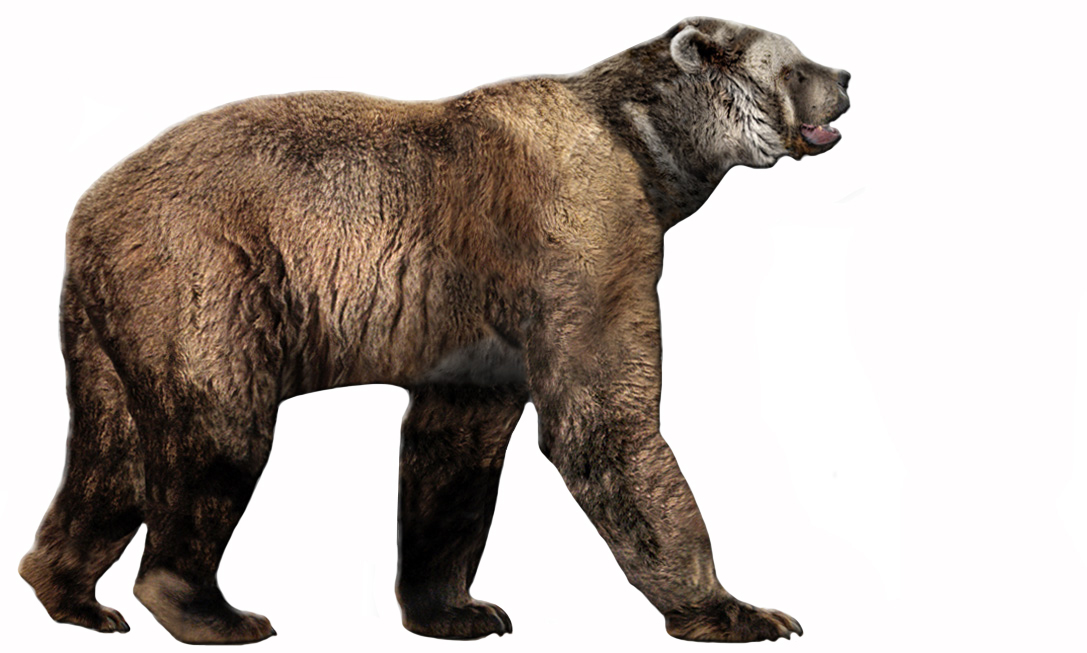
The short-faced bear was not just big; it was built to intimidate. Standing on its hind legs, it would have towered over humans, with long limbs that gave it a high, almost stilted profile. Unlike the more lumbering silhouette of modern brown bears, this species looked leaner and more long-legged, as if designed to cover huge distances in search of food.
Scientists still debate exactly how it hunted or scavenged, but its size and speed suggest it could have dominated carcasses and pushed other predators off their kills. It shared North America with dire wolves, large cats, and early people, living in an intensely competitive world. If you asked me which Ice Age animal could carry a tense, gritty survival film, this towering bear, pacing alone across frozen plains, would be at the top of the list.
Conclusion: the blockbusters that never were
![Conclusion: the blockbusters that never were (Current version from the following site without attribution:[1] Previous version from NPS Foundation Document (archive), page 19 (no name is credited in the "Photo and Art Credits", page 42)original version stitched together from images credited to "NPS Photo" on NPS Paleontology page (archive) and NPS Fossilized Footprints page (archive), Public domain)](https://nvmwebsites-budwg5g9avh3epea.z03.azurefd.net/dinoworld/7dc3f8083e05b30fc6f705f22e4a2075.webp)
Looking at this lineup of real-life giants, it is hard not to feel that our animated Ice Age universe took the safe route. We leaned into familiar shapes and easy jokes while leaving entire casts of bizarre, powerful, and sometimes tragic animals in the shadows. These creatures were more than oversized curiosities; they were engineers of their ecosystems and, in some cases, witnesses to the arrival of our own species.
In my view, giving them more space in our collective imagination is not just about cool visuals; it is about honesty. The past was stranger, grander, and more unnerving than the tidy stories we usually tell, and that makes it far more interesting. Maybe the real question is not why these animals never got their own animated films, but what else we are still overlooking in the long, messy story of life on Earth – what would you have guessed deserved top billing?