
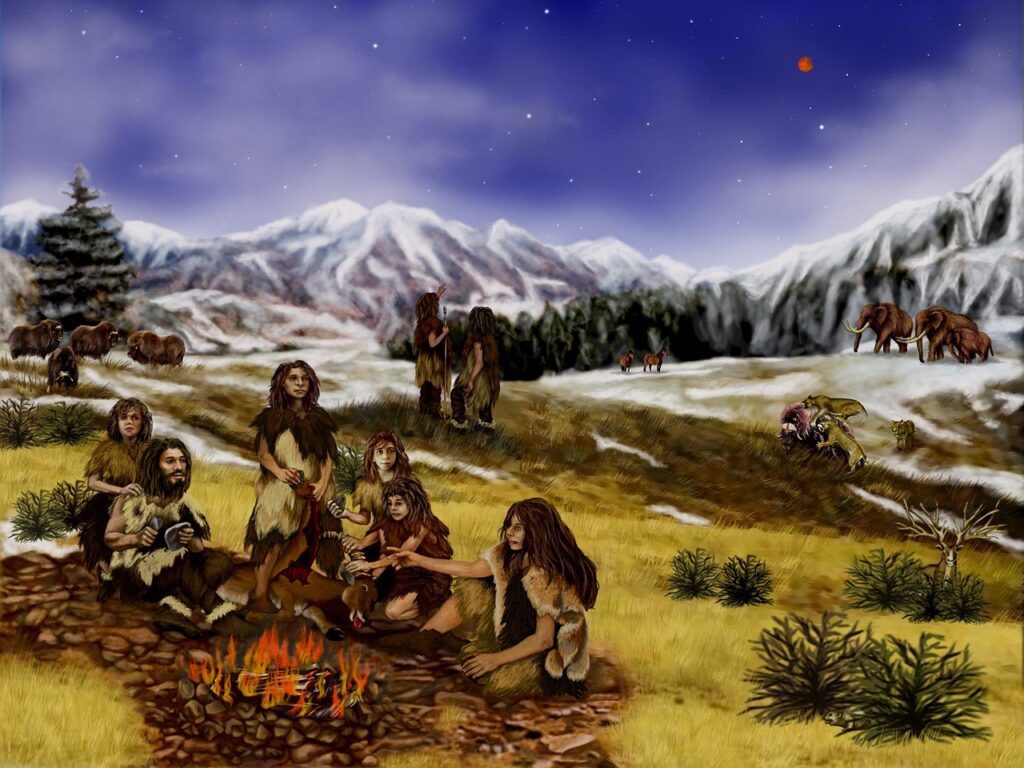
Imagine watching, in your mind’s eye, a small group of early humans huddled around a patch of light, one individual slowly guiding another’s hands over a rough stone. No words as we know them, no school, no written instructions – only gestures, repetition, and attention. Somewhere around one point seven million years ago, scenes like this began leaving faint fingerprints in the archaeological record, and those fingerprints may capture one of the most underrated revolutions in our evolution: the birth of deliberate teaching.
Prehistoric science cannot show us a fossil of a “teacher,” but it can reveal moments where simple copying was no longer enough. Subtle shifts in stone tools, marks of careful correction on bones, and the growing complexity of skills suggest that humans stopped merely watching and started actively instructing. That quiet step – from learning by chance to learning on purpose – may have changed everything about who we became as a species.
The deep-time puzzle: how can we see teaching in stone and bone?
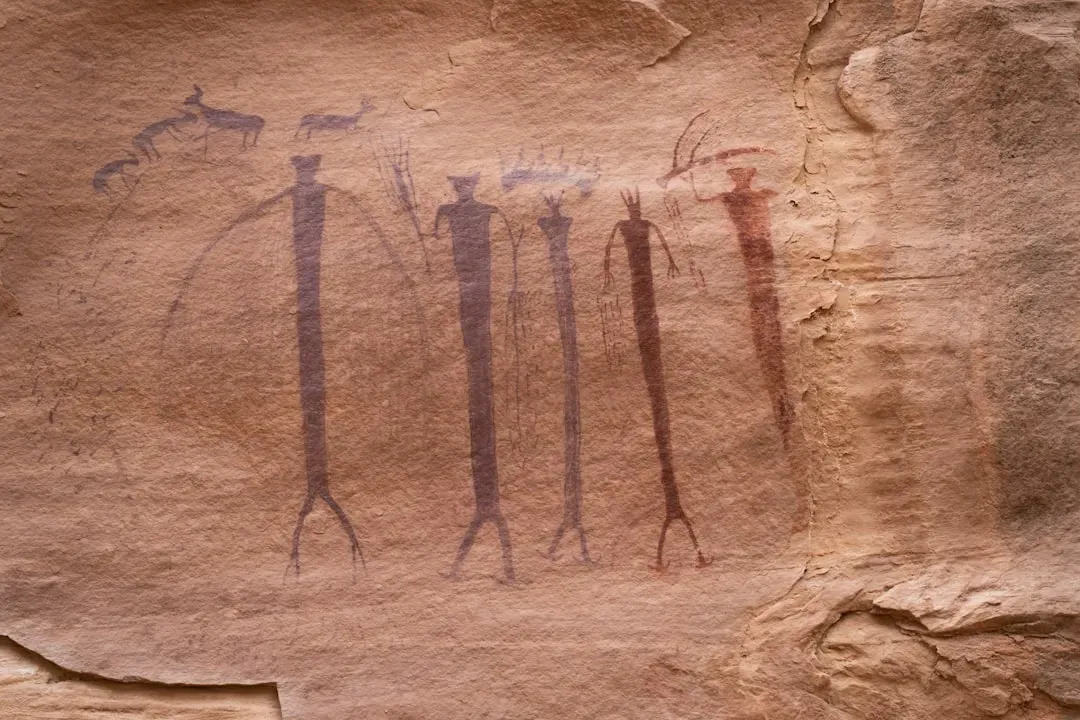
At first glance, it sounds almost impossible: how could archaeologists claim to see teaching that happened nearly two million years ago when no one was there to record it? The answer lies in patterns – repeated, consistent traces left behind in tools, cut marks, and debris that hint at how skills were passed from one individual to another. When you see the same complex technique appear in many places and over long stretches of time, simple imitation starts to feel like too weak an explanation.
Researchers look for signs of learning curves preserved in artifacts: clumsy early attempts, intermediate versions, and fully mastered examples found together at the same site. This kind of “error progression” suggests that novices were practicing under the watchful eyes of more experienced makers. Instead of random trial and error scattered across generations, you get clusters of evidence that point toward guided practice – one mind actively shaping another’s actions.
Handaxes and hidden lessons: why Acheulean tools matter

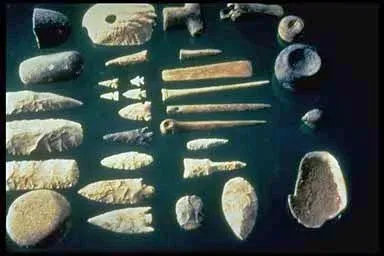
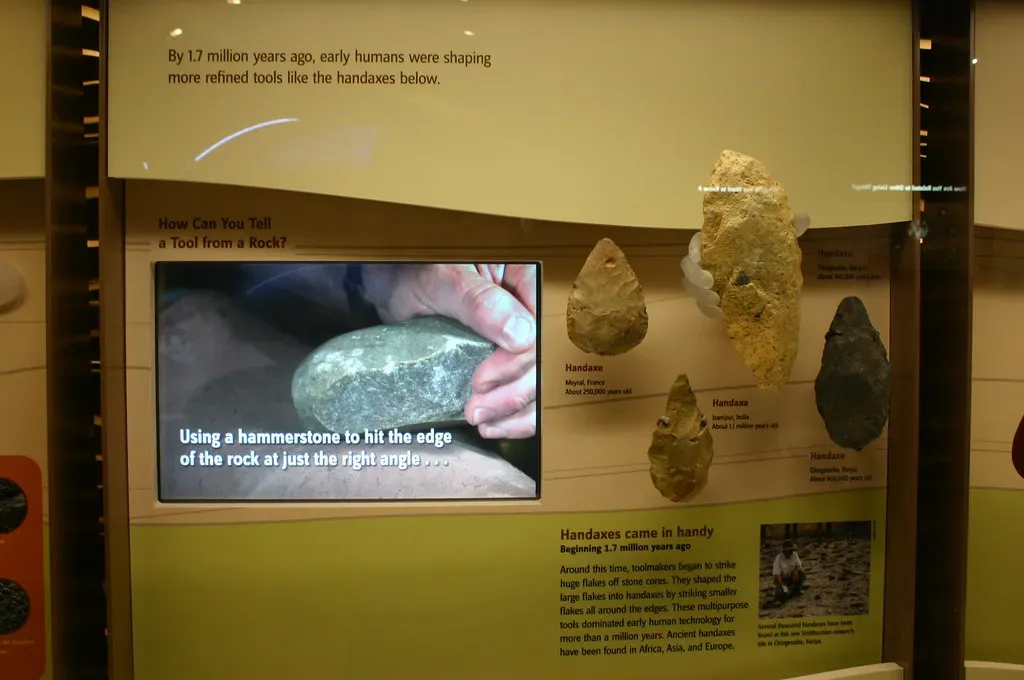
A major piece of this story comes from Acheulean handaxes, those iconic teardrop-shaped stone tools that appear roughly about one point seven million years ago in Africa and continue for astonishingly long stretches of prehistory. These tools are not just sharp rocks; they have symmetry, standardized proportions, and require multiple carefully sequenced strikes to produce. That level of skill is very hard to pick up just by casually watching from a distance.
Modern experiments where people try to learn handaxe-making show that without explicit guidance, most learners struggle badly and waste large numbers of stones before producing anything usable. When experienced knappers intervene – physically repositioning hands, demonstrating angles, correcting mistakes – the learning curve shortens dramatically. When archaeologists see long traditions of finely made handaxes with shared design “rules,” it strongly hints that some form of deliberate, perhaps even patient, teaching was part of early human life.
Beyond copying: why imitation alone is not enough
Many animals learn by observing others, from young chimpanzees watching termite fishing to birds copying each other’s songs. But there is a difference between copying what you see and someone intentionally helping you acquire a skill. Teaching implies that the more experienced individual is willing to pay a cost – time, effort, maybe even lost food opportunities – to make sure a learner succeeds faster or better than they would on their own.
In the archaeological record, the appearance of complex, standardized technologies that are tricky to master pushes us toward that conclusion. If a stone tool requires a particular order of strikes, a very specific way of holding the core, and an understanding of angles you cannot “see” directly, then seeing the final product is not enough. Someone needs to slow down, demonstrate, adjust, and signal when the learner is doing it right. That extra cognitive and social step is exactly what makes teaching such a profound turning point.
Teaching as a social contract: trust, patience, and shared futures
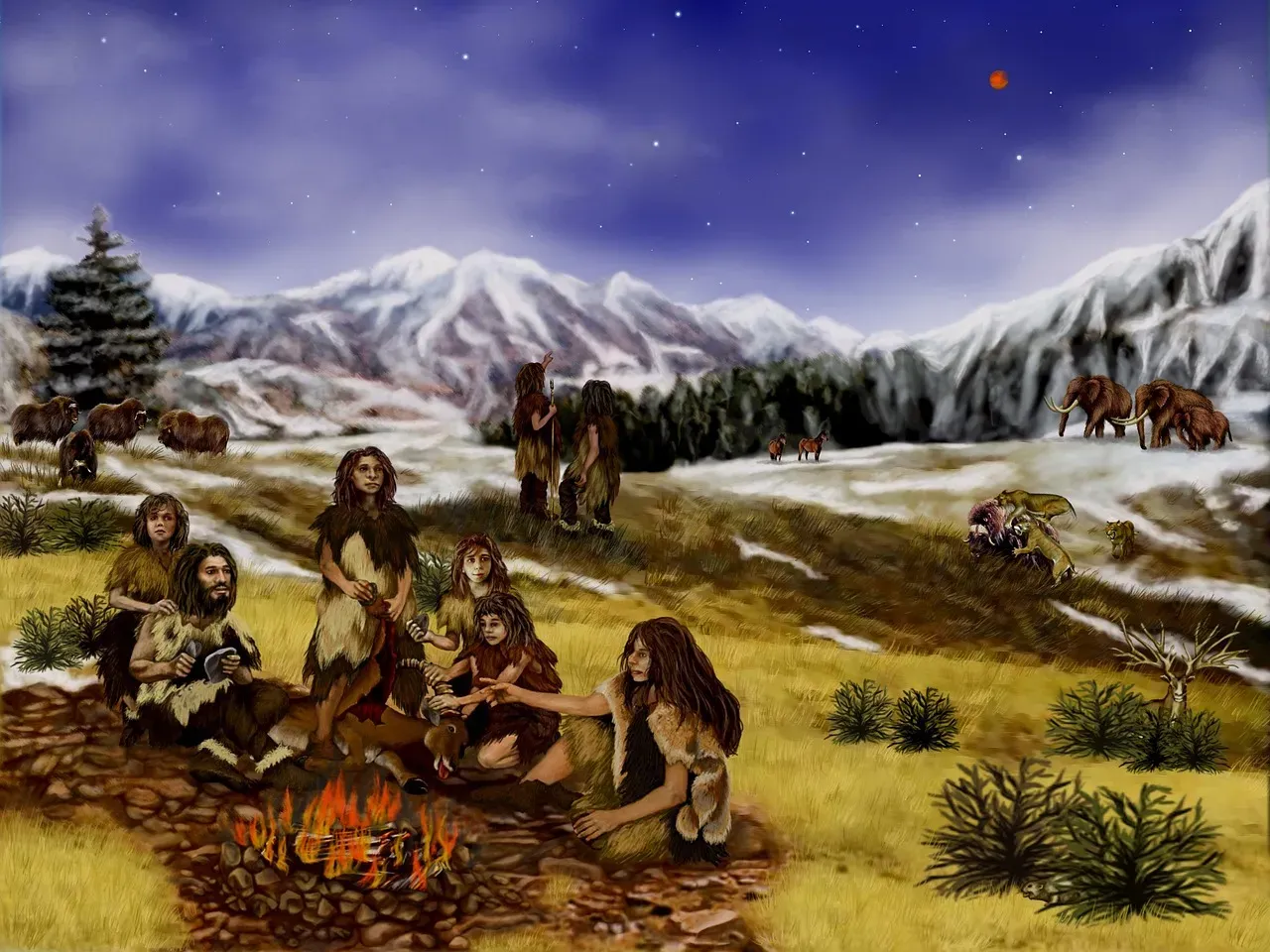
Teaching does not happen in a vacuum; it is built on relationships. For one early human to invest in teaching another, there has to be some expectation that the learner’s improved skill will matter to the group. This might mean better shared hunting success, more reliable food processing, or simply ensuring that knowledge does not die with the older generation. Teaching is, at its core, an act of trust in the future.
When we picture a teacher guiding a learner around a fire, we are really seeing a community betting on its own continuity. The moment teaching shows up, even in subtle, prehistoric form, it signals that our ancestors were thinking in longer time frames. They were willing to slow down now so that someone else would be more capable later. That kind of time-shifted cooperation is one of the clearest early signs of the uniquely human social fabric that still shapes our lives today.
Brains, bodies, and tools: how instruction reshaped human evolution
Deliberate teaching is not just a cultural twist; it likely fed back into biology. As toolmaking, foraging, and social coordination became more complex, individuals who could learn faster – and who could teach more effectively – would have had real advantages. Over countless generations, this relentless pressure may have favored brains that could handle long sequences, hold others’ actions in mind, and imagine the learner’s perspective.
At the same time, bodies adapted to support these new demands. Fine motor control, hand strength, and even the ways our wrists move are part of a package tailored for manipulating tools and demonstrating techniques. Once teaching enters the picture, evolution does not only reward those who can survive harsh environments; it rewards those who can plug into a chain of knowledge that stretches backward and forward in time. Being born into a world where teaching exists is like joining a running start rather than beginning from zero.
From silent gestures to the seeds of language

Many researchers suspect that teaching and language are locked in a tight dance. You can teach with just gestures and demonstrations, but as skills become more intricate, spoken or signed instructions become incredibly powerful. The kinds of detailed techniques hinted at in the archaeological record – specific angles, force levels, and sequences – are exactly the sort of things that language is good at packaging and transmitting.
If early humans were already devoting time and energy to guiding one another through tricky tasks, there would have been strong motivation to refine any communicative abilities they had. Even simple structured signals, repeated and shared across a group, could dramatically smooth the teaching process. In that sense, the first evidence of teaching around one point seven million years ago might also mark a quiet, deep step along the path toward the rich languages we use today to explain everything from cooking recipes to quantum physics.
What early teaching tells us about who we are now

When you step back, the story of that ancient teaching moment is really a story about modern life. Every time we watch a tutorial, take a class, or show a friend how to fix something, we are reenacting a pattern that began long before cities, agriculture, or even our own species form. The fact that archaeologists can see hints of teaching so far back suggests that our hunger to share skills is not a modern invention, but one of our oldest survival strategies.
I find it striking – and honestly a little humbling – that the same basic dynamic driving a parent showing a child how to tie their shoes may have driven an early human guiding a student’s hands on a rough stone core. We like to think our technologies make us special, but the truly radical move was not the first tool, it was the first teacher. In my view, that turning point is more important than any single invention, because it set the template for a species that survives not just by being clever individually, but by building a collective memory that outlives every single one of us.
Conclusion: the first teacher as humanity’s real breakthrough

Looking at the evidence with a cautious but curious eye, it is fair to say that the first clear traces of human teaching in the archaeological record around one point seven million years ago mark more than a technological upgrade. They signal a shift in how our ancestors understood time, relationships, and responsibility. Tools got better, sure – but more importantly, minds started to align around the idea that knowledge was something to be deliberately handed on, not just stumbled into.
In my opinion, that makes the first teacher – not the first stone tool, not the first fire, not even the first artwork – the real star of our evolutionary story. Without the habit of teaching, every generation would be forced to reinvent its world from scratch, and the incredible arc of human culture would collapse into a thin line of repeated mistakes. The next time you learn something from another person, or patiently walk someone through a skill, you are echoing a decision our ancestors made in a very different landscape: to share what they knew, on purpose. If you could stand beside that first teacher for a moment, would you recognize yourself in them more than you expect?