Imagine standing on a beach and watching something the size of a modern humpback whale glide beneath the waves – except it’s not a mammal, it’s a reptile with jaws full of teeth, eyes built for hunting, and a body shaped like a torpedo. That sounds like a movie monster, but it actually swam in Earth’s oceans long before humans or even dinosaurs like T. rex appeared. The idea that a reptile could rival a whale in size feels almost wrong, like reality is breaking its own rules.
What makes it even more mind‑bending is that this isn’t some fringe, debated rumor in paleontology. Fossils keep revealing that some marine reptiles grew to lengths on par with the largest animals alive today, forcing scientists to rethink how quickly ocean giants evolved. Once you realize our planet has produced whale‑sized reptiles more than once, you start to see prehistory not as a dull, dusty past, but as a series of wild experiments in what life can become.
The Giant Ichthyosaurs That Challenged Whales
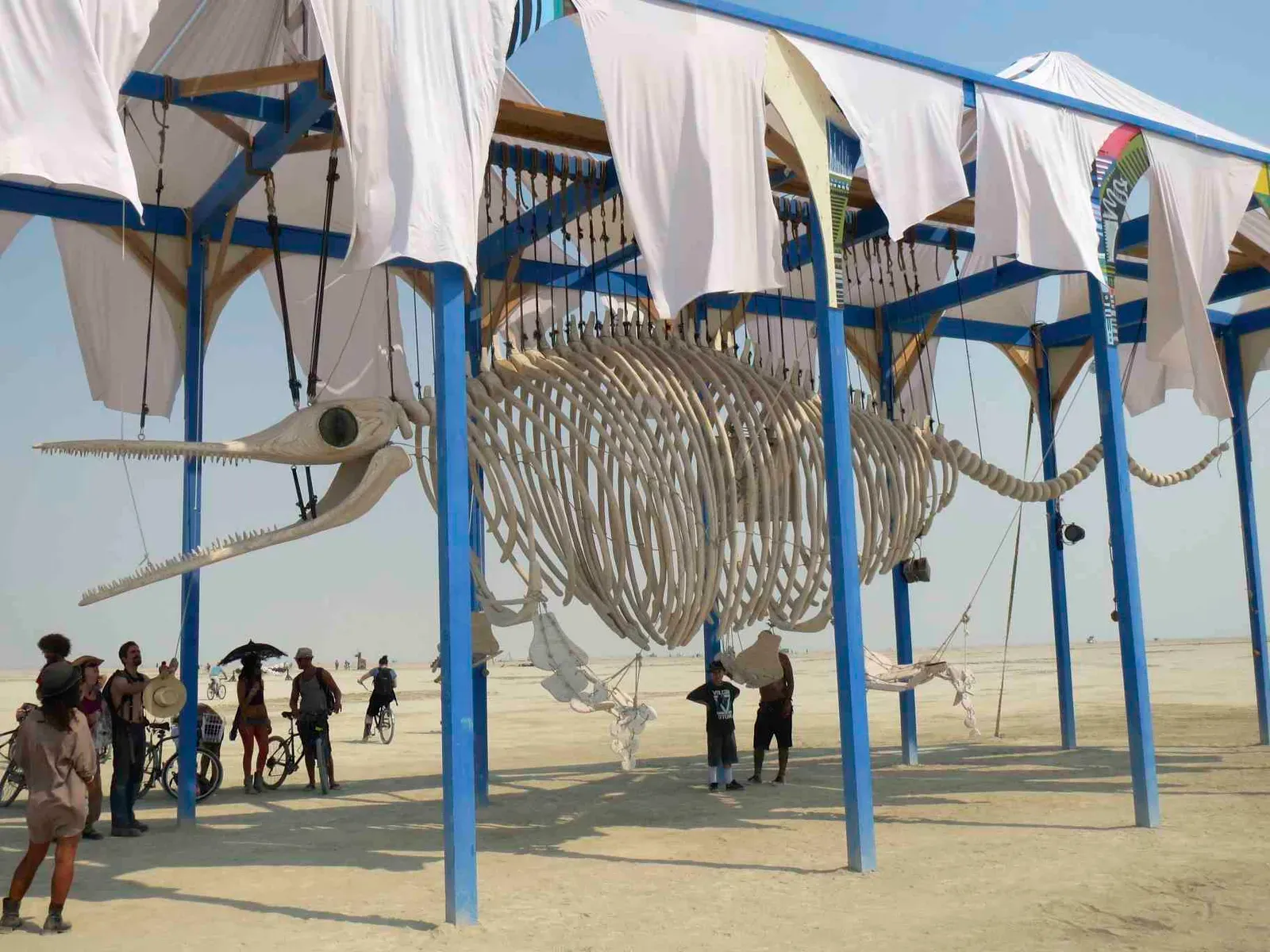
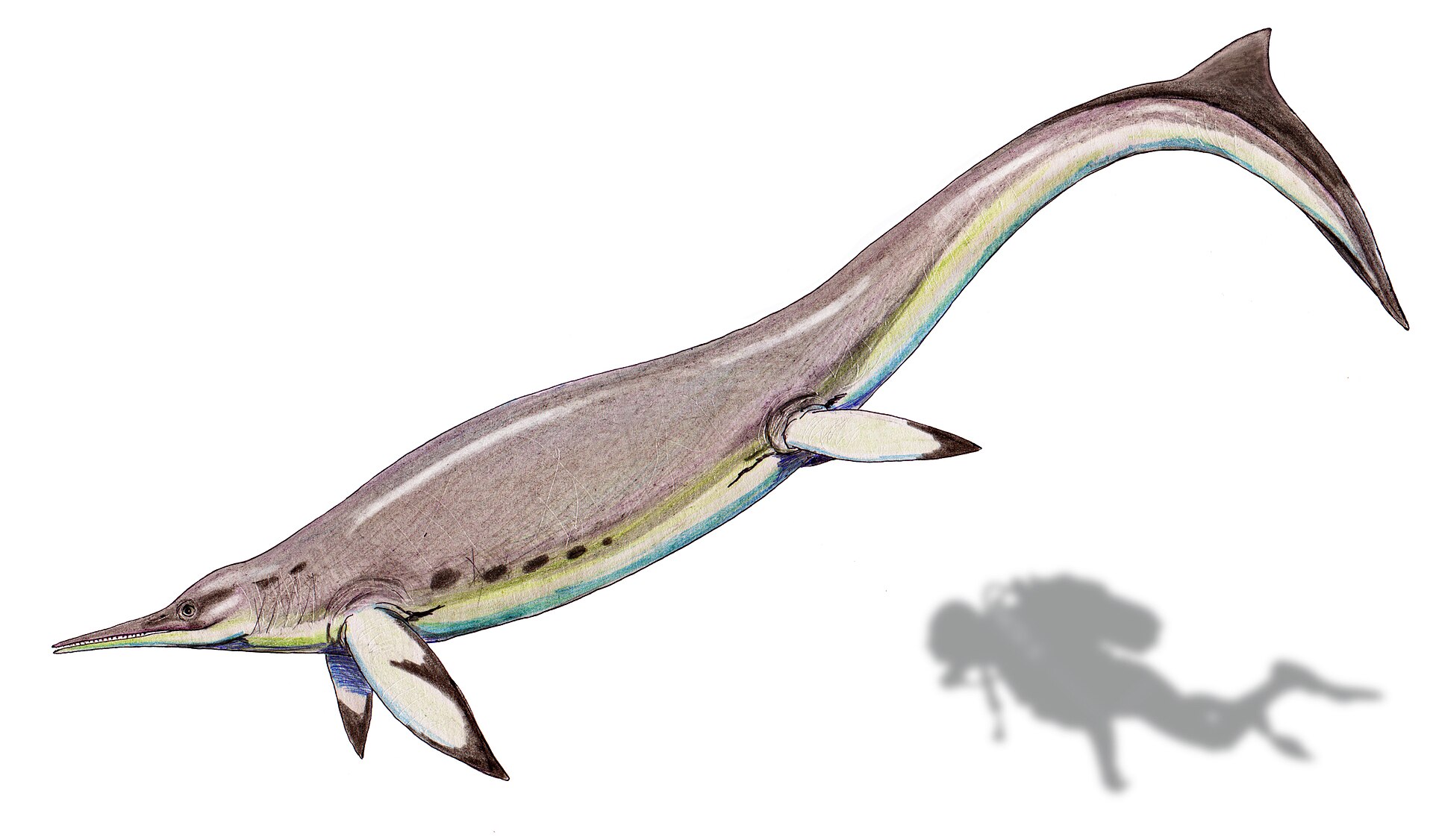
Here’s the wild part: at least one group of ancient marine reptiles, ichthyosaurs, reached lengths comparable to modern humpback whales. Humpbacks typically range around twelve to sixteen meters long, and some of the biggest ichthyosaurs land right in that same ballpark. These animals looked a bit like oversized dolphins designed by a special‑effects team with no sense of restraint – massive heads, streamlined bodies, and powerful tails built for serious speed.
What really blows my mind is that these reptilian giants evolved very early in the age of dinosaurs, during the Triassic Period, when large marine ecosystems were still recovering from a catastrophic mass extinction. Instead of cautiously rebuilding, life went all‑in on size and specialization, and ichthyosaurs shot up into whale territory surprisingly quickly. The fact that reptiles, not mammals, were the first to test the upper size limits of the oceans is one of those details that quietly flips your mental picture of Earth’s history upside down.
Ichthyosaurs: The “Fish Lizards” That Ruled Ancient Seas
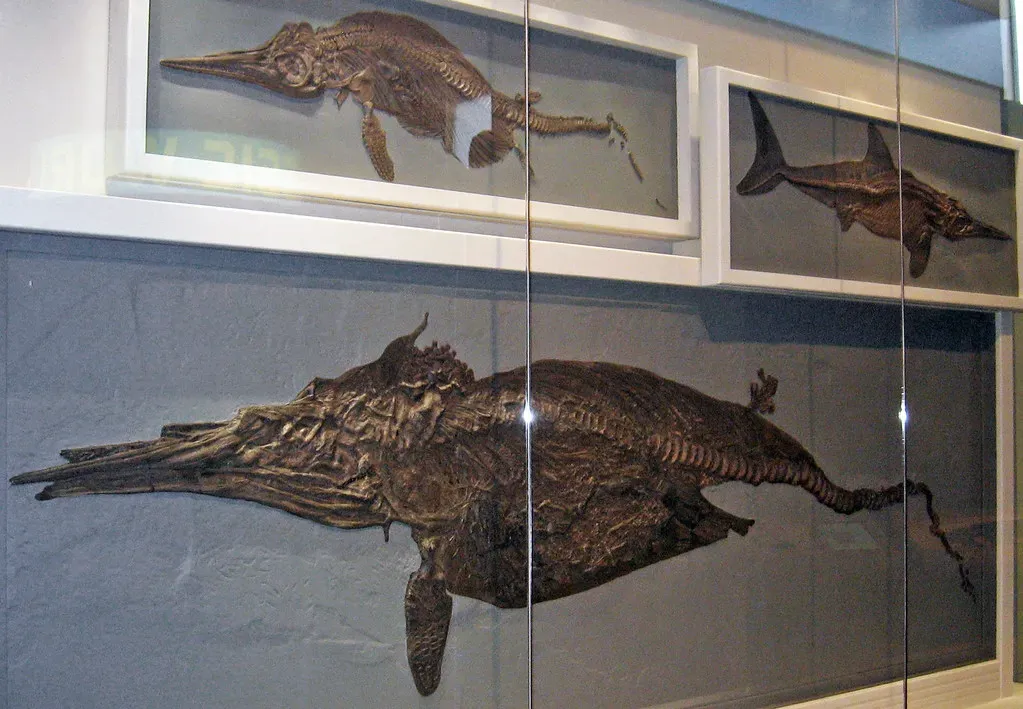
Despite the name, ichthyosaurs were not fish and not dinosaurs; they were marine reptiles that returned to the water from land‑dwelling ancestors, much like the way whales evolved from terrestrial mammals. Their name literally means “fish lizards,” which actually sums them up pretty well: they had lizard ancestry wrapped in a fish‑like, hydrodynamic package. Picture a huge reptile with a long snout, big eyes, paddle‑shaped limbs, and a crescent tail fin, slicing through the water like a reptilian torpedo.
One of the coolest things about ichthyosaurs is how completely they committed to life at sea. They did not crawl onto land to lay eggs; instead, they gave birth to live young in the water, with fossil skeletons even capturing babies halfway out of the body of their mother. That single detail makes them feel oddly familiar, almost like reptilian analogues to dolphins and whales. It’s a reminder that evolution can solve similar problems in eerily similar ways, even when the starting points are totally different.
Cymbospondylus youngorum: The Humpback‑Sized Early Giant
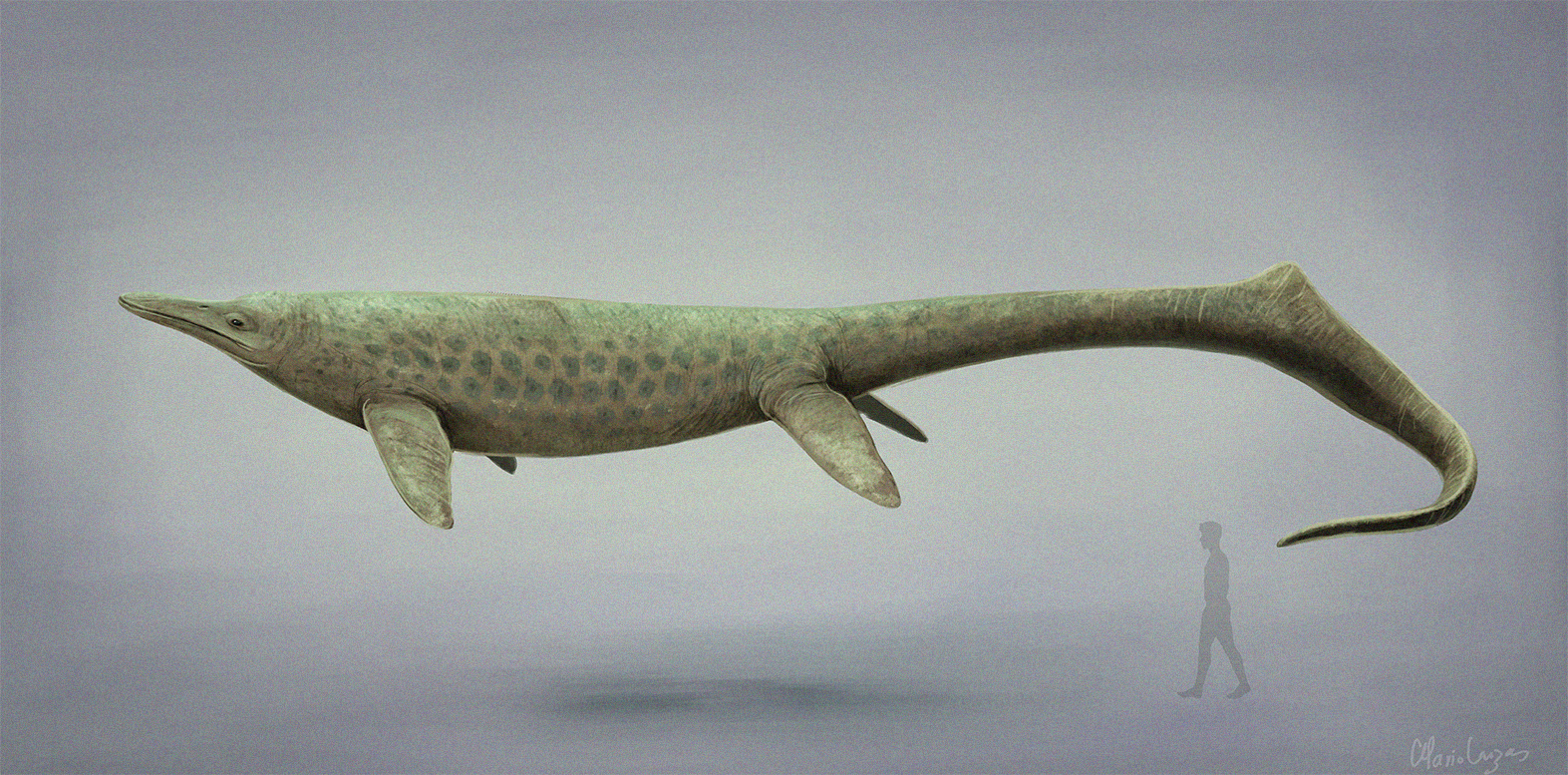
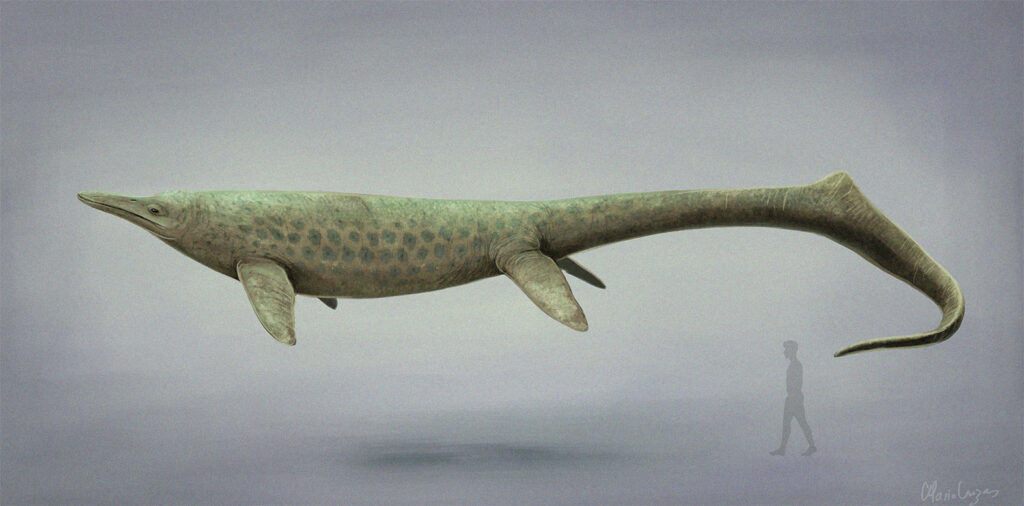
Among the early giants, one ichthyosaur stands out: Cymbospondylus youngorum, a massive predator from the Middle Triassic of what is now Nevada. Based on its skull and body proportions, this animal likely stretched to a length on the order of a humpback whale, making it one of the largest marine reptiles of its time. This was not some late‑game giant; it appeared relatively early after the end‑Permian mass extinction, at a time when marine food webs were still stabilizing.
What’s especially striking is that Cymbospondylus youngorum did not yet have the fully tuna‑like, super‑streamlined profile of later ichthyosaurs, yet it had already reached huge size. That suggests that pure bulk alone can be an advantage, even before every hydrodynamic detail is optimized. To me, it feels a bit like seeing a prototype sports car that is somehow already winning races before engineers have even finished polishing the design. Evolution, clearly, was in a hurry.
Convergent Evolution: Why They Look So Much Like Whales
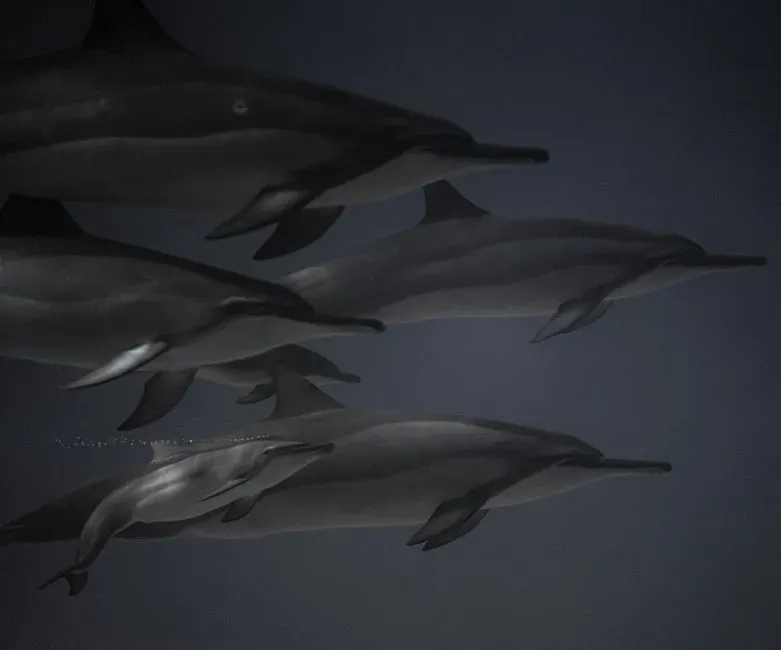
If you put a reconstruction of an ichthyosaur next to a dolphin or small whale, the resemblance is almost unsettling. You get the same general body plan: long, torpedo‑shaped torso, flippers instead of legs, a tail fin for propulsion, and a streamlined skull adapted for catching fast prey. Yet these animals are separated by millions of years and completely different ancestries – one came from reptiles, the other from mammals. That similarity is the result of convergent evolution, where unrelated lineages hit on the same solutions to the same problems.
The ocean is a tough environment if you want to move fast and hunt efficiently, and physics does not care what lineage you come from. Streamlined shapes reduce drag; flippers and tail fins turn limbs into paddles and propellers; big eyes help in dim or deep water. So whales, ichthyosaurs, and even fish like tuna ended up echoing each other in broad outline. For me, that convergence is one of the most humbling lessons in biology: form follows function so strongly that nature keeps reinventing similar “designs,” no matter which branch of the tree of life is doing the experimenting.
How a Reptile Got Big So Fast After Earth’s Worst Extinction
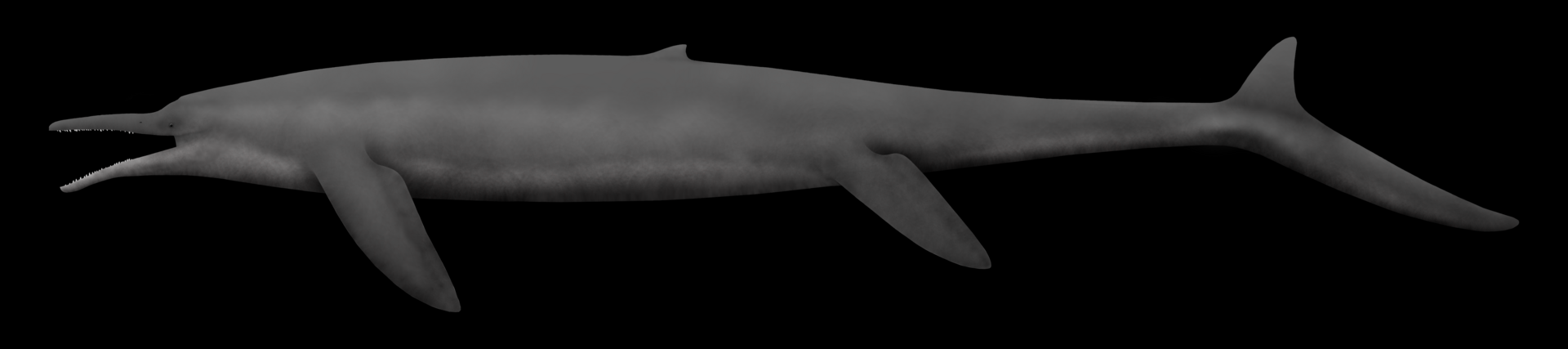
One of the most surprising twists in this story is timing. The gigantic ichthyosaurs evolved not long after the end‑Permian extinction, often called “the Great Dying,” when a huge portion of marine and terrestrial species vanished. You might expect evolution to tiptoe for a while after a catastrophe like that, but instead, at least in the oceans, some lineages rocketed into new roles, including the role of supersized apex predator. Cymbospondylus and its kin are like the first big players showing up to a rebuilt stage while the curtains are still being hung.
From an ecological point of view, this rapid scaling‑up suggests that once a food web starts to stabilize and prey becomes abundant, there is an opening for very large predators to evolve, even in a relatively short geological window. Large bodies come with trade‑offs – you need more food, you reproduce more slowly – but they also offer dominance, reach, and thermal stability in the water. To me, this pattern feels a bit like an economy after a recession: once resources and opportunities return, some “companies” go big as fast as they possibly can, trying to lock in the prime positions.
What Giant Marine Reptiles Reveal About Our Changing Oceans
It’s tempting to treat ichthyosaurs and their whale‑sized cousins as distant, disconnected curiosities, but they actually tell us something important about how oceans respond to big changes. Their rise after a mass extinction shows that marine ecosystems can, under the right conditions, rebound into high‑productivity, large‑body worlds far faster than we might instinctively guess. The catch, of course, is that “fast” in geology still means millions of years, not the human‑scale decades we worry about today.
There’s a sobering flip side to the awe. The same fossil record that reveals these triumphant giants also records their eventual decline and disappearance, along with other marine reptiles that took their place. No matter how dominant or massive a group becomes, it still depends on the health and stability of the wider ecosystem around it. When I look at modern whales facing climate change, noise pollution, and dwindling prey, I can’t help seeing them as the latest chapter in a very old story: ocean giants are spectacular, but they are never guaranteed. The question is whether we want to be the reason this chapter ends sooner than it has to.
Conclusion: Rewriting What We Think Is Possible
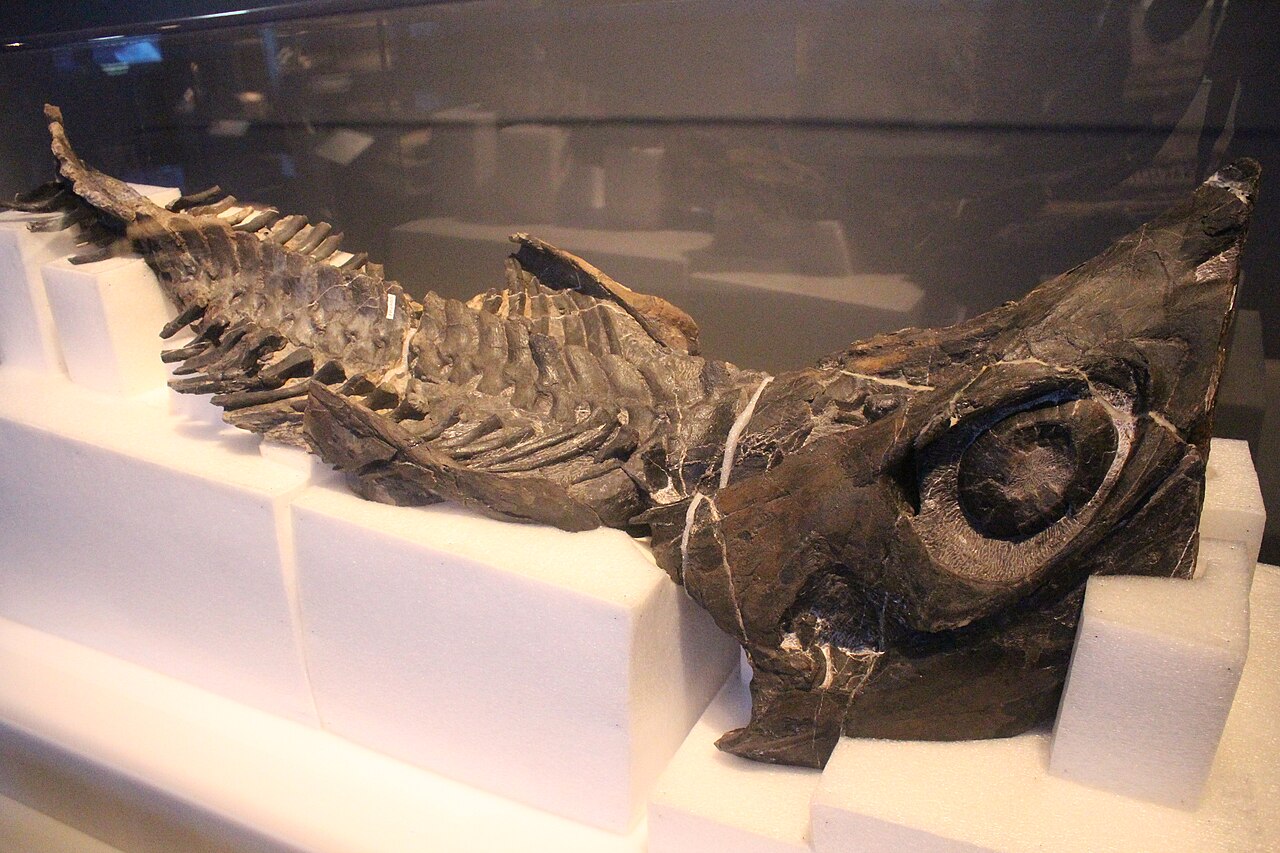
The idea that a marine reptile grew to the size of a humpback whale forces a quiet but radical reset in how we picture life on Earth. We tend to imagine a neat ladder where each era “improves” on the last, as if whales were the final, unique expression of ocean gigantism. Fossils of ichthyosaurs like Cymbospondylus youngorum tear that story apart and replace it with something more interesting: the oceans have experimented with whale‑scale bodies more than once, and reptiles got there long before mammals ever tried.
Personally, I think that recognition should make us a little less arrogant and a lot more curious. We are living at the tail end of a long, messy sequence of evolutionary experiments, not at the pinnacle of anything. Giant marine reptiles are a reminder that nature is more imaginative, and more willing to gamble on extremes, than we usually give it credit for. The real question is not whether the past held creatures as spectacular as whales, but how many other possibilities we still have not uncovered – and how we’ll feel when the next fossil forces us to rewrite the story yet again. Did you expect a reptile to rival a humpback when you first heard the word “ichthyosaur”?