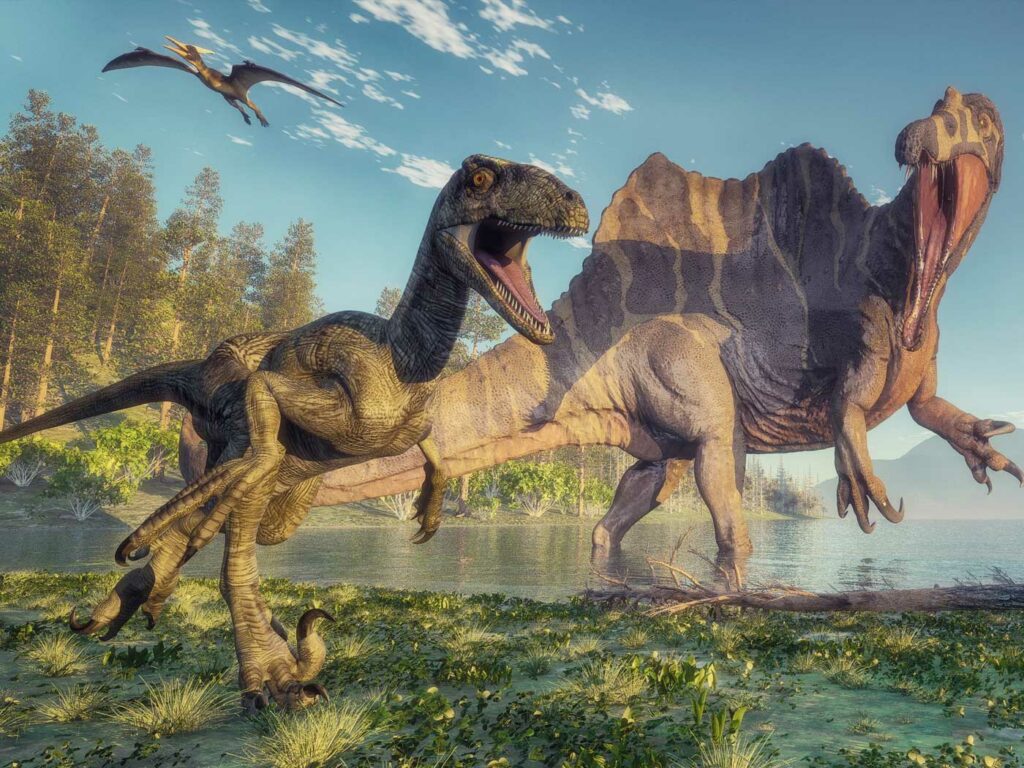
About 66 million years ago, the Cretaceous Period drew to a dramatic close as non-avian dinosaurs disappeared alongside roughly 75 percent of Earth’s species. This Cretaceous-Paleogene event reshaped life on the planet, paving the way for mammals to rise. While a massive asteroid impact stands as the frontrunner explanation, fossil records from North America hint at possible vulnerabilities in dinosaur populations during the final stages of the Cretaceous.
Asteroid Impact: The Smoking Gun of Sudden Catastrophe
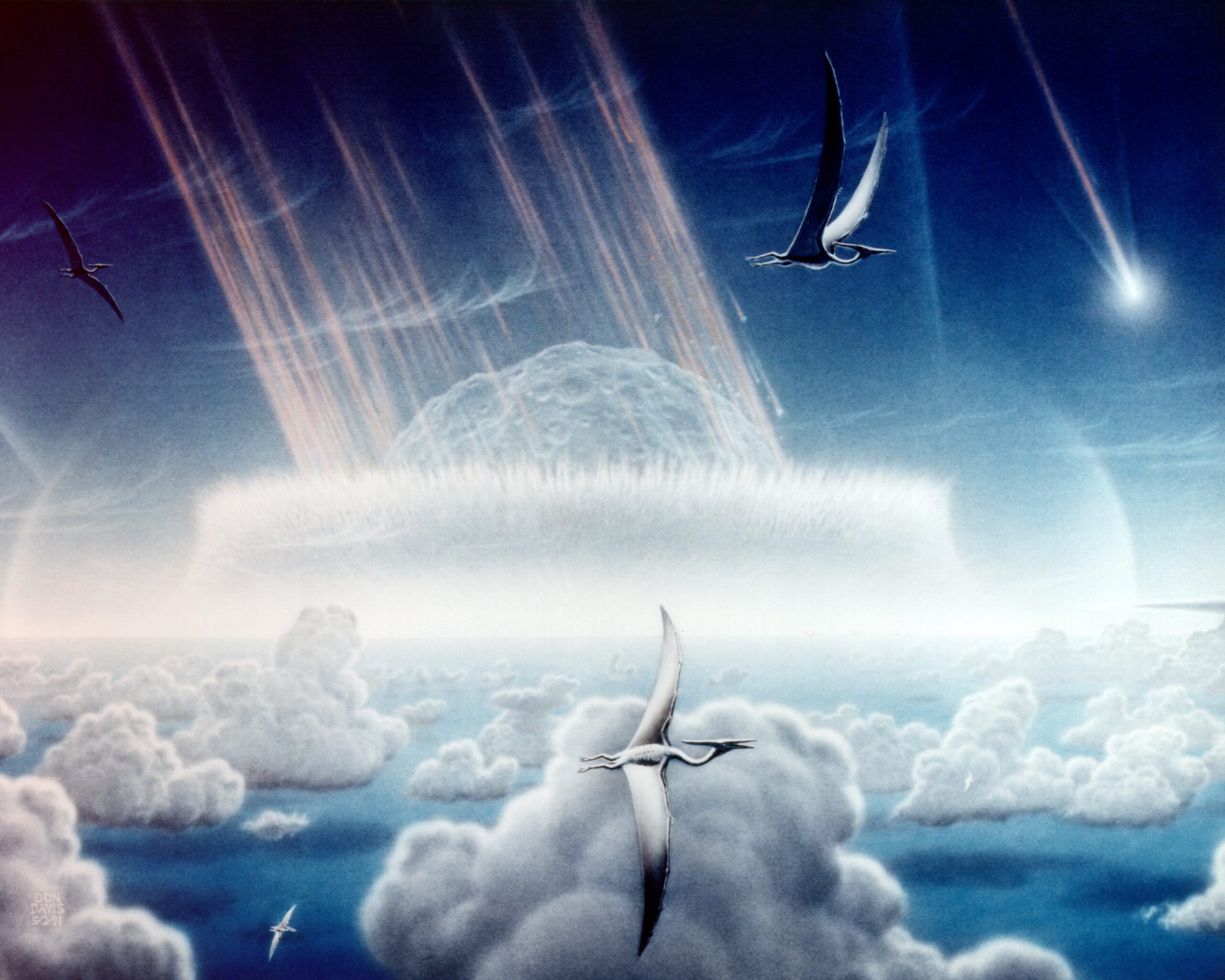
Asteroid Impact: The Smoking Gun of Sudden Catastrophe (Image Credits: Upload.wikimedia.org)
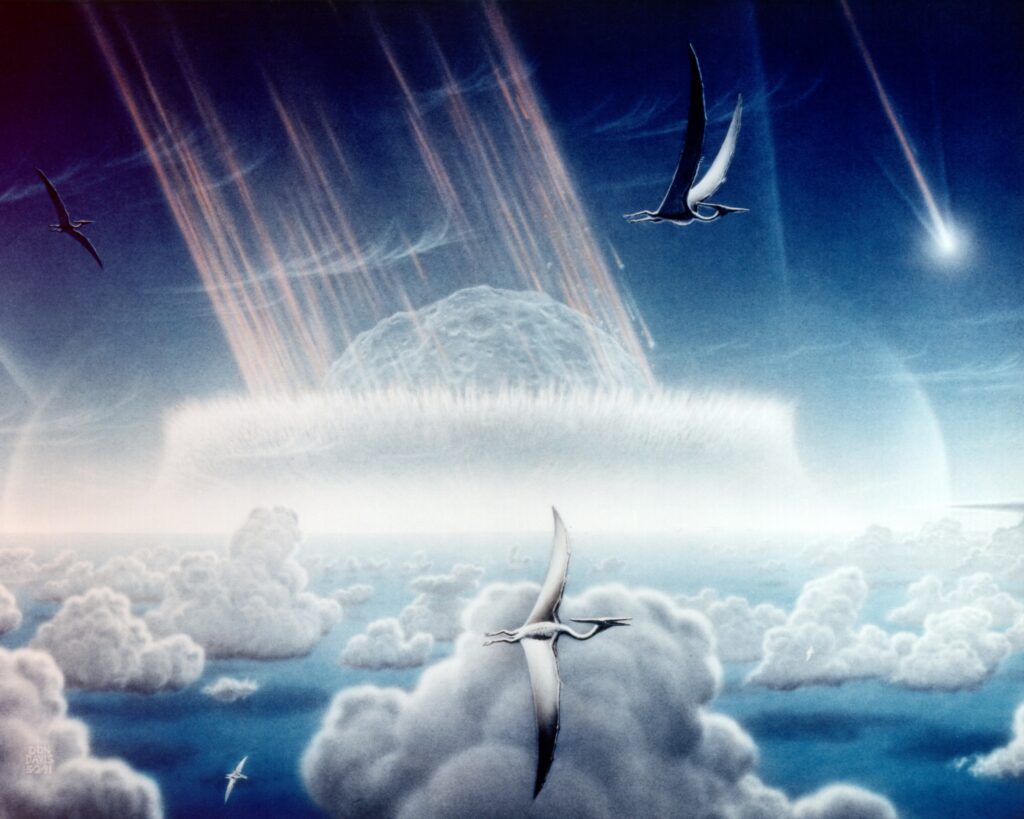
Researchers pinpoint a 10-to-15-kilometer-wide asteroid strike in Mexico’s Yucatan Peninsula as the decisive blow. The resulting Chicxulub crater spans 180 kilometers and unleashed energy equivalent to billions of nuclear bombs. Dust, soot, and sulfate aerosols plunged the planet into a prolonged winter, blocking sunlight and halting photosynthesis for months or years.
Global evidence supports this scenario. A distinctive iridium-rich clay layer marks the boundary everywhere from ocean cores to terrestrial sites. Shocked quartz grains and tektites – molten ejecta – appear precisely at this horizon. Tsunami deposits and fossilized impact debris, such as at North Dakota’s Tanis site, capture the chaos of that fateful day. Ocean acidification and acid rain followed, decimating plankton and cascading through food webs.
Volcanic Fury: Deccan Traps as a Slow-Burning Threat
Massive eruptions from India’s Deccan Traps flooded landscapes with lava over hundreds of thousands of years leading to the boundary. These outpourings released vast sulfur and carbon dioxide, sparking warming spells, acid rain, and habitat disruption. Mercury spikes in sediments signal the volcanic toll on ecosystems.
Though not the sole killer, volcanism likely stressed dinosaurs beforehand. Temperature swings of several degrees occurred near the end-Cretaceous, alongside sea-level drops that shrank shallow seas and altered coastlines. Such changes favored adaptable survivors like small mammals and birds while challenging larger reptiles. Recent models suggest Deccan activity amplified the asteroid’s effects rather than driving extinction alone.
The Decline Dilemma: Fossil Clues from Late Cretaceous Rocks
North American fossils reveal dinosaurs waning in diversity during the Maastrichtian stage of the late Cretaceous. Records show shifts: sauropods returned from southern realms, duckbilled ornithopods dominated browsing niches, and ceratopsians spread northward. Yet overall numbers dropped, prompting questions about pre-impact fragility.
Debate rages, however. A 2021 analysis of over 1,600 occurrences across six families found diversification turning negative around 76 million years ago, tied to global cooling and herbivore competition from rising hadrosaurs. Contrasting 2025 research from New Mexico’s San Juan Basin dates the youngest dinosaurs to within 350,000 years of the impact, amid thriving diversity including massive Alamosaurus sauropods. Critics attribute apparent declines to patchy fossil preservation and sampling biases like the Signor-Lipps effect.
| Theory | Main Evidence | Timing |
|---|---|---|
| Asteroid Impact | Iridium layer, Chicxulub crater, shocked quartz | Precise K-Pg boundary |
| Deccan Volcanism | Mercury anomalies, CO2 warming pulses | Preceding ~1 million years |
| Climate/Sea Level Shifts | Fossil turnovers, regression layers | Late Maastrichtian |
Survivors and Lessons from the Fossil Record
Not all perished equally. Birds, the avian dinosaurs, endured alongside turtles, crocodilians, and small mammals. These groups boasted flexible diets, modest sizes, or burrowing habits that buffered them against darkness and cold. Marine realms suffered heavily, with ammonites and many plankton vanishing.
Fossil sites like Hell Creek Formation preserve final dinosaur bonebeds right up to the boundary, mixed with impact fallout. Global patterns vary: high latitudes fared better than tropics. Recovery unfolded swiftly in microbes but stretched millions of years for complex life, underscoring ecosystem fragility.
Key Takeaways:
- An asteroid impact delivered the knockout punch, backed by worldwide markers.
- Volcanism and climate shifts set the stage but fell short alone.
- Dinosaur decline remains contested, hinging on fossil biases and regional data.
The dinosaur extinction reminds us how intertwined environmental pressures can culminate in collapse. Whether weakened by prior woes or caught off guard, these giants met their end abruptly. What aspect of this ancient mystery intrigues you most? Tell us in the comments.