
You know that split second when you hear something slam, crack, or boom above you and your head just snaps upward before you even think about it? That tiny reflex feels almost trivial, but it is one of the most powerful, deeply wired survival tricks your brain has. Long before humans built cities full of sirens, speakers, and upstairs neighbors, our ancestors lived in a world where a sudden sound from above might mean a falling branch, a predator dropping from a tree, or a rockslide starting to move.
What makes it wild is that this reflex is not random at all. It comes from a surprisingly sophisticated 3D acoustic mapping system inside your head that constantly calculates where sounds are coming from in space. You are basically walking around with a built‑in sonar, and you never even notice it until something startles you. Once you understand how that system works, the simple act of looking up suddenly feels less like a habit and more like a glimpse into millions of years of evolution quietly doing its job.
The brain’s hidden 3D radar: how we build a sound map in real time
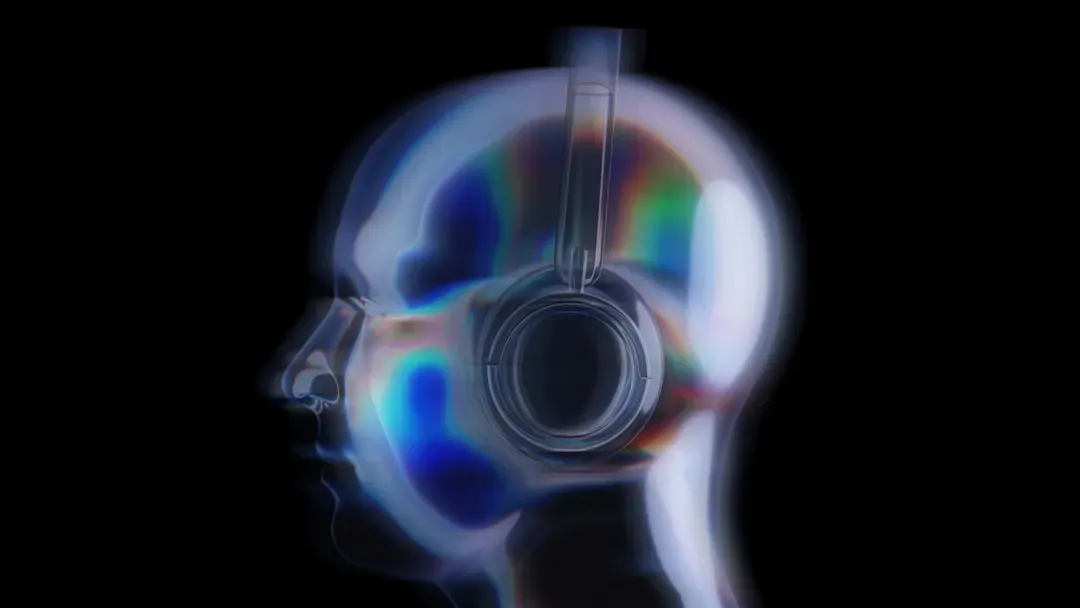
When a loud noise hits your ears, you do not just hear it; your brain immediately starts solving a geometry problem. Sound reaches each ear at slightly different times and volumes, and those tiny differences get fed into neural circuits that estimate where in three‑dimensional space the sound originated. You are not conscious of it, but your brain is continuously layering direction, distance, and elevation into a kind of invisible sound map that surrounds you.
What makes this even more impressive is how fast it all happens. In a fraction of a second, parts of your brainstem and midbrain start integrating those timing and intensity cues, while other regions compare them to your past experiences with similar sounds. The result is a rapid “best guess” about whether the noise is to your left, right, above, or behind – fast enough that your eyes and neck muscles can respond almost instantly. That automatic upward glance is not a random flinch; it is the motor output of a sophisticated 3D computation running on evolutionary autopilot.
Why “above you” feels especially urgent to the nervous system

Not all directions are emotionally equal to your brain, and “above” carries a special kind of urgency. In natural environments, threats that come from overhead – falling branches, rockfalls, predators in trees, even sudden storms – are often harder to see coming and can be more immediately dangerous. If something heavy is already in motion above you, you may have only a heartbeat of time to dodge or shield yourself, so evolution has wired us to treat high‑angle sounds as priority alerts.
On top of that, our visual field is naturally biased forward and slightly down, where we walk and manipulate objects with our hands. That means sounds from above are more likely to be unexpected, because we are not constantly visually scanning the sky or the ceiling. The nervous system compensates for that blind spot by reacting quickly and strongly to overhead noises, basically saying, “You are not watching this area, so I am going to make sure you pay attention when something happens up there.” Your neck muscles respond before your conscious mind even finishes the sentence.
How your ears turn timing differences into a 3D “you are here” marker

The magic trick at the core of 3D acoustic mapping is surprisingly simple: your brain listens for tiny timing and loudness differences between your two ears. If a sound hits your right ear a fraction of a millisecond before your left, the brain registers that it came from the right. If it is slightly louder in one ear than the other, that also feeds into the calculation. Together, these cues let you orient sounds around the horizontal plane – left versus right – with remarkable accuracy.
But elevation – above versus below – is a harder math problem. For that, your brain leans on the complex shape of your outer ears, which filter sound differently depending on the vertical angle it comes from. The folds of your ear subtly alter specific frequencies, and your nervous system learns those patterns over a lifetime. So when you hear a loud bang from above, your brain is not just hearing “loud” and “startling”; it is decoding a pattern of frequency distortions and timing cues that together spell out “up there,” then firing the reflex to look toward it.
The midbrain’s “startle hub”: where reflex and awareness collide

Deep in your midbrain sits a region that acts like a traffic controller for sudden sensory events. It receives fast, raw data from your ears and integrates it with signals from your eyes, neck, and body. When a loud sound breaks through the background, this area rapidly evaluates its direction and salience, then triggers coordinated movements: your head turns, your eyes jump, your muscles tense. It is not asking for your conscious opinion; it is acting first and letting your awareness catch up afterward.
What is fascinating is that this same circuitry helps merge sound and vision into a coherent 3D picture. When a noise comes from above, the system does not just swivel your ears toward it; it aims your eyes in the same direction so you can confirm what is happening. This tight link between auditory and visual orienting is why that upward glance feels so automatic. Your brain is essentially saying, “I have a high‑priority auditory signal from overhead – visual system, go verify.” If it turns out to be a dropping book instead of a falling rock, the reflex still did its job: it bought you information fast.
From predators in trees to upstairs neighbors: old wiring in a new world

In the modern world, a loud noise from above is more likely to be someone dragging furniture in the apartment above you than a leopard dropping from a branch. But your nervous system did not evolve in an apartment building; it evolved in forests, savannas, and mountains, where overhead danger could be sudden and deadly. That ancient context shaped the priorities of your sensory systems long before concrete ceilings and office floors existed.
This is why your reaction can feel strangely exaggerated in everyday life. A slammed door on the floor above or a heavy item falling in the next room can send your heart racing for a moment, even after you recognize that it is harmless. You are carrying around a brain that treats ambiguous, high‑angle, high‑volume sounds as serious business by default. In a sense, your upstairs neighbors are borrowing the same acoustic channel predators once used: the “pay attention now or else” lane in your sensory highway.
Individual differences: why some people whip their head up faster than others

Not everyone reacts to overhead sounds in exactly the same way, and that variation is part of the story too. Some people have highly tuned hearing and strong startle reflexes; they will snap their gaze upward at even a modest thump from the ceiling. Others seem calmer, either because of naturally lower reactivity, learned desensitization, or constant exposure to noisy environments that trains their brain to filter out anything that is not clearly threatening.
Life experiences layer on top of the basic evolutionary wiring. Someone who has lived in quiet rural settings might react strongly to sudden building noises in a city, while a long‑time apartment dweller may barely flinch at the same sound. Stress, anxiety, and fatigue also modulate the system: when you are on edge or exhausted, your brain is more likely to treat ambiguous noise as danger and crank up your reflexive responses. The underlying 3D acoustic mapping is the same; what changes is how high the brain sets the sensitivity dial.
When 3D acoustic mapping misfires: illusions, echoes, and modern confusion
Because your brain is always making fast guesses based on imperfect sound information, it sometimes gets the direction wrong. Echoes in large rooms, weird acoustics in stairwells, or reflections off hard surfaces can trick your 3D mapping system into placing a sound too high, too low, or even behind you when it is actually in front. You might jerk your head upward toward a noise that was really at eye level, simply because the echoes nudged your brain toward the wrong solution.
Modern technology adds more confusion to the mix. Surround‑sound systems, ceiling speakers, and even phone alerts bouncing around inside cars can generate sound patterns that your brain did not evolve to interpret. Your acoustic mapping system does its best, but when sounds are artificially engineered to come from all directions, your reflexes can feel a bit “twitchy.” That does not mean the system is broken; it means you are running ancient, danger‑optimized software on a very modern, highly artificial soundscape.
Why this ancient reflex still matters – and what it says about being human

It is tempting to shrug off the habit of looking up at loud noises as a minor quirk, but I think it is one of those quiet reminders that we are still very much animals shaped by our past. Underneath our apps, deadlines, and playlists, there is an old brain that never stopped watching for falling branches and unseen predators. The fact that a single crack or thud from above can cut through your thoughts and pull your gaze upward says a lot about what your nervous system still considers non‑negotiable.
In my view, this is not something to “fix” or override; it is something to respect. That reflex is a living fossil of survival strategies that worked well enough to get your ancestors through a dangerous world. Even if your biggest overhead threat today is the neighbor dropping a dumbbell, your brain is still doing exactly what it was built to do: map sound in three dimensions, flag anything suspicious above you, and force you to check it out. The next time your head snaps up at a sudden noise, it might be worth pausing for a second to appreciate just how much quiet, invisible computation – and how many generations of evolution – went into that one simple move. Did you ever think something as small as a startled glance could carry that much history?