
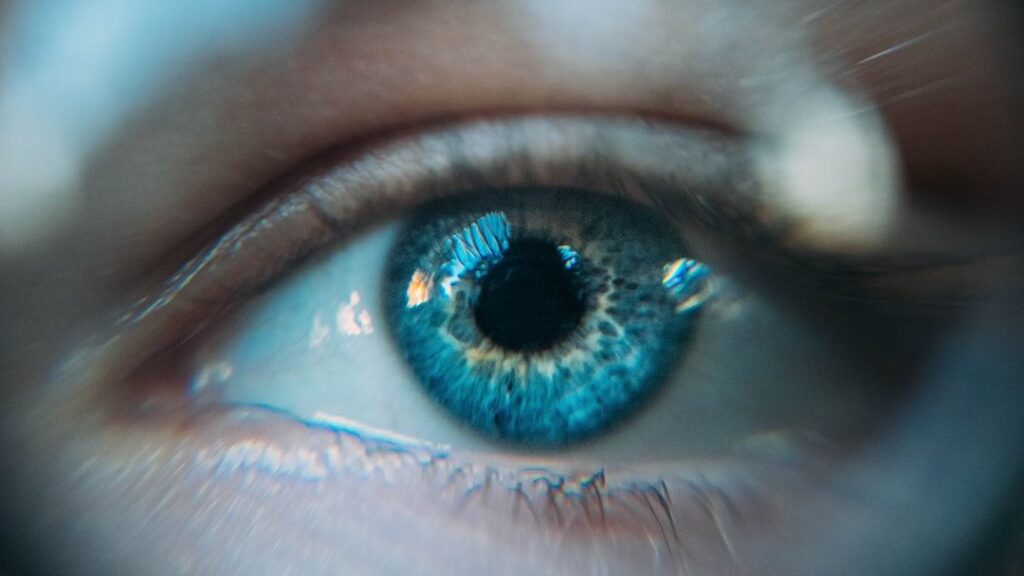
Look someone straight in the eyes for a second and notice what your brain does almost automatically: you track where they are looking, how fast their eyes move, whether they hesitate, whether they avoid you. It feels so normal that it barely registers as a feature. Yet this everyday experience hinges on a bizarre anatomical quirk: the glaringly white sclera of the human eye. You do not see that same stark contrast in other primates, where the eyes tend to be darker and far less readable. Once you notice this difference, it becomes almost eerie, as if humans are walking around with literal high‑contrast billboards exposing their attention to everyone around them.
The bold claim in the headline is that this was not a biological accident, and many evolutionary scientists argue that is exactly right. There is growing evidence that our unusually visible eyeballs play a central role in how we communicate, cooperate, and even deceive each other. At the same time, the story is more nuanced than a simple one‑line explanation. Not every primate has perfectly dark eyes, not every human eye is equally white, and the evolutionary path from murky sclera to spotlight‑bright whites is still being pieced together. Let’s dig into what we actually know, what is still debated, and why your visible gaze might be one of the most radically human traits you carry around on your face.
The Human Eye Is Weirdly Loud Compared To Other Primates
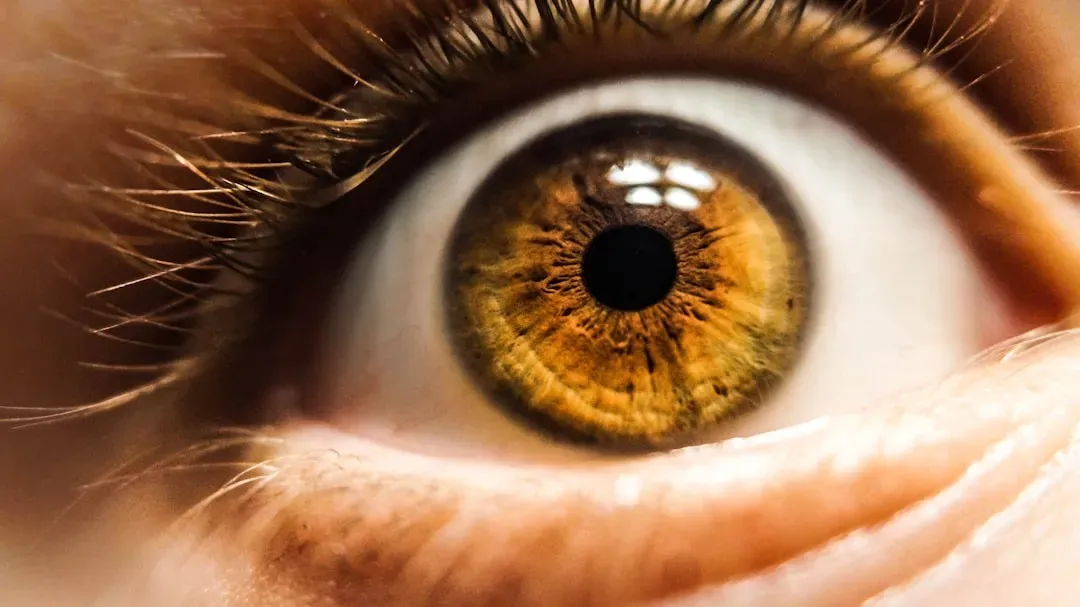
If you put a close‑up photo of a human eye next to the eye of a chimpanzee or gorilla, the difference is striking: our sclera, the outer layer surrounding the iris, is bright and pale, while theirs tends to be dark or mottled, blending in more with the iris and surrounding skin. That contrast in humans creates a sort of built‑in highlighter for gaze direction. Even from several meters away, you can usually tell where someone is looking just by following the angle of that dark iris floating on a white background. In other primates, the cues are subtler, buried in the overall shape of the eye or the movement of the head.
Scientists sometimes describe the human eye as having a “cooperative” design because it exposes so much information that can be read at a glance. The lids open wide, the sclera is large and visible, and the shape of the eye socket makes the eyeball more exposed from the front. Our eyes are practically shouting: look here, here is my attention. By contrast, many non‑human primates have eyes that are more hooded, more uniformly pigmented, or more camouflaged against the face. This is not an absolute rule, but the overall pattern is strong enough that it jumps out in comparative anatomy. Once you see it, humans start to look like the noisy extroverts at a party full of low‑key, reserved cousins.
The Gaze Signaling Hypothesis: Eyes Built For Being Read

The core idea behind the gaze signaling hypothesis is surprisingly simple: human eyes evolved to be easily read by other humans because that helped our ancestors navigate complex social life. In a cooperative hunt, for example, knowing exactly where your partner is looking could mean the difference between a coordinated ambush and total chaos. In childcare, a quick glance from a caregiver toward a danger or a food source can silently instruct a child. Over thousands of generations, individuals who were better at both sending and reading these tiny visual signals may have had a real survival advantage.
Experimental work with infants and adults supports the idea that we are almost unnaturally tuned into gaze. Babies just a few months old will follow an adult’s eyes to an object, even when nothing is said. Adults can detect gaze direction with surprising accuracy, even when only brief fragments of the eyes are visible. The white sclera acts like a contrast booster, turning tiny eye movements into clear, trackable signals. The hypothesis does not claim that this was a conscious design choice by evolution, of course. Instead, as social interactions became more complex, any small mutation that made gaze easier to interpret could be favored, gradually pushing humans toward the high‑contrast eye design we see today.
Every Other Primate Has Darker, Less Readable Eyes – But It’s Not All Or Nothing

It is true in broad strokes that humans stand out from other primates because of our bright, conspicuous sclera, while many of our relatives have darker, less obvious whites. However, reality is messier than a clean before‑and‑after picture. Some primate species show partial depigmentation, patches of lighter sclera, or subtle contrasts that can still hint at gaze direction. The overarching pattern is that humans are extreme outliers, not that every other primate is a perfect opposite. Evolution rarely paints in pure black and white; it loves gradients, exceptions, and intermediate forms.
This nuance matters because it helps keep the story honest. If we pretend that all non‑human primates have pitch‑black, completely unreadable sclera, we oversimplify what natural variation looks like. In some monkeys and apes, the combination of eye shape, eyelid position, and facial coloring can make gaze somewhat detectable, even without pure white sclera. Still, when you line up a series of primate faces, humans consistently show the clearest, most exaggerated version of an eye built for visibility. Think of it like being the loudest instrument in a band: others might still make sound, but your part is cranked way up.
Gaze Following: The Social Superpower Behind White Sclera

One of the most persuasive lines of evidence that our visible sclera matters is how obsessively we follow each other’s gaze. From childhood, we treat other people’s eyes like a pointer device, the original cursor showing us what to pay attention to. In psychological experiments, humans are incredibly quick to redirect their own attention to whatever someone else is staring at, even when they are not aware they are doing it. This behavior is so automatic that it can feel like a reflex, more like flinching from a loud noise than a conscious decision.
What makes gaze following special is how deeply it is wired into our social cognition. When you follow someone’s eyes, you are not just tracking a line in space; you are trying to infer what they know, what they want, what they intend to do next. That ability to read minds through eyes sits at the heart of cooperation, teaching, and even subtle forms of manipulation. Humans outperform most other primates on tasks that require reading intentions from gaze alone, and our bright sclera gives the visual system a powerful cue to work with. In a sense, we evolved high‑definition attention indicators, and then built an entire social world that depends on them.
Intentional Or Accidental? What The Evidence Actually Supports

When people say the difference in sclera color was not accidental, what they really mean is that there are signs of directional selection: evolutionary pressures that repeatedly favored certain traits over others. In the case of human eyes, several lines of research suggest that our pale sclera did not just drift into existence by chance. Comparative studies show that human sclera are not only lighter but also more uniformly depigmented than in our closest relatives, which is exactly what you would expect if there was a long‑term push toward making them more readable. It is not a random smattering of variation; it looks like a consistent trend.
At the same time, being honest about the limits of the data matters. Evolutionary science works mostly with clues and correlations, not time‑travel footage. While gaze signaling is a strong and increasingly supported explanation, it is not the only possible factor. Some researchers have proposed that genetic drift, sexual selection, or changes in overall facial morphology may have interacted with sclera color in complex ways. The safest conclusion from the current evidence is that our visible whites likely did confer advantages related to communication and cooperation, and those advantages were significant enough that natural selection kept nudging the trait in the same direction, rather than leaving it up to pure accident.
White Sclera, Trust, And The Strange Game Of Human Deception
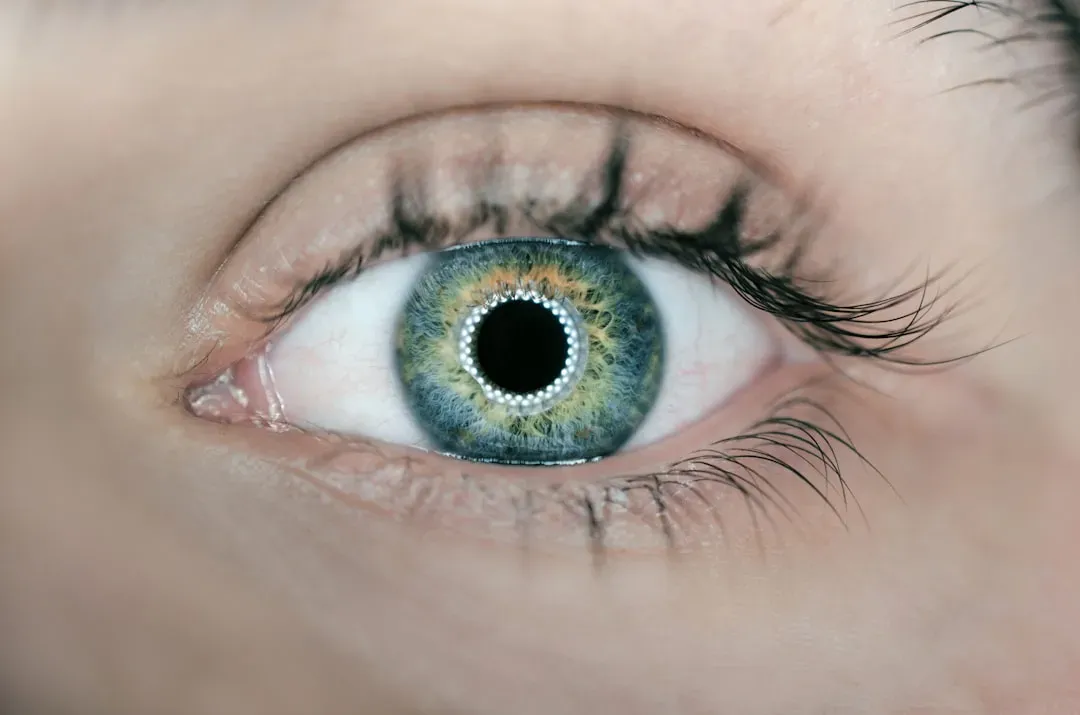
At first glance, making your gaze so easy to read seems like a terrible idea in a world full of competition and potential enemies. If others can always see where you are looking, they can predict your moves, catch your lies, and expose your secrets. Yet that very vulnerability may be part of the point. In highly cooperative societies, being able to signal honesty and reliability can be worth more than the occasional strategic advantage of hiding your attention. A face where the eyes are open, bright, and readable can function like a built‑in badge of transparency, at least on average.
Of course, humans are nothing if not creative, and we quickly learned to work around our own honesty features. We glance sideways, we hold eye contact a bit too long, we wear sunglasses, we look at someone’s forehead instead of their eyes to fake engagement. The white sclera did not eliminate deception; it just raised the stakes and changed the rules of the game. Personally, I find it fascinating that our bodies are simultaneously wired for intense mutual monitoring and for sneaky workarounds. It is as if evolution gave us open‑source eyes and then dared our clever brains to find exploits.
Culture, Makeup, And How We Hack The Eye Signal Further

Humans have not been content to leave eye signaling entirely to biology. Across cultures, people have invented ways to enhance, exaggerate, or soften the cues coming from the eyes. Eyeliner, mascara, and eyeshadow can sharpen the contrast between sclera and surrounding tissue, making the eyes pop more dramatically. Contact lenses and cosmetic procedures can change the apparent size, color, or brightness of the eyes, sometimes making gaze seem more intense, sometimes more soft and approachable. Even something as simple as plucking or shaping eyebrows can subtly modify how others interpret our expressions and gaze.
These cultural hacks underscore how central eyes are to our sense of identity and attractiveness. When you see how much effort people put into drawing attention to their eyes, you get a sense of how deeply gaze is tied to perceived connection, intimacy, and status. In many modern social settings, direct eye contact is treated as a signal of confidence, authenticity, or even dominance, while avoiding eye contact can be read as shyness, guilt, or respect, depending on the context. We are constantly tuning and interpreting eye signals, layering cultural meanings on top of a biological system that was already highly optimized for visibility.
What Our Eye Whites Reveal About What It Means To Be Human
When you step back, the story of the human sclera is less about a minor anatomical tweak and more about who we are as a species. We are intensely social, obsessed with what others think, feel, and plan to do. Our brains are giant prediction engines running on tiny social cues, and the eyes are one of the richest input streams we have. The evolution of bright, readable sclera fits neatly into that picture: it is a small physical change with enormous ripple effects on trust, teaching, coordination, and even moral judgment. Our eyes made our inner world a little more public, and our societies expanded to match.
My own view is that the evidence strongly supports the idea that human eye whites did not just happen by accident, even if the exact evolutionary pathway will always have some uncertainty. When you look someone in the eye and instantly know where their attention lies, you are using a system that has been tuned by countless generations of social pressure. That realization makes ordinary eye contact feel strangely profound. The next time you catch someone’s gaze across a room and instantly read their intent, you are watching millions of years of evolutionary negotiation play out in a fraction of a second. Did you ever imagine that something as simple as the white of your eye could carry that much history?