Every time we think we finally have life on Earth neatly categorized, the deep sea casually reminds us we’ve barely scratched the surface. In the last few years, remote cameras and deep-diving submersibles have started bringing back footage of creatures so strange that some biologists are quietly wondering if a few “extinct” evolutionary branches never really vanished at all. They just slipped into the planet’s darkest, least explored corners and kept evolving in secret.
That sounds dramatic, but it’s not science fiction. The deep ocean covers most of our planet, yet we’ve explored only a tiny fraction of it. When you consider that, it suddenly seems less crazy that lineages we assumed were gone might actually be hiding kilometers beneath the waves. The question is no longer just what lives down there, but whether our entire picture of life’s history is missing crucial chapters.
The Deep Sea Is Still Almost Completely Unknown
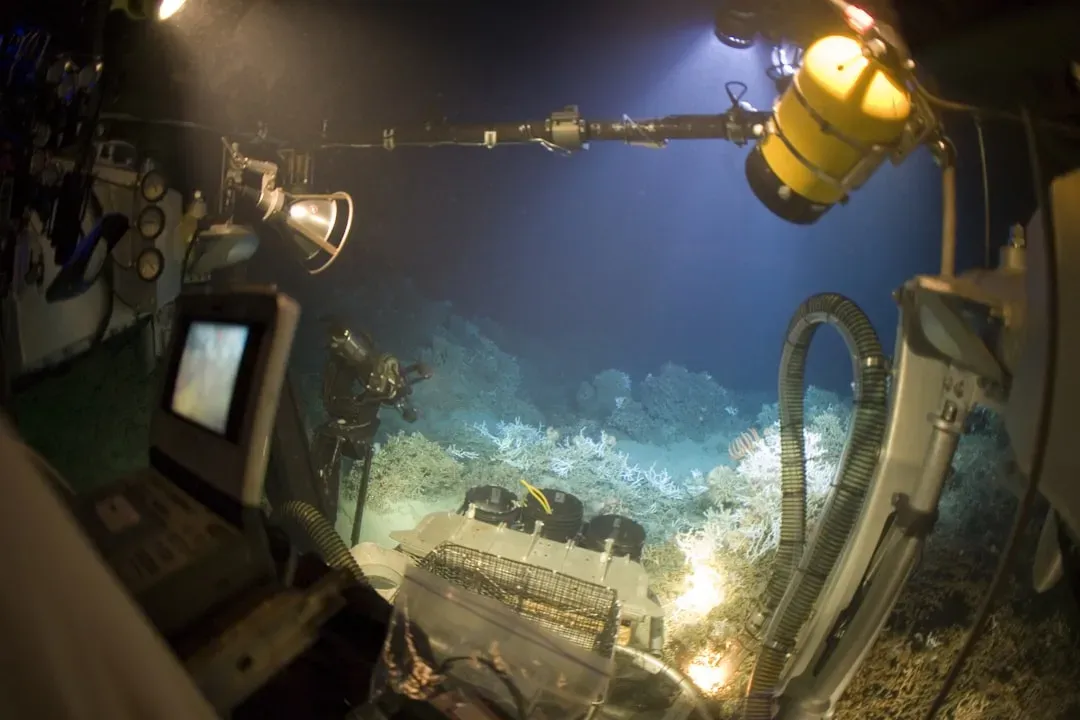
It’s easy to forget that when we talk about the “deep sea,” we’re talking about most of Earth. The majority of the planet’s habitable space lies in cold, pressurized darkness, far beyond the reach of sunlight and far outside the comfort zone of human exploration. For decades, our view of these depths came from occasional net hauls and the rare manned dive, which is a bit like trying to understand an entire rainforest by dragging a single net through it once in a while.
Modern robotic submersibles and high-definition cameras have improved that picture, but only in tiny patches. We have mapped the surface of Mars more thoroughly than large stretches of our own seafloor. That means our fossil record, museum collections, and biology textbooks are built mostly on shallow-water and terrestrial life. When biologists say a lineage disappeared tens of millions of years ago, that verdict has usually been based on what we could see and dig up on land and in coastal seas, not on a serious survey of the abyss.
Living Fossils And The Shock Of The Coelacanth
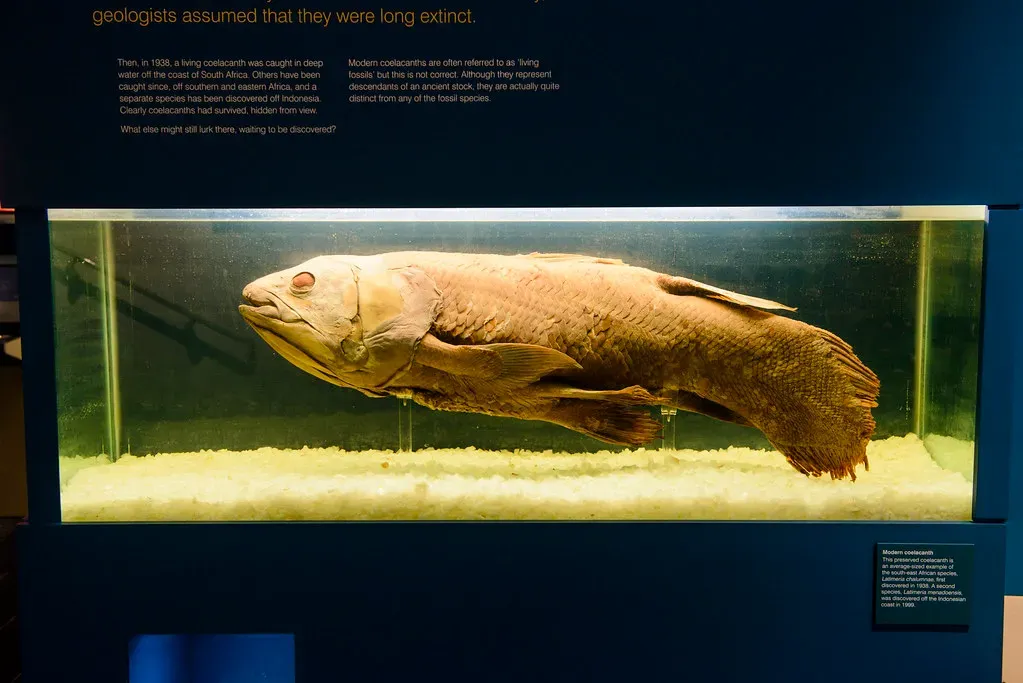
Whenever scientists talk about “extinct” lineages turning up alive, the story of the coelacanth is never far behind. This lobe-finned fish was thought to have vanished around the same time as the dinosaurs, known only from fossils more than sixty million years old. Then, in the mid‑twentieth century, a living coelacanth turned up in a fish market, casually blowing up a long‑standing assumption that its entire branch of the tree of life had ended ages ago.
The coelacanth isn’t actually a deep‑trench animal, but it’s a powerful reminder that our sense of extinction can be dead wrong when our sampling is poor. If such a spectacular “Lazarus taxon” could hide in relatively accessible waters for so long, it’s not a stretch to imagine even stranger lineages quietly persisting in the deep. When new deep‑sea animals appear that seem to echo ancient body plans, the coelacanth hangs in the background as a cautionary tale: sometimes the fossils stop not because the lineage ended, but because our evidence did.
Ghosts From The Cambrian: Body Plans That Look Weirdly Familiar
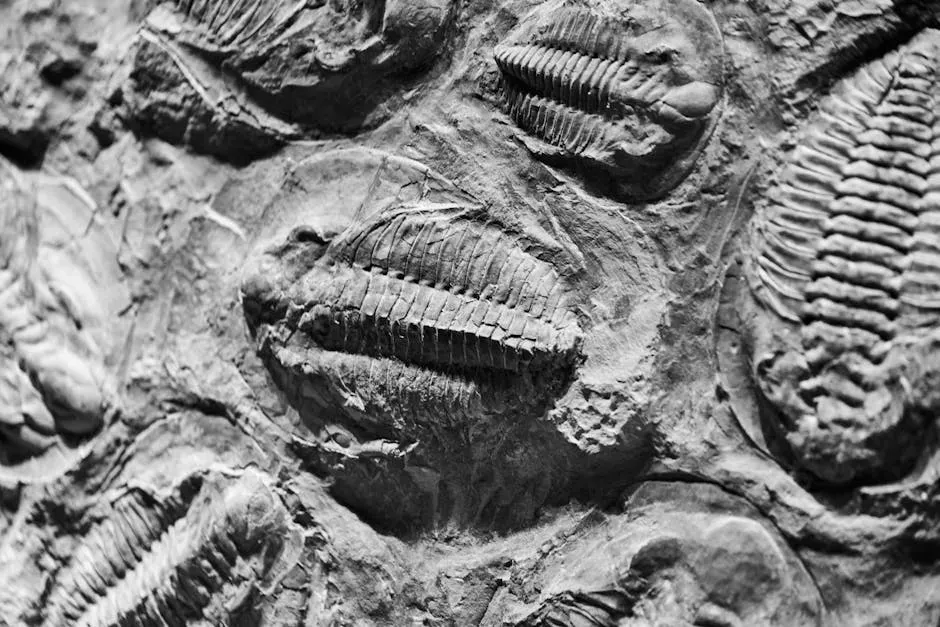
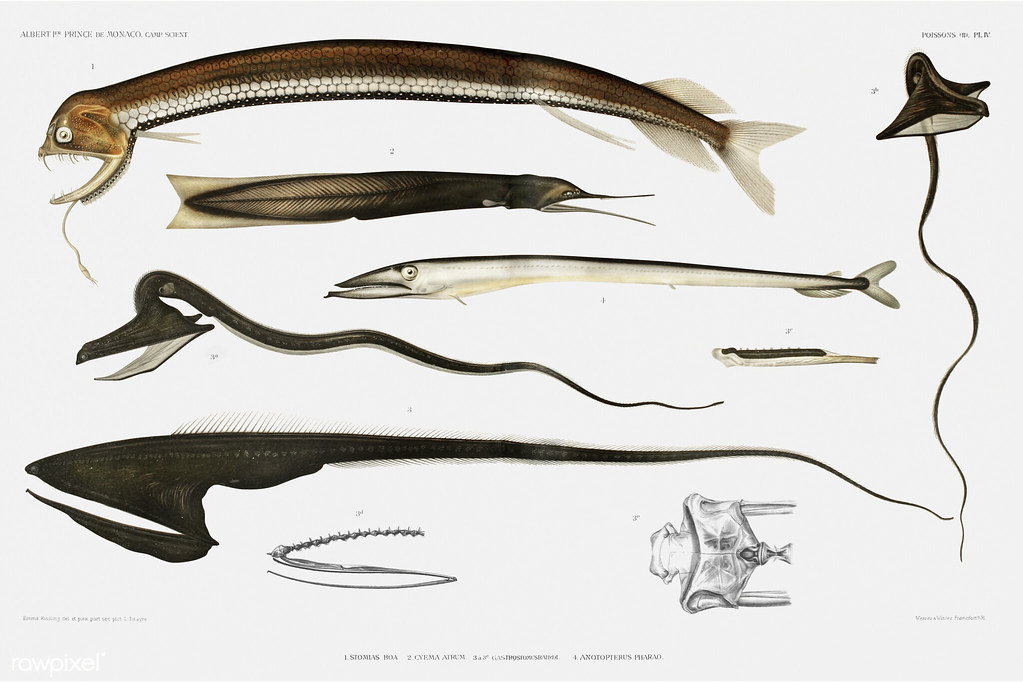
One of the most unsettling things for paleobiologists is when modern deep‑sea animals show striking similarities to very ancient fossils from the Cambrian period. That’s the era often described as life’s big “body plan explosion,” when the major groups of animals we know today first appear in the fossil record. Some deep‑sea worms, crustaceans, and gelatinous creatures have features that look eerily reminiscent of those early experiments in animal design, almost like the echoes of a long‑ago evolutionary frenzy that never fully died out.
This doesn’t mean we are literally finding unchanged Cambrian animals, but it does raise tough questions. Are these simply examples of convergent evolution, where similar environments produce similar shapes over and over? Or are they the descendants of ancient lineages that survived in low‑competition refuges, slowly changing but keeping their ancestral blueprints? When you see a modern deep‑sea organism that looks like it walked off a Cambrian fossil slab, it’s hard not to feel like the past is reaching into the present.
Hydrothermal Vents: Cradles Of Strange, Ancient‑Looking Lineages
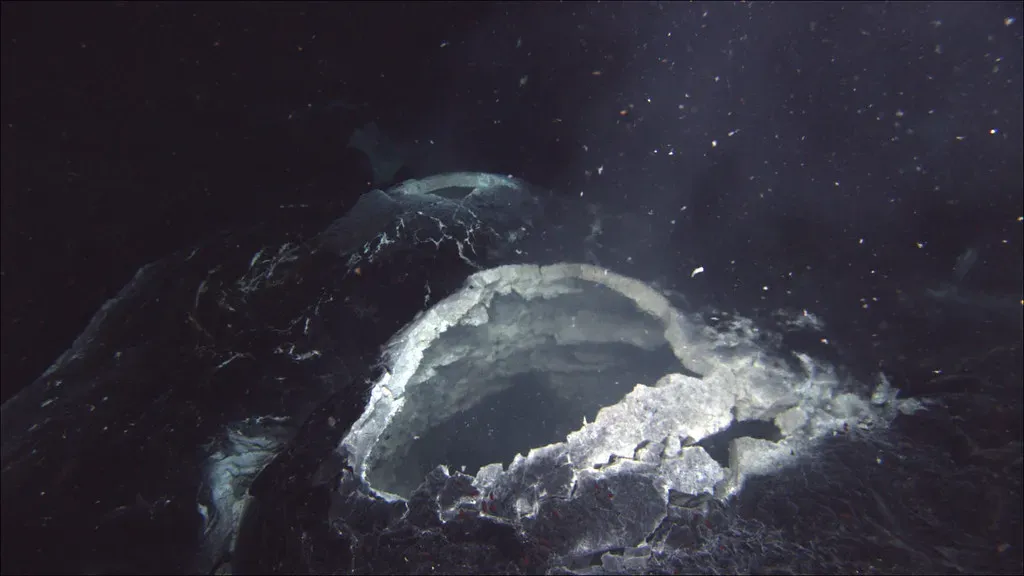
Hydrothermal vents are some of the most alien ecosystems on Earth, running on chemical energy instead of sunlight. Around these undersea chimneys, you find worms with no mouths or guts, shrimp with light‑sensing backs, and snails armored with iron‑rich scales. Many of these animals belong to lineages that are either completely new to science or only distantly related to anything we know from shallower waters, and their evolutionary roots can stretch back astonishingly far.
What makes vents so interesting for questions about “extinct” lineages is how stable they can be in evolutionary terms. These environments are extreme but also isolated, with unique chemistry and relatively few outsider species moving in. That isolation can preserve odd evolutionary experiments that might be wiped out in more crowded, competitive habitats. When researchers reconstruct the family trees of vent animals, they sometimes find deep splits that hint at branches surviving quietly for tens of millions of years, almost like libraries of ancient genetic information sitting next to superheated water.
When New Species Don’t Fit Neatly On The Tree Of Life
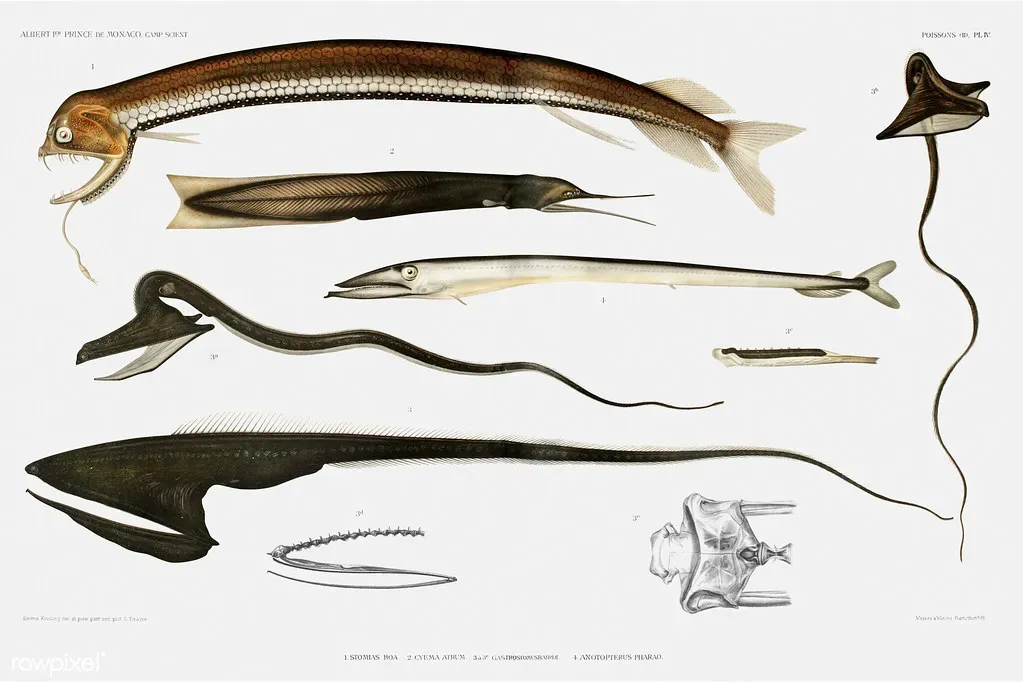
Taxonomists usually take pride in being able to place new species somewhere on the existing tree of life, even if it takes a bit of genetic detective work. But some recent deep‑sea finds have made that job uncomfortably hard. Every now and then, DNA data and anatomy point in opposite directions, or a creature turns up that fits badly with how we thought major groups were related. It’s like trying to file a document into a cabinet that suddenly seems to be missing entire drawers.
In some cases, these misfits hint that what we considered a single tidy lineage might actually be a collection of several older, more complicated branches. In others, they force biologists to rethink when and where certain features evolved. A bizarre worm or jelly‑like animal pulled up from the depths can send ripples through textbooks because it suggests our neatly drawn evolutionary timelines are oversimplified. When a new discovery only makes sense if an “extinct” branch hung on longer than we assumed, people understandably start asking whether that branch ever fully died out at all.
Genetic Time Machines: DNA As A Window Into Hidden Histories
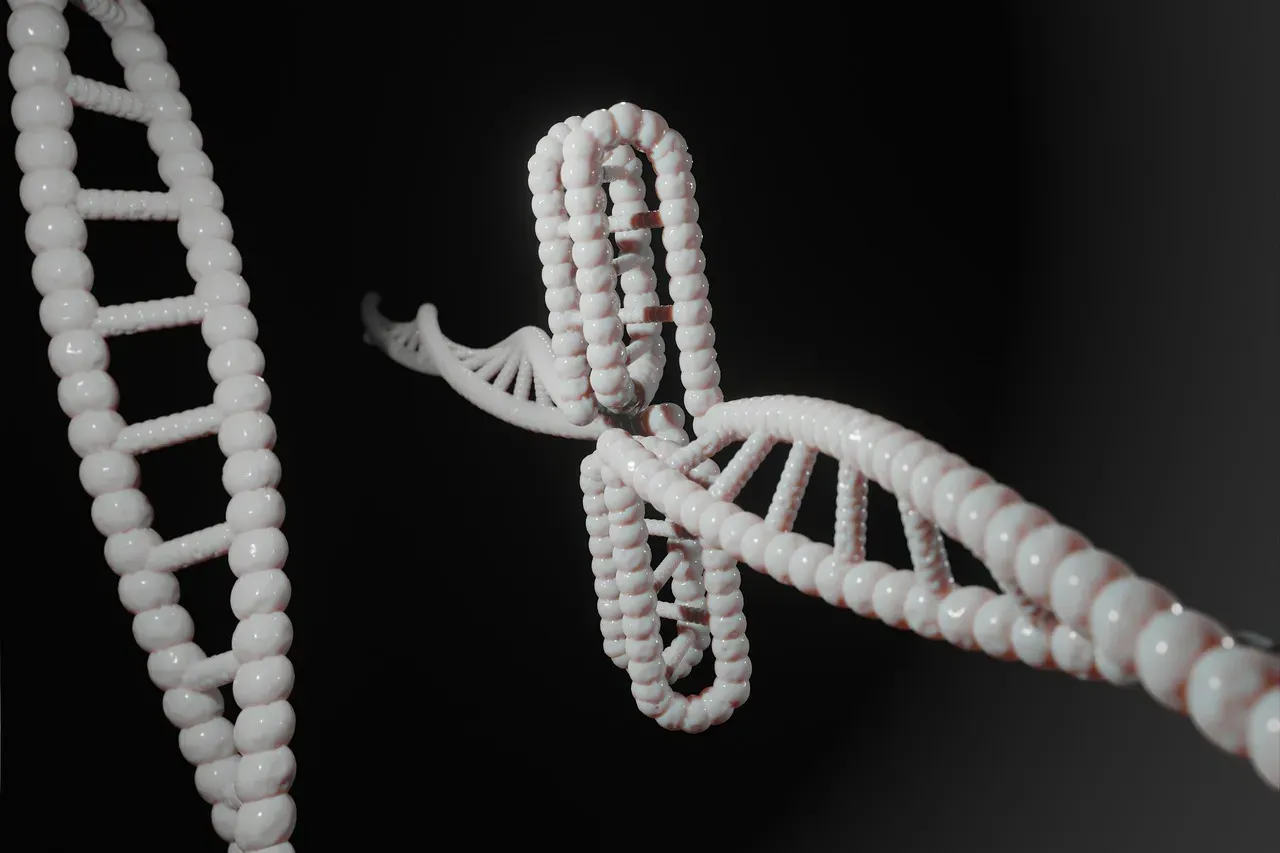
One of the most powerful tools in sorting out these mysteries is genetics. By comparing the DNA of deep‑sea species to their relatives in shallower waters or on land, scientists can estimate how long ago they split from a common ancestor. Sometimes those splits go back shockingly far, into time periods when we thought certain lineages were already in decline or gone. It feels a bit like using a molecular time machine to peer into eras that the fossil record barely covers for the deep ocean.
Of course, these genetic clocks come with caveats. Mutation rates can vary, and statistical models have to be handled with care, especially when data are sparse. But when multiple lines of genetic evidence suggest that a group of deep‑sea animals has been on a separate path since ancient times, it supports the idea that what looks “extinct” from fossils might still be alive in altered form. DNA cannot tell us that a particular famous fossil animal is swimming around today, but it can show that its broader branch of the family tree never truly stopped growing leaves.
The Line Between “Extinct” And “Overlooked” Is Blurry
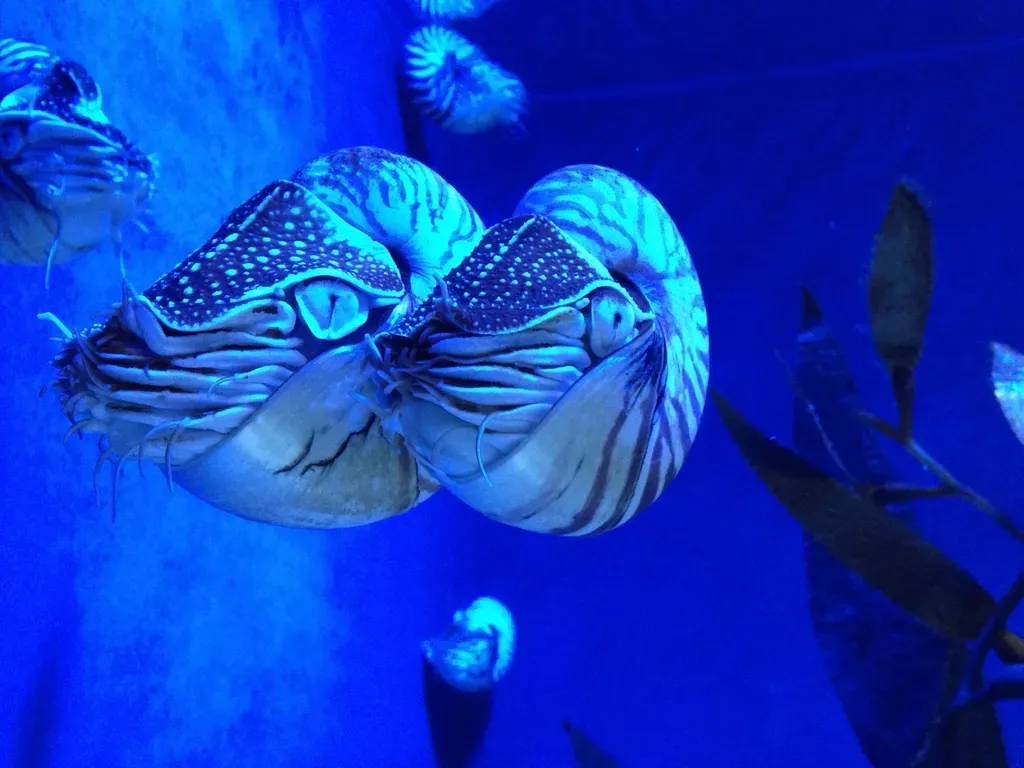
There’s a hard emotional punch when we label something extinct, because it feels final, like a door slammed shut forever. But scientifically, extinction is a statement about what we can no longer find despite looking, not a magical event that erases every last descendant from existence. For the deep sea, the uncomfortable truth is that we barely started looking in a serious way over the last few decades. Declaring an entire lineage gone based on shallow‑water fossils and coastal surveys starts to look more like a guess than a verdict.
As new technologies let us scan seafloor habitats, deploy more cameras, and sample DNA floating in the water, we’re already seeing cases where supposedly lost groups turn out to have obscure surviving cousins. These are not dramatic resurrected dinosaurs, but they are enough to blur the boundary between extinction and oversight. The more we learn, the more cautious many researchers are becoming about declaring the deep ocean’s evolutionary stories finished. Personally, I think that humility is overdue; it’s a bit like admitting we closed the book halfway and assumed we knew the ending.
Why These Discoveries Matter Far Beyond Curiosity
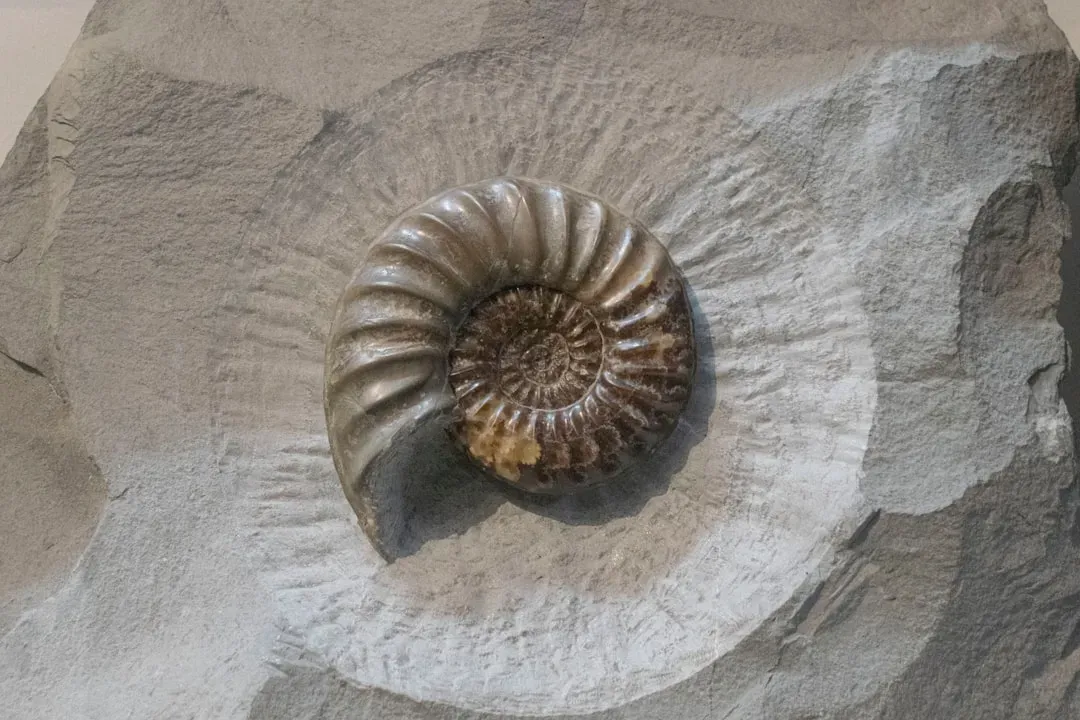
It’s tempting to see all this as just cool trivia: weird deep‑sea animals, ancient‑looking worms, and unsettling fossils. But the implications run much deeper. If long‑hidden lineages are still active, it means our standard timelines for when certain traits evolved, diversified, or disappeared may need serious revision. That has consequences for everything from how we model the rise of complex life to how we interpret climate shifts in Earth’s past, because those models often assume particular groups were present or absent at specific times.
On a more practical level, these discoveries add urgency to deep‑sea conservation. Mining proposals and large‑scale industrial activities are already targeting seafloor regions that might house some of these fragile, anciently rooted communities. Destroying them before we even understand what they represent would be like bulldozing a library filled with unknown languages. In my view, if there is even a chance that we are looking at living remnants of lineages we thought were gone, the ethical bar for disturbing those habitats should be set extremely high.
Conclusion: The Deep Sea Is Quietly Rewriting Our Story Of Life
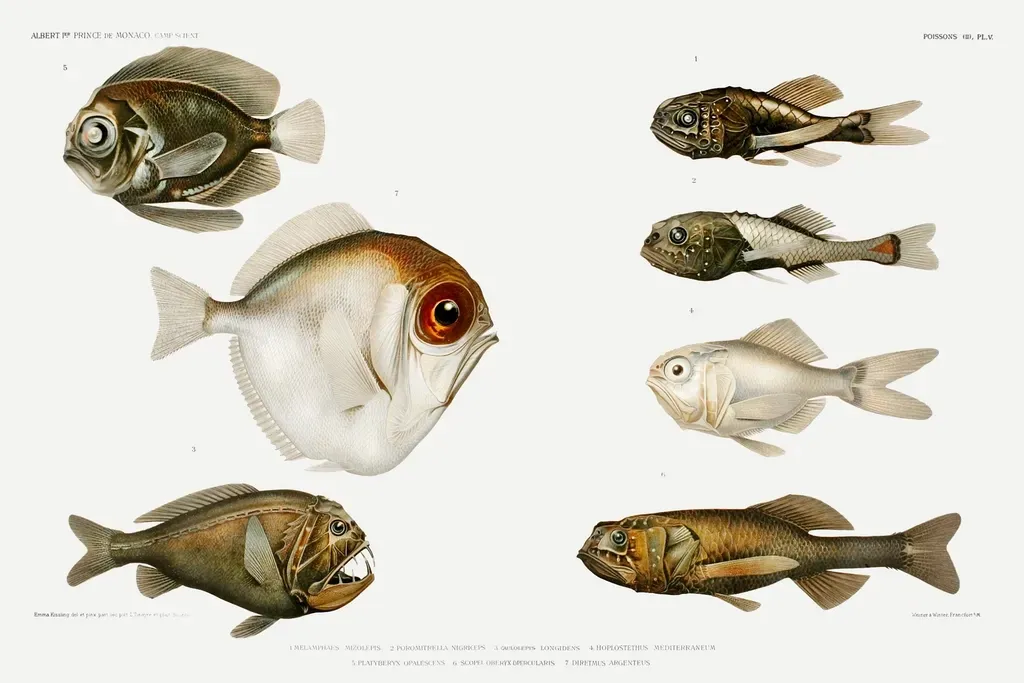
When you zoom out, a pattern starts to emerge: the more we probe the deep sea, the more it undermines our neat narratives about beginnings and endings in evolution. We are not finding intact copies of ancient animals frozen in time, but we are seeing enough odd lineages and ancient genetic signatures to question whether some branches ever fully vanished the way we claimed. To me, that feels both humbling and slightly unsettling, like realizing the family tree hanging in your hallway is missing entire generations you never knew existed.
My own bias is clear: I think we have been too quick to declare lineages extinct based on patchy evidence, especially for an environment we have barely sampled. The deep ocean is not just a backdrop; it is a dynamic, long‑running refuge where evolution has been quietly doing its own thing while we argued about fossils on land. Maybe the real shock is not that “extinct” lineages might still be active, but that we ever thought we had the final word. When our planet’s darkest places are still full of surprises, how confident should we really be about what is gone forever and what is simply waiting to be found?