Imagine standing in front of a rock shelter in South Africa, then a cave in France, then a windswept cliff in Australia, and seeing the same mysterious signs staring back at you. Simple lines, dots, ladders, zigzags, crosses, circles – carved or painted by hands that vanished tens of thousands of years ago. They look almost childlike, and yet they keep showing up in places and times that should have had no connection at all. That’s the unsettling part: across five continents, prehistoric rock art seems to be speaking a visual language that no one alive today can read.
Archaeologists, linguists, cognitive scientists, and even mathematicians have all tried to decode these repeating symbols. Some see early writing, others see shamanic visions, others a kind of universal doodling. The honest truth is that nobody has anything like a consensus. And that makes this one of the most intriguing unsolved stories in human history – a global mystery carved into stone, asking us whether our ancestors all thought in surprisingly similar ways.
The Same Strange Symbols Keep Reappearing Around the World
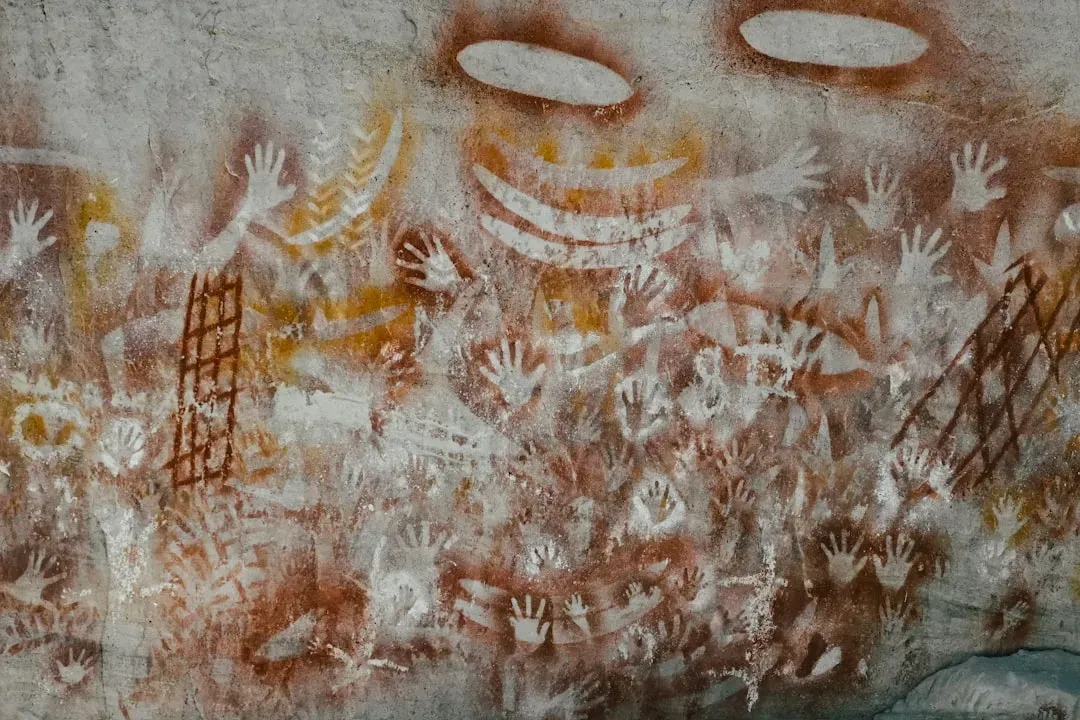
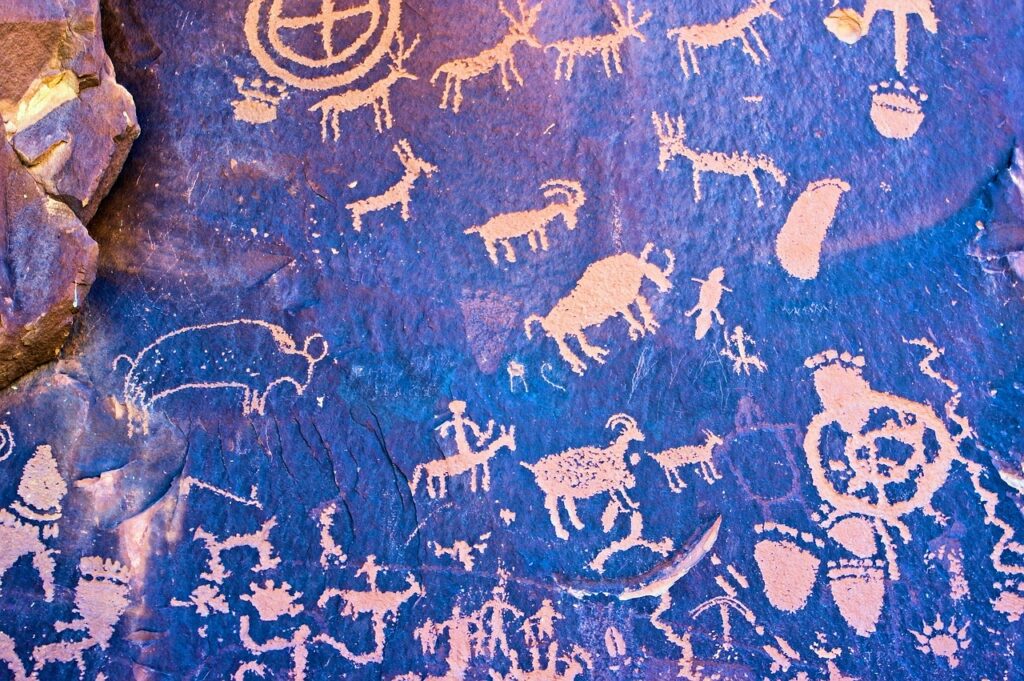
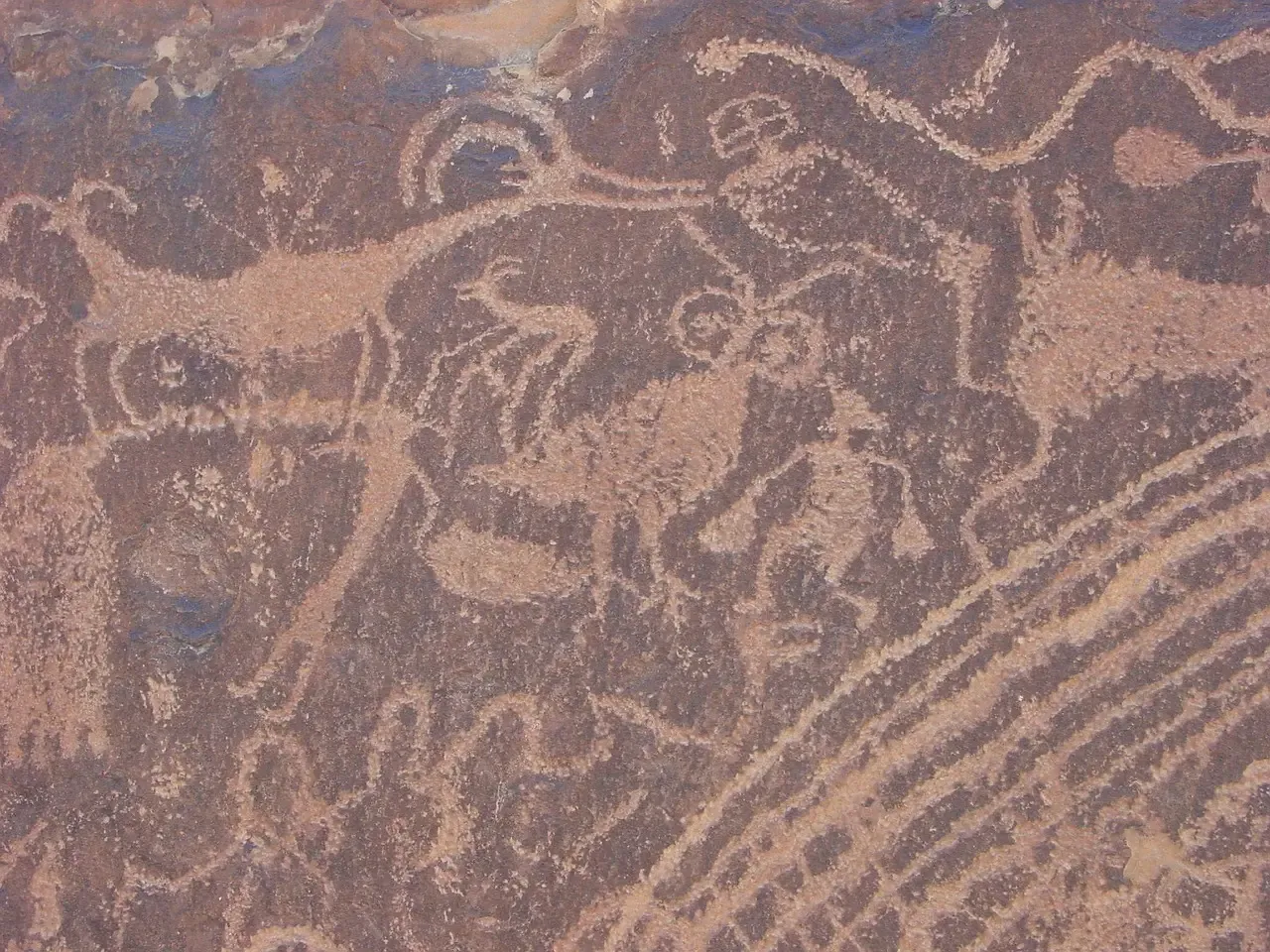
One of the most surprising facts about prehistoric rock art is how often the same basic signs show up in caves and rock shelters separated by oceans and tens of thousands of years. Archaeological surveys have repeatedly documented recurring shapes such as parallel lines, dots in clusters, ladder-like grids, zigzags, branching patterns, circles, and crosses in sites from Europe, Africa, Asia, Australia, and the Americas. You can walk into a famous European cave, then into a much later North American rock panel, and recognize echoes of the same visual vocabulary.
These geometric marks appear alongside very different figurative scenes – mammoths and bison in Ice Age Europe, hand stencils in Indonesia, kangaroos in Australia, abstract spirit figures in the Americas – yet the non-figurative signs themselves stay eerily familiar. They are often tucked around animals, near entrances, or grouped in dense clusters, hinting that they mattered for more than decoration. When you see the same dozen or two core shapes spread across five continents, it feels less like coincidence and more like a pattern demanding an explanation.
Are We Looking at the Earliest Steps Toward Writing – or Just Human Doodles?
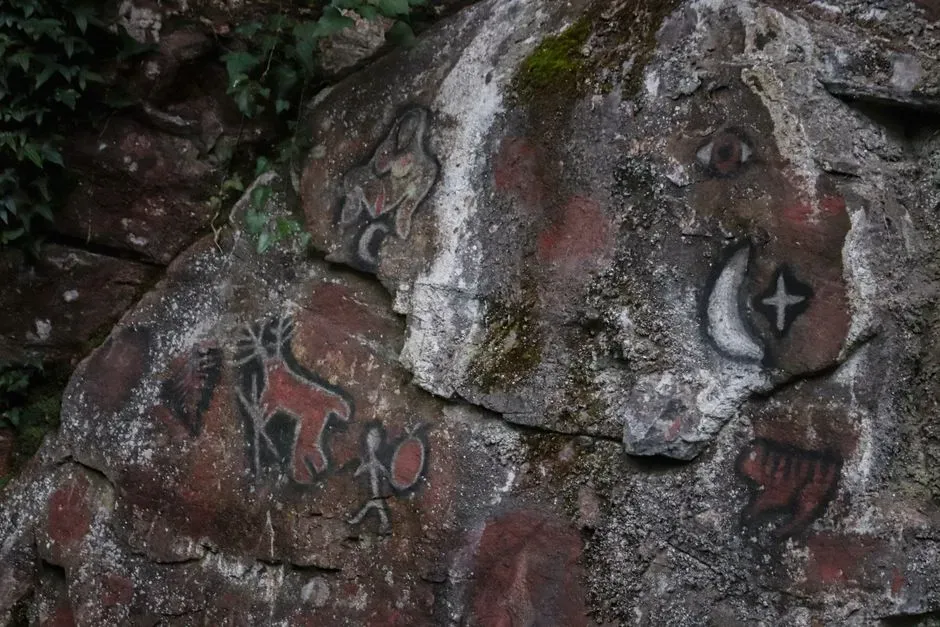
One of the most tempting ideas is that these repeated signs represent a very early system of notation – not quite full writing, but a way to record information in a durable, standardized form. Some researchers argue that certain repeated combinations or positions of symbols might track seasons, hunting routes, animal behaviors, or ritual events, much like a prehistoric calendar or mnemonic code. They point to patterns where specific signs appear with particular animals or in specific zones of a cave, suggesting structured meaning rather than random scribbles.
Others are far more skeptical and see these marks as the Stone Age version of margin doodles: satisfying shapes to scratch or paint because humans everywhere enjoy making patterns. From this view, lines, dots, and zigzags repeat around the world simply because they are the easiest, most basic forms the human hand and brain naturally produce. I tend to think the truth may sit awkwardly in between: some signs probably were meaningful codes within local traditions, while others were more spontaneous or aesthetic. The problem is that we no longer share the cultural context needed to tell which is which.
Shared Brains, Shared Motifs: A Deep Cognitive Pattern?
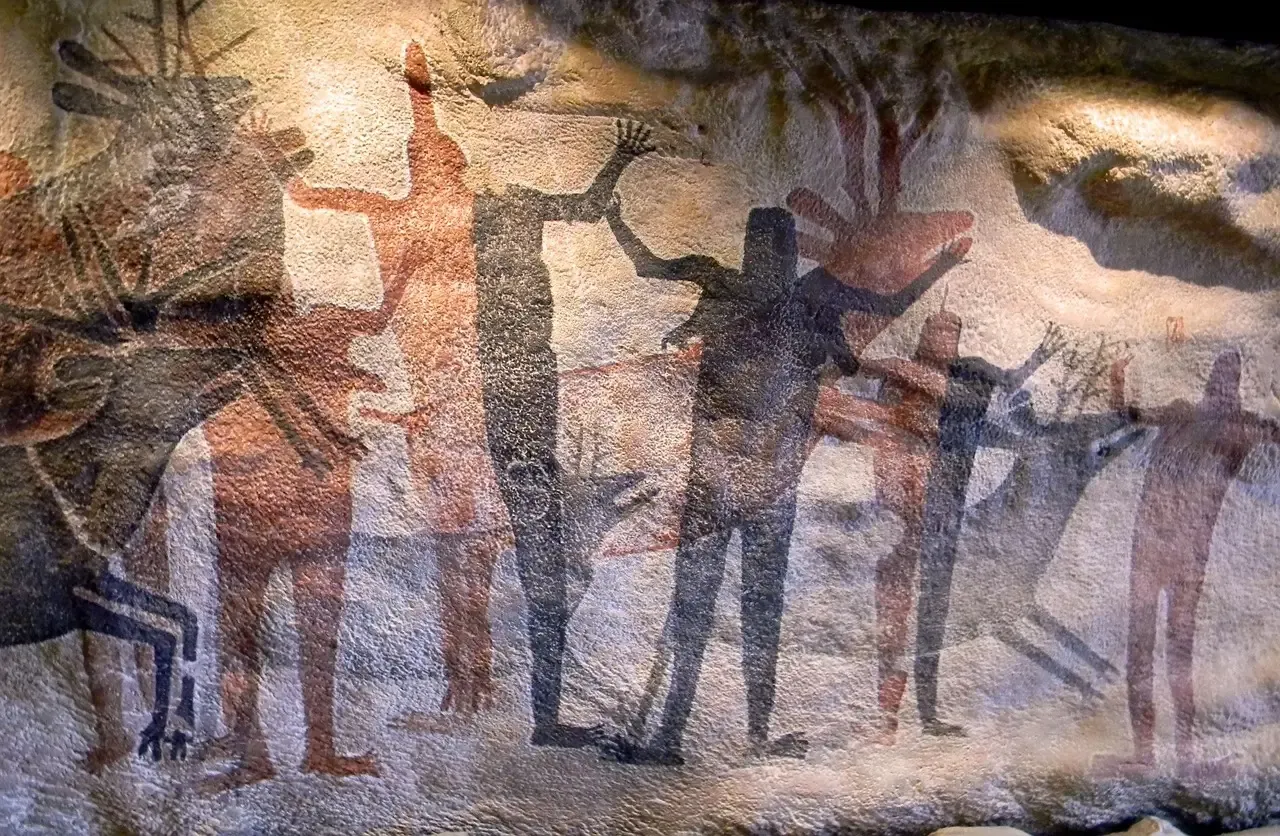
Another big line of thinking does not lean on cultural contact at all but on biology. Humans everywhere, regardless of culture or language, share broadly similar brains and sensory systems. Cognitive scientists have suggested that certain geometric shapes are especially easy for our visual system to process and remember, such as straight lines, grids, and simple curves. These same forms often show up in children’s early drawings and in modern abstract design, which hints that they might be “default” outputs of human perception and motor control.
If that’s true, then the global spread of similar rock art symbols might say less about prehistoric travel or communication and more about convergent thinking. Many different groups could independently invent dots, ladders, spirals, or zigzags because those shapes simply sit at the sweet spot between being easy to make and satisfying to look at. I find this deeply compelling: the idea that our ancestors, separated by ice sheets and millennia, still reached for the same mental building blocks when they grabbed a piece of ochre or a stone tool and started to mark a wall.
Could Trance States and Visionary Experiences Explain the Symbols?
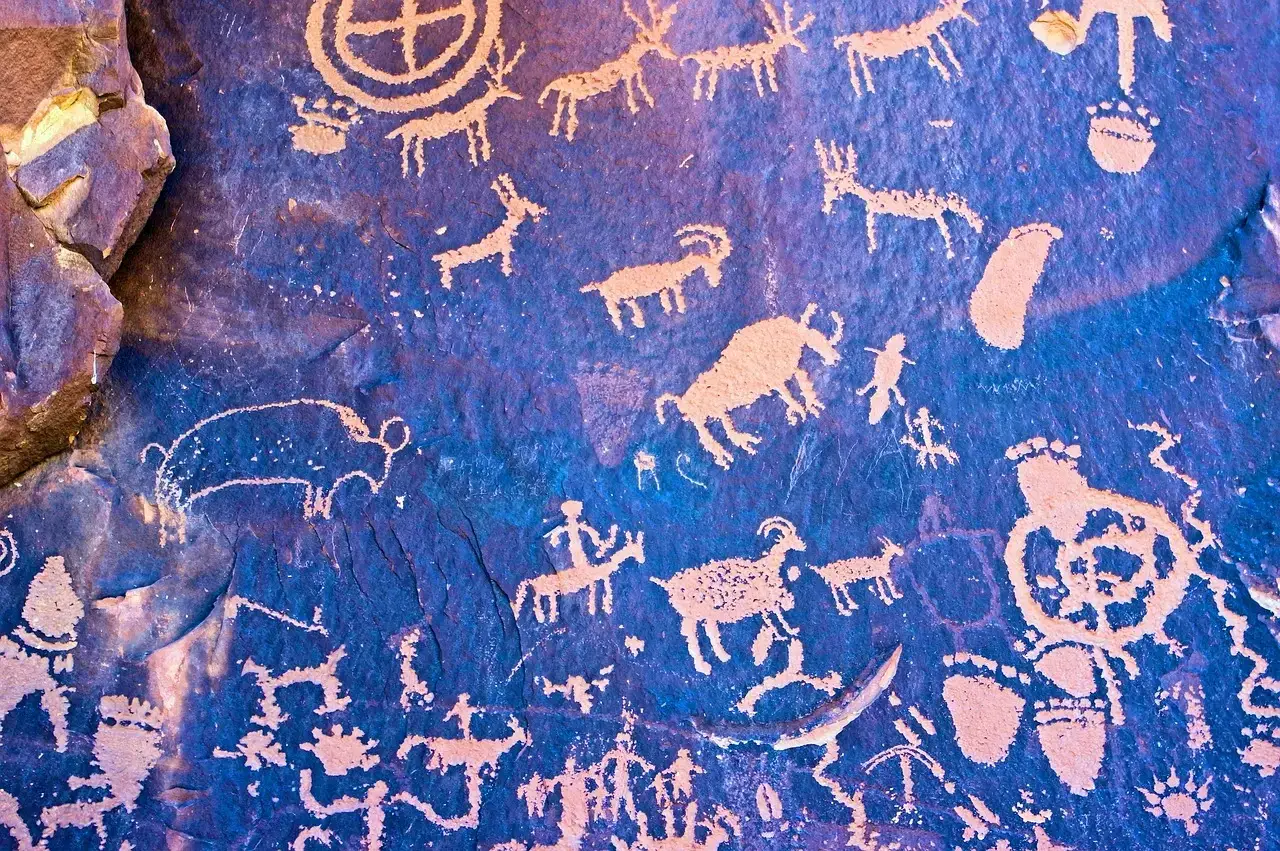
Some archaeologists and anthropologists argue that you cannot understand rock art without thinking about altered states of consciousness. In this view, many geometric motifs – grids, tunnels, radiating lines, zigzags, flickering dots – resemble so-called entoptic patterns that people report during migraines, sensory deprivation, or trance states. Because these neural patterns arise from the structure of the human visual system itself, they might be broadly similar for people in very different cultures and times.
According to this perspective, shamans or ritual specialists in prehistoric communities might have experienced intense visions during ceremonies, then painted or carved the core shapes they saw onto rock surfaces. That could explain why some symbols feel strangely universal: they might be records of the visual system under extreme conditions, not of specific animals or events. I’m wary of stretching this explanation too far – not every dot or zigzag needs a psychedelic backstory – but it does offer a powerful way to connect neuroscience with what we see on cave walls.
The Limits of What We Can Know – and Why That Uncertainty Matters
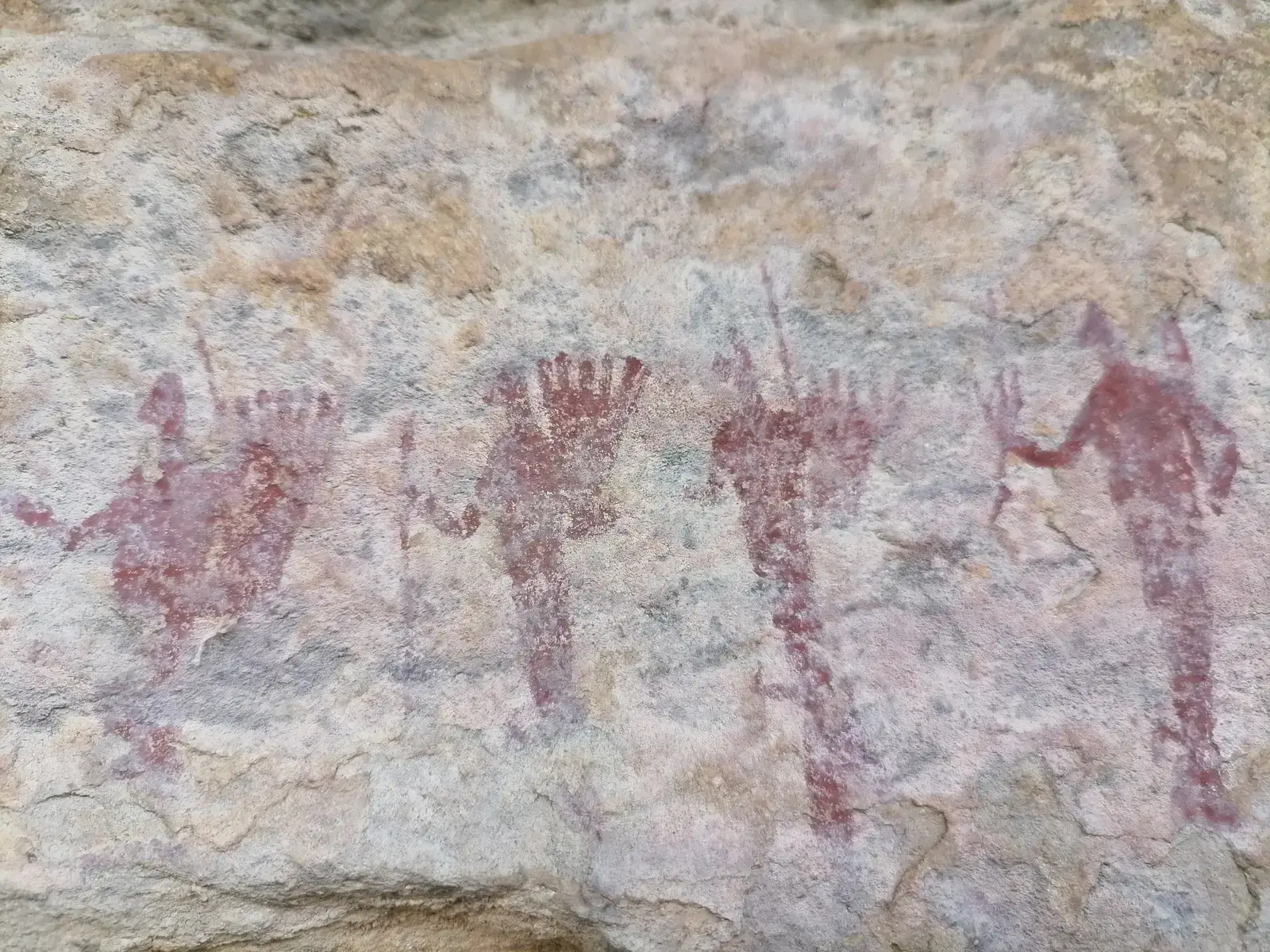
When you dig into the details, what stands out most is just how hard it is to test any theory about these ancient symbols. Rock art is incredibly difficult to date precisely, and many panels have been exposed, repainted, or partially eroded over huge spans of time. We rarely know who made which symbol, what language they spoke, or how many layers of meaning might have accumulated as generations reused the same surfaces. Without that context, even well-argued hypotheses can feel like we’re projecting our own modern categories onto a world that thought differently.
At the same time, the very stubbornness of this mystery is what makes it valuable. It forces archaeologists to be honest about uncertainty, to ask better questions instead of leaping to neat answers like “this is a map” or “that is a clan sign.” It also invites the rest of us to see early humans as complex, imaginative people, not just survival machines. Standing in front of those repeated symbols, you realize we may never fully decode what they meant – but we can still let them expand our sense of how rich and varied human thought has always been.
Conclusion: A Global Script We May Never Read – and Why I Think That’s Okay
The fact that prehistoric rock art across five continents shares the same core symbols is both thrilling and frustrating. It hints at a kind of global visual language, whether rooted in early notation, shared brain wiring, visionary experiences, or some mix of all three, yet every proposed meaning remains contested. My own opinion is that we should resist the urge to force a single, tidy interpretation. These marks likely carried different layers of meaning in different places: sometimes practical, sometimes sacred, sometimes playful, sometimes deeply personal.
Maybe the most honest way to see these symbols is as an unfinished conversation between past and present. Our ancestors carved their thoughts into stone, assuming only that someone would see them, not that anyone thousands of years later would understand. In a strange way, their silence pushes us to be more humble about our own certainty and more curious about minds that are gone. The mystery will probably never fully dissolve, and that is part of its power: it reminds us that human creativity has always outrun our ability to explain it. Faced with those stubborn signs on the rock, the real question is not just what they meant back then, but what they are quietly asking of us now.