Close your eyes for a second and picture the sky. You probably imagine birds, maybe a hawk riding a thermal, or a flock of starlings wheeling at dusk. Now imagine that same sky, but hundreds of millions of years earlier. No birds. No bats. Just creatures so strange and spectacular that even a veteran paleontologist would be left speechless.
The story of aerial life on Earth didn’t start with feathers. It started much, much earlier, with reptiles, giant insects, and flying monsters that pushed the boundaries of what any animal can physically achieve. Some of them were bigger than small planes. Others were armed like biological weapons. All of them were extraordinary. Ready to be surprised? Let’s dive in.
Quetzalcoatlus: The Sky Titan That Defied All Physics
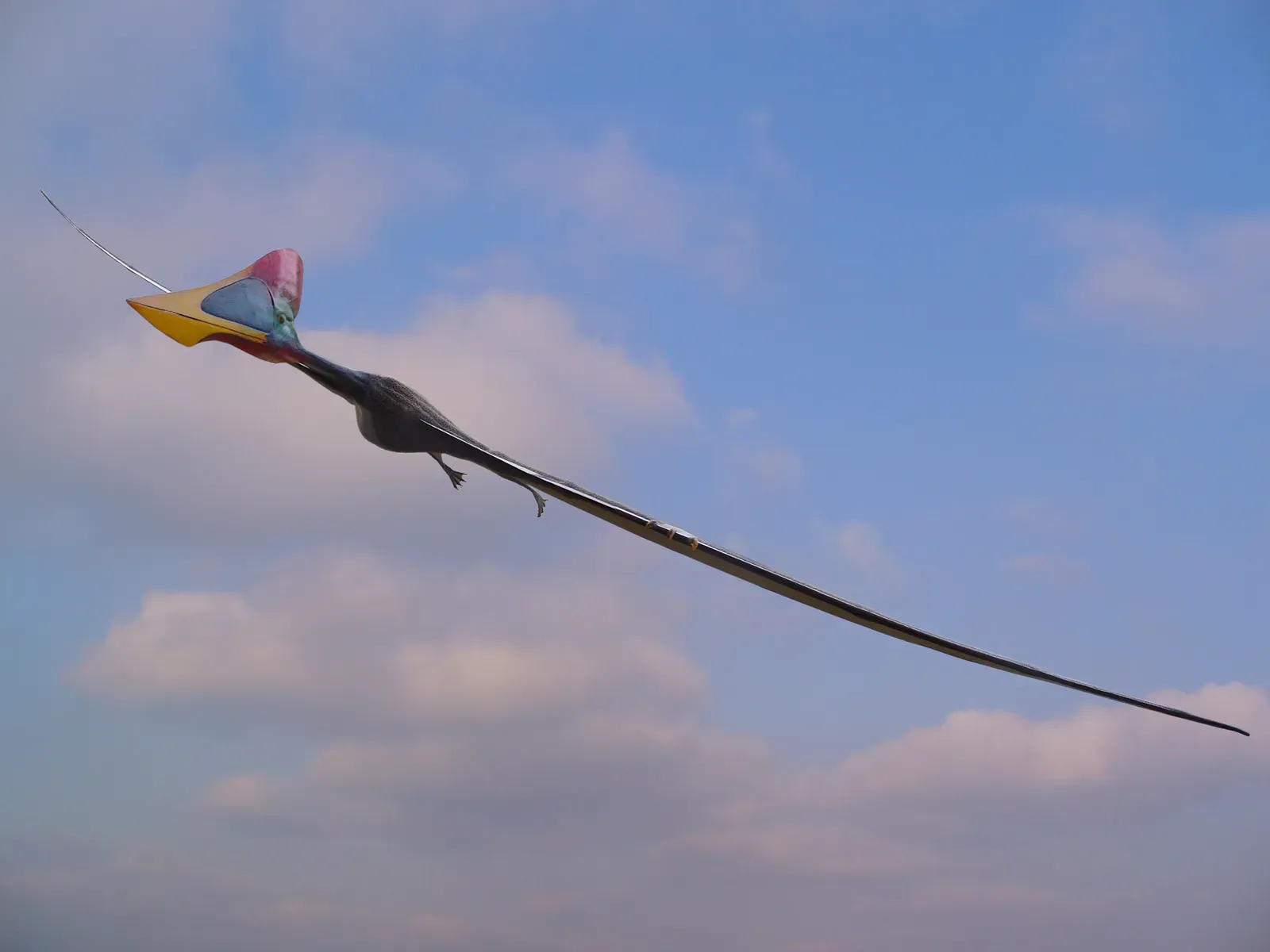
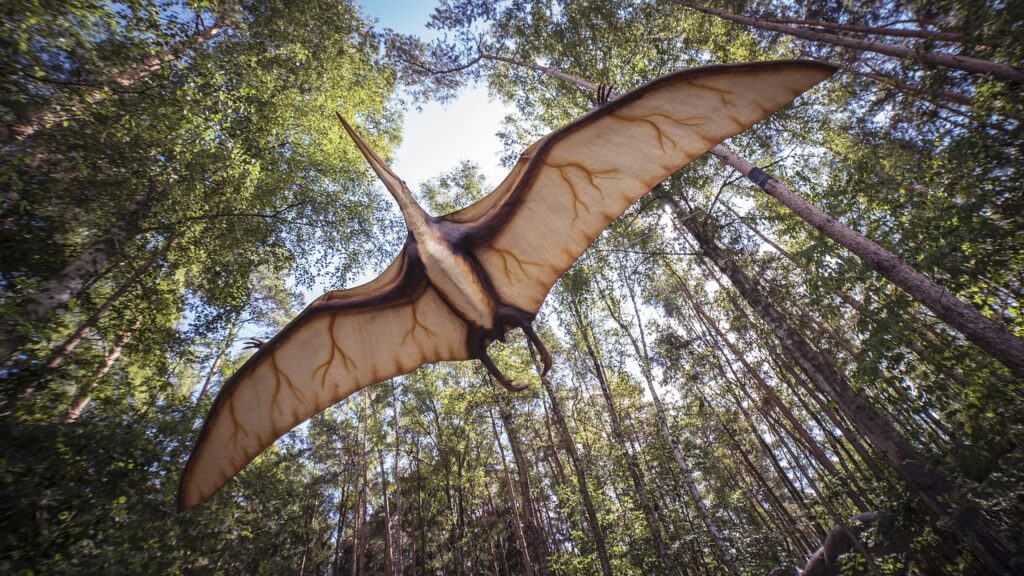
Here’s the thing. When you hear that a flying creature had a wingspan wider than many real aircraft, your brain wants to reject it. Yet there exists a life-size model of Quetzalcoatlus northropi with a yellow beak the size of a man and a wingspan wider than many of the planes exhibited nearby at the Museum of Flying in Santa Monica, California. That is not science fiction. That is verified paleontology. The species was named Quetzalcoatlus in honor of Quetzalcoatl, the feathered serpent god of Aztec mythology.
You might assume that a creature of this size would be grounded by its own weight, but the fossil record tells a different story. The wings were formed by a membrane of skin and muscle stretched between the body, the legs, and a single elongated finger that acted as the wing’s main support. Despite their size, the wings were surprisingly lightweight, because, like birds, pterosaurs had hollow bones filled with air spaces. Computer modeling has since revealed that Quetzalcoatlus northropi was capable of flight up to 130 km/h for seven to ten days at altitudes of up to 4,600 meters. Just think about that for a moment.
Pteranodon: Hollywood’s Favorite Sky Ruler
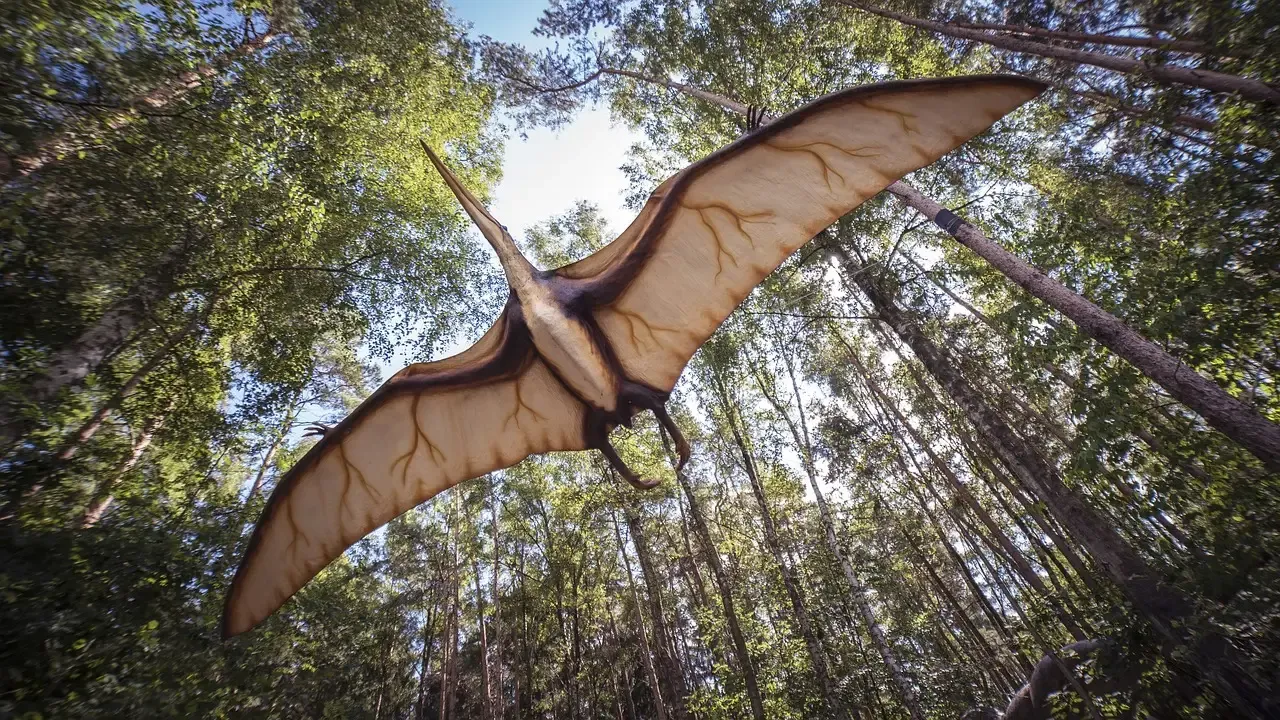
If you’ve ever watched a dinosaur movie and spotted a winged reptile snatching prey from the air, you were almost certainly looking at a version of Pteranodon. Arguably the most famous pterosaur, Pteranodon is probably the creature most people immediately think of when thinking about flying dinosaurs, and over 1,200 fossilized specimens have been unearthed, more than any other prehistoric flying reptile. That’s an extraordinary fossil record for any ancient animal.
What made Pteranodon genuinely remarkable wasn’t just the fame. It had hollow bones and a large keel-like breastbone, features that made it lighter and more aerodynamic, and its unique build allowed it to launch from a standstill and glide effortlessly through the air. The remains of Pteranodon are found in rocks that lay more than a hundred miles out to sea from the Cretaceous period, meaning this fish-catcher, which had a wingspan of up to 24 feet, must have regularly soared vast distances over the waves. Honestly, that level of endurance puts most modern flying animals to shame.
Hatzegopteryx: The Island Predator You Should Fear Most
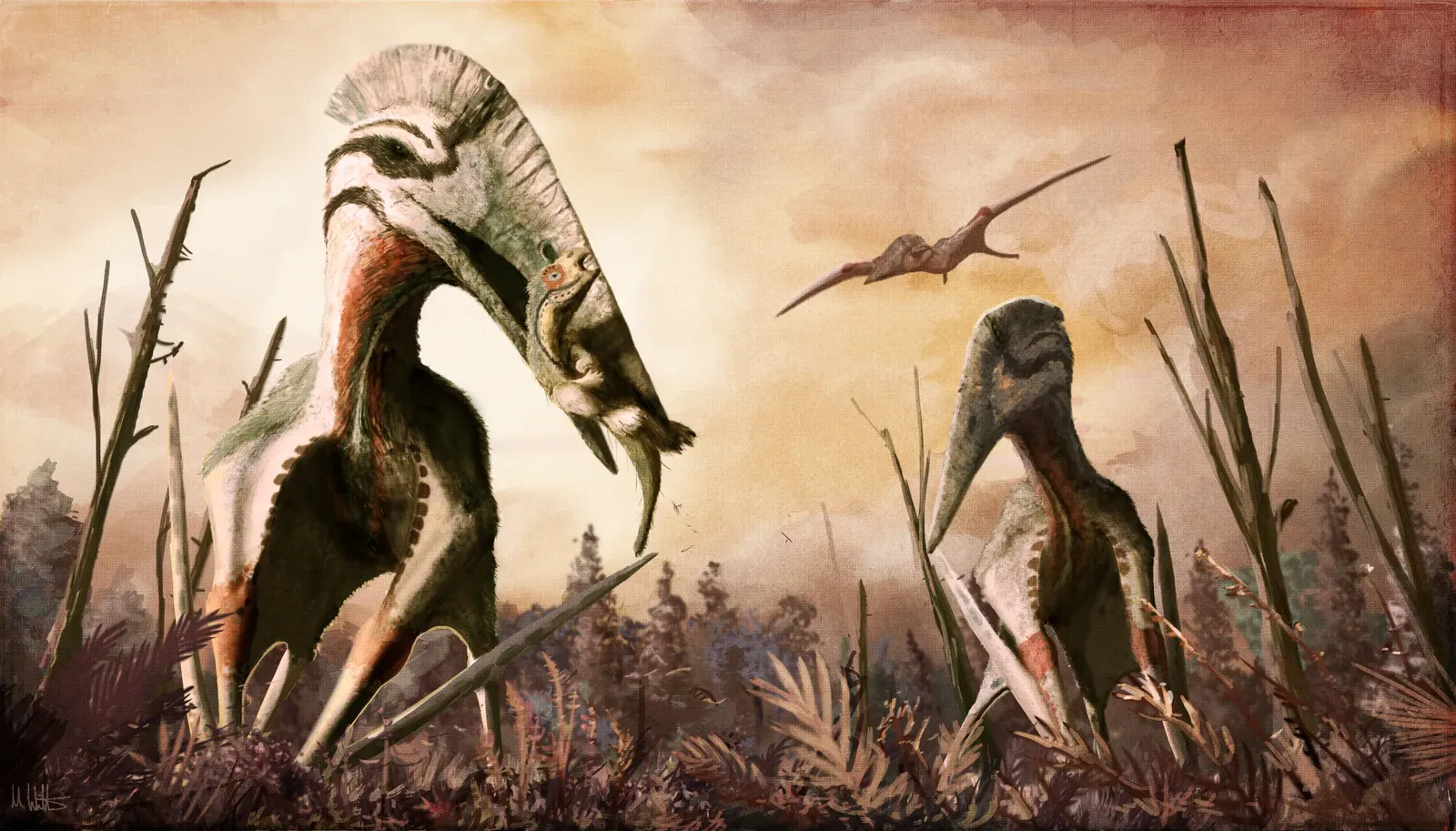
Most people have heard of Quetzalcoatlus, but Hatzegopteryx doesn’t get nearly the attention it deserves. Let’s be real, this creature deserves its own documentary series. It is generally estimated that Hatzegopteryx had a wingspan of up to between 33 and 39 feet, and it likely lived in what is now modern-day Romania during the Late Cretaceous period, around 70 million years ago. Imagine that hovering over a Romanian landscape.
Hatzegopteryx was a large winged reptile and an inhabitant of Hațeg Island in the prehistoric Tethys Sea, and it was likely an apex predator there, feeding on iguanodontids and even smaller titanosaurs. Yes, you read that correctly. This thing hunted dinosaurs. There is far less agreement as to what these giant azhdarchid pterosaurs ate. Azhdarchids can reach sizes of up to 10 metres or more in wingspan, like Hatzegopteryx, and there have been at least six different diets argued for these pterosaurs. The debate itself says everything about how extraordinary this creature was.
Dimorphodon: The Early Jurassic Oddball With a Bulldog Face
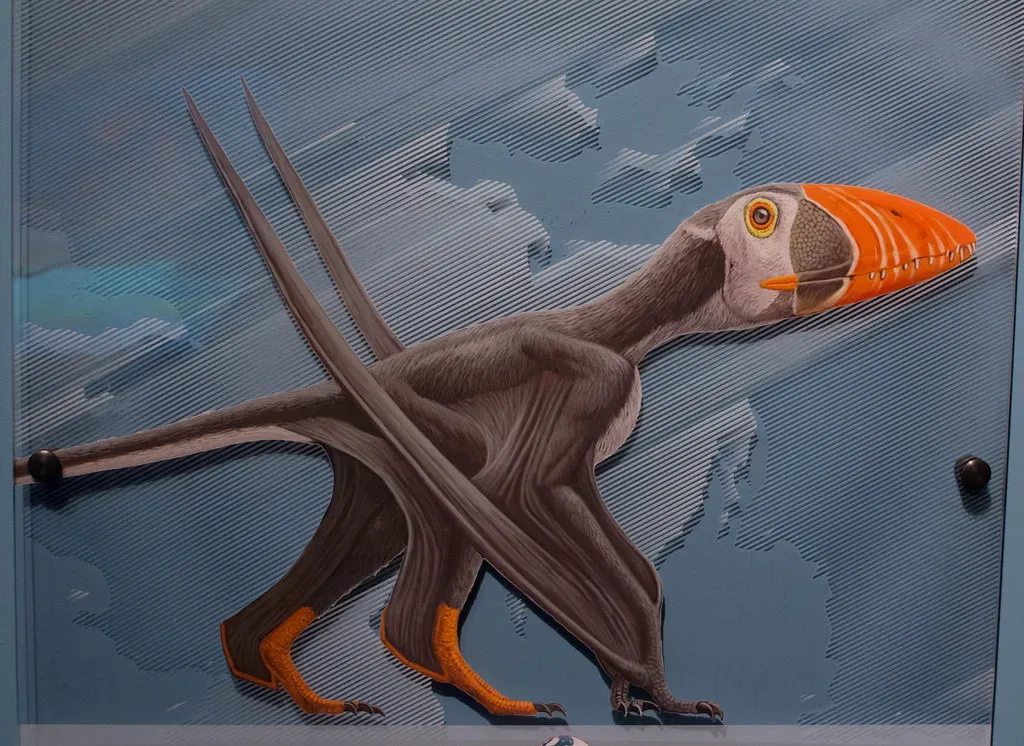
If Quetzalcoatlus was the giant of the skies, Dimorphodon was its bizarre little cousin that nobody quite knew what to do with. While many pterosaurs featured long, graceful heads and necks, Dimorphodon went the completely opposite direction. Looking more like a flying bulldog, Dimorphodon had a short stubby neck on which perched a head and jaw that was much shorter and deeper than many of its pterosaur cousins. Nature really did go rogue with this one.
Dimorphodon is found as a fossil in European deposits from the Early Jurassic Period, around 200 million to 176 million years ago, and is among the earliest known pterosaurs. It was about a metre long and had a wingspan of about 1.7 metres. This European pterosaur is unique for having two different types of teeth in its jaws, a rarity among reptiles, and its name even means “two-form tooth.” Discovered in 1828 by the famed British paleontologist Mary Anning, Dimorphodon was the first pterosaur to be found and identified in the United Kingdom. You could say this strange little flyer launched an entire field of pterosaur research.
Rhamphorhynchus: The Diamond-Tailed Hunter of the Jurassic Seas
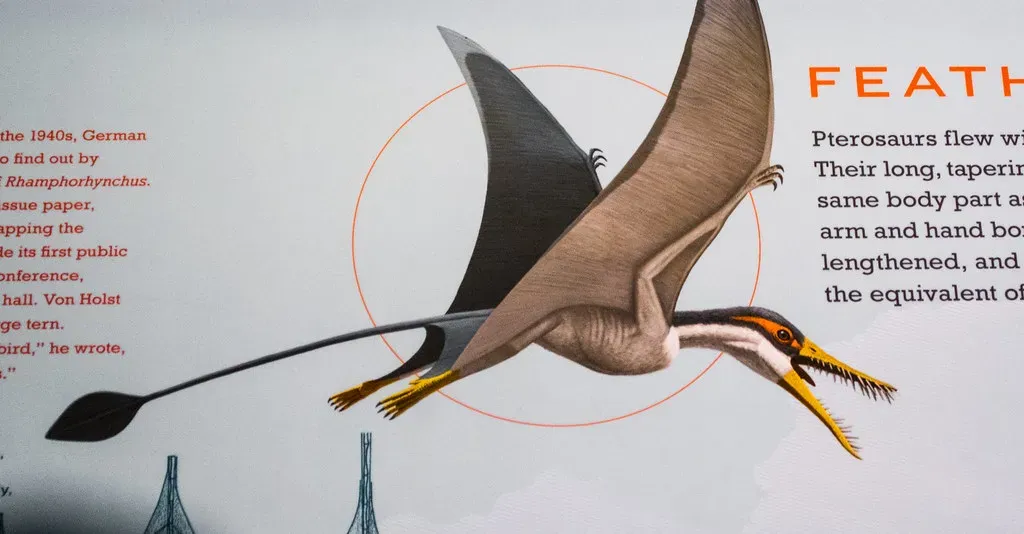
Rhamphorhynchus is a genus of extinct pterosaur that lived during the Late Jurassic period, roughly 150 million years ago, and it is well-known for its long, narrow wings and a relatively short body compared to some other pterosaurs. It might not be the biggest or the most dramatic, but it’s one of the most fascinating. One of its most distinctive features is its long, slender tail, which had a diamond-shaped fin at the tip, and this tail likely played a role in stabilization and control during flight.
What makes Rhamphorhynchus especially gripping is what paleontologists discovered about its final moments in one extraordinary fossil. Paleontologists have pieced together a fight from preserved remains showing the large-toothed fish Aspidorhynchus with its jaws firmly clamped on the wing of a hapless Rhamphorhynchus. Even more amazing is the fact that the Rhamphorhynchus had a small fish in its own throat, suggesting that the predator quickly became the prey. It’s a snapshot of prehistoric life so vivid it’s almost cinematic. Rhamphorhynchus most likely lived in the landmass that would eventually become modern-day Europe, and its teeth fragments have been found in England, Germany, Portugal, Spain, and even Tanzania.
Tapejara: The Crested Sky Sailor of Cretaceous Brazil
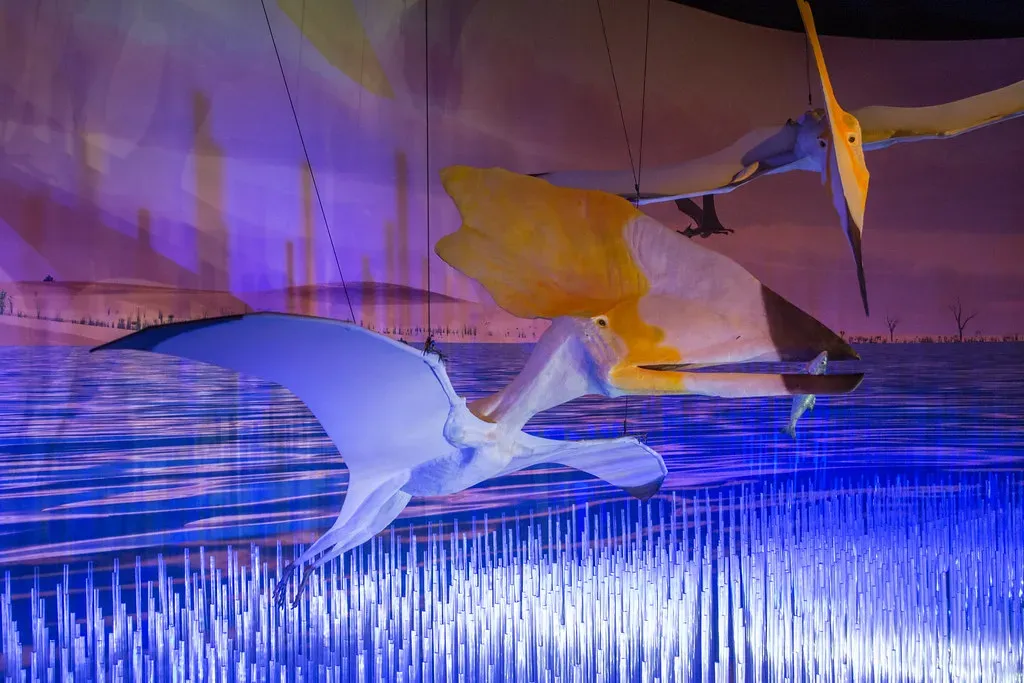
Think of Tapejara as nature’s experiment in dramatic headwear. Tapejara, from the early Cretaceous period, is notable for the large, sail-like crests on its head, and was adapted for soaring with wings designed to glide over long distances. It had a varied diet, including fish and possibly fruit. Fruit. A flying reptile eating fruit. That is one of the more unexpected details in all of prehistoric science.
It’s hard to say for sure exactly what those elaborate crests were for, but paleontologists have some compelling ideas. One of pterosaurs’ most distinctive features is the head crest, a striking structure made of hornlike material and soft tissue supported by bone. Some evidence suggests they might have even been brightly colored. There is significant disagreement over what these crests were actually used for, with some paleontologists thinking they helped pterosaurs distinguish one species from another, while others argue they attracted mates, regulated heat, or acted as a rudder in the air. Fossil record evidence also suggests Tapejara’s strong hind limbs and flexible wing membranes contributed to exceptional maneuverability while flying.
Meganeura: The Eagle-Sized Dragonfly That Predated Them All
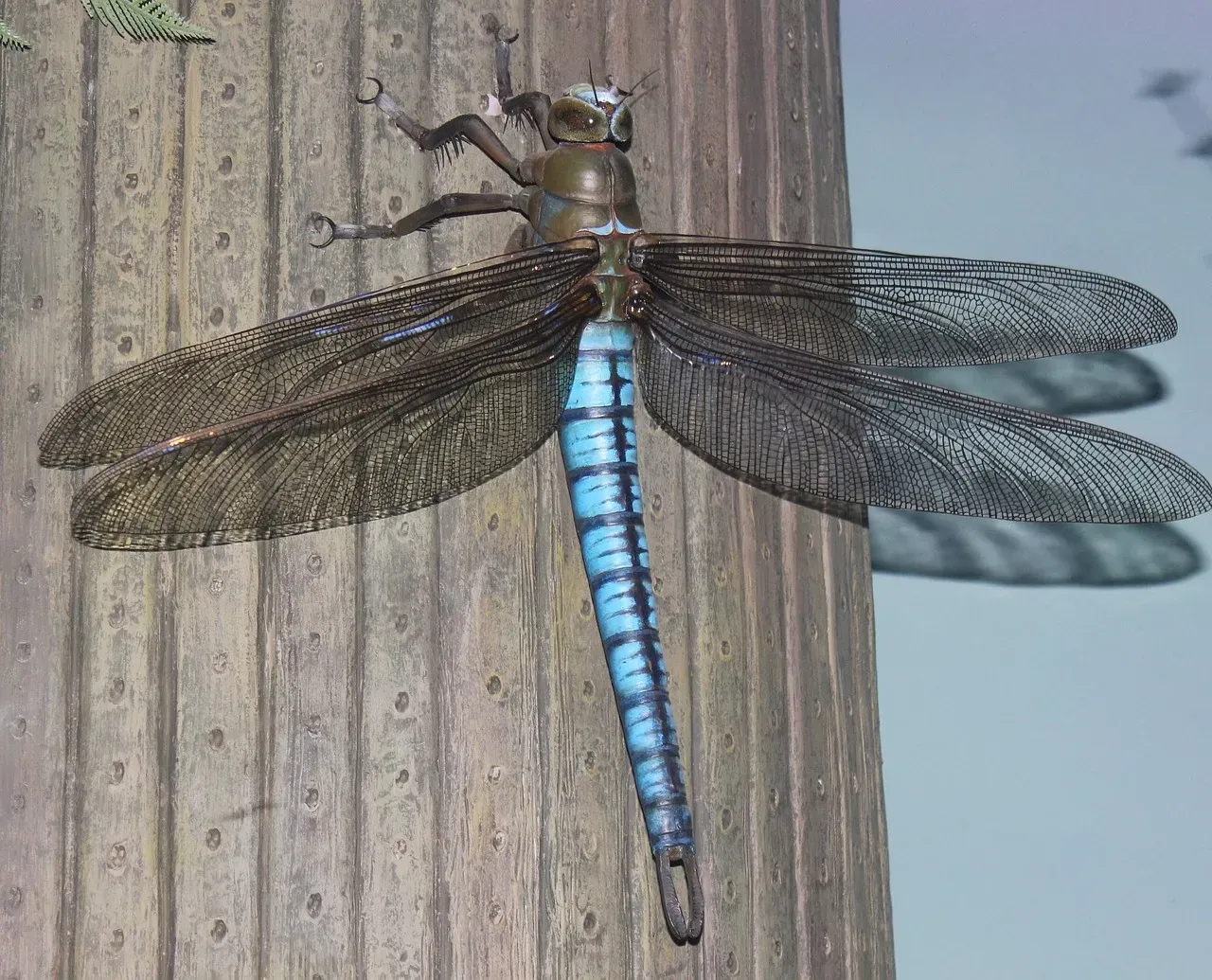
Here’s where things get truly surreal. Long before any pterosaur spread its leathery wings, the skies were ruled by something even more alien. Before dinosaurs evolved, back when the world was swampy and green around 300 million years ago, giant dragonfly-like insects called griffinflies filled the skies. With wingspans that stretched up to a whopping 71 centimetres, these epic insects would have blocked out the Sun as they flew past. Now that is a mental image.
Meganeura, the most famous of these ancient airborne titans, was an apex predator in a world still discovering what it meant to fly. Measuring almost a meter long, Meganeura was the size of an eagle, making it one of the largest insects that ever lived and the largest dragonfly of all time. The secret behind these colossal creatures lies in something you breathe every day: oxygen. Back then, Earth’s atmosphere contained roughly 35 percent oxygen compared to today’s 21 percent, and this oxygen-rich environment allowed insects to grow far beyond anything we see today. Another theory as to why griffinflies grew so large is that there were simply no aerial predators around to eat them, until birds evolved from dinosaurs and started to prey upon them, at which point these dragonfly-like insects had to become smaller and faster to escape.
Conclusion: The Sky Has Always Belonged to the Bold
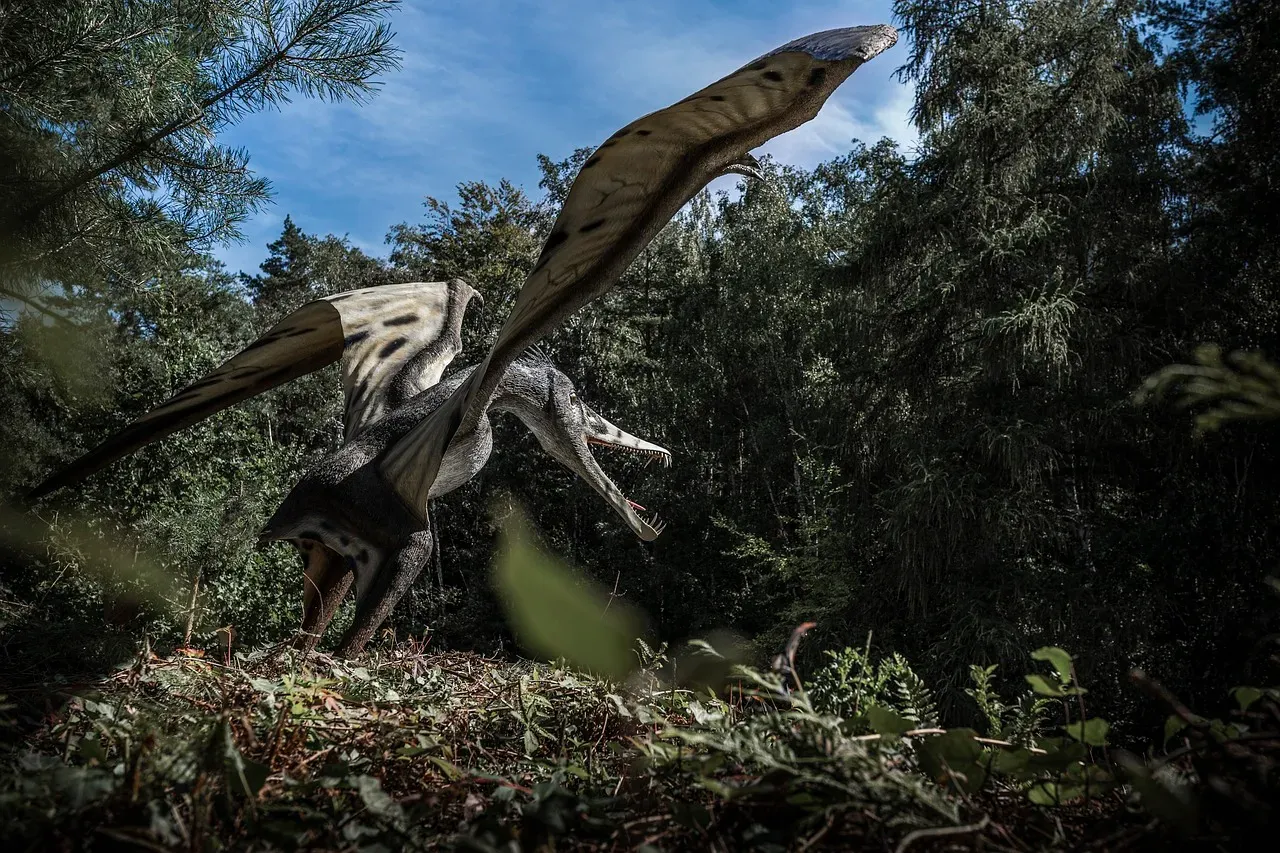
What strikes you most, looking back at all of these creatures, is how radically different the ancient sky was compared to what you see above you today. Pterosaurs were an incredibly diverse group of reptiles, with sizes ranging from sparrow-like creatures to giants with wingspans exceeding modern airplanes, and their fossil record reveals a variety of adaptations, including crests on their heads and specialized teeth tailored for different diets and ecological niches. Every single species in this list solved the challenge of flight in its own unique way.
Pterosaurs are notable for being the first vertebrates with backbones to evolve flight capabilities. Yet even before them, Meganeura and its kin had already staked their claim on the open air. Sadly, like many incredible creatures of the past, the pterosaurs met an untimely end. The same event that led to the extinction of most dinosaurs, likely a meteorite impact, also wiped out these fantastic flyers. Their loss left a permanent gap in the story of life on Earth.
The next time you watch a bird glide over the horizon, remember what came before it. Creatures that made today’s eagles look timid. Giants that made the air itself shake. What prehistoric creature do you find most extraordinary? Share your thoughts in the comments below.