Articles for author: Awais Khan

Advantage of Beaks

How the Evolution of Beaks Helped Dinosaurs Survive Through Birds

In the dramatic story of life on Earth, few evolutionary tales are as fascinating as how dinosaurs survived extinction through their avian descendants. The asteroid impact 66 million years ago wiped out all non-avian dinosaurs, yet their legacy continued through birds—the only dinosaur lineage that persists today. Central to this survival story is the evolution ...

During the Jurassic, high sea levels flooded continents, forming vast shallow seas and reshaping coastlines across the globe.

Underwater Worlds: The Lost Continental Shelves of the Mesozoic

Beneath our modern oceans lie the submerged remnants of ancient worlds—vast continental shelves that once hosted diverse ecosystems during the Mesozoic Era (252-66 million years ago). These shallow marine environments, now hidden beneath hundreds of meters of water, were once thriving habitats where prehistoric creatures flourished in warm, sunlit waters. The story of these lost ...

Dino Dreams: Could Dinosaurs Have Had REM Sleep?

Dino Dreams: Could Dinosaurs Have Had REM Sleep?

Picture this: a massive Tyrannosaurus rex closing its tiny eyes and drifting off into a world of prehistoric dreams. Or maybe a graceful Triceratops, tucked comfortably in a forest clearing, experiencing rapid eye movements behind closed lids. While this might sound like something out of a fantasy movie, recent scientific discoveries are painting an entirely ...

Close-up of a dinosaur skeleton head and upper body, showcasing detailed bone structure with a dramatic, shadowy museum background.

What Petrified Bones, Footprints, and Skin Imprints Tell Us About Prehistoric Life

The silent remnants of Earth’s ancient past—fossilized bones, preserved footprints, and delicate skin impressions—serve as time capsules from eras long gone. These paleontological treasures provide our most direct connection to creatures that roamed the planet millions of years before humans existed. Through careful scientific analysis of these preserved remains, researchers piece together compelling narratives about ...

area covered with green leafed plants

What Did Dinosaurs Really Eat? A Look at Ancient Plant Life

When we imagine dinosaurs, we often picture ferocious predators like Tyrannosaurus rex tearing into prey. However, the reality of dinosaur diets was far more diverse and fascinating. Approximately 65% of all dinosaur species were herbivores, consuming various types of prehistoric plants throughout the Mesozoic Era (252-66 million years ago). Understanding what plant-eating dinosaurs consumed requires ...

blue and white bird on brown wooden surface

The Hidden Dinosaur Traits in Your Backyard Birds

Gazing out your window at a cardinal perched on a feeder or watching a robin hop across your lawn, you might not immediately think “dinosaur.” Yet these familiar backyard visitors are the last descendants of the mighty beasts that once ruled our planet. Modern birds didn’t just evolve from dinosaurs—they are dinosaurs, specifically avian theropods ...

Crocodiles and alligators, alongside birds, are the closest living kin to dinosaurs.

How Crocodiles Became Living Fossils From the Age of Dinosaurs

While dinosaurs vanished from Earth 66 million years ago, their contemporaries—the crocodilians—continue to thrive in modern ecosystems. These remarkable reptiles have maintained their basic body plan for over 200 million years, earning them the title of “living fossils.” The story of how crocodiles survived multiple mass extinctions while dinosaurs perished is a fascinating tale of ...

Dr. Hans Dieter Sues

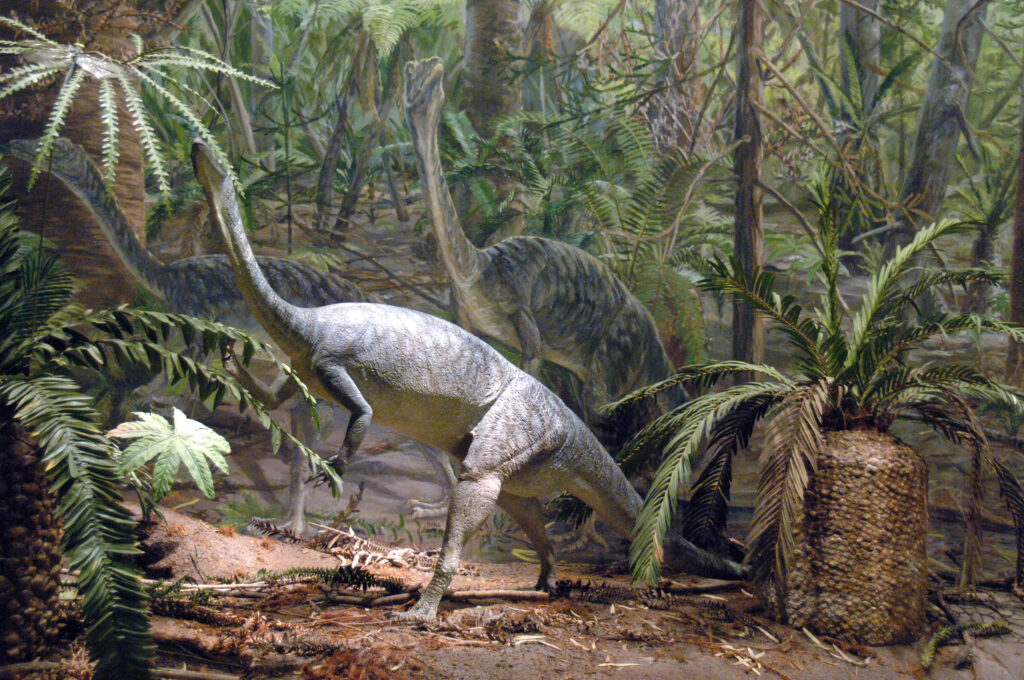
Dr. Hans-Dieter Sues and the Forgotten Dinosaurs of the Early Mesozoic

The early days of dinosaur evolution remain one of paleontology’s most fascinating yet understudied chapters. While Jurassic and Cretaceous giants like Tyrannosaurus rex and Brachiosaurus have captured public imagination for generations, their evolutionary precursors from the dawn of the Mesozoic Era have often been overlooked. Dr. Hans-Dieter Sues, a distinguished paleontologist and Senior Scientist at ...

A lifelike dinosaur statue, resembling a Tyrannosaurus rex, stands in a lush, green forest. It has an open mouth displaying sharp teeth, conveying a fierce expression.

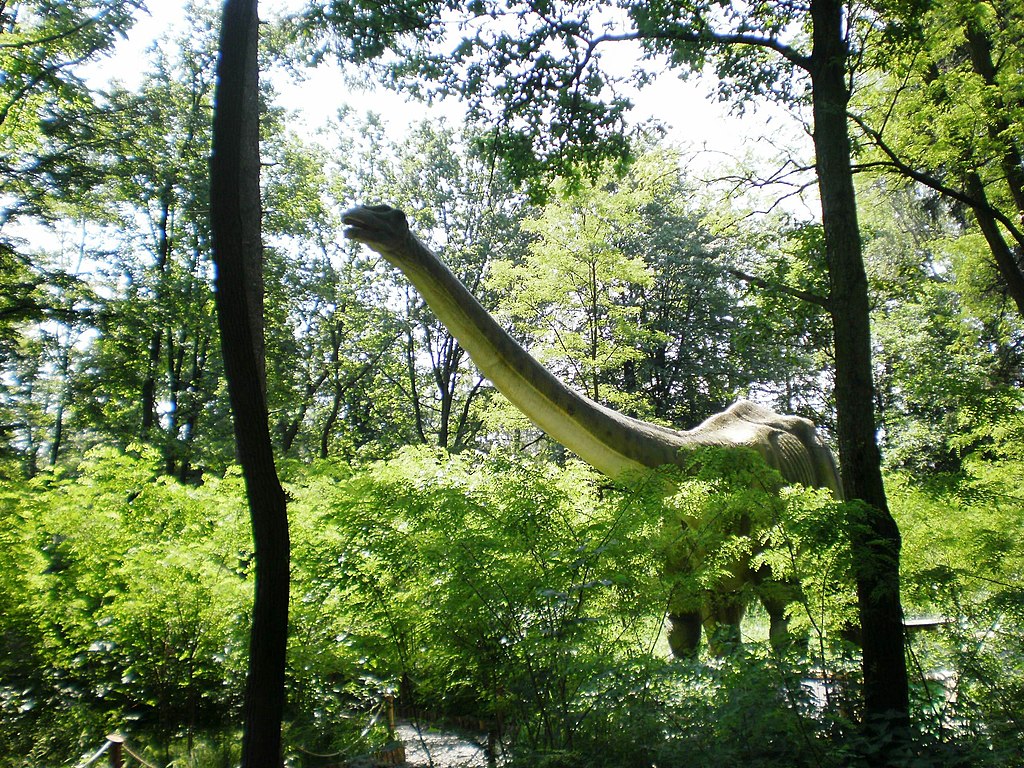
Did Gigantic Size Help or Hinder Dinosaur Survival?

For over 160 million years, dinosaurs dominated Earth’s terrestrial ecosystems, evolving into a remarkable diversity of forms. Among their most striking characteristics was the tremendous size many species achieved—from the 85-foot Brachiosaurus to the 40-foot Tyrannosaurus rex. These dimensions far exceed those of most modern land animals, raising fascinating questions about how size influenced dinosaur ...

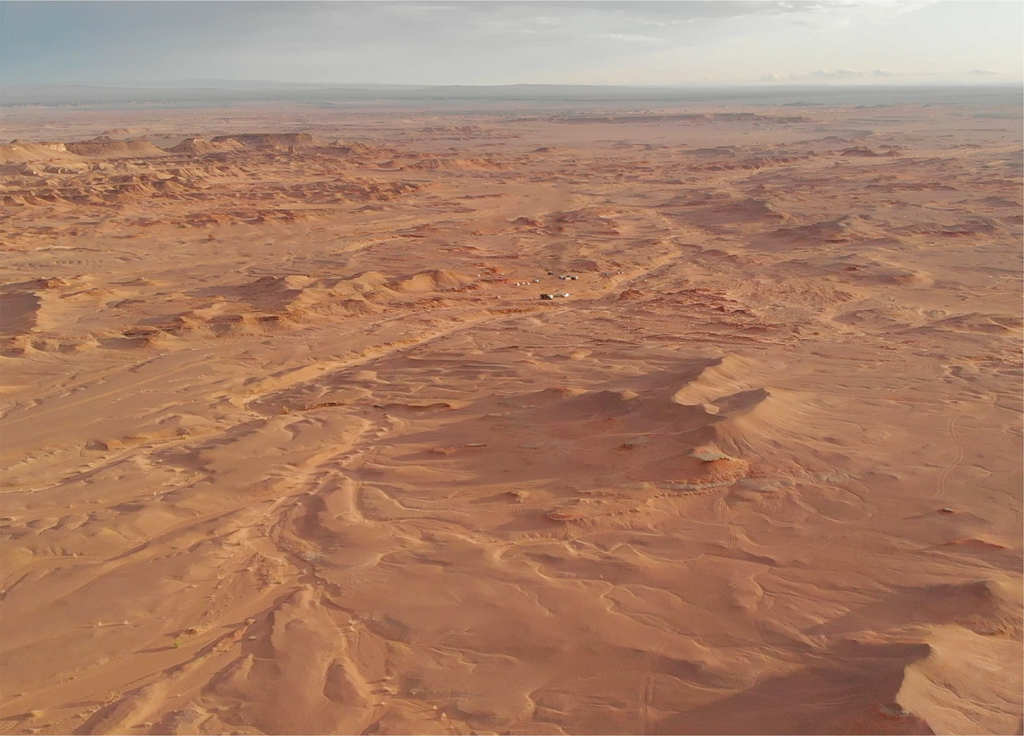
The Great Pangaean Desert

The Supercontinent Pangaea: Why It Mattered to Dinosaurs

In the vast timeline of Earth’s history, few geological features have played as significant a role in shaping life as Pangaea, the supercontinent that once dominated our planet. This massive landmass, existing approximately 335 to 175 million years ago, created the stage upon which dinosaurs would evolve, thrive, and diversify. Pangaea’s existence fundamentally shaped dinosaur ...