Northern Greece – Four million years ago, expansive grasslands concealed a formidable predator that prowled the Pliocene landscape. Fossil vertebrae discovered near Thessaloniki revealed Laophis crotaloides, a viperid snake that achieved unprecedented bulk among venomous reptiles. This ancient giant, first described in the mid-19th century, continues to captivate paleontologists with its massive frame and hints of unique adaptations.
A Lost Fossil Rediscovered
A Lost Fossil Rediscovered (Image Credits: Reddit)
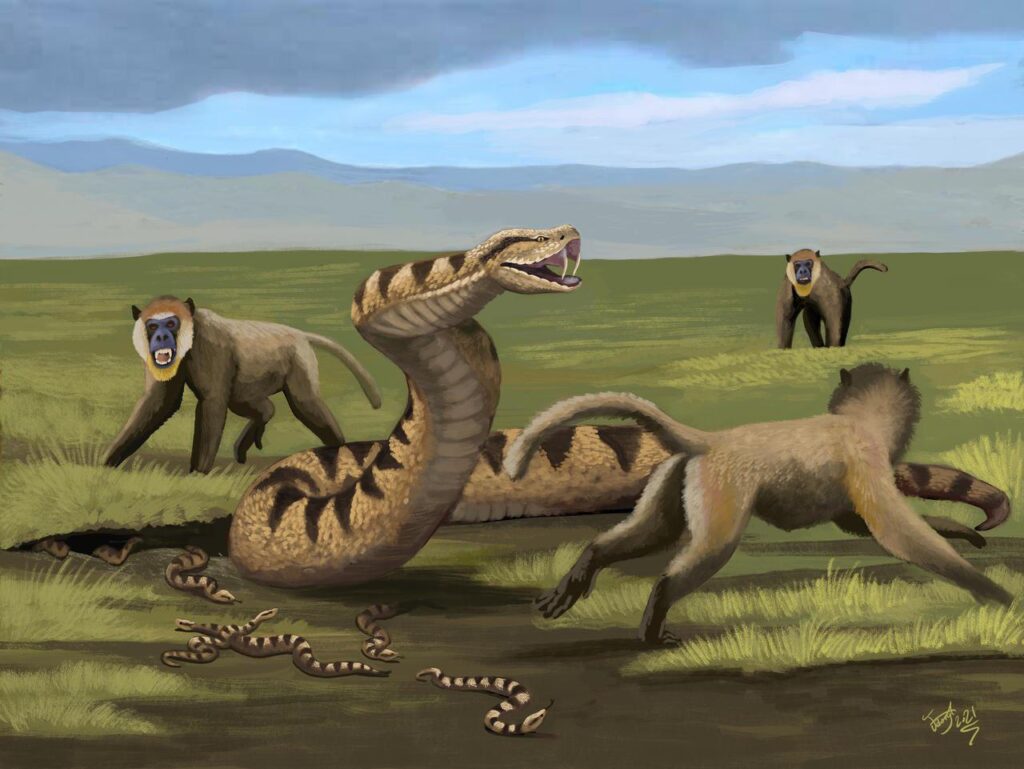
In 1857, British paleontologist Sir Richard Owen examined 13 large vertebrae from Megalo Emvolon, near Thessaloniki. He identified them as belonging to a viperid snake resembling modern rattlesnakes and named the species Laophis crotaloides, meaning “stone snake” in ancient Greek. Owen estimated its length at 10 to 12 feet based on the robust bone structure.
The original specimens vanished over time, leaving the species shrouded in mystery. That changed in 2014 when researchers uncovered a matching vertebra near Thessaloniki, confirming Owen’s description. Subsequent studies, including a 2016 analysis by Georgalis and colleagues, provided new measurements and reinforced Laophis as Europe’s largest known viper. These findings highlighted the snake’s vertebral features, such as a centrum length of about 15 mm and a height exceeding 28 mm.
Dimensions That Defy Expectations
Laophis crotaloides measured 3 to 4 meters (10 to 13 feet) in length, with estimates placing its weight at 26 kilograms (57 pounds). This girth set it apart, as its vertebrae indicated a far stockier build than typical vipers. Paleontologists derived these figures from comparisons with modern viper anatomy and direct measurements of the fossils.
Such size stemmed from elongated neural spines and wide prezygapophyses, features visible in Owen’s original illustrations. The snake’s body likely supported powerful musculature suited for ambushing prey. No other venomous snake fossils match this combination of length and mass, cementing Laophis’s record.
Adapting to Pliocene Plains
During the early Pliocene (MN 15 zone), northern Greece featured open steppes rather than dense forests. Laophis thrived in this seasonal environment, where cool winters challenged reptiles. Researchers suggest it possessed a specialized metabolism to hunt large mammals year-round, defying norms for cold-blooded giants.
Fossil sites like Maramena and Megalo Emvolon yielded additional herpetofauna, painting a picture of diverse reptile communities. Laophis likely used aggressive mimicry or biofluorescent traits, as speculated from modern viper analogs, to lure prey amid the grasses. Its presence underscored how Pliocene Europe fostered oversized predators before climate shifts favored smaller forms.
Heavyweight Champion Among Venomous Snakes
Modern king cobras reach up to 5.5 meters but weigh only about 10 kilograms, making Laophis nearly three times heavier despite shorter length. The South American bushmaster, the largest living viper at 3.7 meters and 5 kilograms, also pales in comparison. These disparities highlight Laophis’s exceptional robustness.
Here is a comparison of key venomous snakes:
| Species | Max Length | Max Weight |
|---|---|---|
| Laophis crotaloides | 4 m | 26 kg |
| King Cobra | 5.5 m | 10 kg |
| Bushmaster | 3.7 m | 5 kg |
- Laophis excelled in mass, ideal for overpowering sizable prey.
- King cobras prioritize length for elevation and strikes.
- Bushmasters remain slimmer, suited to rainforest ambushes.
- All share viperid or elapid venom delivery but differ in ecology.
Legacy of a Prehistoric Predator
Laophis crotaloides offers a window into an era when venomous snakes pushed physical limits in temperate zones. Its fossils challenge assumptions about reptile gigantism, typically linked to tropics. Ongoing research may uncover more remains, refining our understanding of Pliocene biodiversity.
Key Takeaways
- Laophis weighed 57 pounds, triple a king cobra’s mass.
- First described in 1857; key fossils rediscovered in 2014.
- Lived in Greek grasslands 4 million years ago.
The story of this colossal viper reminds us that ancient ecosystems harbored surprises far beyond today’s wildlife. What do you think about Laophis crotaloides? Tell us in the comments.