Articles for author: Awais Khan

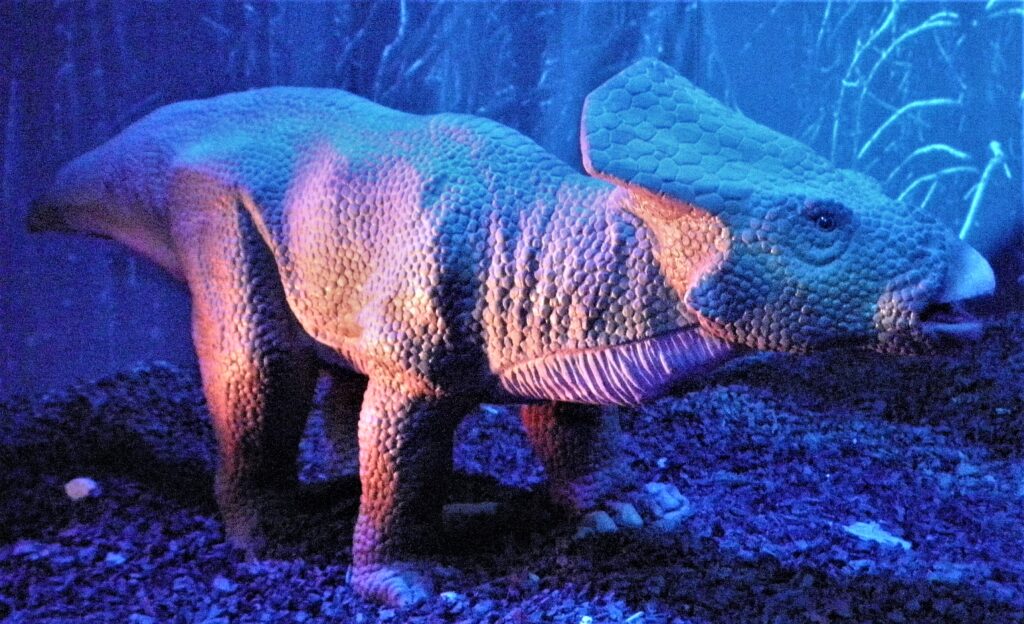
A small dinosaur model with textured skin and frill, illuminated in blue and purple light, stands on a dark, rocky surface in an exhibit.

Protoceratops: The Small Frilled Dinosaur at the Center of the First Dino Fight

Protoceratops, a relatively small but significant member of the ceratopsian family, has fascinated paleontologists since its discovery in the 1920s. This sheep-sized dinosaur with its distinctive frill has become one of the most well-documented dinosaurs thanks to numerous fossil discoveries, including eggs, juveniles, and adults. Perhaps most famously, Protoceratops appears in what may be the ...


A dark, rocky planet with a blue glow is surrounded by multiple asteroids in space. The scene conveys a sense of mystery and isolation. Stars dot the black background.

The Role of Asteroids and Supervolcanoes in Dinosaur History

Dinosaurs dominated Earth for over 165 million years, establishing themselves as one of the most successful groups of animals in our planet’s history. Yet their reign came to a dramatic end 66 million years ago during the Cretaceous-Paleogene (K-Pg) extinction event, which eliminated approximately 75% of all species on Earth. For decades, scientists have debated ...

José Bonaparte

José Bonaparte: The Argentine Legend Who Brought South America’s Dinosaurs to Light

José Bonaparte, often called the “Father of South American Paleontology,” transformed our understanding of dinosaur evolution through his remarkable discoveries in Argentina. Without formal academic training, this self-taught scientist unearthed some of the most important dinosaur fossils ever found, revealing that South America was home to unique dinosaur lineages that evolved separately from those in ...

Close-up of a dinosaur skeleton head, showcasing sharp teeth and detailed bones. Background features blurred skeleton parts, museum-like setting. Atmospheric and intriguing.

Fake Fossils in Museums: Can You Spot the Forgery?

In the hallowed halls of natural history museums worldwide, millions of visitors marvel at fossilized remains of creatures that walked, swam, or flew across our planet millions of years ago. These precious windows into Earth’s past help scientists assemble the complex puzzle of evolution and ancient ecosystems. However, lurking among authentic specimens is a troubling ...

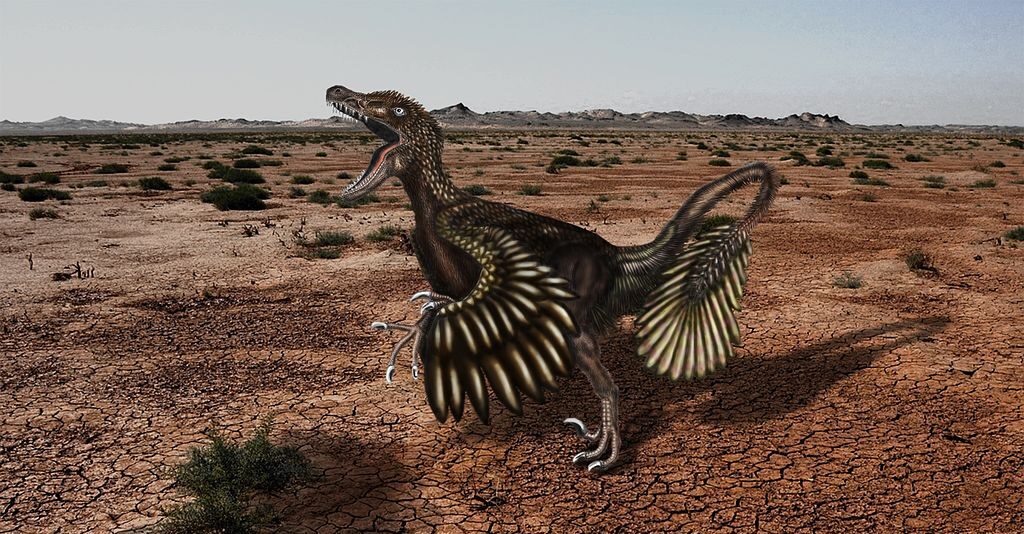
Velociraptor Mongoliensis Painting

How Dinosaurs Adapted to Living in Deserts, Swamps, and Forests

The remarkable 165-million-year reign of dinosaurs across Earth showcases one of evolution’s most impressive achievements: adaptation to diverse environments. From scorching deserts to muggy swamps and dense forests, dinosaurs evolved specialized traits that allowed them to thrive in vastly different ecosystems. These adaptations manifested in their skeletal structures, metabolic processes, feeding strategies, and reproductive behaviors. ...

A lifelike dinosaur statue stands amid lush greenery, with towering palms and dense foliage. The scene evokes a prehistoric, adventurous ambiance.

What Dinosaur Noses Tell Us About Their Intelligence and Senses

Dinosaurs dominated Earth for over 165 million years, yet our understanding of their sensory capabilities and cognitive abilities remains limited. Recent paleontological advances, however, have begun to unlock new insights by focusing on an often-overlooked feature: their noses. The nasal passages and olfactory bulbs of dinosaurs provide critical clues about how these ancient creatures experienced ...

A roaring T. rex, mouth open displaying sharp teeth, emerges from dense jungle foliage. The scene is dark and intense, evoking a sense of danger.

The Apex Predators of the Mesozoic: Who Ruled Where?

The Mesozoic Era, spanning from 252 to 66 million years ago, was a time when Earth’s landscapes and oceans teemed with formidable predators that have captivated our imagination since their fossilized remains were first discovered. Often called the “Age of Reptiles,” this vast period witnessed the rise and fall of some of the most fearsome ...

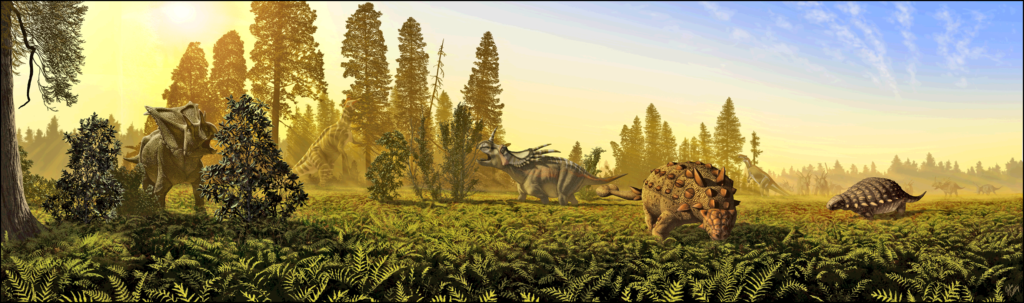
Dinosaurs roam a prehistoric forest at sunrise. A Triceratops, Ankylosaurus, and other dinosaurs are surrounded by lush ferns and towering trees.

What Did a Day Look Like in the Jurassic Period?

The Jurassic Period, from approximately 201 to 145 million years ago, represents one of the most fascinating chapters in Earth’s history. This middle period of the Mesozoic Era witnessed the dominance of dinosaurs, the evolution of early mammals, and dramatic shifts in our planet’s geography and climate. While we can’t travel back in time to ...

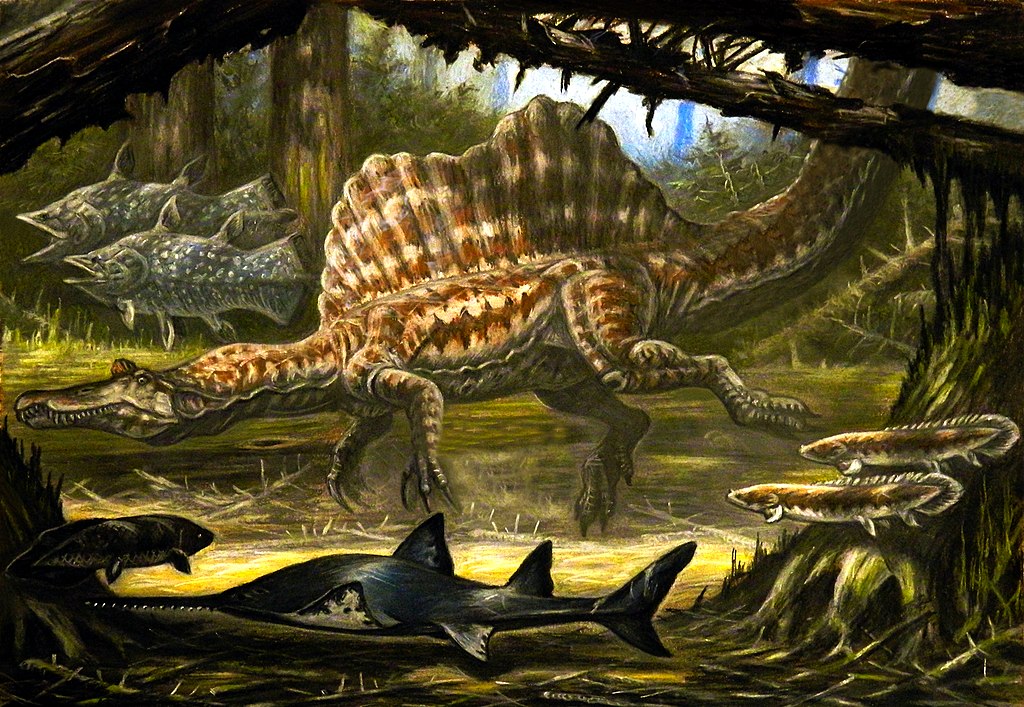
The mystery of how Spinosaurus moved, both on land and in water, continues to spark heated debates among paleontologists, with each new discovery offering fresh insights into its unique biology.

Spinosaurus: The Aquatic Predator That’s Still Changing Shape

In the vast catalog of prehistoric beasts, few have undergone as many dramatic scientific reimaginings as Spinosaurus aegyptiacus. This massive theropod dinosaur from the Cretaceous period has transformed in our scientific understanding from a standard terrestrial predator to what many paleontologists now consider the first known semi-aquatic dinosaur. The story of Spinosaurus is not just ...

Awais Khan

Velociraptor Mongoliensis Painting

The Raptor Debate: Just How Smart Were They, Really?

When Steven Spielberg’s “Jurassic Park” hit theaters in 1993, it forever changed how we view extinct dinosaurs, particularly the clever, kitchen-invading Velociraptors that hunted in packs and outwitted humans. These cinematic portrayals sparked widespread fascination with raptor intelligence, launching debates among paleontologists and dinosaur enthusiasts alike. But how much of what we think we know ...