Articles for author: Awais Khan

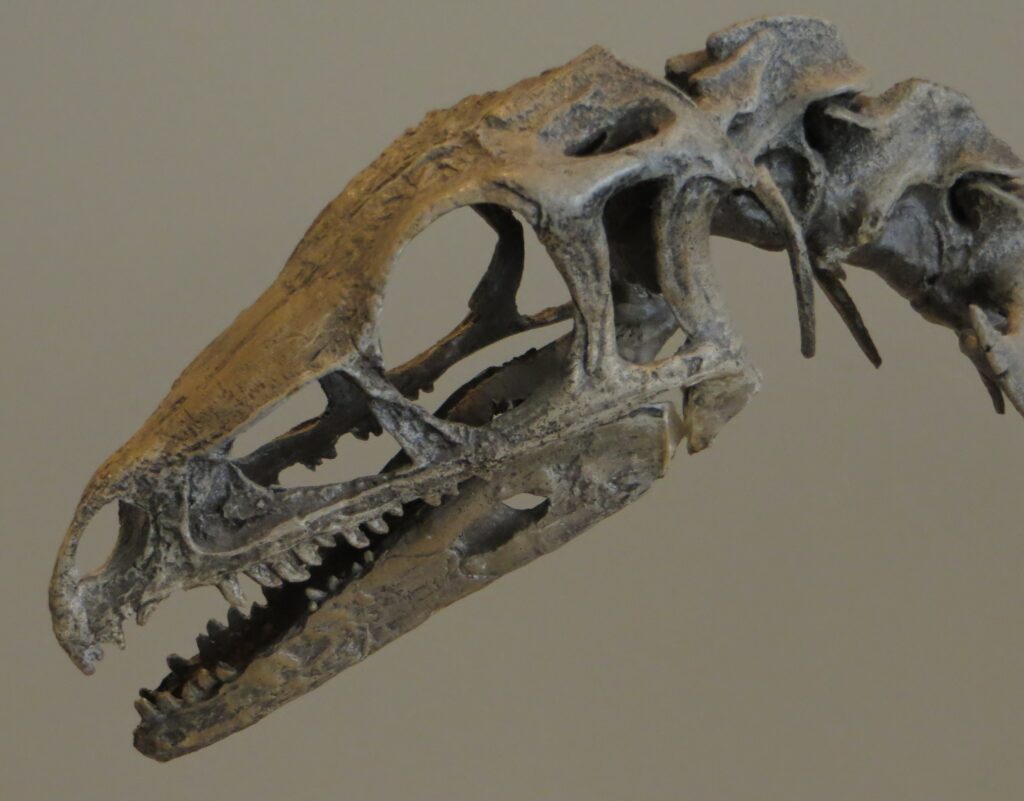
Fossilized dinosaur skull with sharp teeth and hollow eye sockets. The weathered gray bone highlights intricate jaw and cranial features against a beige background.

How Fast Did Dinosaurs Digest?

Dinosaurs, those magnificent prehistoric creatures that roamed Earth for over 165 million years, continue to captivate our imagination despite being extinct for 65 million years. While we’ve learned much about their appearance, behavior, and habitats through fossil records, some aspects of dinosaur physiology remain less understood. One such fascinating aspect is their digestive processes. How ...
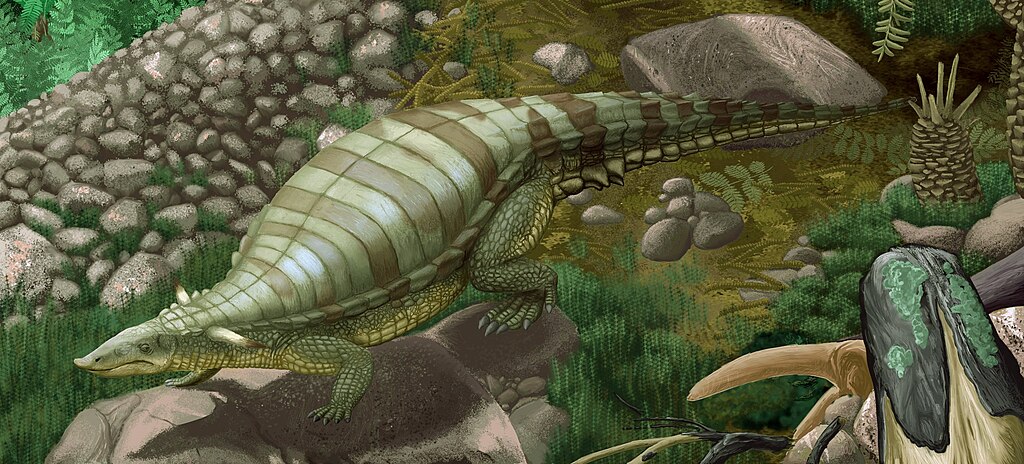
Illustration of a large, armored prehistoric reptile with a striped shell, moving across a rocky terrain, surrounded by lush green ferns and plants.

Typothorax: The Strange Armored Reptile From the American Southwest

Beneath the rust-colored rocks and windswept mesas of the American Southwest lies a prehistoric legacy that continues to captivate paleontologists worldwide. Among the many fossil treasures discovered in this region, few are as distinctive as Typothorax, an armored reptile that roamed the landscape during the Late Triassic period, approximately 230-200 million years ago. With its ...

Close-up of a dinosaur footprint fossil embedded in rocky ground. The texture is rugged, with shades of brown and green, conveying an ancient, historical feel.

What Fossil Footprints Reveal About Dinosaur Stampedes

Across the ancient landscapes of our planet, dinosaurs once thundered in massive herds, leaving behind only their fossilized footprints as evidence of these dramatic events. These trace fossils, preserved in stone for millions of years, provide paleontologists with a remarkable window into dinosaur behavior that skeletal remains alone cannot offer. Unlike bones, which reveal information ...

A realistic dinosaur statue, with an open mouth and sharp teeth, against a blue sky. The large sculpture conveys a sense of power and ferocity.

Could Dinosaurs Wink, Blink, or Cry?

Dinosaurs have captivated human imagination since their fossils were first discovered. While we’ve made tremendous advances in understanding their anatomy, behavior, and evolution, certain aspects of their biology remain shrouded in mystery. Among these enigmas are questions about their ocular capabilities and expressions: Could dinosaurs wink playfully at each other? Did they blink to protect ...

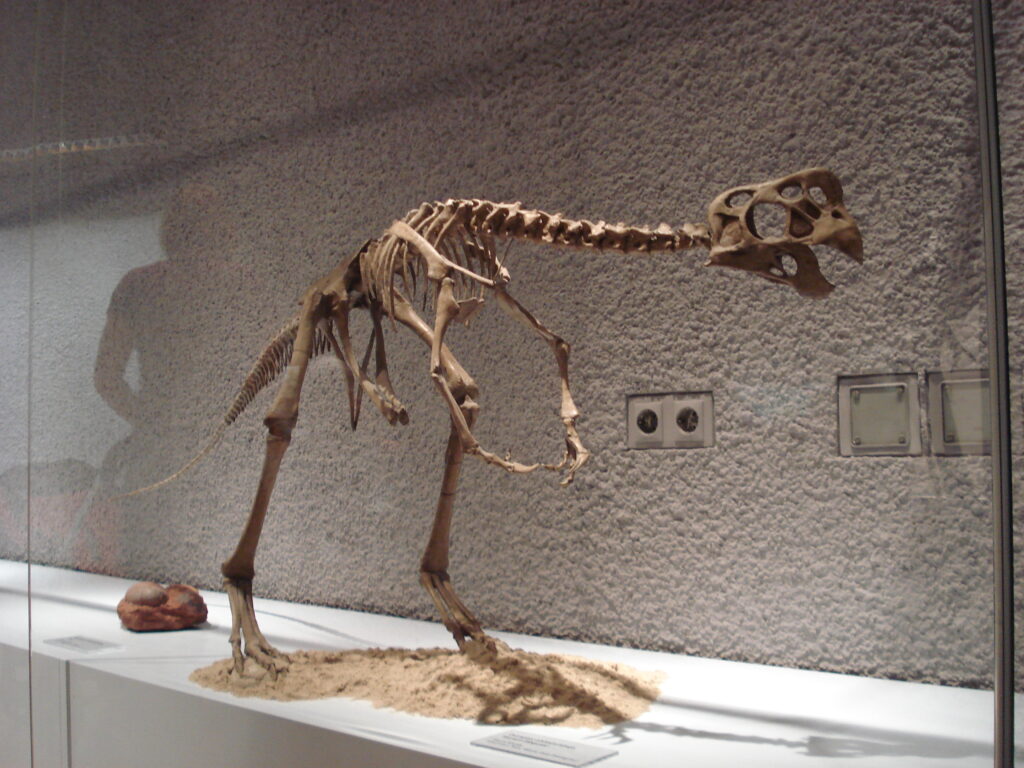
Dinosaur skeleton displayed in a glass case against a textured wall. The bones are arranged on a sandy surface, conveying an ancient, historical tone.

How Scientists Tell the Age of a Dinosaur Bone

When we marvel at dinosaur skeletons in museums, we’re looking at remains that are millions of years old. But how exactly do scientists determine the age of these ancient bones? Dating dinosaur fossils is a fascinating blend of chemistry, physics, geology, and paleontology that allows researchers to peer back into Earth’s distant past. The methods ...

Black and white image of a dinosaur fossil skull, with intricate details of the jaw and teeth. The texture is weathered, conveying ancient history.

The Dinosaur Fossil That Was Assembled Backwards

The field of paleontology has been punctuated by moments of brilliance and occasional blunders that have shaped our understanding of prehistoric life. Among these fascinating stories of scientific discovery and misinterpretation, few are as intriguing as the case of Iguanodon—a dinosaur whose initial reconstruction became one of paleontology’s most famous mistakes. This remarkable tale of ...

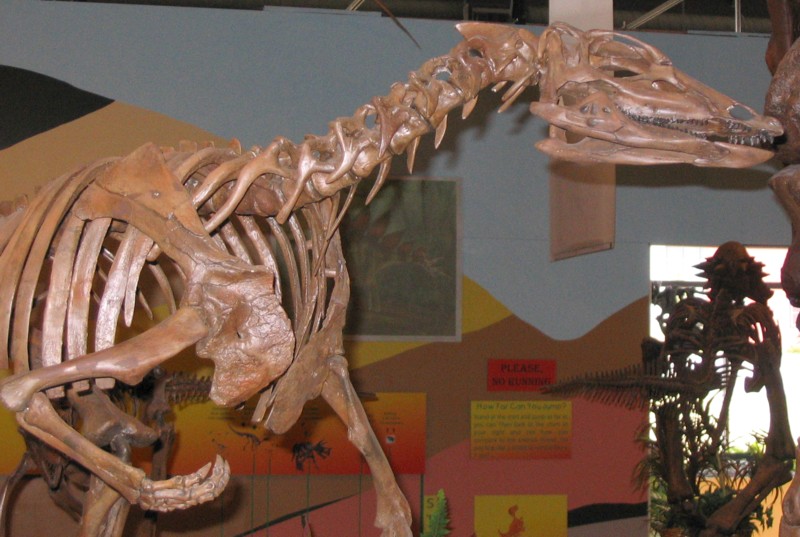
Dinosaur skeleton exhibit in a museum, featuring a partial view of a long-necked fossil against a colorful, informative background display.

Have We Found Fossils With Soft Tissue Preserved?

For centuries, our understanding of prehistoric life has been built on the study of fossilized bones and other mineralized remains. The conventional wisdom held that soft tissues—muscles, blood vessels, skin, and internal organs—could never survive the fossilization process. However, remarkable discoveries over the past few decades have challenged this assumption, opening exciting new windows into ...

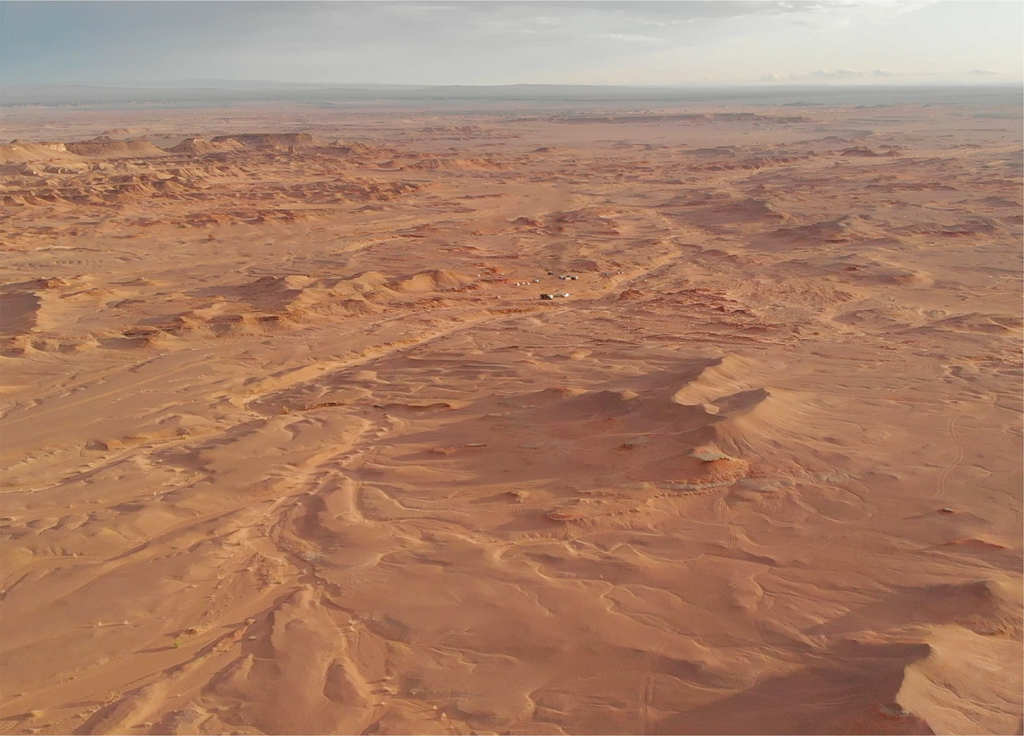
A vast, arid desert landscape under a cloudy sky, with rolling dunes and small rugged hills. Sparse vegetation, conveying a sense of isolation.

What Prehistoric Climates Meant for Daily Dino Survival

The dinosaurs dominated Earth for over 165 million years, thriving through dramatic climate shifts and environmental changes that would challenge even the most adaptable modern species. From scorching deserts to lush rainforests, from warm polar regions to seasonal temperate zones, these magnificent creatures evolved remarkable adaptations to survive in their prehistoric worlds. The climate of ...

Microraptor's aerodynamic feathers hint at gliding or even early flight, soaring through prehistoric skies.

The Rise of Miniaturization: Why So Many Tiny Dinosaurs Evolved in the Cretaceous

The Cretaceous period, spanning from approximately 145 to 66 million years ago, witnessed a fascinating evolutionary trend that continues to captivate paleontologists and dinosaur enthusiasts alike: the proliferation of miniaturized dinosaur species. While popular culture often portrays dinosaurs as towering behemoths, the fossil record reveals a different story—one where diminutive dinosaurs thrived and diversified across ...

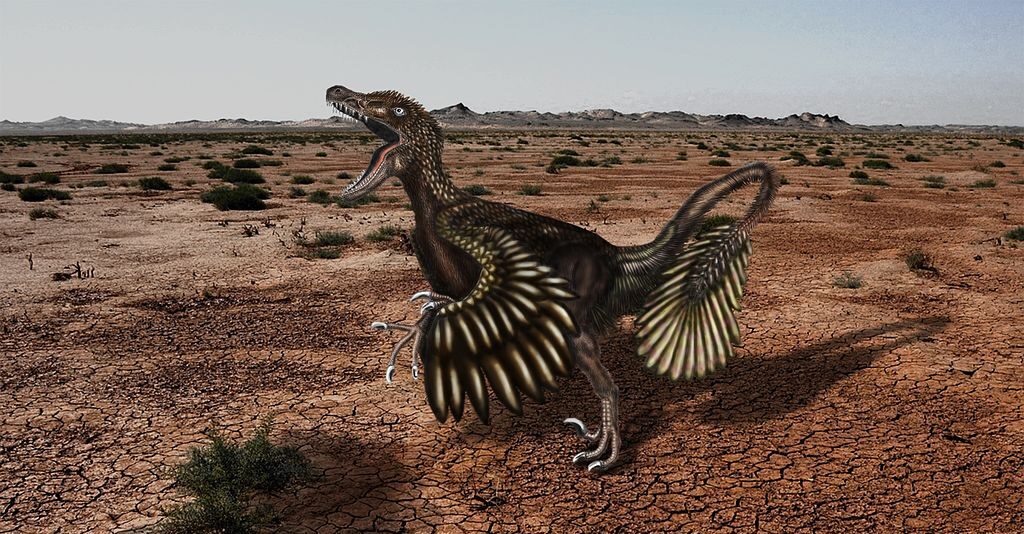
Velociraptor Mongoliensis Painting

Tiny Tyrants: Mini-Raptors of the Cretaceous Forests

While Tyrannosaurus rex and other massive predatory dinosaurs often dominate our imagination of prehistoric life, the Cretaceous period was also home to a fascinating group of smaller predators that ruled the undergrowth of ancient forests. These diminutive yet deadly hunters—sometimes weighing no more than a modern turkey—were equipped with impressive intelligence, speed, and hunting adaptations ...