Articles for author: Mitul Biswas

Bugs Bigger Than Birds

Bugs Bigger Than Birds The Insects of the Carboniferous and Beyond

When we imagine prehistoric giants, dinosaurs typically spring to mind, but millions of years before these reptiles ruled the Earth, another group of creatures grew to astonishing proportions. During the Carboniferous period, approximately 359 to 299 million years ago, insects reached sizes that seem almost impossible by today’s standards. Some species grew larger than many ...

dinosaur Video Games

How Dinosaurs Have Been Depicted in Video Games Over the Years

Dinosaurs have captivated human imagination since their fossils were first discovered, and their presence in video games has evolved dramatically over the decades. From pixelated predators to scientifically accurate digital recreations, these prehistoric creatures have stomped, roared, and evolved across gaming platforms since the earliest days of the medium. The portrayal of dinosaurs in video ...

Dinosaur statue outdoors, resembling a brown triceratops with three horns, stands on rocks surrounded by green foliage, next to a "Do Not Climb" sign.

Carnotaurus The Horned Meat-Eater With Tiny Arms and a Speedy Build

The prehistoric world was filled with fearsome predators, but few were as distinctive as Carnotaurus sastrei. This peculiar theropod dinosaur, whose name translates to “meat-eating bull,” roamed the landscapes of South America during the Late Cretaceous period, approximately 72-69 million years ago. With its unique combination of bull-like horns, tiny forelimbs, and a body seemingly ...

Gorgosaurus chasing Corythosaurus

Corythosaurus The Crested Hadrosaur With a Helmet Like Skull

Corythosaurus, meaning “helmet lizard,” stands as one of the most distinctive dinosaurs of the Late Cretaceous period. With its remarkable cranial crest resembling a Corinthian helmet, this duck-billed dinosaur captured scientists’ imagination since its first discovery in 1912. As a member of the hadrosaur family, Corythosaurus combined impressive size with unique anatomical features that continue ...

10 Prehistoric Birds That Were Real-Life Monsters

10 Prehistoric Birds That Were Real-Life Monsters

Picture this scene from millions of years ago. A shadow sweeps across an ancient grassland, but it’s not from an airplane overhead. It’s from a bird. A bird so massive that its wingspan stretches further than most school buses are long. Somewhere else, thunderous footsteps echo through prehistoric forests as flightless giants, taller than basketball ...

The Inland Seas That Split North America in Two

The Inland Seas That Split North America in Two

The heart of North America once harbored vast prehistoric seas that divided the continent into separate landmasses. These ancient inland waterways, which existed during various geological periods, fundamentally shaped the continent we know today. From the Western Interior Seaway of the Cretaceous period to earlier Paleozoic seas, these massive bodies of water created unique ecosystems, ...

Dinosaurs in Modern Art

How Dinosaurs Are Represented in Modern Art

Dinosaurs, those magnificent creatures that once dominated our planet, continue to captivate our collective imagination despite having vanished 66 million years ago. Their ghostly presence persists not only in scientific research but also in the realm of art, where creative minds breathe new life into these prehistoric beings. Modern artists across various media have embraced ...

gray dinosaur skeleton figurine

How Do We Reconstruct Dinosaur Skeletons in Museums

From the first moment you walk into a natural history museum and encounter a towering Tyrannosaurus rex or a magnificent Diplodocus, there’s an undeniable sense of wonder. These massive prehistoric creatures, brought back to life through meticulous scientific reconstruction, connect us to Earth’s distant past. But have you ever wondered how scientists and museum professionals ...

Continental Drift

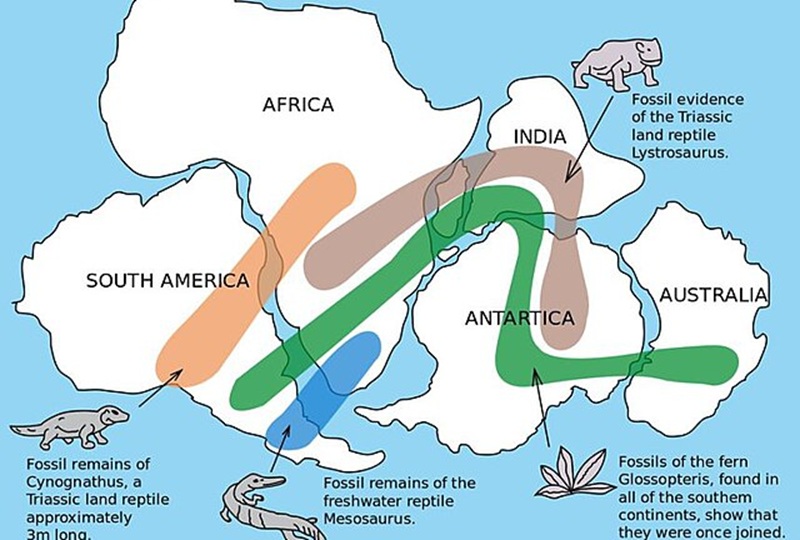
How Continental Drift Split Dinosaur Species Apart

The ancient supercontinent Pangaea began breaking apart approximately 180 million years ago, triggering one of the most significant evolutionary experiments in Earth’s history. This massive geological process, known as continental drift, created natural barriers that isolated dinosaur populations from one another, leading to divergent evolution across separate landmasses. Once-connected species began developing along independent evolutionary ...

Fossils Are Glued Together

When Fossils Are Glued Together Science or Scam

The world of paleontology sits at a fascinating intersection of scientific discovery and public wonder. For centuries, fossil discoveries have captivated our imagination and expanded our understanding of Earth’s ancient past. However, behind museum displays of complete dinosaur skeletons and prehistoric creatures lies a complex reality that many visitors don’t realize: very few fossils are ...