Articles for category: Dinosaur Profiles

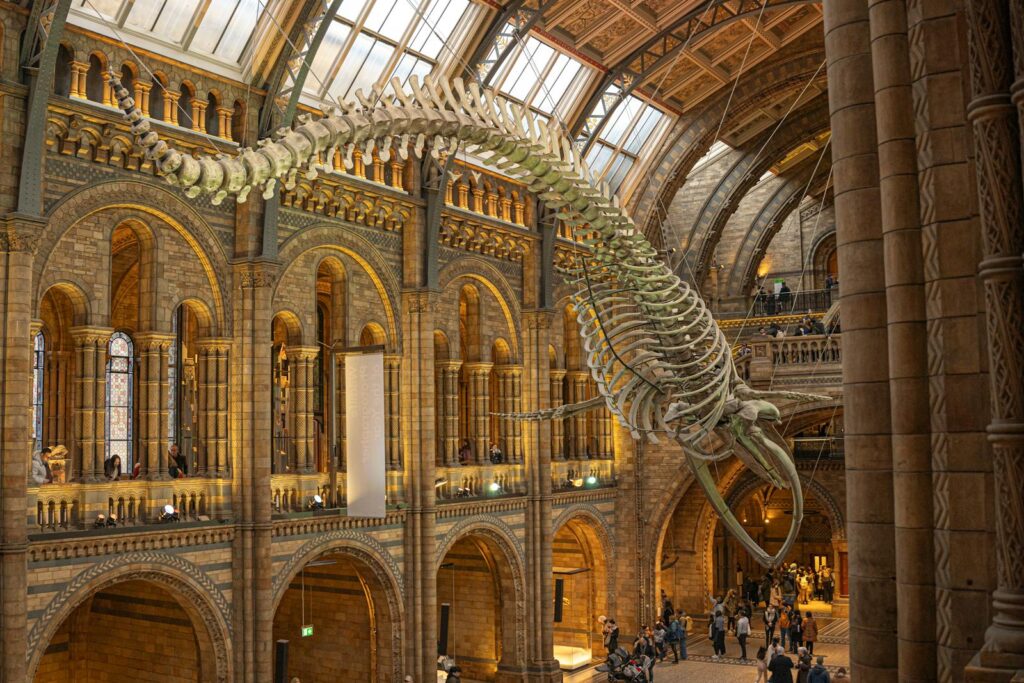
Dinosaur skeleton displayed among lush, green foliage in a museum. Its long neck arches gracefully, creating a striking, lifelike presence.

Anzu wyliei: The “Chicken from Hell” That Roamed South Dakota

Approximately 66 million years ago, during the Late Cretaceous period, a peculiar dinosaur roamed the prehistoric landscapes of what would eventually become South Dakota. Named Anzu wyliei but colloquially known as the “Chicken from Hell,” this feathered dinosaur has fascinated paleontologists since its official scientific description in 2014. The creature’s nickname stems from its appearance, ...

Oculudentavis

Meet the Smallest Dinosaur Ever Discovered: The Hummingbird-Sized Oculudentavis

In the world of paleontology, discoveries constantly reshape our understanding of prehistoric life. Among these findings, few have been as fascinating as Oculudentavis khaungraae, a tiny creature that stunned scientists when it was first identified in 2020. Preserved in amber from Myanmar dating back approximately 99 million years, this diminutive animal was initially believed to ...

Gargi

The Anatomy of a Killer: Why T. rex Became So Dominant

The Anatomy of a Killer: Why T. rex Became So Dominant

Imagine walking through ancient forests 68 million years ago, when the ground would shake beneath your feet from footsteps that weren’t your own. In those prehistoric landscapes of what we now call North America, one predator ruled supreme with such devastating efficiency that its very name has become synonymous with ultimate power. But how did ...

Did Sauropods Truly Migrate Thousands of Miles Across Pangea's Vast Landscapes?

Did Sauropods Truly Migrate Thousands of Miles Across Pangea’s Vast Landscapes?

Picture this. Gigantic creatures with necks stretching toward the sky, walking for decades across a land so vast it defies imagination. The question of whether sauropods migrated thousands of miles across Pangea has captivated paleontologists for years. These weren’t your average road trips, these were journeys spanning what would later become continents. What’s fascinating is ...

Illustration of a gray and blue dinosaur with a slender body, long tail, and three-toed front limbs. It has a textured pattern and alert stance.

Eoraptor: The Small, Swift Carnivore That May Have Started It All

In the vast timeline of Earth’s history, few creatures hold as pivotal a position as Eoraptor. This diminutive dinosaur, whose name means “dawn thief,” lived approximately 231 million years ago during the Late Triassic period, making it one of the earliest known dinosaurs. Discovered in Argentina’s Ischigualasto Formation in 1991, Eoraptor has forced paleontologists to ...

Horned dinosaur ceratopsian, Triceratops (Cretaceous, Hell Creek Formation, Corson County, South Dakota)

Was the Triceratops Just a Young Torosaurus? The Ongoing Debate

In the realm of paleontology, few controversies have sparked as much scientific debate as the relationship between Triceratops and Torosaurus. For decades, these iconic horned dinosaurs were classified as distinct genera that lived during the Late Cretaceous period. However, in 2010, a contentious hypothesis emerged suggesting that Torosaurus specimens might actually represent mature Triceratops individuals, ...

Two large dinosaurs are near a water body under a cloudy sky. One drinks from the river, while the other stands nearby. The scene is serene and prehistoric.

The Duck-Billed Dinosaur That Could Sing Through Its Skull

The duck-billed dinosaurs, or hadrosaurs, were among the most successful dinosaurs of the Late Cretaceous period. While their duck-like bills have captured our imagination for generations, recent scientific discoveries about their cranial structures have revealed something even more fascinating: some hadrosaurs may have been capable of producing complex sounds through elaborate hollow chambers in their ...