Articles for category: Dinosaur Science & Theories

Boterbloem (Ranunculus)

Did Toxic Plants Help Drive Dinosaurs to Extinction?

For 165 million years, dinosaurs dominated Earth’s ecosystems. Then, rather suddenly in geological terms, they vanished – leaving behind only their avian descendants. While most scientists agree that an asteroid impact played a major role in the mass extinction event at the end of the Cretaceous period, emerging research suggests a more complex narrative. Could ...
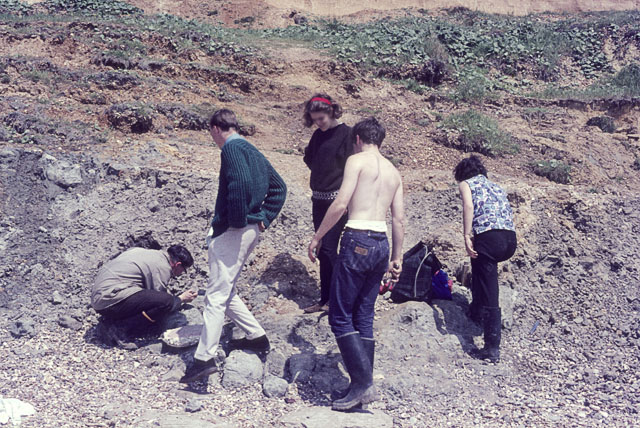
Five people are exploring a rocky, grassy hillside. One person is shirtless. The group is intently examining the ground, conveying curiosity and engagement.

The Role of Amateur Fossil Hunters in Major Discoveries

The world of paleontology often conjures images of academic professionals meticulously brushing away dirt in remote locations. However, some of history’s most significant fossil discoveries weren’t made by scientists with advanced degrees, but by everyday people with a passion for the past. Amateur fossil hunters—from curious children to dedicated hobbyists—have repeatedly changed our understanding of ...

A dinosaur model with an open mouth, resembling a T. rex, stands among lush green foliage and plants.

Could Dinosaurs Have Evolved into Even Smarter Creatures?

The extinction of dinosaurs 66 million years ago represents one of Earth’s most profound evolutionary turning points. The asteroid impact that wiped out approximately 75% of all species cleared the evolutionary playing field, allowing mammals to diversify and eventually produce primates with remarkable intelligence. But this cataclysmic reset prompts a fascinating question: without this extinction ...

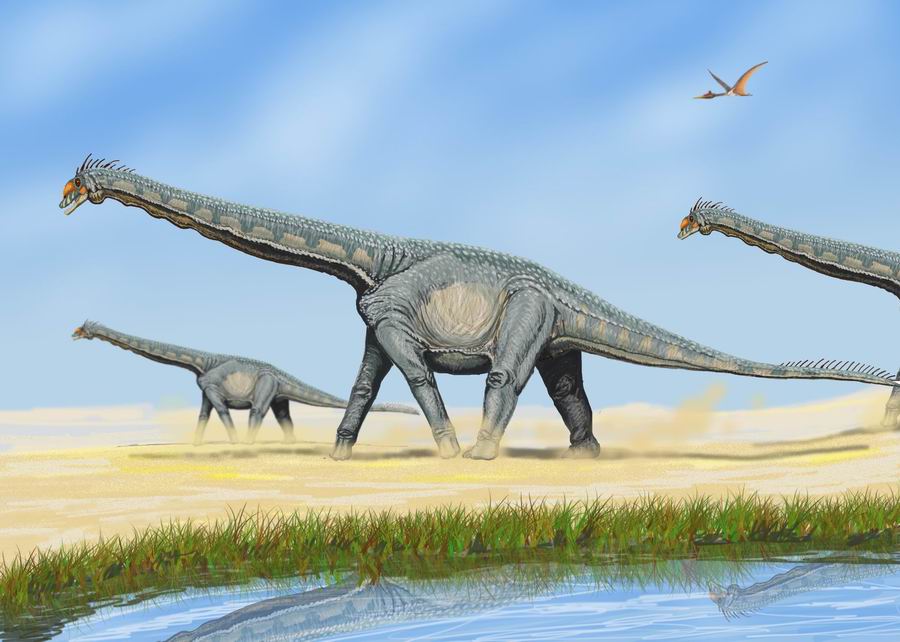
Alamosaurus: North America's Answer to South American Giants

10 Dinosaurs So Big They Shattered Scientific Assumptions

The world of dinosaur paleontology has witnessed jaw-dropping discoveries that completely transformed our understanding of just how massive these ancient giants could become. While children grow up imagining T. rex as the ultimate prehistoric predator, the reality is far more mind-boggling – there were herbivorous dinosaurs so unimaginably large that they redefined what we thought ...

5 Reasons Why Dinosaurs Dominated (While Others Vanished)

5 Reasons Why Dinosaurs Dominated (While Others Vanished)

Picture this: for over 160 million years, dinosaurs absolutely ruled the Earth. While countless other species came and went, these remarkable creatures maintained their dominance across three entire geological periods. But here’s the fascinating twist that most people don’t realize – dinosaurs weren’t always the kings of the prehistoric world. They started as small, scrappy ...

Dino Dreams: Could Dinosaurs Have Had REM Sleep?

Dino Dreams: Could Dinosaurs Have Had REM Sleep?

Picture this: a massive Tyrannosaurus rex closing its tiny eyes and drifting off into a world of prehistoric dreams. Or maybe a graceful Triceratops, tucked comfortably in a forest clearing, experiencing rapid eye movements behind closed lids. While this might sound like something out of a fantasy movie, recent scientific discoveries are painting an entirely ...

A lifelike dinosaur statue, resembling a Tyrannosaurus rex, stands in a lush, green forest. It has an open mouth displaying sharp teeth, conveying a fierce expression.

Did Gigantic Size Help or Hinder Dinosaur Survival?

For over 160 million years, dinosaurs dominated Earth’s terrestrial ecosystems, evolving into a remarkable diversity of forms. Among their most striking characteristics was the tremendous size many species achieved—from the 85-foot Brachiosaurus to the 40-foot Tyrannosaurus rex. These dimensions far exceed those of most modern land animals, raising fascinating questions about how size influenced dinosaur ...