Articles for category: Prehistoric Environment

Why Ancient Meteor Strikes Still Shape Earth's Weather Today

Why Ancient Meteor Strikes Still Shape Earth’s Weather Today

Picture Earth as a massive canvas where cosmic forces have painted their signatures across millions of years. When we look at today’s weather patterns, hurricanes swirling across oceans, or unexpected climate shifts, we’re witnessing the lingering effects of ancient cosmic collisions that reshaped our planet’s atmosphere. These weren’t just momentary disruptions but permanent alterations to ...

Gorgosaurus chasing Corythosaurus

Why Dinosaurs Thrived in the Hot, Humid Cretaceous

The Cretaceous period, spanning from 145 to 66 million years ago, represented the final chapter in the Age of Dinosaurs—a time when these magnificent creatures reached their evolutionary peak in both diversity and specialization. While dinosaurs had already dominated Earth for over 100 million years by this point, the Cretaceous offered a unique combination of ...

Forest Flowers Spring

When Flowers First Bloomed: How the Rise of Plants Changed the Dino World

In a world dominated by towering dinosaurs and ancient conifers, a quiet revolution was unfolding that would forever alter Earth’s ecosystems. Approximately 130-140 million years ago, during the Early Cretaceous period, the first flowering plants—or angiosperms—began to bloom across the prehistoric landscape. This botanical innovation represented one of the most significant evolutionary developments in our ...

Geology Play in Finding Dinosaurs

What Role Does Geology Play in Finding Dinosaurs

For paleontologists, the hunt for dinosaur fossils begins not just with a keen eye for bones, but with an intimate understanding of Earth’s geological processes. The science of geology provides the roadmap that leads researchers to fossil-rich locations and helps them understand the ancient environments where dinosaurs once lived. From sedimentary rock formations to the ...

When Pangaea began to break apart, it unleashed the Central Atlantic Magmatic Province—an enormous volcanic event around 201 million years ago that rocked the planet at the Triassic-Jurassic boundary.

Earthquakes, Eruptions, and Extinction Events in the Age of Dinosaurs

The Mesozoic Era, spanning from approximately 252 to 66 million years ago, was a dynamic period of Earth’s history dominated by dinosaurs. Beyond the fascinating creatures that roamed the planet, this era was characterized by tremendous geological activity that shaped continents, transformed ecosystems, and ultimately contributed to one of the most significant mass extinctions in ...

Icebergs are formed when pieces of ice break away from the Antarctic ice sheet

When the Poles Had Tropical Seas: Ocean Life at the Ancient Poles

Earth’s poles today are frigid realms of ice and snow, inhabited by remarkably adapted species that survive in some of our planet’s harshest conditions. Yet the geological record tells a dramatically different story—one where these same polar regions once hosted warm, tropical seas teeming with diverse marine life. This seemingly paradoxical transformation spans millions of ...

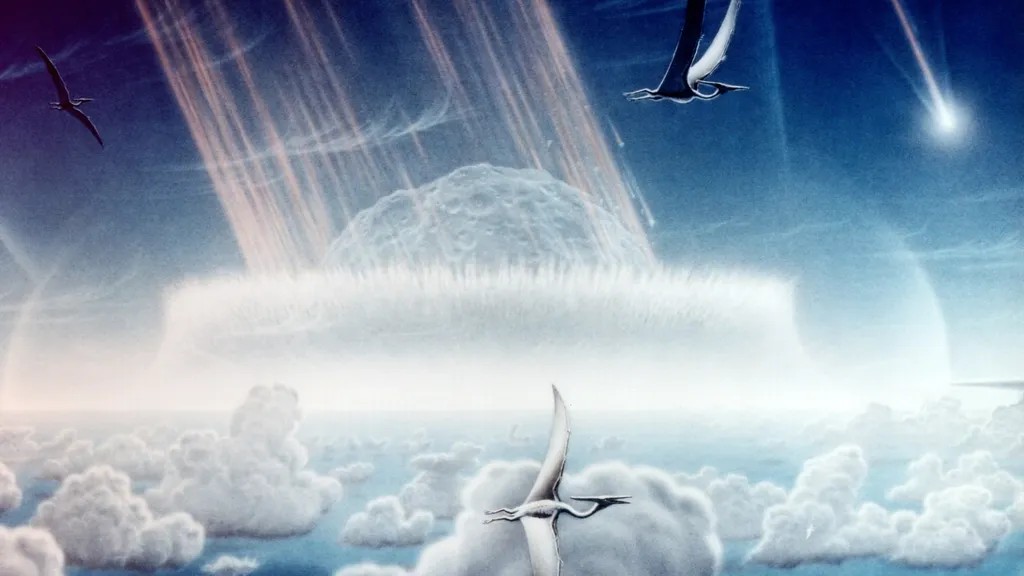
A fiery meteor crashes into the Earth, creating a bright explosion over a dark, cloud-covered ocean, illustrating a dramatic and destructive event.

How Ancient Meteor Showers May Have Triggered Mini-Extinctions

Earth’s history is punctuated by catastrophic events that have dramatically altered the course of life on our planet. While the dinosaur-killing asteroid impact 66 million years ago stands as the most famous extinction event linked to cosmic bombardment, scientists now believe numerous smaller, yet still significant “mini-extinctions” may have been triggered by ancient meteor showers ...

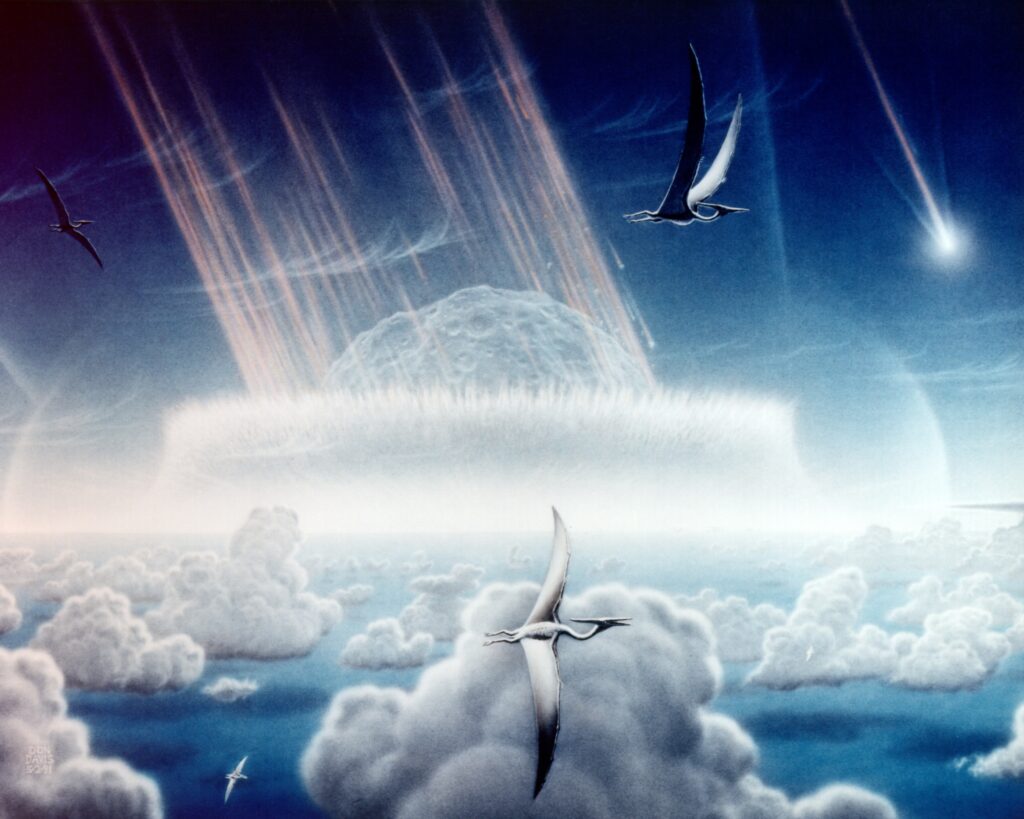
The dinosaur era concluded with one of the most dramatic climate catastrophes in Earth’s history, triggered by the impact of a massive asteroid approximately 10 kilometers in diameter in what is now the Yucatán Peninsula of Mexico.

What If Dinosaurs Never Went Extinct? The “What-If” War

The Cretaceous-Paleogene extinction event 66 million years ago dramatically altered Earth’s evolutionary trajectory, eliminating approximately 75% of species, including the non-avian dinosaurs that had dominated terrestrial ecosystems for over 160 million years. This catastrophic asteroid impact opened ecological niches that mammals eventually filled, ultimately leading to human evolution. But what if that asteroid had missed ...