Articles for author: Awais Khan

Close-up of a dark, serrated dinosaur tooth embedded in a textured beige rock. The sharpness and detail convey a sense of ancient history and discovery.

The Most Popular Dinosaur Costumes in Movies and TV Shows

Dinosaurs have captivated human imagination ever since their fossils were first discovered, but it’s their representation in visual media that has truly brought these prehistoric creatures to life in the public consciousness. From the early days of stop-motion animation to today’s cutting-edge CGI and practical effects, dinosaur costumes and representations have evolved dramatically. This evolution ...

A lifelike T-Rex model stands menacingly in a misty forest, showing sharp teeth and detailed scales. Tall green trees surround, adding a prehistoric feel.

What Is the Difference Between Theropods, Sauropods, and Ornithopods?

When we think of dinosaurs, most of us conjure images of massive, long-necked creatures grazing on treetops, fierce predators with razor-sharp teeth, or peculiar herbivores with beaks and frills. These mental images represent three major groups of dinosaurs that dominated the Mesozoic Era: theropods, sauropods, and ornithopods. Each group evolved distinct anatomical features, dietary preferences, ...

Ancient Wetlands and Swamps That Hid Dinosaurs

In the misty shadows of prehistoric landscapes, vast networks of wetlands and swamps once served as both sanctuary and hunting ground for countless dinosaur species. These waterlogged ecosystems, teeming with life and vegetation, created perfect conditions for dinosaur habitation while simultaneously preserving their remains for future discovery. Today, paleontologists unearth these ancient creatures from what ...

A large shark swims gracefully over a sunlit, seaweed-covered ocean floor. The clear blue water adds a serene yet commanding presence to the scene.

Life in the Shadows: Deep Ocean Creatures During the Age of Dinosaurs

While dinosaurs dominated the land during the Mesozoic Era (252-66 million years ago), an equally fascinating but less celebrated evolutionary story was unfolding in the depths of Earth’s oceans. The marine ecosystems of this period hosted an extraordinary array of creatures that thrived in darkness, adapting to changing ocean conditions and evolving remarkable survival strategies. ...

Illustration of large dinosaurs with long necks walking in a sandy landscape. A pterosaur flies in the blue sky, and grass grows near a water body.

When Scientists Thought Dinosaurs Were Just Giant Lizards

Long before we understood dinosaurs as the diverse group of animals that dominated Earth for over 165 million years, these prehistoric creatures were grossly misinterpreted. For much of the 19th and early 20th centuries, the scientific community viewed dinosaurs simply as enormous reptiles that dragged their massive bodies across primordial landscapes. This mistaken view shaped ...

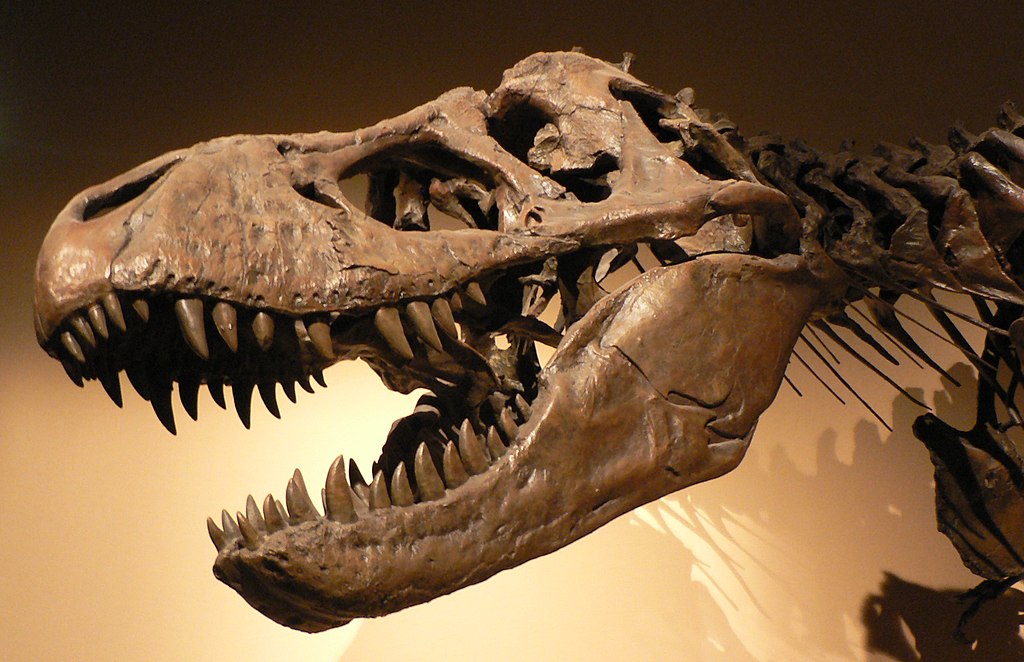
Close-up of a dinosaur skeleton head, showcasing sharp teeth and detailed bones. Background features blurred skeleton parts, museum-like setting. Atmospheric and intriguing.

What Is the “Bone Wars” and Why Did It Matter?

In the late 19th century, a fierce scientific rivalry erupted that would forever change our understanding of prehistoric life and shape the development of American paleontology. This intense competition, known as the “Bone Wars,” pitted two brilliant but deeply flawed paleontologists against each other in a decades-long battle for fossil supremacy. Their ruthless pursuit of ...

Illustration of a brown, long-necked dinosaur, likely a sauropod, with a small head and long tail against a white background. The tone is neutral and educational.

How Dinosaurs Survived Harsh Weather Conditions

Dinosaurs dominated Earth for approximately 165 million years through multiple climate shifts, extreme weather events, and changing environments. Their remarkable adaptability allowed them to thrive across various landscapes and weather conditions that would challenge even modern animals. From scorching deserts to frigid polar regions, dinosaurs evolved ingenious physiological and behavioral adaptations that enabled their long ...

Studies suggest dinosaurs grew faster than reptiles but slightly slower than similar-sized mammals.

Giant Crocodiles That Hunted Dinosaurs

In the shadowy waters of prehistoric rivers and coastal regions, enormous crocodilian predators lurked, some growing large enough to prey upon dinosaurs that ventured too close to the water’s edge. These ancient reptiles were not the crocodiles we recognize today but were their distant relatives, often larger and more terrifying. Some of these massive predators ...

Illustration of Daspletosaurus, a large theropod dinosaur, depicted in a dynamic pose with detailed skin texture and sharp teeth.

Were Dinosaurs Warm-Blooded? New Evidence Suggests Yes

The question of whether dinosaurs were warm-blooded or cold-blooded has fascinated paleontologists for decades. Recent scientific discoveries have dramatically shifted our understanding of these magnificent prehistoric creatures, suggesting that many dinosaurs may indeed have been endothermic (warm-blooded) rather than ectothermic (cold-blooded) as traditionally believed. This revelation fundamentally changes our perception of how dinosaurs lived, moved, ...

A dark-colored Tyrannosaurus rex walks past trees and foliage with a small theropod following closely, playfully snapping at a fluttering butterfly.

Nanotyrannus: A Teenage T. rex or a Dinosaur of Its Own?

In paleontology, few debates have persisted with such intensity as the controversy surrounding Nanotyrannus. First described in 1988, this purported tyrannosaurid has sparked decades of scientific deliberation about whether it represents a distinct genus or merely juvenile specimens of the iconic Tyrannosaurus rex. The implications extend beyond simple classification—they challenge our understanding of dinosaur diversity ...