Articles for category: Dinosaur Profiles

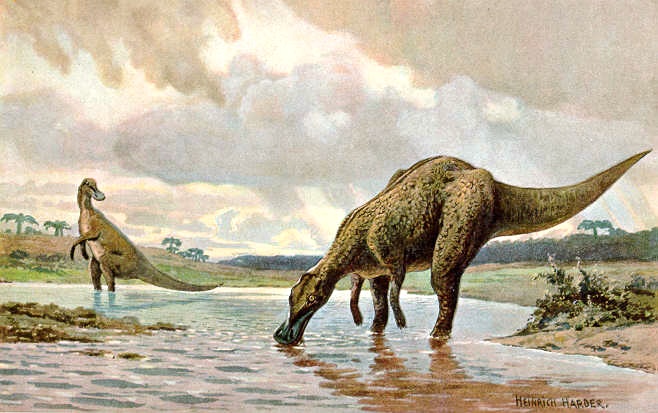
Two dinosaurs by a riverbank with a cloudy sky. One dinosaur stands in water drinking, while the other watches from the shore. The scene is calm and prehistoric.

The Most Colorful Dinosaurs – New Discoveries in Fossil Pigments

Dinosaurs have captivated our imagination for generations, but until recently, their true colors remained a mystery. Scientists traditionally depicted these prehistoric creatures with speculative coloration based on modern reptiles. However, groundbreaking discoveries in the field of paleontology have revolutionized our understanding of dinosaur appearance. Recent research into fossil pigments has revealed that the dinosaur world ...
Large, brown dinosaur with a spiny sail along its back and a long tail, standing in profile on a white background. It appears powerful and ancient.

Could Dinosaurs Swim? Evidence Suggests Some Were Great Divers

When we imagine dinosaurs, we typically picture them roaming across prehistoric landscapes, hunting or grazing in ancient forests and plains. However, paleontological evidence increasingly suggests that many dinosaur species were quite comfortable in aquatic environments. Recent fossil discoveries and anatomical studies have revolutionized our understanding of dinosaur capabilities, revealing that some species weren’t just capable ...

The rise of indie games in the 2010s introduced more experimental and stylized approaches to dinosaur design.

Did Any Dinosaurs Glow in the Dark?

The idea of glowing dinosaurs might seem like something straight out of science fiction, yet recent scientific discoveries suggest this fascinating possibility could be rooted in reality. Paleontologists and evolutionary biologists have been exploring evidence that certain dinosaur species may have possessed bioluminescent capabilities, similar to modern creatures like fireflies and deep-sea fish. This intriguing ...

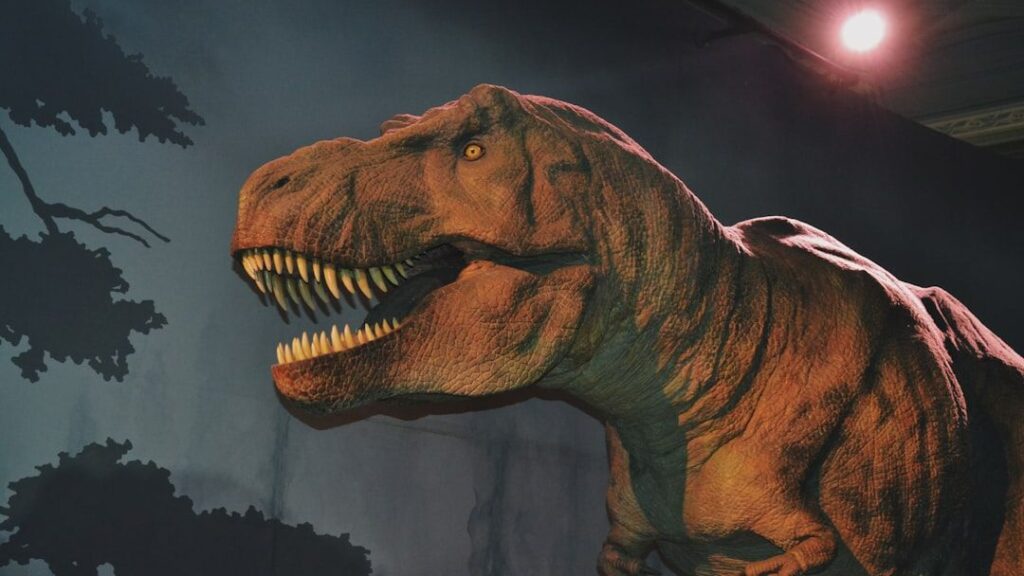
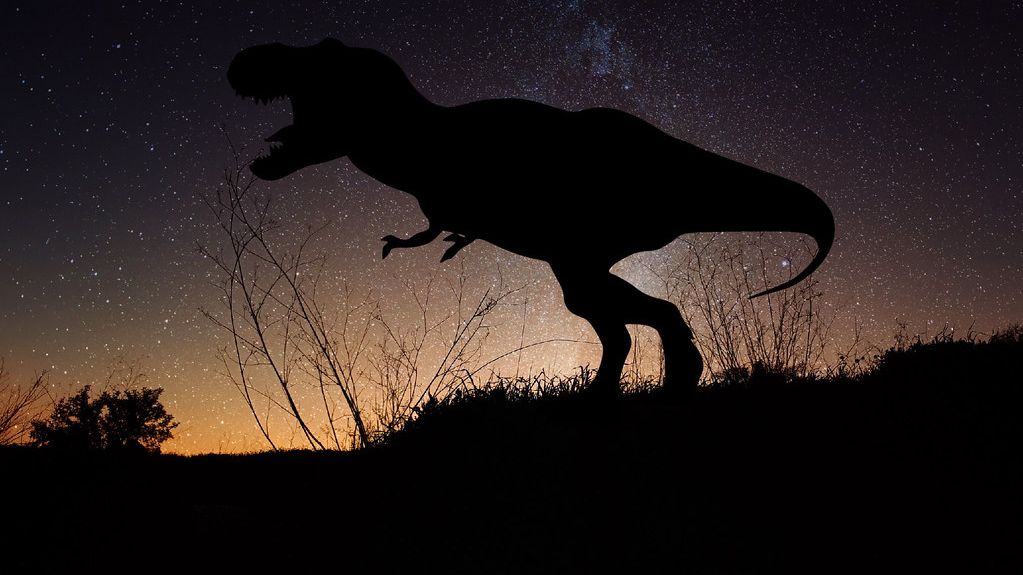
A large T-Rex statue with exposed teeth stands menacingly in front of dense, dark trees under a twilight sky, conveying a fierce, prehistoric vibe.

Could Any Dinosaur Beat T. Rex in a Fight?

The Tyrannosaurus rex stands as one of the most fearsome predators ever to walk the Earth, dominating the late Cretaceous landscape approximately 68-66 million years ago. With its massive jaws capable of delivering bone-crushing bites, powerful hind legs, and reputation as the “tyrant lizard king,” T. rex has long captured our imagination as the ultimate ...

Most of the film's dinosaurs, including Velociraptor and T. rex, lived in the Cretaceous, not the Jurassic.

The True Size of T. Rex – Was It Bigger Than We Thought?

The tyrannosaurus rex has captivated our imagination since its discovery, standing tall in museum halls and dominating prehistoric scenes in films and documentaries. For decades, paleontologists have studied the remains of this apex predator, attempting to accurately determine its true size and proportions. Recent discoveries and advanced analytical techniques are challenging long-held assumptions about T. ...

9 Little-Known Dinosaurs That Roamed the Earth Before the Jurassic Period

9 Little-Known Dinosaurs That Roamed the Earth Before the Jurassic Period

When most people think about dinosaurs, they picture the massive, iconic creatures of the Jurassic era. The roaring T-Rex, the long-necked Brachiosaurus, the thundering herds of Triceratops. Yet millions of years before those giants took over the planet, a much quieter and stranger chapter in Earth’s history was already unfolding. Smaller, stranger, often overlooked creatures ...

A large, feathered Quetzalcoatlus with a long beak and wearing a plaid flat cap stands on a sandy beach, with rocky hills and a bright blue sky in the background.

The Pterosaur With a Wingspan Wider Than a Cessna

When you think about giants of the ancient world, dinosaurs probably come to mind first. But soaring through the skies above those massive land dwellers was something even more extraordinary – a creature so massive it could dwarf modern aircraft. The largest flying animal that ever lived wasn’t a bird or a bat, but a ...

Illustration of Euhelopus, a long-necked sauropod dinosaur, showing its characteristic elongated neck and sturdy limbs.

What Determined the Growth Rates of Dinosaurs

The prehistoric world was populated by dinosaurs of vastly different sizes, from the chicken-sized Compsognathus to the towering Brachiosaurus. These incredible variations in size didn’t happen by chance—they were the result of complex growth patterns that varied dramatically between dinosaur species. Recent paleontological research has uncovered fascinating insights into why some dinosaurs grew at astonishing ...