Articles for category: Prehistoric Discoveries

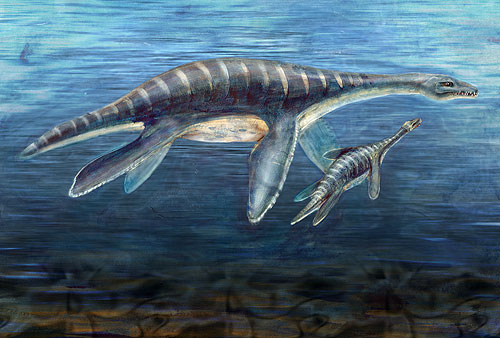
Mother and Juvenile Plesiosaur

How the Marine Reptile Plesiosaurus Took Over the Seas

Beneath the rippling waters of Earth’s ancient oceans, a remarkable reptilian dynasty once reigned supreme. The Plesiosaurus and its relatives dominated the marine realm for over 135 million years, evolving into some of the most specialized aquatic predators our planet has ever witnessed. With their distinctive body plan—featuring elongated necks, compact bodies, and powerful flipper-like ...

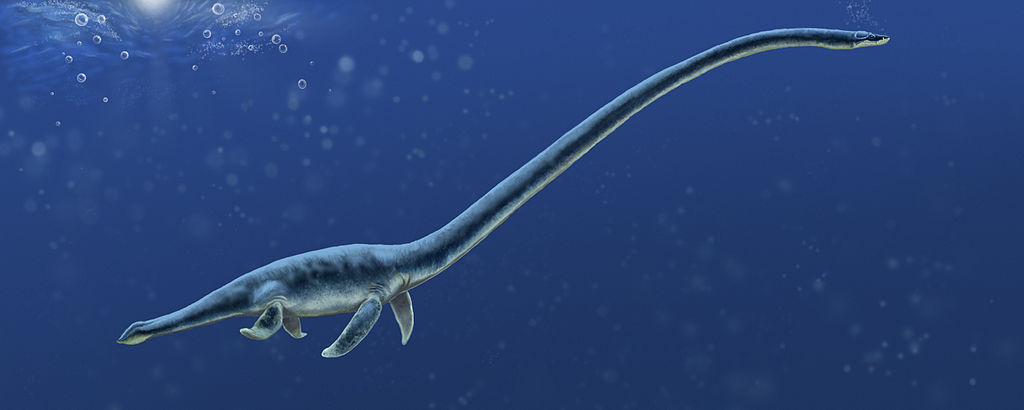
Albertonectes vanderveldei, a new elasmosaur

Elasmosaurus: The Long-Necked Wonder of the Ancient Seas

The prehistoric oceans were home to some of Earth’s most remarkable creatures, and few were as strikingly unusual as Elasmosaurus. This extraordinary marine reptile, with its impossibly long neck and streamlined body, swam through the waters of the Late Cretaceous period approximately 80.5 million years ago. As a member of the plesiosaur family, Elasmosaurus has ...

The Hidden Colors of Prehistoric Seas

The Hidden Colors of Prehistoric Seas

Imagine standing on the shores of an ancient Earth billions of years ago, watching waves crash against primordial rocks. The sight would be breathtaking, yet completely alien to our modern eyes. Instead of the familiar deep blue we know today, prehistoric oceans shimmered with unexpected hues that tell a remarkable story of life, chemistry, and ...

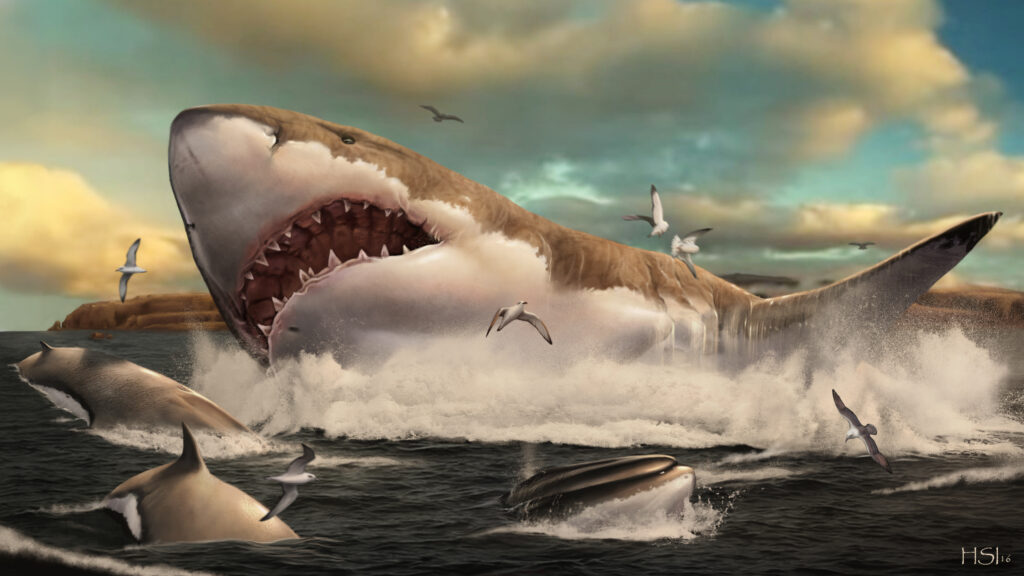
A gigantic shark with its mouth open emerges from ocean waves, surrounded by splashing water and seagulls flying under a dramatic sky. Thrilling scene.

How Megalodon Took Over After the Dinosaurs Vanished

When the dinosaurs disappeared approximately 66 million years ago, Earth’s ecosystems underwent a dramatic transformation. In the oceans, new apex predators emerged to fill the ecological void, with one prehistoric shark eventually rising to dominate the marine world. Otodus megalodon, commonly known as the Megalodon, would evolve in the aftermath of this extinction event to ...

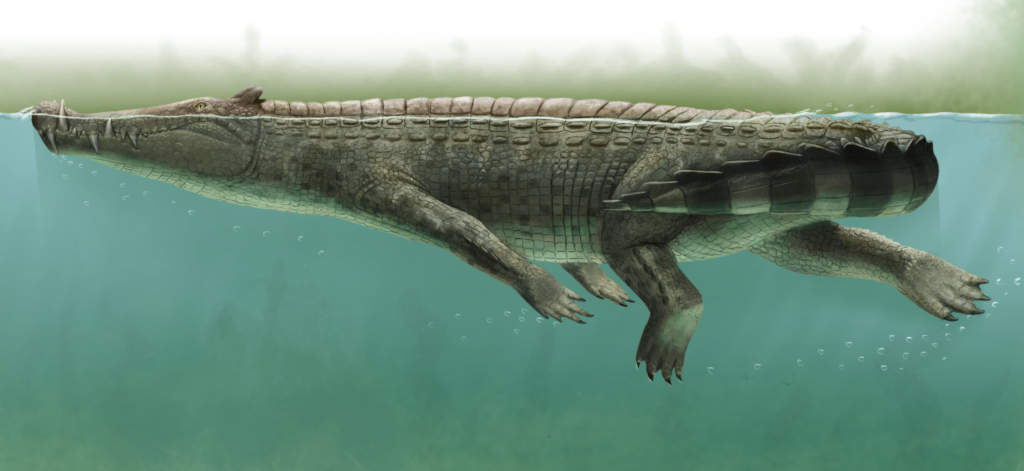
Illustration of a large prehistoric crocodile swimming underwater, showing detailed scales and powerful limbs, conveying a sense of ancient majesty.

From Crocodylomorphs to Otters: How Aquatic Life Evolved

The journey of terrestrial vertebrates back to aquatic environments represents one of evolution’s most fascinating narratives. Over millions of years, numerous lineages independently abandoned their terrestrial lifestyles to exploit the rich resources of rivers, lakes, and oceans. This remarkable story of convergent evolution spans diverse taxonomic groups, from ancient crocodylomorphs to modern otters, demonstrating how ...