Articles for author: Awais Khan

Close-up of a dark, serrated dinosaur tooth embedded in a textured beige rock. The sharpness and detail convey a sense of ancient history and discovery.

Could Dinosaurs See in Color? What Scientists Think

For millions of years, dinosaurs dominated Earth’s landscapes as the unrivaled rulers of the prehistoric world. While we’ve made remarkable discoveries about their physical appearances, hunting behaviors, and social structures, some aspects of dinosaur biology remain shrouded in mystery. Among these enigmas is the question of dinosaur vision—specifically, whether these ancient reptiles perceived their world ...

Awais Khan

Fossilized skeleton of a prehistoric platypus embedded in sandy rock. The detailed bones include a distinctive skull and ribcage, conveying ancient history.

7 Times Dinosaur Bones Turned Out to Be Fakes

The world of paleontology has been rocked by numerous cases of fraudulent dinosaur fossils throughout history. From ambitious hoaxes to innocent misidentifications, these fake dinosaur remains have sometimes fooled experts and the public alike. While the scientific community has developed increasingly sophisticated methods to authenticate fossil discoveries, some remarkable cases of dinosaur forgeries have left ...

Illustration of a large dinosaur walking in a prehistoric forest. Trees and foliage cast shadows. Calm atmosphere with a clear blue sky.

How Long Did It Take for Life to Recover After the Dinosaurs?

The extinction of the dinosaurs marks one of the most significant turning points in Earth’s biological history. Approximately 66 million years ago, a catastrophic asteroid impact near Mexico’s Yucatán Peninsula triggered the Cretaceous-Paleogene (K-Pg) extinction event, wiping out roughly 75% of all species on Earth, including non-avian dinosaurs. While this moment dramatically altered life’s trajectory ...

Awais Khan

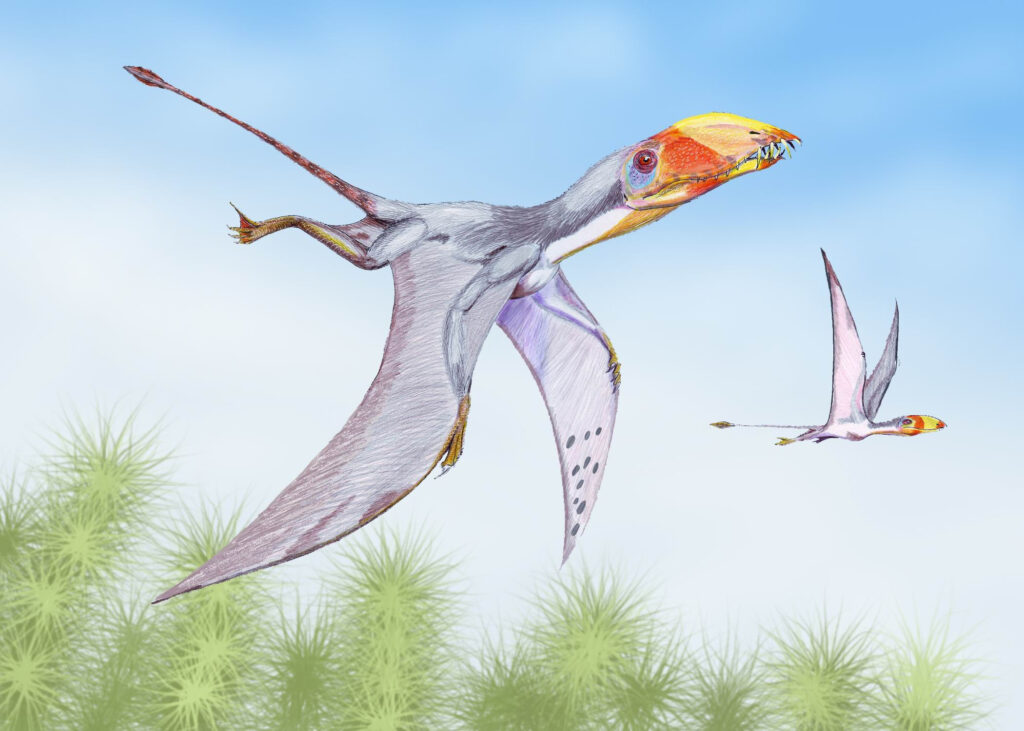
Illustration of two pterosaurs with vibrant orange and yellow beaks flying over green foliage against a clear blue sky, evoking a prehistoric scene.

What Was the Largest Flying Dinosaur? Meet the Giant Pterosaurs

When we look at the skies of the ancient world, few creatures capture our imagination like the massive pterosaurs that once dominated prehistoric airspace. These remarkable flying reptiles—often incorrectly called “flying dinosaurs”—evolved impressive adaptations that allowed creatures the size of small airplanes to take flight. While not technically dinosaurs (they belong to a separate reptile ...

Dinosaur eating plants

Could Dinosaurs Have Developed Intelligence Like Humans?

The question of whether dinosaurs could have evolved human-like intelligence if not for their extinction 66 million years ago remains one of paleontology’s most fascinating thought experiments. For 165 million years, dinosaurs dominated Earth’s ecosystems, diversifying into countless species with varying capabilities. While we traditionally picture dinosaurs as primitive reptiles, recent discoveries have dramatically shifted ...

Awais Khan

Illustration of a green, long-necked dinosaur with dark spots walking among trees. The background shows a blurred forest, conveying a prehistoric setting.

The Biggest Dinosaur Ever Discovered – How It Compares to a Blue Whale

Imagine standing beside a creature so enormous that your entire existence seems inconsequential—a behemoth from Earth’s ancient past that dwarfs nearly everything alive today. The search for the largest dinosaur ever to walk our planet has captivated paleontologists for generations, leading to remarkable discoveries that challenge our understanding of biological size limits. As impressive as ...

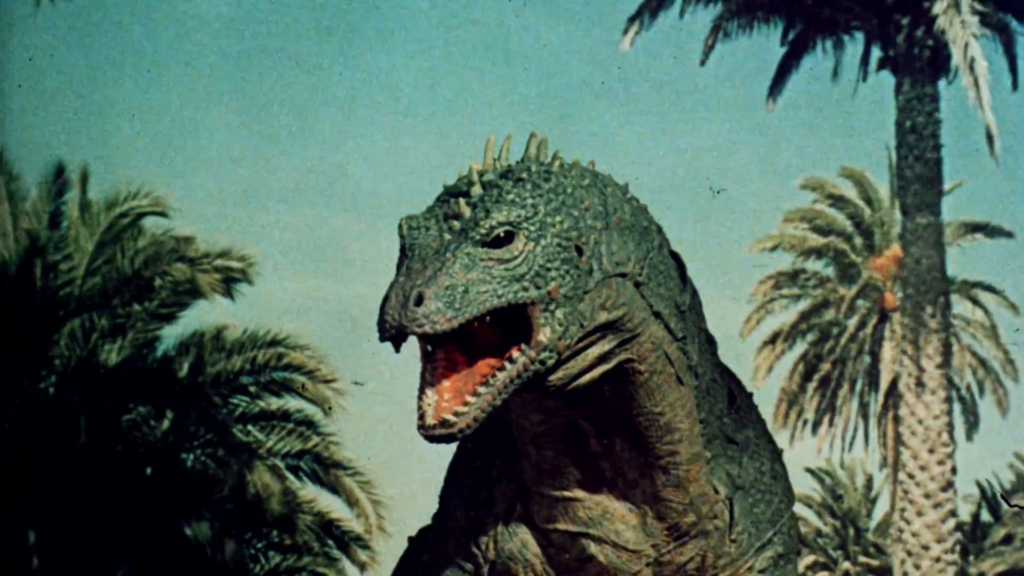
A large, green, scaly dinosaur with an open mouth stands amidst tall palm trees under a clear blue sky, conveying a sense of ancient, prehistoric life.

What Did Dinosaurs Eat? A Look at Fossilized Stomach Contents

For centuries, paleontologists have been piecing together the puzzle of dinosaur diets through fossilized teeth, coprolites (fossilized feces), and skeletal adaptations. However, perhaps the most direct evidence comes from the rare and remarkable discovery of actual stomach contents preserved within dinosaur fossils. These extraordinary findings, known as gastric residues or gut contents, provide a literal ...

Illustration of a mosasaur, a large marine reptile, swimming with an open mouth. It has a long, streamlined body and flippers, evoking a prehistoric era.

The Most Ferocious Sea Predator of the Jurassic Era

Beneath the ancient waves of Earth’s Jurassic oceans swam creatures of terrifying proportion and deadly efficiency. While dinosaurs dominated the land, the seas witnessed an equally dramatic evolutionary arms race, producing apex predators that would make today’s great white sharks seem almost docile by comparison. Among these marine hunters, one creature stands out as perhaps ...

Awais Khan

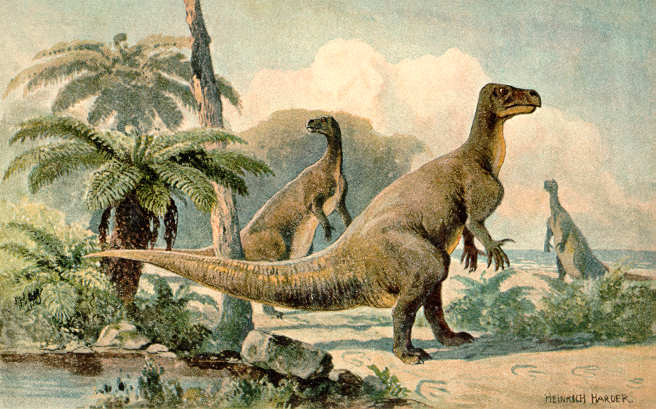
Illustration of three dinosaurs standing in a prehistoric landscape with lush greenery and palm trees. The scene conveys a tranquil, ancient atmosphere.

Iguanodon: The First Dinosaur Ever Officially Named

Dinosaurs have captured human imagination for centuries, but there was a time when these magnificent prehistoric creatures were unknown to science. The story of dinosaur discovery begins with Iguanodon, a remarkable herbivore that holds the distinction of being the first dinosaur ever to receive an official scientific name. This groundbreaking identification in the early 19th ...

Illustration of a prehistoric, large ground sloth standing on hind legs in a grassy field with a wooded background, conveying a sense of ancient wilderness.

The Mystery of the Giant Sloth – Could It Still Be Alive?

Throughout history, certain creatures have captured our imagination with their sheer size and mysterious nature. Among these, the giant ground sloth stands as one of the most fascinating prehistoric mammals to have roamed the Americas. While conventional scientific wisdom tells us these enormous creatures went extinct thousands of years ago, persistent reports from remote regions ...