Articles for category: Dinosaur Science & Theories

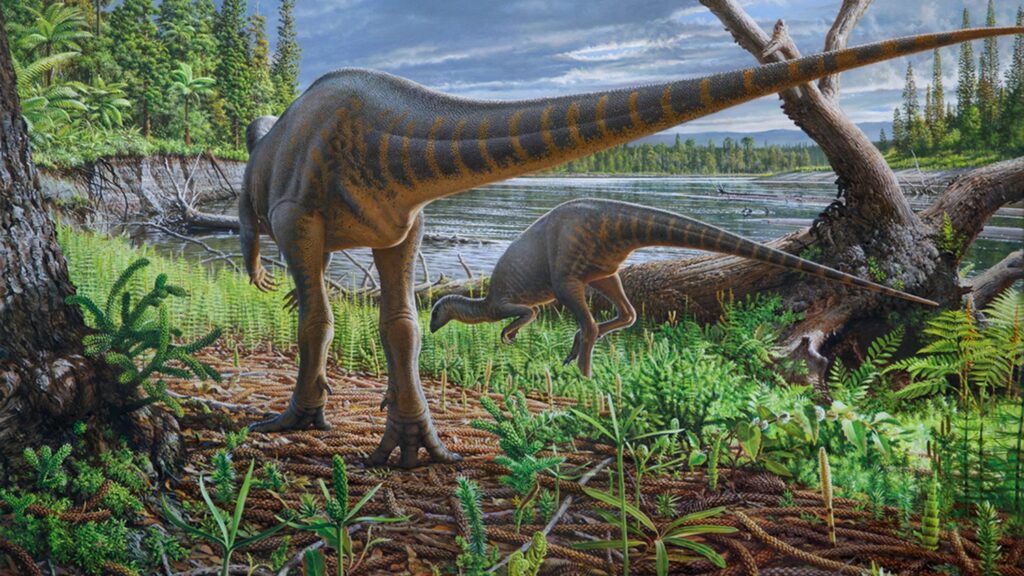
The discovery of Nyasasaurus parringtoni

Could Dinosaurs Have Developed Civilization

For millions of years, dinosaurs dominated Earth, evolving into countless species with diverse capabilities. Their long reign—spanning approximately 165 million years—dwarfs humanity’s brief 300,000-year existence. This stark contrast inevitably raises a fascinating question: if dinosaurs had not been wiped out by the Chicxulub asteroid impact 66 million years ago, could they have eventually developed intelligence ...

A large, green, scaly dinosaur with an open mouth stands amidst tall palm trees under a clear blue sky, conveying a sense of ancient, prehistoric life.

What Did Dinosaurs Eat? A Look at Fossilized Stomach Contents

For centuries, paleontologists have been piecing together the puzzle of dinosaur diets through fossilized teeth, coprolites (fossilized feces), and skeletal adaptations. However, perhaps the most direct evidence comes from the rare and remarkable discovery of actual stomach contents preserved within dinosaur fossils. These extraordinary findings, known as gastric residues or gut contents, provide a literal ...

What Do Dinosaur Footprints Reveal About Their Social Behavior and Ancient Herds?

What Do Dinosaur Footprints Reveal About Their Social Behavior and Ancient Herds?

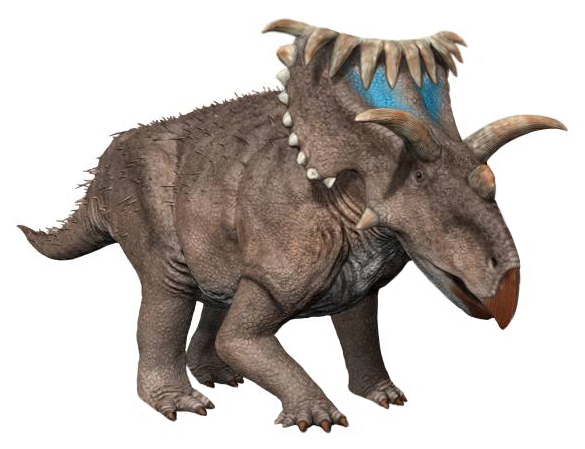
Imagine standing in a muddy field 76 million years ago, watching a group of enormous horned dinosaurs move through a Cretaceous landscape together – not alone, not scattered, but in a tightly coordinated group. Now imagine a pair of massive tyrannosaurs circling nearby, watching from a distance. It sounds like something from a movie, right? ...

A feathered dinosaur with gray, speckled patterns runs across a blue background. It has a long tail, sharp beak, and a dynamic, lively posture.

10 Small Dinosaurs That Could Have Been Your Pet (In Another Universe)

In our world, cats purr from our laps and dogs fetch our slippers, but imagine an alternate reality where the asteroid never hit and dinosaurs evolved alongside humans. While we typically picture dinosaurs as towering behemoths, paleontology has revealed numerous small species that might have made delightful companions in this fascinating alternate universe. These pint-sized ...

a large iceberg with a bird flying over it

How Did Dinosaurs Survive Ice Ages?

The relationship between dinosaurs and ice ages presents one of paleontology’s most fascinating chapters. While popular imagination often places dinosaurs in lush, tropical environments, the reality is far more complex. Dinosaurs existed on Earth for approximately 165 million years, spanning the Mesozoic Era (252-66 million years ago), during which our planet experienced significant climate fluctuations. ...

Two boys standing in front of a dinosaur skeleton

Why Are Dinosaurs Still a Hit With Kids (and Adults)?

Imagine walking through a museum and watching a five-year-old’s eyes light up as they encounter a towering T-Rex skeleton. Their excitement is infectious, spreading to teenagers snapping selfies and adults reading every placard with fascination. This scene plays out millions of times every year across the globe, proving that our obsession with dinosaurs transcends age, ...

A monochrome photo of a life-sized T. rex model with an open mouth, sharp teeth visible. It stands near large tent canopies under a partly cloudy sky.

Could Some Dinosaurs Have Been Poisonous?

When we imagine dinosaurs, we typically think of their enormous size, fearsome teeth, or protective armor. Yet one intriguing question that paleontologists have begun exploring is whether some dinosaurs might have possessed venomous or poisonous capabilities. While direct evidence remains limited, recent scientific research has opened fascinating possibilities about toxic dinosaurs that could change our ...

A close-up of a dinosaur statue with sharp, white teeth and textured, dark green skin. The open mouth and yellow eyes create an intense, lifelike appearance.

Did Dinosaurs Have Night Vision? What Their Eyes Tell Us

The mysterious world of dinosaurs continues to captivate our imagination, even millions of years after these magnificent creatures roamed the Earth. While fossils have provided tremendous insights into dinosaur anatomy, behavior, and evolution, some aspects of their biology remain elusive. One particularly fascinating question is whether dinosaurs possessed night vision capabilities. By examining fossil evidence, ...