Articles for author: Awais Khan

Awais Khan

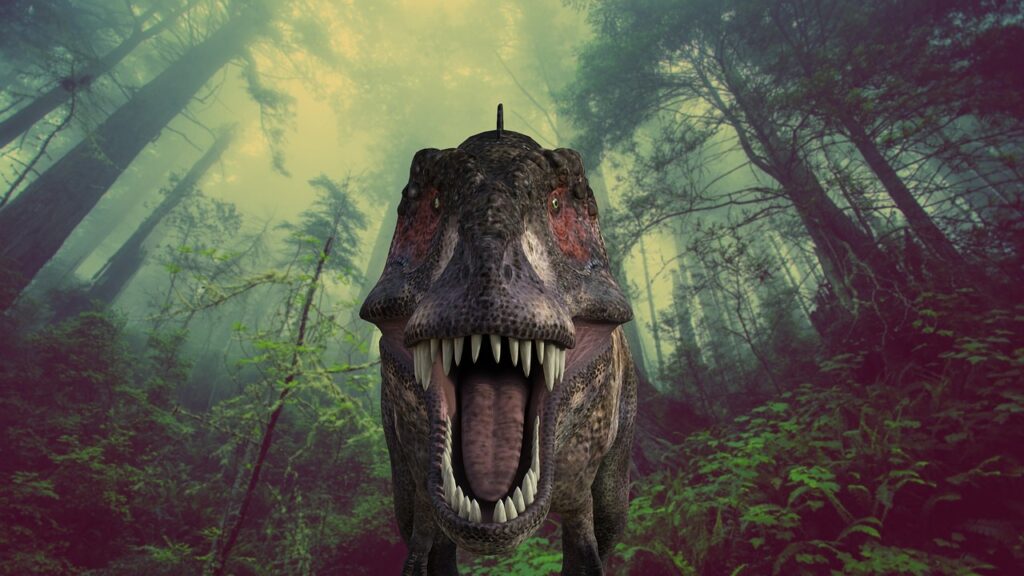
A dinosaur model with an open mouth, resembling a T. rex, stands among lush green foliage and plants.

T-Rex vs. Great White Shark: Which Apex Predator Reigns Supreme?

In the realm of apex predators, few creatures capture our imagination quite like the Tyrannosaurus rex and the Great White shark. These magnificent hunters, separated by millions of years of evolution and vastly different environments, represent the pinnacle of predatory adaptation in their respective domains. The T-rex, the “tyrant lizard king,” dominated the terrestrial ecosystems ...

A statue of a man on a tall pedestal overlooks a forest with distant city buildings under a pale sky, conveying a sense of serenity and grandeur.

Would Human Civilization Have Evolved at All in a Dino-Dominated World?

The question of whether human civilization could have emerged in a world where dinosaurs remained the dominant life forms is a fascinating thought experiment that blends paleontology, evolutionary biology, and speculative science. For 165 million years, dinosaurs ruled Earth before their sudden extinction approximately 66 million years ago, creating an ecological vacuum that mammals eventually ...

Recumbent Megaloceros at Crystal Palace Park

When Dinosaurs Looked Like Scaly Lizards: The Art That Misled a Generation

For decades, our perception of dinosaurs was shaped by artwork that portrayed them as sluggish, scaly creatures dragging their tails along the ground. These images became deeply embedded in the public consciousness through museum displays, books, films, and toys. However, paleontological discoveries over the past forty years have dramatically transformed our understanding of how dinosaurs ...

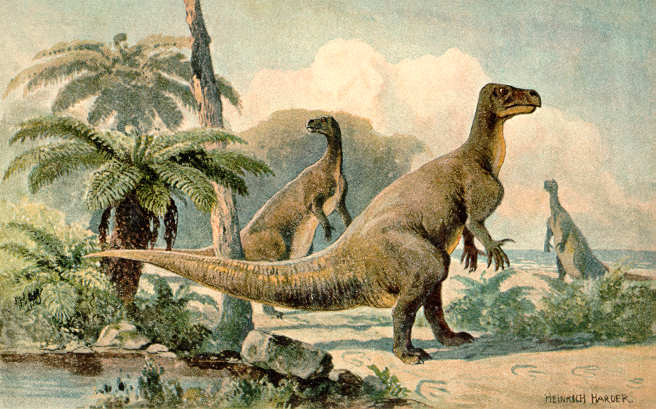
Illustration of three dinosaurs standing in a prehistoric landscape with lush greenery and palm trees. The scene conveys a tranquil, ancient atmosphere.

The Long Shadow of Iguanodon: How One Tooth Changed Everything

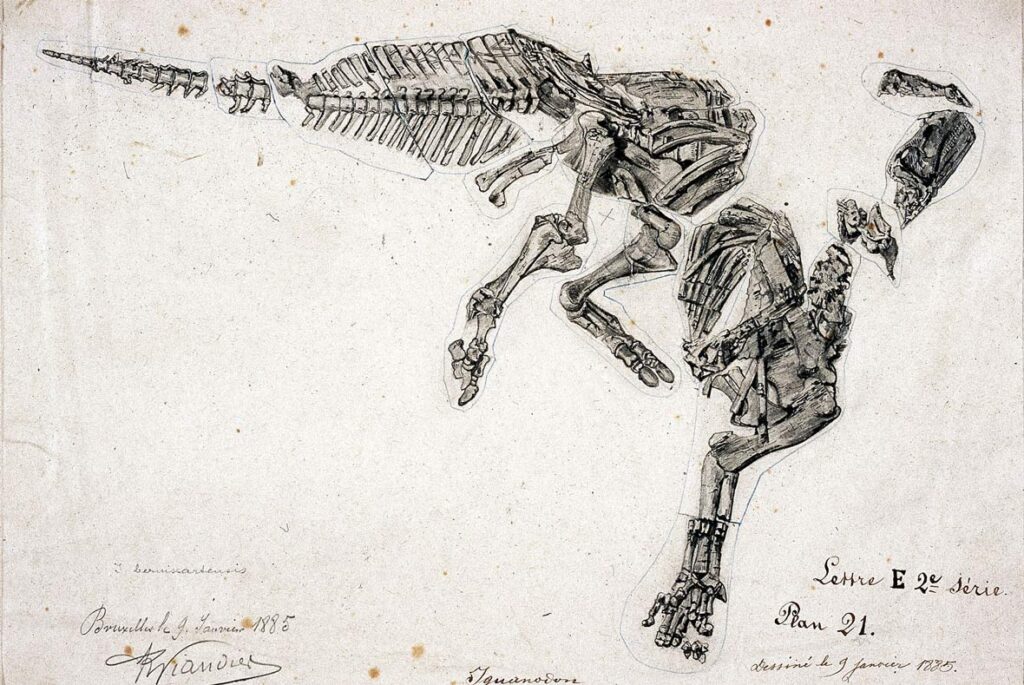
In the quiet countryside of Sussex, England, in 1822, a seemingly insignificant discovery would alter the course of scientific understanding forever. Mary Ann Mantell, while accompanying her husband Gideon on a country walk, spotted something unusual glinting among the rocks—a fossilized tooth unlike anything previously documented. This single tooth would become the first scientifically described ...

Illustration of a dinosaur skeleton, likely Iguanodon, displayed on aged paper. Bone structures intricately detailed, evoking scientific curiosity.

Could You Dig Up a 1,000-Year-Old Bone That’s Not Fossilized Yet?

When we think of ancient bones, we often imagine fossils—hard, stone-like remains that have survived the test of time. But what about bones that are centuries old yet haven’t fossilized? Is it possible to unearth a 1,000-year-old bone that still maintains its original organic composition? This question takes us into the fascinating intersection of archaeology, ...

Tyrannosaurus Rex and Triceratops, painting by Charles R Knight

When Paleoartists Got It Totally Wrong—But Everyone Believed Them

For over a century, paleoartists have given the public visual interpretations of prehistoric creatures that shaped our collective imagination. These artistic renderings have informed our understanding of dinosaurs and other extinct species, but many of these widely accepted depictions were spectacularly incorrect. Based on limited fossil evidence and contemporary scientific understanding, paleoartists created images that ...

Recumbent Megaloceros at Crystal Palace Park

The Line Between Science and Imagination in Dinosaur Art

Dinosaur art represents a fascinating intersection of scientific knowledge and creative interpretation. Artists who bring extinct creatures to life must balance paleontological evidence with the inevitable gaps that imagination must fill. This delicate dance between science and artistic license has evolved dramatically over the centuries, reflecting both our advancing understanding of dinosaurs and our cultural ...

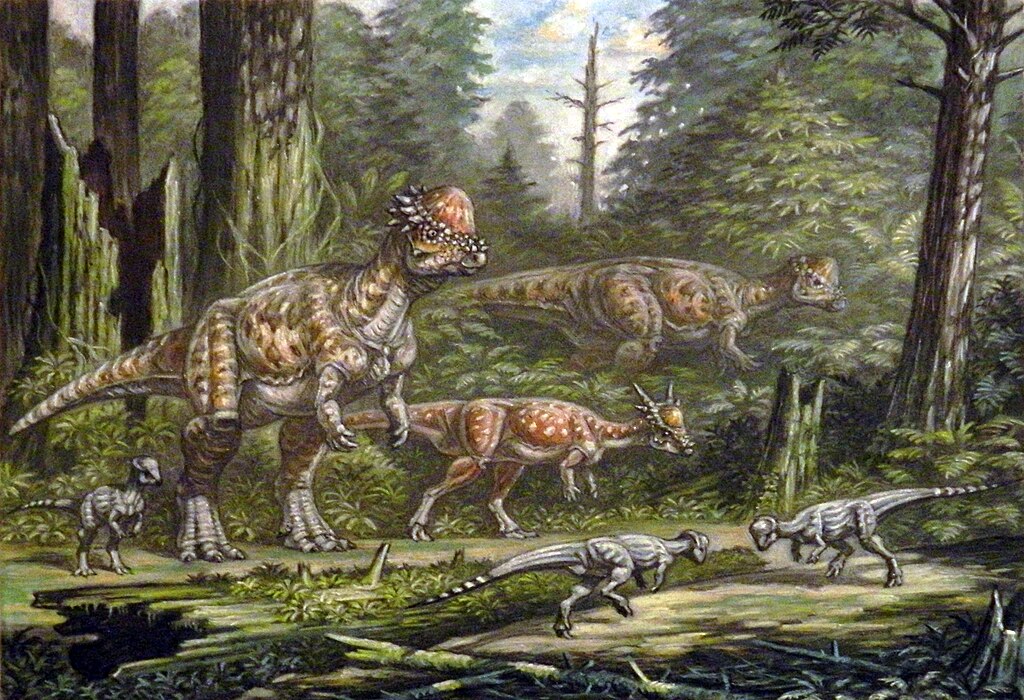
Pachycephalosaurus, Stygimoloch, Sphaerotholus.

Stygimoloch: The Spiky-Skulled Oddity of the Late Cretaceous Midwest

The enigmatic Stygimoloch, with its distinctive domed skull adorned with menacing spikes, represents one of the most visually striking dinosaurs to roam North America during the final stages of the Cretaceous period. This peculiar pachycephalosaurid dinosaur, whose name translates to “demon from the river Styx,” captures both scientific interest and popular imagination with its unusual ...

Sun-smart survival—millions of years in the making!

The Science of Dinosaur Nostrils: Where Did They Really Breathe From?

For generations, our understanding of dinosaurs has been shaped by museum exhibits, textbooks, and popular media that often depict these ancient creatures with nostrils positioned at the tip of their snouts. This seemingly intuitive placement mirrors what we observe in many modern animals. However, recent paleontological research has dramatically shifted our understanding of dinosaur respiratory ...

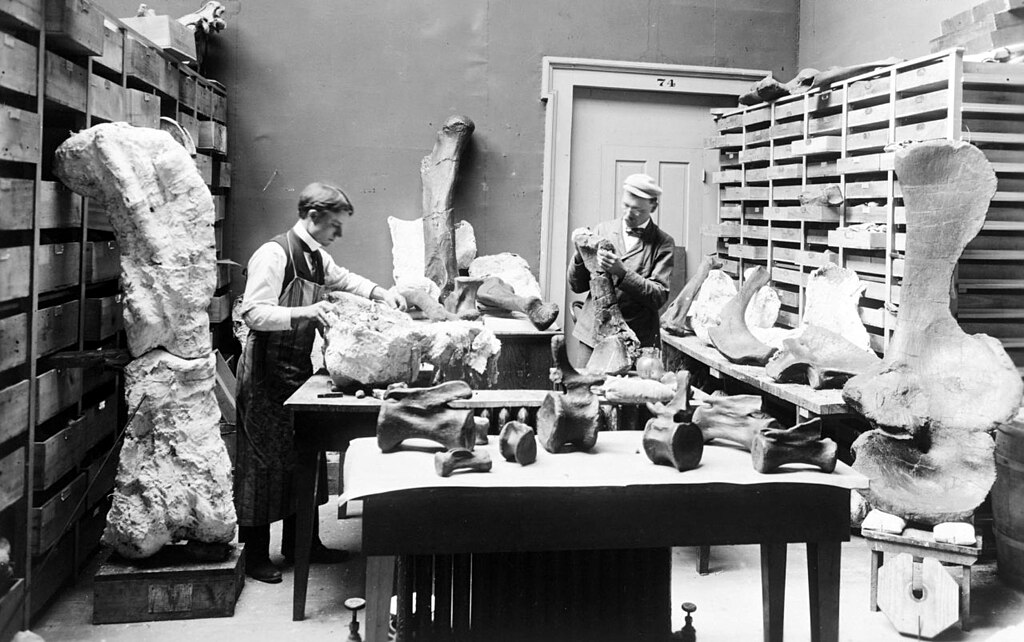
Elmer Riggs, the first curator of Fossil Mammals wearing cap and field laboratory assistant Harold W. Menke preparing Grand Junction Colorado fossils including the Brachiosaurus altithorax femur still in plaster jacket at left, Paleontology Laboratory, Field Columbian Museum, Geology specimen, December 1, 1894.

Early Fossil Labs: Where Dinosaur Bones Were Studied Before Microscopes

Long before electron microscopes and CT scanners revolutionized paleontology, scientists worked in rudimentary settings to unlock the mysteries of prehistoric life. The earliest fossil laboratories were far from the sophisticated facilities we know today, yet they laid crucial groundwork for our understanding of dinosaurs and other ancient creatures. These pioneering spaces represented the first systematic ...