Articles for category: Prehistoric Theories

two striped hyenas playing chase in a dry field

Do Any Animals Feed on Bones Today — and What Does That Tell Us About the Past?

When we think of animal diets, we typically picture carnivores tearing into flesh, herbivores grazing on plants, or omnivores enjoying a varied menu. However, one fascinating dietary specialization often goes overlooked: osteophagy, or the consumption of bones. While most predators discard the hardest parts of their prey, certain specialized animals have evolved to extract nutrients ...

When Dinosaur Days Were Different

Dinosaurs Lived in a Faster-Spinning World – Here’s What That Means

Imagine Earth as a giant spinning top that’s slowly losing its momentum. That’s exactly what’s been happening to our planet for billions of years, but the implications go far deeper than you might expect. Recent scientific discoveries have revealed that when dinosaurs ruled the Earth, our planet was actually spinning significantly faster than it does ...

Geological Museum at the University of Wyoming

Southern Germany’s Jurassic Secrets at Stuttgart’s Natural History Museum

Within the heart of Baden-Württemberg, Stuttgart’s Natural History Museum (Staatliches Museum für Naturkunde Stuttgart) houses one of Europe’s most remarkable collections of Jurassic fossils, telling a fascinating story of prehistoric life that once flourished in what is now southern Germany. This treasure trove of paleontological wonders offers visitors a unique glimpse into an ancient world ...

The Real Paleontologist Behind Jurassic Park's Alan Grant: Meet Jack Horner

The Real Paleontologist Behind Jurassic Park’s Alan Grant: Meet Jack Horner

When Steven Spielberg’s groundbreaking film Jurassic Park roared into theaters in 1993, audiences worldwide were captivated by the adventures of Dr. Alan Grant, the rugged paleontologist who knew dinosaurs better than anyone alive. But what many moviegoers didn’t realize was that this fictional character was inspired by a very real scientist whose revolutionary discoveries had ...

An artist's rendition of 2016 WF9 as it passes Jupiter's orbit inbound toward the sun.

The Two-Impact Hypothesis: Was One Asteroid Not Enough to End the Dinosaurs?

The extinction of dinosaurs 66 million years ago marks one of the most significant turning points in Earth’s biological history. For decades, scientists widely accepted the theory that a single massive asteroid impact at Chicxulub, Mexico, triggered the mass extinction event that wiped out approximately 75% of all species on Earth. However, recent scientific discoveries ...

The Iron Preservation Mystery

The Dinosaur That Made Scientists Say, “Wait, What?”

Picture this: A paleontologist in North Carolina breaks open what should be solid rock from a 68-million-year-old dinosaur bone. Instead of finding the expected stone-like fossil, she discovers something that stretches and bends like fresh tissue. According to new research, iron in the dinosaur’s body preserved the tissue before it could decay. “What we found ...

The Herbivore Crisis That Shook Everything

Did Climate Changes Already Spell Doom for Dinosaurs?

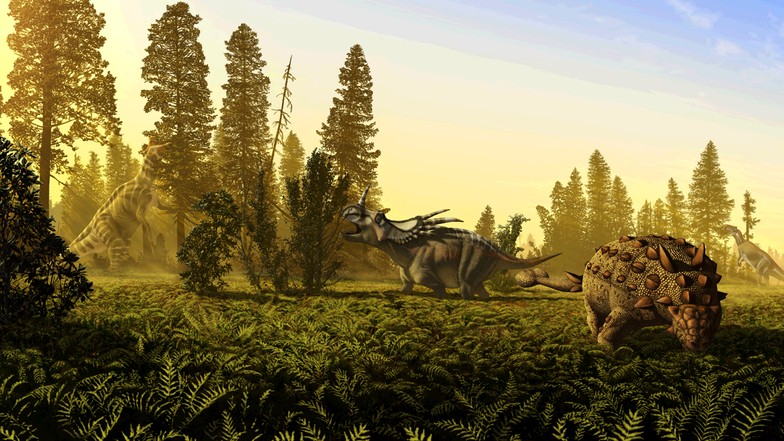
Picture this: sixty-six million years ago, massive beasts roamed the Earth like something out of a fantasy movie. Tyrannosaurus rex terrorized the landscape while herds of Triceratops grazed peacefully nearby. Then suddenly, everything changed. But what if the story you’ve heard about their extinction is missing a crucial chapter? Long before the asteroid struck, Earth’s ...

black and white nike shoe

Did Prehistoric Crabs or Fish Live in Fossil Cavities?

The question of whether prehistoric crabs or fish inhabited the cavities found in fossils has fascinated paleontologists for decades. These ancient hollows, formed in the remains of deceased organisms, potentially served as microhabitats for various marine creatures. Through careful examination of sedimentary deposits, trace fossils, and preserved remains, scientists have uncovered compelling evidence that certain ...