Articles for author: Awais Khan

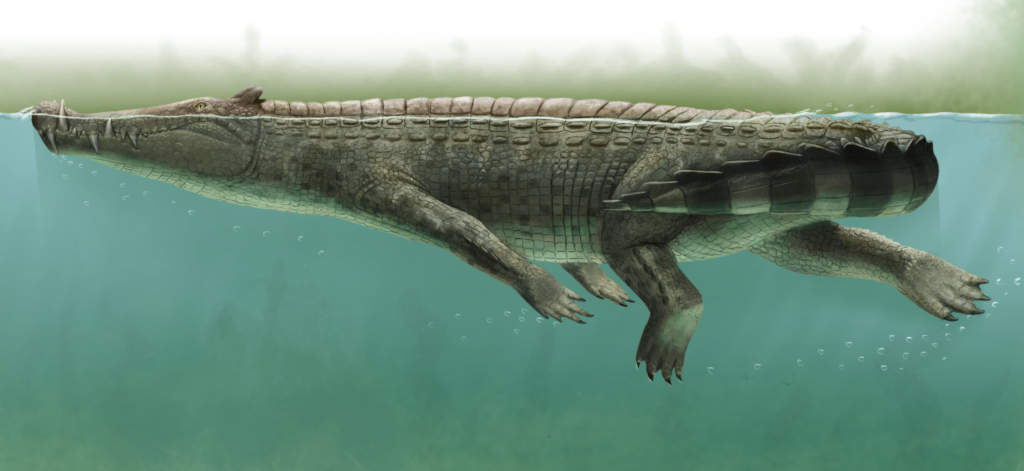
Illustration of a large prehistoric crocodile sitting upright on sandy ground, mouth open. The skin is textured with scales, and the atmosphere is misty.

The Prehistoric Crocodile With Legs Like a T-Rex

In the annals of prehistoric creatures, few animals challenge our understanding of evolution as dramatically as Batrachopus grandis—the ancient crocodile that walked on legs resembling those of a Tyrannosaurus rex. Unlike modern crocodiles that sprawl with limbs extending sideways from their bodies, this remarkable reptile stood tall with its legs positioned directly beneath its body, ...

Microfossils from a sediment core of the Deep Sea Drilling Project

How Microfossils Help Date Dinosaur Discoveries

When we think of paleontology, massive dinosaur bones and dramatic fossil displays often come to mind. However, some of the most valuable clues about prehistoric life and the timing of dinosaur existence come from organisms so tiny they can only be seen under a microscope. Microfossils—the preserved remains of bacteria, protists, fungi, plants, and tiny ...

The First Swimming Dinosaur

Why the Sahara Desert Was Once Home to Aquatic Dinosaurs

Picture this: you’re standing in the blazing heat of the Sahara Desert, sand stretching endlessly in every direction. It’s hard to believe that roughly one hundred million years ago, this same spot was teeming with enormous crocodiles, massive fish, and most surprisingly, aquatic dinosaurs. But that’s exactly what scientists have discovered buried beneath all that ...

Gait Analysis from Fossilized Tracks

Fossil Clues That Reveal Ancient Behavior, Not Just Anatomy

Paleontology has traditionally focused on reconstructing the physical appearance of extinct creatures through fossil remains. However, a fascinating branch of this science delves deeper, examining subtle clues that reveal not just what ancient organisms looked like, but how they lived, behaved, and interacted with their environments. These behavioral fossils—also called trace fossils or ichnofossils—provide remarkable ...

Aerial view of an active volcano spewing bright lava down its dark slopes, surrounded by barren, rocky terrain. Smoke rises, creating a dramatic scene.

Volcanoes, Oxygen, and CO₂: How Ancient Atmospheres Impacted Dino Life

When dinosaurs ruled Earth, our planet’s atmosphere differed drastically from today’s air. This ancient atmosphere, shaped by volcanic eruptions, fluctuating oxygen levels, and carbon dioxide concentration, created the environmental conditions that allowed dinosaurs to thrive for over 165 million years. Through examining geological evidence and fossil records, scientists have pieced together how these atmospheric factors ...

The discovery of marine fossils alongside dinosaur remains illuminates the complex ecological connections that existed between terrestrial and marine environments during the Mesozoic Era.

What If Dinosaurs Had Become Aquatic?

The story of Earth’s prehistoric giants took a dramatic turn 66 million years ago when a catastrophic asteroid impact triggered mass extinction, wiping out non-avian dinosaurs and allowing mammals to diversify and thrive. But what if evolution had taken a different path? What if dinosaurs, facing environmental pressures, had adapted to aquatic environments instead of ...

the Gobi region where Saichania roamed

Fossil Hotspots Around the World and Why They Keep Delivering

The Earth’s geological record serves as a vast library of past life, with certain locations emerging as exceptional chapters in this planetary narrative. These fossil hotspots—areas with extraordinary concentrations of well-preserved remains—continue to unveil the mysteries of ancient organisms and ecosystems. From Canadian mountainsides revealing the earliest complex animals to Mongolian deserts yielding spectacular dinosaur ...