Articles for author: Awais Khan

Dinosaur fossil on display in the American Museum of Natural History

Top Dinosaur Exhibits in the U.S. Worth Traveling For

The allure of dinosaurs transcends generations, captivating both children and adults with their prehistoric majesty. Across the United States, world-class museums and exhibitions bring these ancient creatures to life through impressive fossil collections, interactive displays, and cutting-edge technology. From complete T. rex skeletons to hands-on paleontological dig sites, these destinations offer visitors a chance to ...

The mystery of how Spinosaurus moved, both on land and in water, continues to spark heated debates among paleontologists, with each new discovery offering fresh insights into its unique biology.

Spinosaurus: The Aquatic Predator That’s Still Changing Shape

In the vast catalog of prehistoric beasts, few have undergone as many dramatic scientific reimaginings as Spinosaurus aegyptiacus. This massive theropod dinosaur from the Cretaceous period has transformed in our scientific understanding from a standard terrestrial predator to what many paleontologists now consider the first known semi-aquatic dinosaur. The story of Spinosaurus is not just ...

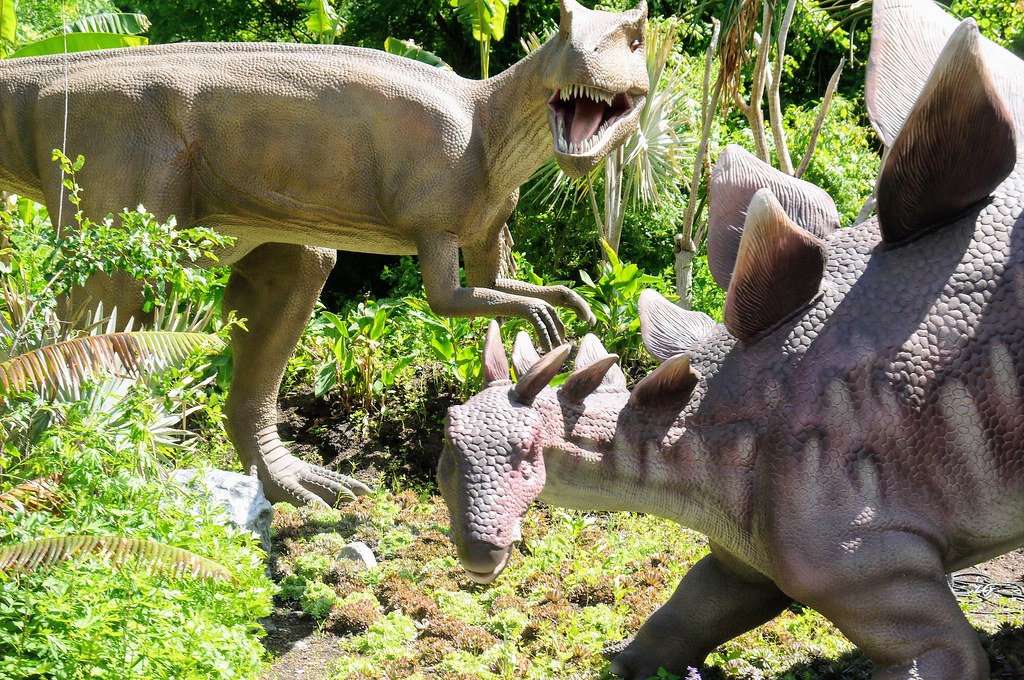
A lifelike dinosaur statue stands amid lush greenery, with towering palms and dense foliage. The scene evokes a prehistoric, adventurous ambiance.

How Victorian London Reacted to the First Dinosaur Exhibition

In the mid-nineteenth century, as the British Empire expanded its global reach, an equally revolutionary expansion of knowledge was occurring beneath Londoners’ feet. The discovery of extinct reptilian creatures, soon to be named “dinosaurs,” shattered conventional understandings of Earth’s history and challenged religious orthodoxy. When the Crystal Palace Park unveiled the world’s first dinosaur sculptures ...

Microraptor's aerodynamic feathers hint at gliding or even early flight, soaring through prehistoric skies.

The First Birds: Feathered Dinosaurs That Took to the Skies

The boundary between dinosaurs and birds has become increasingly blurred over the past few decades. What was once considered a clear evolutionary divide has transformed into a fascinating continuum of feathered creatures that gradually conquered the air. The story of how dinosaurs evolved into the birds we know today represents one of evolution’s most remarkable ...

When Steven Spielberg’s “Jurassic Park” roared into theaters in 1993, it did more than entertain audiences—it fundamentally transformed our collective perception of dinosaurs.

Did We Misidentify Dozens of Dinosaur Species?

The field of paleontology has experienced a seismic shift in recent years as researchers question whether we’ve been correctly identifying dinosaur species for the past century. This phenomenon, sometimes called “taxonomic inflation,” suggests that what we once thought were dozens of distinct dinosaur species might be fewer species at different growth stages or displaying sexual ...

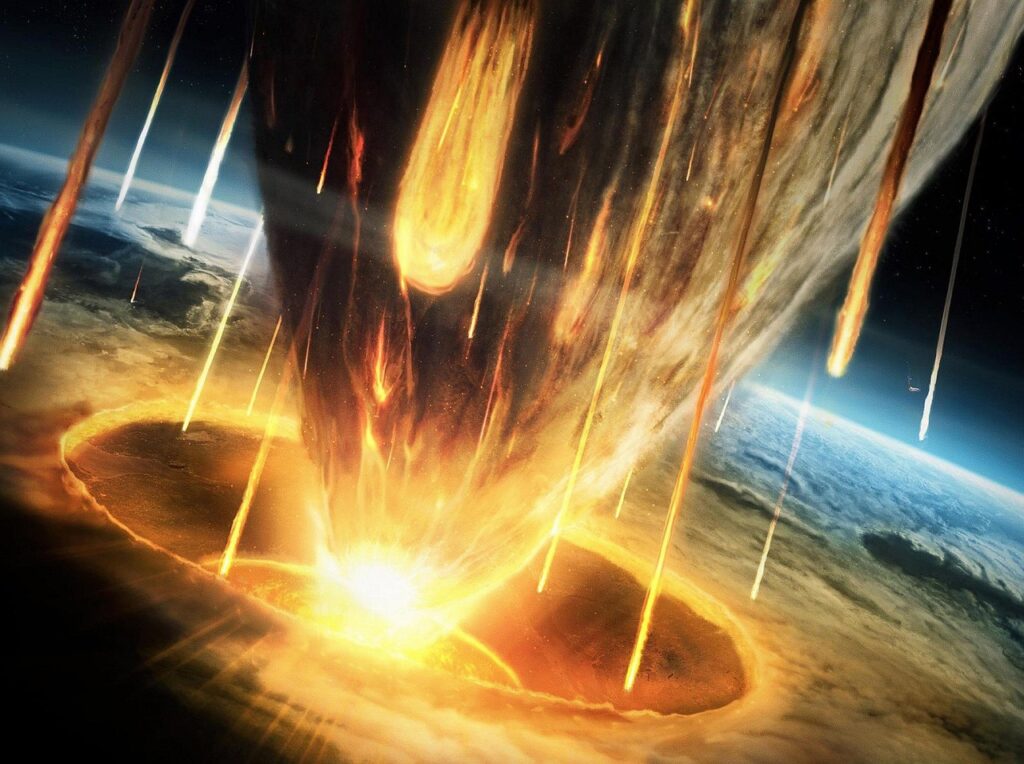
A fiery meteor crashes into the Earth, creating a bright explosion over a dark, cloud-covered ocean, illustrating a dramatic and destructive event.

The Climate Chaos After the Asteroid: How the Sky Went Dark

When a massive asteroid slammed into Earth 66 million years ago, it didn’t just kill the dinosaurs – it triggered one of the most catastrophic climate disasters in our planet’s history. The impact, which created what we now call the Chicxulub crater in Mexico’s Yucatán Peninsula, released energy equivalent to billions of atomic bombs, instantly ...

Environmental Factors

Ancient Rainfall Patterns and How They Affected Dinosaur Migration

The movement patterns of dinosaurs, Earth’s most iconic prehistoric inhabitants, were influenced by numerous environmental factors during their 165-million-year reign. Among these factors, rainfall patterns stand out as particularly significant, shaping migration routes, breeding grounds, and feeding territories. Paleoclimatologists and paleontologists have made remarkable strides in understanding how precipitation cycles during the Mesozoic Era (252-66 ...

Dinosaur skeletons in a museum exhibit, featuring a prominent T. rex skull with jaws open. The setting is spacious with high ceilings and wooden displays.

From Bone to Museum: The Journey of a Dinosaur Fossil

The magnificent dinosaur exhibits that captivate visitors in museums worldwide represent the culmination of a remarkable scientific process that often spans years, sometimes decades. Each fossil on display has undergone an extraordinary journey—from its formation millions of years ago to its discovery, preparation, and final mounting in a museum hall. This transformation from buried bone ...

North American Stegosauridae. From upper left: Stegosaurus stenops, Stegosaurus ungulatus, Hesperosaurus mjosi, and Alcovasaurus longispinus.

Was the Jurassic More Dangerous Than the Cretaceous?

The Mesozoic Era, often called the “Age of Dinosaurs,” spans three distinct periods: the Triassic, Jurassic, and Cretaceous. Each period hosted unique ecosystems with different predators, prey relationships, and environmental conditions. When comparing the Jurassic Period (201-145 million years ago) with the Cretaceous Period (145-66 million years ago), paleontologists examine fossil evidence, ancient environments, and ...