Articles for author: Awais Khan

Close-up of a dinosaur skeleton head and upper body, showcasing detailed bone structure with a dramatic, shadowy museum background.

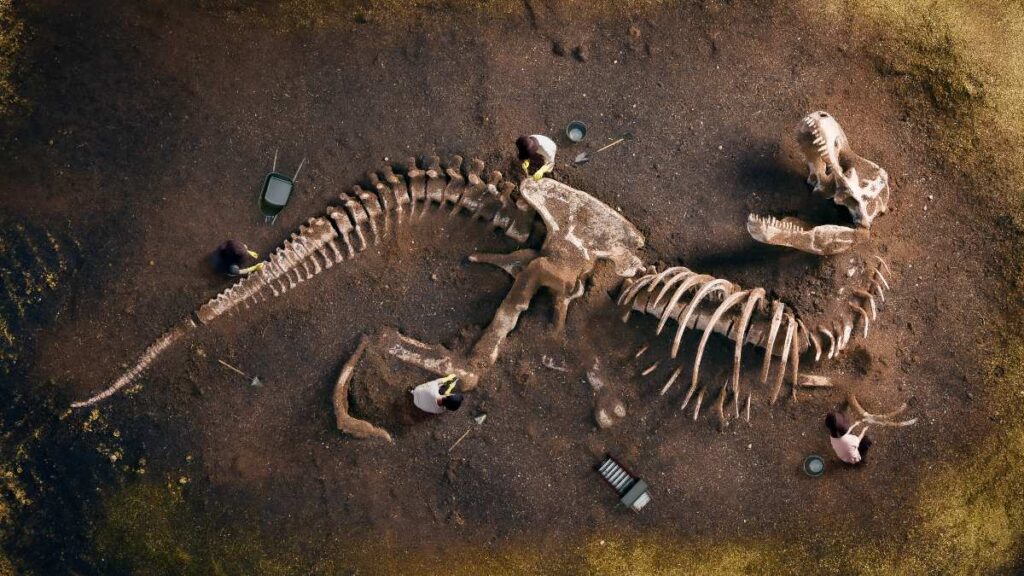
What Petrified Bones, Footprints, and Skin Imprints Tell Us About Prehistoric Life

The silent remnants of Earth’s ancient past—fossilized bones, preserved footprints, and delicate skin impressions—serve as time capsules from eras long gone. These paleontological treasures provide our most direct connection to creatures that roamed the planet millions of years before humans existed. Through careful scientific analysis of these preserved remains, researchers piece together compelling narratives about ...

Illustration of a woolly rhino in a snowy landscape, with a blue sky and swirling snowflakes. The animal appears majestic and resilient.

The Woolly Rhinoceros: An Ice Age Giant You Should Know About

The Ice Age conjures images of massive mammoths and saber-toothed cats, but one magnificent beast often overlooked in popular culture deserves equal recognition: the woolly rhinoceros. This formidable herbivore roamed the cold steppes of Eurasia during the Pleistocene epoch, perfectly adapted to harsh glacial conditions that would devastate most modern mammals. With its impressive horn ...

The Great Pangaean Desert

The Supercontinent Pangaea: Why It Mattered to Dinosaurs

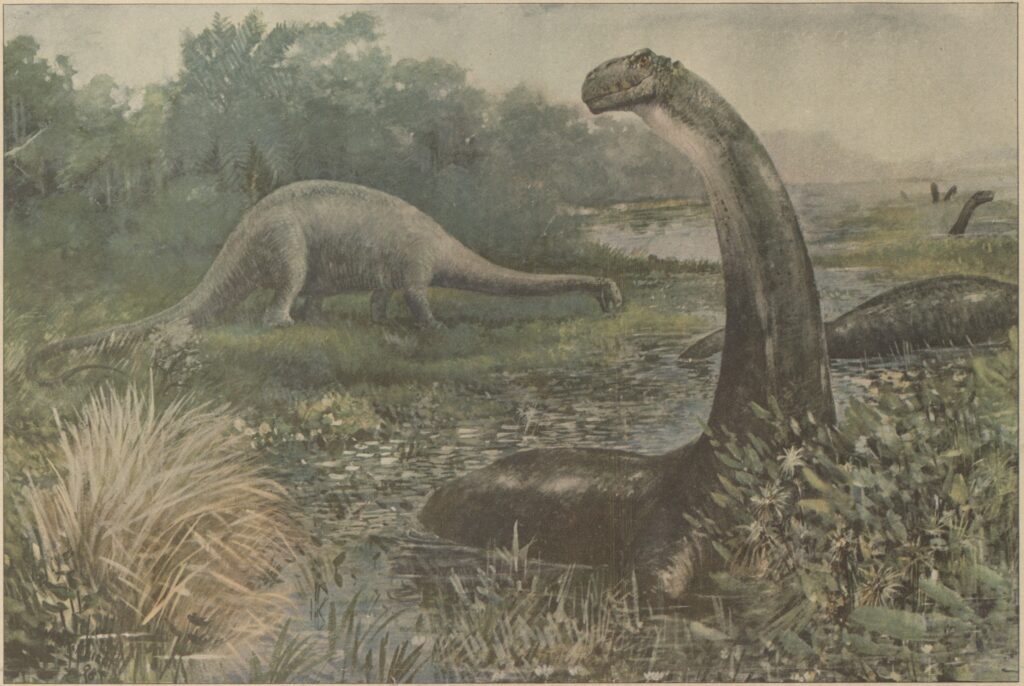
In the vast timeline of Earth’s history, few geological features have played as significant a role in shaping life as Pangaea, the supercontinent that once dominated our planet. This massive landmass, existing approximately 335 to 175 million years ago, created the stage upon which dinosaurs would evolve, thrive, and diversify. Pangaea’s existence fundamentally shaped dinosaur ...

Dinosaur skeletons in a museum exhibit, featuring a prominent T. rex skull with jaws open. The setting is spacious with high ceilings and wooden displays.

When Museums Buy Stolen Fossils: Who’s Responsible?

The discovery of a significant fossil, whether it’s a T. rex skull or an ancient hominid, represents a crucial piece of our planet’s history. However, the journey these specimens take from ground to museum display often travels through murky ethical waters. When prestigious institutions purchase fossils with questionable provenance, it raises profound questions about accountability, ...

A hoatzin bird perches on a tree branch in a dense, green forest. Its brown plumage and spiky crest stand out against the leafy background.

The Strange Case of the Hoatzin: A Bird With Dinosaur-Like Claws

The hoatzin (pronounced ho-AT-sin) stands as one of ornithology’s most fascinating enigmas—a living puzzle piece that seems to bridge ancient prehistory with modern avian evolution. Native to the Amazon and Orinoco basins of South America, this peculiar bird has captivated scientists for centuries with its bizarre physical characteristics, most notably the clawed digits on its ...

A rocky asteroid burns with fiery debris trailing behind, set against a glowing sun and a dark star-filled space. The scene conveys chaos and intensity.

The Two Asteroid Theory: Was Earth Hit Twice in the Age of Dinosaurs?

The extinction of dinosaurs represents one of Earth’s most profound ecological transitions, transforming the planet’s biodiversity and paving the way for mammalian dominance. For decades, scientists attributed this mass extinction to a single asteroid impact at Chicxulub, Mexico. However, emerging research suggests a more complex scenario – the possibility that Earth experienced not one, but ...

SkySat satellite image of Deccan Traps, Maharashtra

Was the End-Cretaceous Extinction Slower Than We Think?

The end-Cretaceous mass extinction, which wiped out approximately 75% of all species on Earth, including the non-avian dinosaurs, has long been regarded as a sudden, catastrophic event. Conventional wisdom holds that the impact of a massive asteroid in what is now Chicxulub, Mexico, delivered a swift deathblow to Earth’s ecosystems around 66 million years ago. ...

Dino Dreams: Could Dinosaurs Have Had REM Sleep?

Dino Dreams: Could Dinosaurs Have Had REM Sleep?

Picture this: a massive Tyrannosaurus rex closing its tiny eyes and drifting off into a world of prehistoric dreams. Or maybe a graceful Triceratops, tucked comfortably in a forest clearing, experiencing rapid eye movements behind closed lids. While this might sound like something out of a fantasy movie, recent scientific discoveries are painting an entirely ...

Close-up of a dry, rocky terrain with a small cactus and sprouting grass. Sunlight highlights the textures, creating a calm, arid atmosphere.

What Fossilized Forests Tell Us About Earth’s Deep Past

Ancient trees, preserved in stone, offer us windows into worlds long vanished. Fossilized forests—sometimes called petrified forests—stand as some of our most dramatic connections to Earth’s distant past. These remarkable geological treasures preserve not just individual trees but entire ecosystems frozen in time. By studying these stone forests, scientists can reconstruct ancient environments, track climate ...