Articles for author: Awais Khan

Kristina Curry Rogers

How Dr. Kristi Curry Rogers Uncovered the Secrets of Tiny Titanosaurs

In the world of paleontology, where massive dinosaur fossils often capture the spotlight, Dr. Kristi Curry Rogers has turned her attention to something much smaller but equally significant—baby dinosaurs. As a pioneering paleontologist specializing in titanosaurs, Dr. Rogers has revolutionized our understanding of how these massive creatures grew from tiny hatchlings into the largest animals ...

Natural History Museum 1881 by Alfred Waterhouse - Mary Anning, the Fossil Woman

What If Humans and Dinosaurs Coexisted? (Scientifically Grounded Version)

The idea of humans and dinosaurs sharing the Earth has captivated our imagination for generations, from “The Flintstones” to “Jurassic Park.” While popular culture often depicts these scenarios for entertainment, the scientific reality presents a fascinating thought experiment. In truth, non-avian dinosaurs went extinct approximately 66 million years ago following the Chicxulub impact event, while ...

Dinosaur skeleton displayed among lush, green foliage in a museum. Its long neck arches gracefully, creating a striking, lifelike presence.

Anzu wyliei: The “Chicken from Hell” That Roamed South Dakota

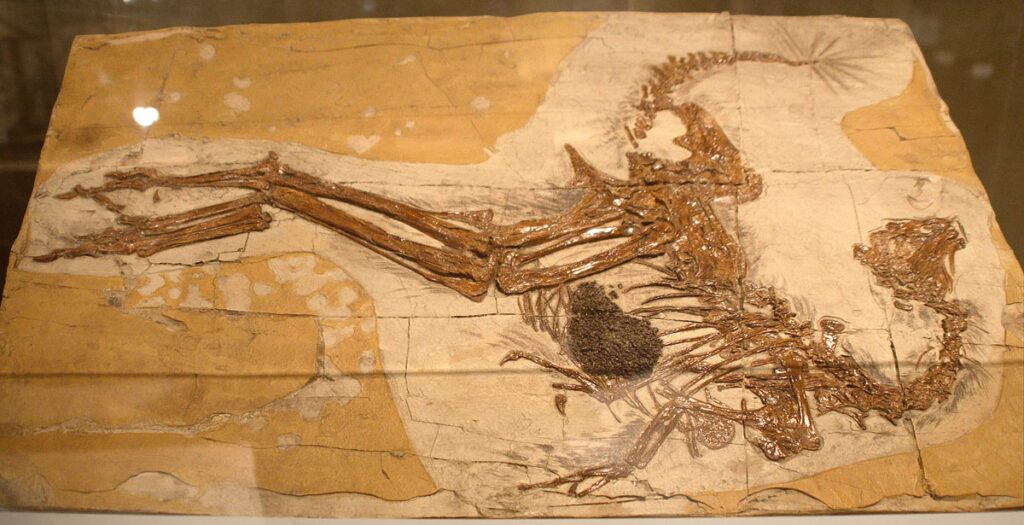
Approximately 66 million years ago, during the Late Cretaceous period, a peculiar dinosaur roamed the prehistoric landscapes of what would eventually become South Dakota. Named Anzu wyliei but colloquially known as the “Chicken from Hell,” this feathered dinosaur has fascinated paleontologists since its official scientific description in 2014. The creature’s nickname stems from its appearance, ...

FossiLab at Smithsonian National Museum of Natural History

The Secret Life of Fossil Prep Labs: How Mistakes Are Avoided

From dusty field discoveries to museum pedestals, fossils undergo a remarkable transformation journey—one largely hidden from public view. Behind the scenes, fossil preparation laboratories operate as the critical bridge between excavation and exhibition. These specialized workspaces combine elements of science, art, and craftsmanship, where technicians meticulously free ancient remains from their rocky prisons. This delicate ...

"Sue" the Tyrannosaurus rex in its new suite in the Evolving Planet exhibit hall at the Field Museum of Natural History, Chicago, Illinois, United States

What Fossilized Ankles Tell Us About Dinosaur Evolution

Deep within the earth, preserved in stone for millions of years, dinosaur fossils have been quietly holding the secrets of an ancient world. While teeth, skulls, and towering leg bones often capture our imagination, some of the most revealing evidence about dinosaur evolution comes from a surprisingly humble source: ankle bones. These small skeletal components ...

Fossil Dinosaur Eggs

Are Fossilized Eggs Proof of Complex Dinosaur Parenting?

For centuries, paleontologists have unearthed the remains of dinosaurs, piecing together their physical characteristics and behaviors from bones, tracks, and other preserved evidence. Among these fascinating discoveries, fossilized dinosaur eggs stand out as particularly significant finds, potentially offering rare glimpses into the reproductive behaviors and parenting strategies of these ancient creatures. As scientists continue to ...

Massive mosasaurs and plesiosaurs needed huge amounts of food to survive.

Mosasaurus missouriensis: The Sea Monster From the Western Interior Seaway

The ancient oceans that once covered North America held fearsome predators that would rival even the most terrifying creatures of modern imagination. Among these marine reptiles, Mosasaurus missouriensis stands as one of the most formidable hunters of the Late Cretaceous period. This massive predator patrolled the waters of the Western Interior Seaway, a vast marine ...

T-rex Sue

Why Some Scientists Refuse to Study Privately Owned Fossils

Paleontology sits at a fascinating intersection of science, commerce, and heritage preservation. While dinosaur bones and ancient remains captivate public imagination and fetch millions at auctions, a significant portion of the scientific community deliberately avoids researching privately held specimens. This principled stance, though sometimes controversial, stems from deep ethical, scientific, and practical concerns. This article ...