Articles for author: Awais Khan

A colorful dinosaur statue with an open mouth stands amidst lush greenery and tall trees in a forest setting, creating a playful, lively scene.

Could Dinosaurs Have Used Venom to Hunt?

For generations, our understanding of dinosaurs has been continuously evolving. From slow, lumbering beasts to agile predators, our perception of these ancient creatures transforms with each new scientific discovery. Among the most intriguing recent questions in paleontology is whether some dinosaurs might have utilized venom as a hunting strategy. This fascinating possibility challenges our conventional ...

10 Things That Would Happen If You Lived in the Prehistoric Era

10 Things That Would Happen If You Lived in the Prehistoric Era

Imagine stepping back through time, far beyond the comfort of modern civilization, into an era when survival required cunning, cooperation, and an intimate relationship with the natural world. Living in the prehistoric era wouldn’t have been the romanticized adventure that movies often portray. Instead, it would have been a raw, challenging existence that demanded every ...

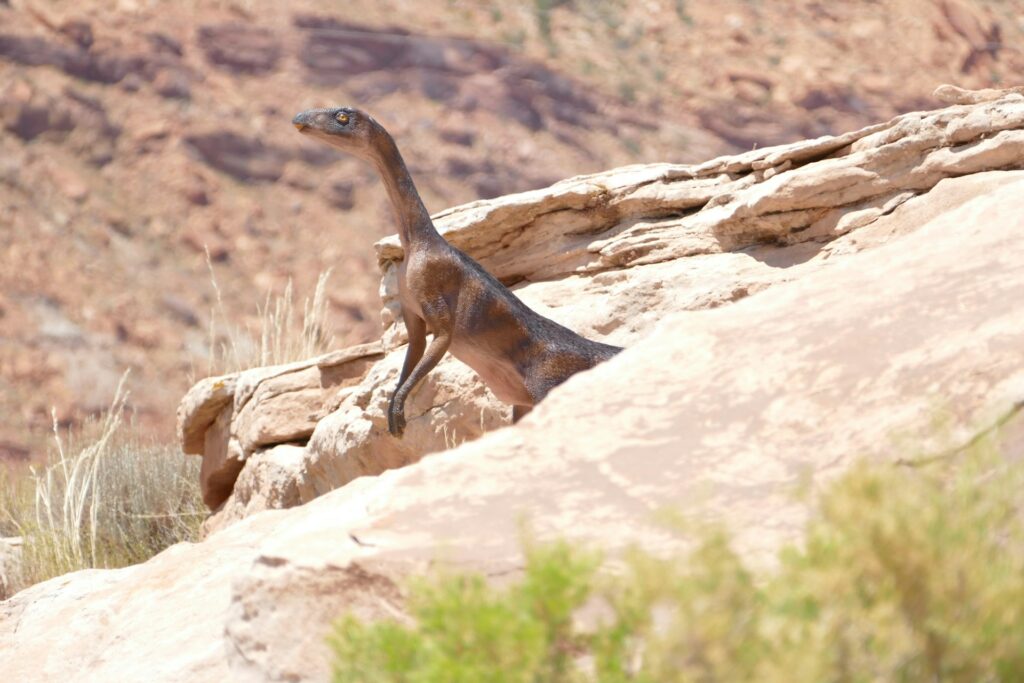
Illustration of a gray and blue dinosaur with a slender body, long tail, and three-toed front limbs. It has a textured pattern and alert stance.

Eoraptor: The Small, Swift Carnivore That May Have Started It All

In the vast timeline of Earth’s history, few creatures hold as pivotal a position as Eoraptor. This diminutive dinosaur, whose name means “dawn thief,” lived approximately 231 million years ago during the Late Triassic period, making it one of the earliest known dinosaurs. Discovered in Argentina’s Ischigualasto Formation in 1991, Eoraptor has forced paleontologists to ...

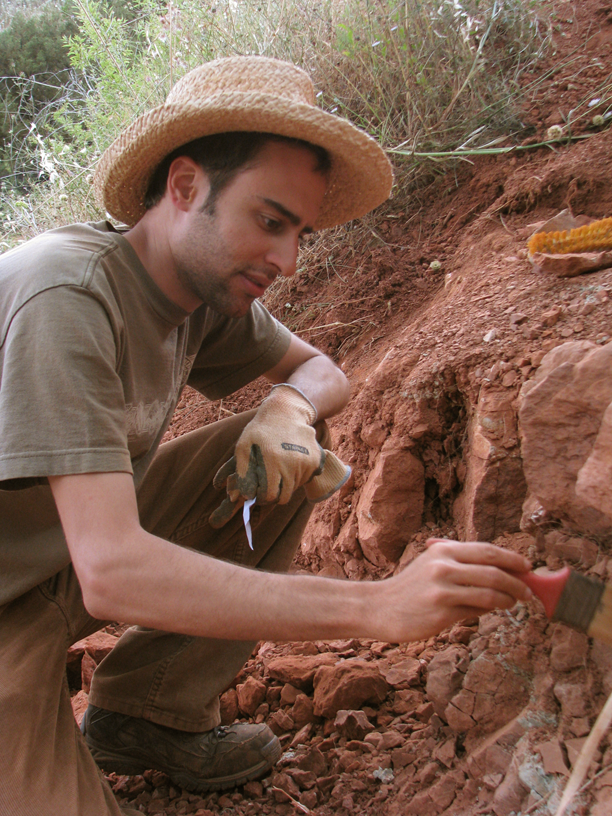
BLM Paleontologist Dr Greg McDonald

How Citizen Scientists and Hikers Are Helping Paleontologists Find Fossils

In the rugged outcrops of ancient rock formations and along weathered hiking trails, an unexpected partnership has been flourishing. Professional paleontologists, once working primarily within academic institutions, are now joining forces with everyday nature enthusiasts to uncover the secrets of Earth’s distant past. This collaboration between scientists and citizen volunteers represents a remarkable shift in ...

A hand delicately uses a tool to uncover details of a fossil embedded in rock, illuminated warmly. The scene conveys patience and precision in paleontology.

5 Women in Paleontology Who Are Breaking New Ground (Literally)

The field of paleontology has historically been dominated by men, but women have been making extraordinary contributions that are reshaping our understanding of prehistoric life. These pioneering female scientists aren’t just breaking gender barriers—they’re breaking ground as they excavate fossils and unearth new species that help us piece together Earth’s fascinating history. Their discoveries span ...

black and blue beetle on brown rock

What Prehistoric Insects Reveal About Ancient Climates

Prehistoric insects, preserved in amber, fossilized in rock, or trapped in ancient ice, serve as time capsules that unlock secrets about Earth’s past environments. These tiny creatures, some dating back hundreds of millions of years, provide scientists with remarkable insights into ancient climate conditions that shaped our planet long before human civilization emerged. Unlike larger ...

A starry night sky over a calm river with bright reflections of city lights on water. Two figures stand on a grassy bank, evoking a peaceful, contemplative mood.

What Artists Got Right—Before Scientists Could Prove It

Throughout history, artists have demonstrated an uncanny ability to capture truths about our world that science would only confirm much later. This fascinating intersection of art and science reveals how human intuition, observation, and creativity can sometimes leap ahead of methodical scientific inquiry. From anatomical details to astronomical phenomena, artists have frequently depicted reality with ...

An emu stands alert in a grassy field, its textured brown plumage blending with the golden background. The scene is calm and natural.

Cassowaries: The Modern-Day Dinosaurs Walking Among Us

In the dense rainforests of northeastern Australia, Papua New Guinea, and nearby islands, a creature stalks the undergrowth that seems like a visitor from Earth’s prehistoric past. Standing up to 6.5 feet tall, with brilliant blue necks, red wattles, and a distinctive helmet-like casque atop their heads, cassowaries are often described as “modern-day dinosaurs.” This ...

Hands of a paleontologist carefully cleaning a fossil with a precision tool under a magnifying lamp. The scene conveys focus and meticulous care.

7 Paleontologists You’ve Never Heard Of — But Owe Your Dino Knowledge To

While names like Mary Anning and Roy Chapman Andrews might ring familiar bells in the halls of paleontological fame, countless other dedicated scientists have worked tirelessly behind the scenes, revolutionizing our understanding of prehistoric life. These unsung heroes of paleontology have excavated crucial fossils, developed innovative methodologies, and challenged prevailing theories, yet they rarely receive ...

Stretching the limits sauropods like Mamenchisaurus wielded necks longer than a school bus, redefining the possible in prehistoric proportions.

The Myth That Dinosaurs Were Dumb — Debunked

For decades, popular culture has portrayed dinosaurs as lumbering, pea-brained beasts doomed to extinction by their stupidity. Films, cartoons, and outdated textbooks reinforced this image of dinosaurs as evolutionary failures—creatures with walnut-sized brains controlling enormous bodies. However, modern paleontology tells a dramatically different story. Far from being unintelligent evolutionary dead ends, dinosaurs were complex creatures ...