Blog

Best Practices for Fossil Collectors

What Is Taphonomy and What Does It Tell Us About Dinosaurs?

When we marvel at dinosaur fossils in museums, we’re looking at the end result of a complex series of natural processes that transformed living organisms into stone. These processes—collectively known as taphonomy—hold crucial keys to understanding dinosaur biology, behavior, and ecosystems. Taphonomy, derived from the Greek words “taphos” (burial) and “nomos” (laws), is the study ...
New Fossil Discoveries Prove Dinosaurs Were Far Smarter Than We Thought

New Fossil Discoveries Prove Dinosaurs Were Far Smarter Than We Thought

Dinosaurs have always captured our imagination. From the thundering footsteps of a Tyrannosaurus rex to the sharp, sickle-toed raptors made famous by Hollywood, these creatures have been the stuff of both nightmares and wonder for generations. Most people picture them as powerful but fundamentally dim-witted beasts, ruled by instinct and little else. That picture, it ...

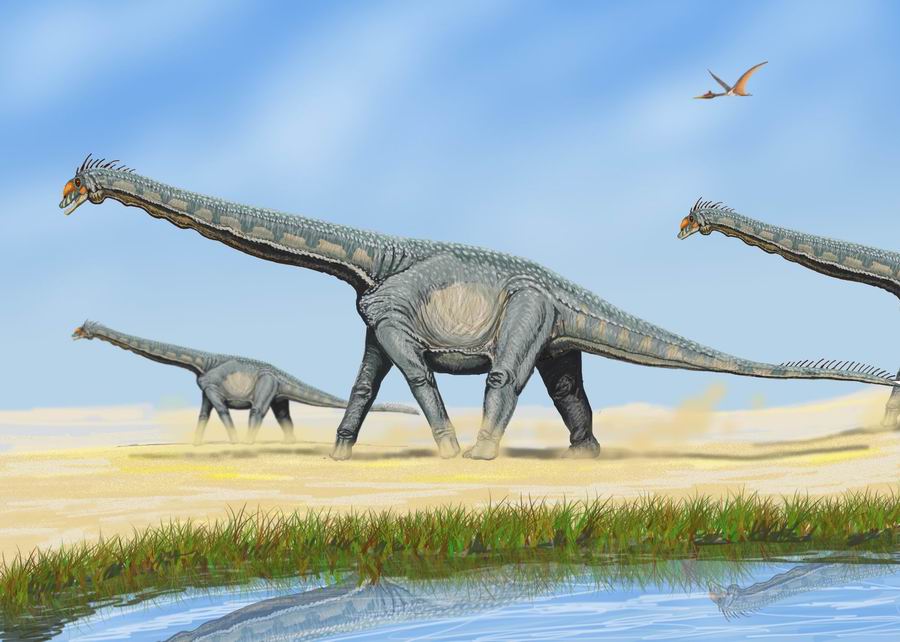
Illustration of large dinosaurs with long necks walking in a sandy landscape. A pterosaur flies in the blue sky, and grass grows near a water body.

Alamosaurus: The Last of the Giants in North America

When dinosaurs roamed the Earth, North America was home to some of the most magnificent creatures that ever lived. Among them was Alamosaurus sanjuanensis, a colossal sauropod that holds the distinction of being one of the last dinosaurs to inhabit the continent before the mass extinction event 66 million years ago. This towering herbivore, with ...

The Inland Seas That Split North America in Two

The Inland Seas That Split North America in Two

The heart of North America once harbored vast prehistoric seas that divided the continent into separate landmasses. These ancient inland waterways, which existed during various geological periods, fundamentally shaped the continent we know today. From the Western Interior Seaway of the Cretaceous period to earlier Paleozoic seas, these massive bodies of water created unique ecosystems, ...

Gorgosaurus chasing Corythosaurus

Corythosaurus The Crested Hadrosaur With a Helmet Like Skull

Corythosaurus, meaning “helmet lizard,” stands as one of the most distinctive dinosaurs of the Late Cretaceous period. With its remarkable cranial crest resembling a Corinthian helmet, this duck-billed dinosaur captured scientists’ imagination since its first discovery in 1912. As a member of the hadrosaur family, Corythosaurus combined impressive size with unique anatomical features that continue ...

Zodiac Signs Most Likely to Keep Secrets

Zodiac Signs Most Likely to Keep Secrets

You’ve probably been there before. Someone leans in close, eyes darting around the room, and whispers something they need you to hold onto. Maybe it’s about a relationship that’s falling apart, a job offer they haven’t accepted yet, or something more vulnerable. In that moment, trust becomes everything. The question is, can you trust yourself ...